Get in touch with Zhenling Company

HDPE CNC Machining Services for Made-to-Drawing Parts
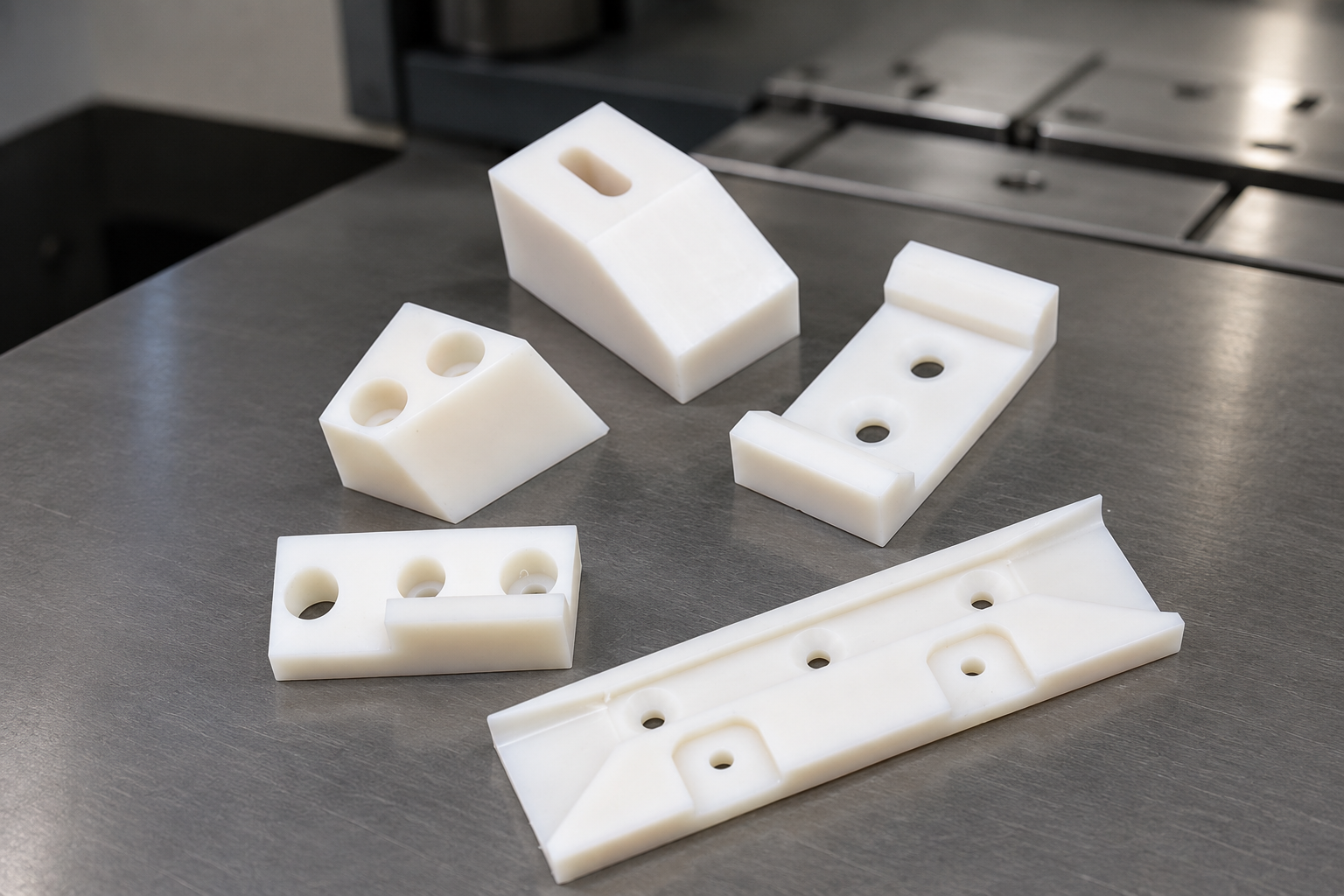
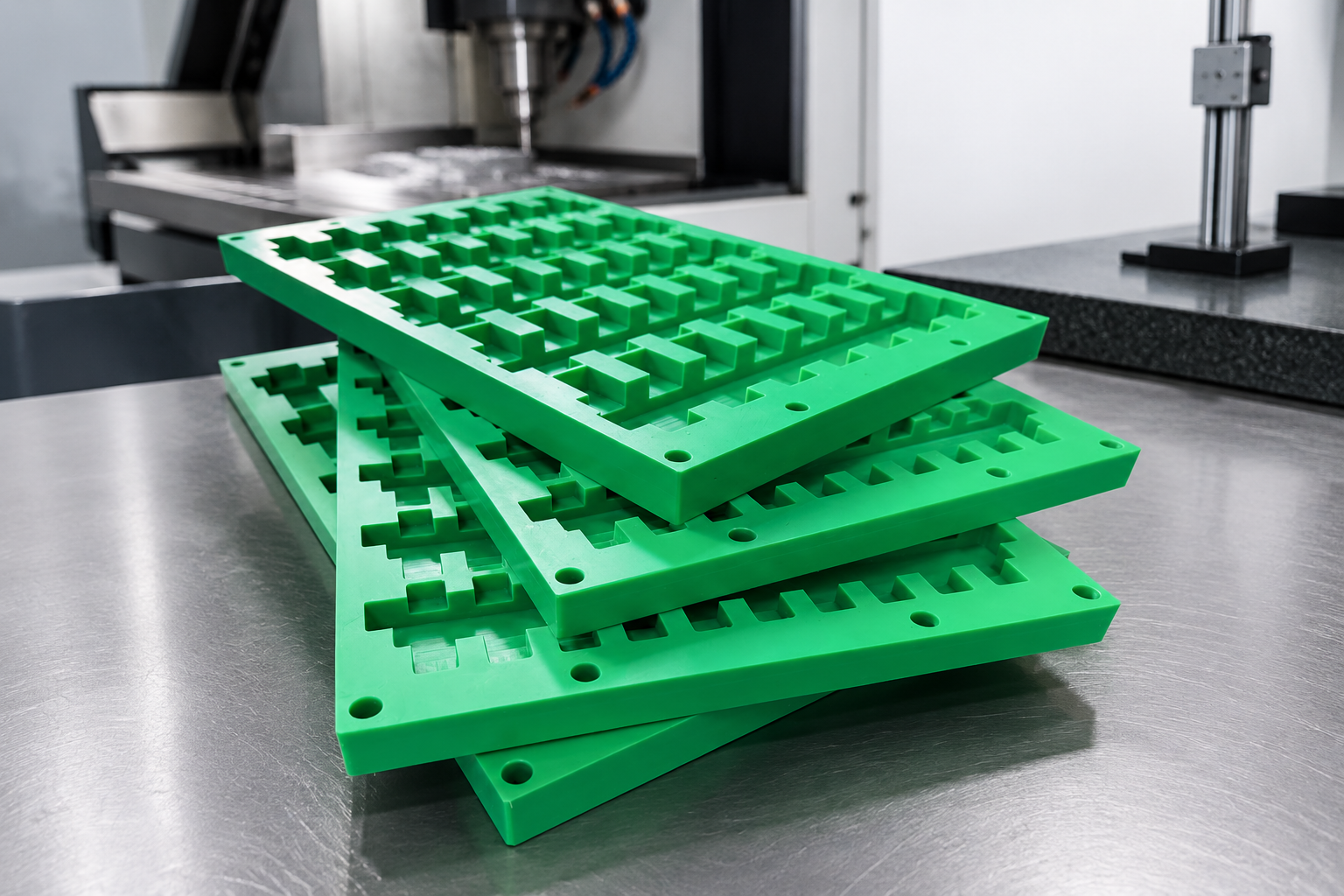
HDPE CNC machining starts with the drawing, the selected high-density polyethylene stock and a written acceptance state. Zhenling accepts made-to-drawing HDPE CNC machining orders for custom parts, then reviews geometry, workholding, tolerance, inspection scope, quantities and service conditions before releasing a quotation. HDPE CNC Machining enquiries should include HDPE or UHMW-PE grade, stock form, part geometry, dimensional function, finish and inspection needs. Treat capability and timing as provisional. Written terms should identify the reviewed route, limits, records and released-part assumptions.
Specifications & Security
- STEP, IGES, Parasolid, PDF, DWG and DXF accepted
- If a non-disclosure agreement is executed, it governs the information and transfer route covered by that agreement.
Service Standards
01
Quote response
Timing stated in the written quotation.
Engineer-reviewed, with open RFQ questions identified.
02
Prototype schedule
Schedule stated in the written quotation.
Start point and transit scope are order-specific.
03
Small-batch schedule
Schedule stated in the written quotation.
Start point is order-specific.
04
High-volume production planning
Schedule stated in the written quotation.
Quantity and released scope determine timing.
05
Order quantity
Minimum quantity is confirmed in the written quotation.
Single-piece review availability is order-specific.
06
Release path
Prototype or sample batch first.
Production scope is released after approval.
HDPE CNC Machining Routes By Part Geometry
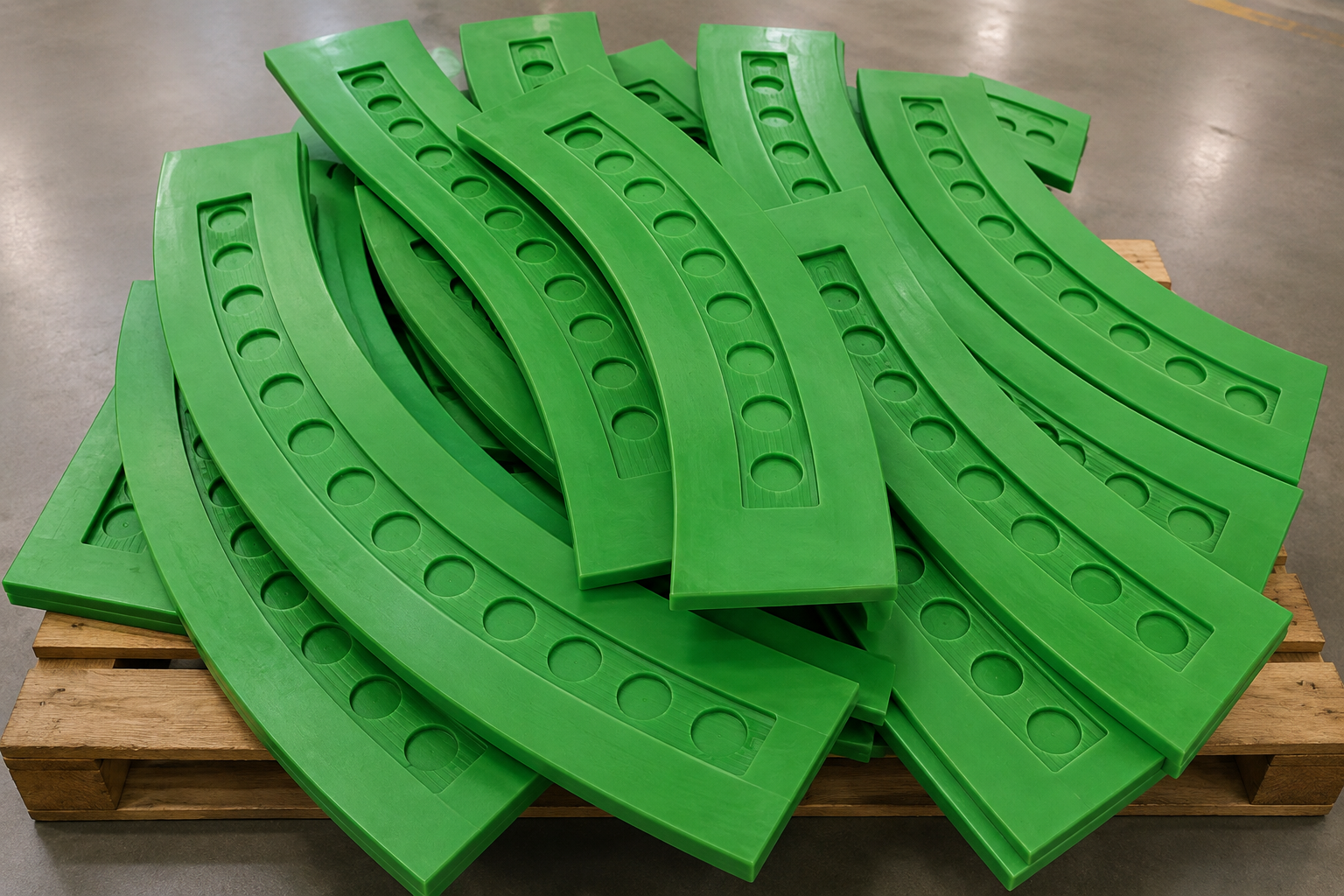
Our HDPE machining services route each part by geometry rather than forcing every job into one process promise. That review covers how the part is supported, where material is removed, how chips leave the cut and which features control function after the part is unclamped.
CNC Plastic Machining Review
To machine HDPE as a repeatable plastic part, the machining process has to connect plastic stock, tool geometry and inspection state. Buyers searching for CNC machining HDPE, HDPE milling or plastic machining services need the same discipline, but the answer remains specific to the drawing.
Plastic Stock Identity
Grade, manufacturer, colour, additives and supplied form.
Plastic Part Geometry
Datums, broad faces, pockets, walls, bores and critical interfaces.
Plastic Workholding
Location and support without forcing the component flat.
Plastic Cutter Geometry
Flute form, sharp edge and end mill selection for clean shearing.
Plastic Heat Control
Cutting strategy that limits local softening and thermal movement.
Plastic Chip Control
Evacuation route that keeps stringy chips away from the finished face.
Plastic Surface Finish
Functional faces, cosmetic faces and permitted tool marks.
Plastic Inspection State
Temperature, support, time, method and decision rule.
Plastic Component Duty
Load, temperature, chemical exposure and required grade evidence.
Plastic Fabrication Handoff
Assembly preparation, cleaning, marking and packing.
These checkpoints turn material behavior into an RFQ discussion. An HDPE CNC feeds and speeds table is not a substitute for a drawing review because stock condition, tool geometry, setup rigidity, feature depth and chip evacuation change the workable cutting plan.
HDPE Material Selection and Service-Duty Inputs
Material selection changes machining behavior, dimensional stability and the evidence needed with the finished order. We quote against the exact HDPE grade or a buyer-approved alternative, not the word “polyethylene” alone.
HDPE and UHMW-PE are not interchangeable. Choosing the wrong grade can change stiffness, wear behavior, dimensional response and the evidence required for the application, so Zhenling confirms the specified polymer against the RFQ before stock release.
Properties belong to the selected grade
HDPE is lightweight and valued for impact resistance, low moisture absorption and resistance to many corrosion environments. Tensile strength, stiffness, temperature resistance and chemical compatibility still belong to the exact grade and service condition; they are not created by the cutting operation.
Stock identity
- Manufacturer and grade or trade name.
- Natural, black or specified colour.
- Virgin or recycled-content requirement.
- Sheet, rod, block or supplied blank.
- Additives such as UV, antistatic or flame-retardant packages.
Service-duty inputs
- Sustained and peak load, direction and duration.
- Minimum, normal and maximum service temperature.
- Chemical identity, concentration and contact time.
- Residual, local or multiaxial stress concerns.
- Stock thermal history and any buyer validation standard.
Surface, Edge and Assembly Requirements
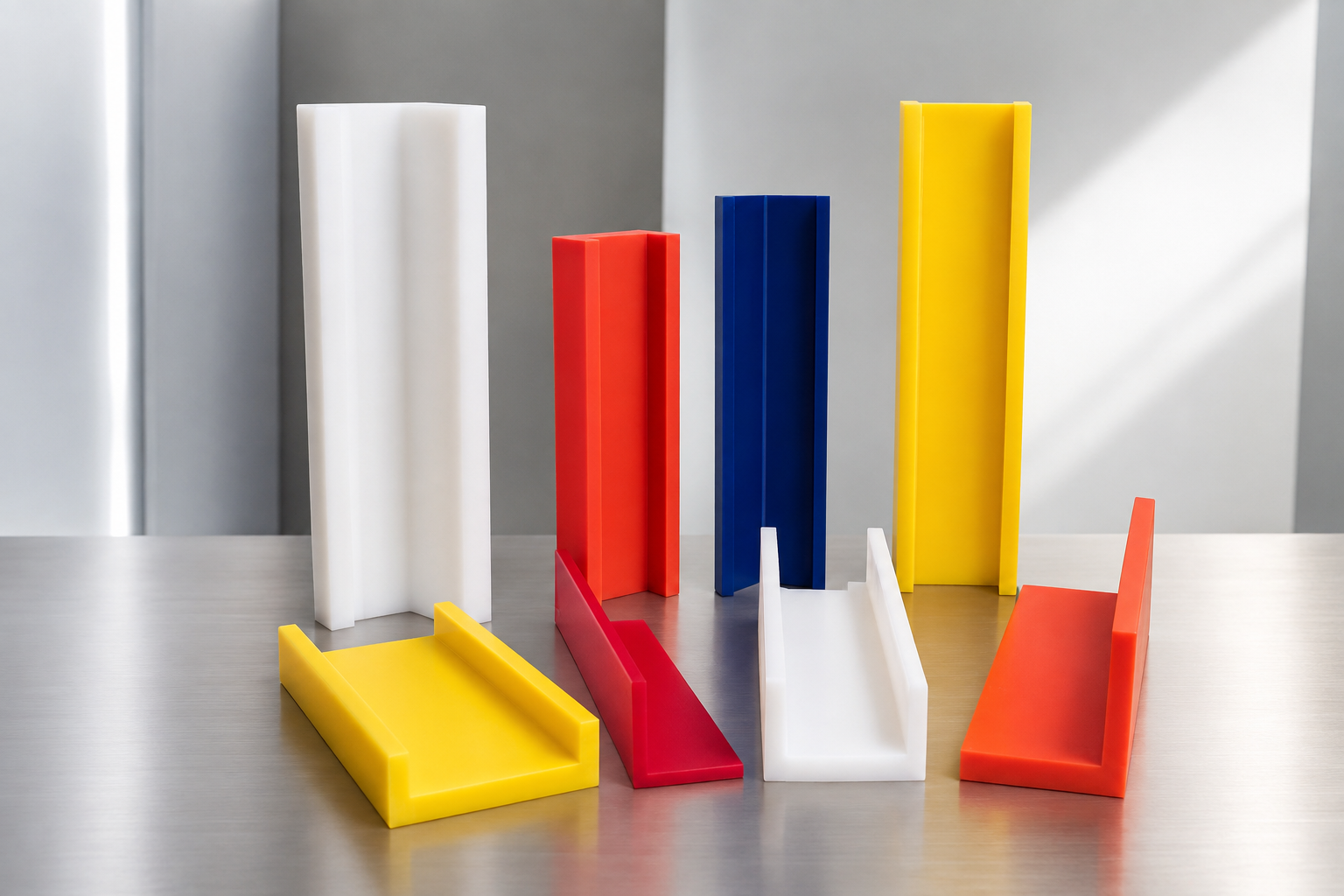
Surface finish on an HDPE part depends on tool condition, cutting heat, chip evacuation, stock surface and the drawing’s acceptance language. We review the required result before quoting; no secondary treatment is assumed unless it is written into the scope.
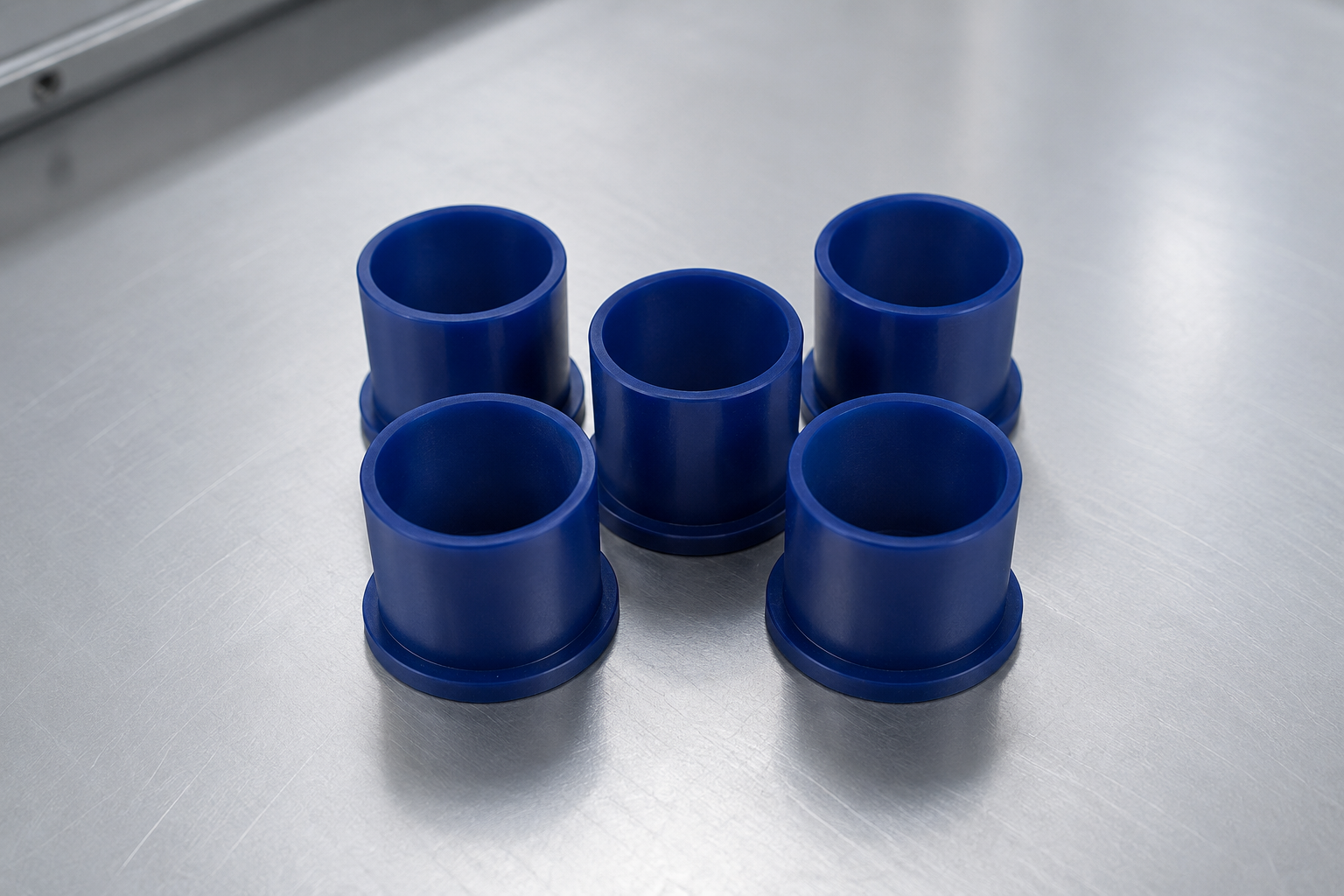
Define the visible and functional surfaces
DATA STREAM: ACTIVE
- As-machined tool marks permitted or controlled.
- Stock texture retained or removed.
- Edge break, chamfer and corner radius.
- Sealing, sliding or bearing interface.
Define the handoff condition
DATA STREAM: STANDBY
- Mechanical fastening or welding preparation.
- Marking and traceability restriction.
- Cleaning method and prohibited residues.
- Protective packing for critical surfaces.
STANDARD ISO 14253-1:2017
For a geometrical specification that needs a formal pass/fail decision, ISO 14253-1:2017 provides the conformity-decision framework; the RFQ still has to name the characteristic and measurement method.
PROCESS CONTROL
Clear finish language prevents a cosmetic expectation from turning into an unquoted inspection requirement. It also gives the machinist a defined reason to control chip recutting and clamping marks.
RFQ Acceptance State for HDPE Parts
A tolerance without a measurement state is incomplete for a material that responds to temperature, support and stress release. Use the worksheet to replace each example with the drawing value and the measurement condition for your part.
An ambiguous near-limit dimension creates rejection risk because temperature, support and measurement uncertainty can move the reported result. Zhenling resolves that risk in a written acceptance state; ISO 1:2022 and ISO 14253-1:2017 provide the reference-temperature and decision-rule framework. Annealing HDPE is not assumed as a universal fix: stock history and any thermal treatment belong in the drawing review.
Acceptance Field Worksheet
10 NODES ONLINE
OPTICAL_SCAN // ACTIVE
Temperature-to-inspection map
ISO 1:2022 supplies the standard reference-temperature framework. A measurement away from that condition is not automatically invalid: the result can be corrected when the coefficient, temperatures and uncertainty budget make the correction fit for the required decision.
Precision language on the drawing
A buyer request for precision or tight tolerances must identify the functional feature and acceptance state. Zhenling works to the drawing-specific HDPE tolerance class confirmed during quotation, with feasibility checked against the chosen stock and geometry.
If tolerance, support, temperature and decision rule are separated, two suppliers may be quoting different acceptance problems even when the drawing number looks the same.
RFQ acceptance-state principle
Replace the worksheet entries with your RFQ values. Zhenling confirms achievability feature by feature during drawing review.
Pricing, Lead Times and Quote Equality
Price follows stock selection, material yield, geometry, setups, critical dimensions, inspection scope, quantity, finish and packing. The written quotation confirms response timing after enough information is available to price the intended scope.
HDPE machining cost only becomes comparable after the scope is normalized. The trap is comparing unit price before that step; unlike a quote that repeats the drawing number alone, Zhenling confirms the material, acceptance state, documents and release quantity against the RFQ. Tightening every dimension costs you inspection and process time, so special controls should follow function.
Cost driver
Why it moves the quote
Buyer action
Grade and stock form
Specified stock changes availability, yield and traceability.
Name an approved grade or permit an equivalent for review.
Material removal
Large one-side removal adds cutting time and distortion risk.
Share the model and identify stock surfaces that may remain.
Critical features
Feature-level tolerance changes process and inspection effort.
Limit special controls to function-critical callouts.
Quantity and release
Setup is shared differently across sample, pilot and production lots.
Provide all quantity bands in one RFQ.
Documents and packing
Traceability, measured values and surface protection add scope.
List every required document in the purchase order.
Prototype
7–15 working days
After drawing approval, excluding international transit.
Small batch
15–30 business days
After drawing approval for the released scope.
High-volume production run
4–8 weeks
Scheduled and confirmed in the quotation.
Quote Equality Checklist
Compare material manufacturer and grade, drawing revision, quantity bands, critical features, acceptance state, sample release, documents, packing and trade term. If one field differs, unit prices are not yet comparable.
Compare two HDPE machining quotations on the same basisMachining versus molding
Machining avoids mold tooling but carries setup and cutting cost into each part; molding adds tooling capital and lowers recurring cost only when the actual quote supports it. No universal crossover volume applies to custom geometry.
Calculate the crossover from your own supplier quotesWe accept a prototype or sample batch first and release production after approval. Expedited scheduling is quotation-specific, and feasibility is confirmed during drawing review.
Payment method, deposit, balance timing and requested material or inspection records are confirmed in the written quotation and purchase order.
01
Lock the revision.
Match 2D drawing, 3D model and change notes.
02
Lock the material.
Record grade, manufacturer requirement, colour, stock and documents.
03
Lock acceptance.
Agree datums, measurement state, uncertainty and decision rule.
04
Release the sample.
Machine the approved scope and return the agreed evidence.
05
Approve production.
The buyer records acceptance or changes before the repeat lot.
06
Preserve the handoff.
Pack critical surfaces and ship the specified records with the order.
Drawing Review and Order Process
PROC.030
-
STEP 01Send the files
We work from STEP, IGES or Parasolid 3D files plus PDF, DWG or DXF drawings.
-
STEP 02Answer material questions
Grade, stock, colour, additives, exposure and traceability are reviewed.
-
STEP 03Resolve acceptance state
Critical dimensions, support, temperature, time and evidence are written into scope.
-
STEP 04Receive the quotation
Price, lead times, quantity path, documents and trade term are returned in writing.
-
STEP 05Release a sample
Prototype or sample approval becomes the production checkpoint.
-
STEP 06Release and ship
The approved revision and purchase-order documents stay with the order handoff.
Acceptance-State Ledger Field
RFQ Integration Rationale
Acceptance-State Ledger Field
RFQ Integration Rationale
Rationale Output
Drawing and model revision
Prevents geometry and tolerance changes from hiding inside a price comparison.
Rationale Output
HDPE grade and stock
Connects material identity to machinability, duty and document needs.
Rationale Output
Critical feature and datum
Directs process and inspection effort to function.
Rationale Output
Temperature, time and support
Defines the physical state in which the result is accepted.
Rationale Output
Load, duration and exposure
Separates short-term size from creep and stress-cracking duty.
Rationale Output
Uncertainty and decision rule
Prevents a near-limit result from being accepted differently by each party.
Rationale Output
Documents and release owner
Names the evidence and the person who authorizes the next lot.
Manufacturing Base and Parts We Make to Drawing
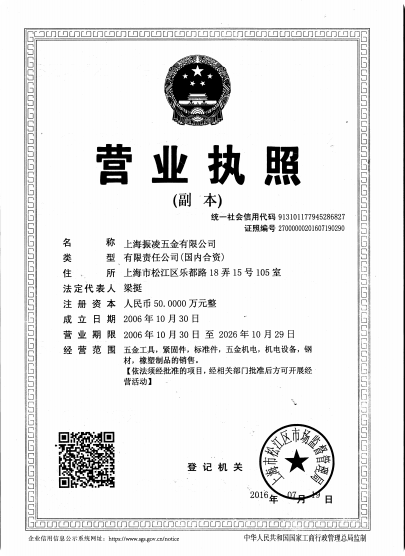
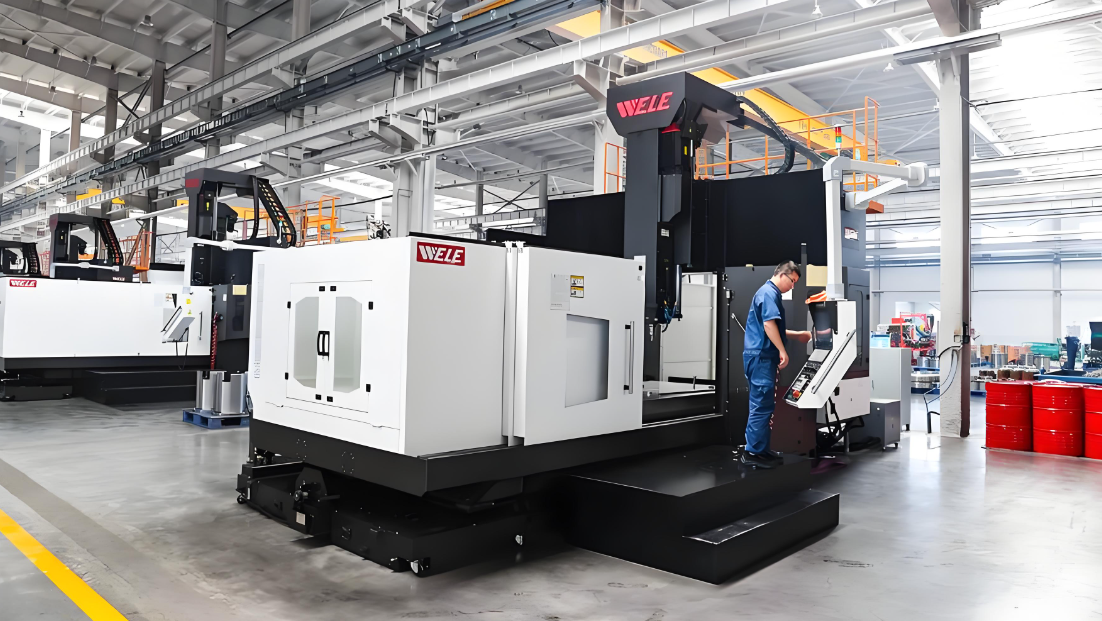
Zhenling has operated as a made-to-drawing manufacturing business since 2006 in Jiashan County, Zhejiang. Its site covers 8,000 m², including a 6,000 m² workshop supporting custom machining work.
Company foundation
Since 2006
Made-to-drawing and made-to-sample manufacturing.
Jiashan site
8,000 m²
Manufacturing location in Zhejiang, China.
Workshop
6,000 m²
General machining platform for custom industrial work.
HDPE Engineering & Procurement Tools
01
HDPE Acceptance-State Builder
MODULE FUNCTION
Generate a definitive, written acceptance state. Lock in reference temperatures, support conditions, and decision rules to eliminate ambiguous rejection risks.
02
HDPE Quote Equality Checklist
MODULE FUNCTION
Ensure an apples-to-apples supplier comparison. Audit raw material grades, unconstrained measurement rules, and thermal treatment assumptions.
03
Machining vs. Molding Cost Planner
MODULE FUNCTION
Calculate the break-even volume for your specific HDPE components. Compare CNC machining precision against injection molding tooling costs.
HDPE CNC Machining FAQs
Yes. CNC milling and CNC turning can produce custom HDPE parts, but feature feasibility depends on stock condition, geometry, workholding, chip evacuation, thermal expansion and the measurement state. Zhenling confirms the route at drawing review.
Internal stress from stock production, uneven material removal, jaw pressure, cutting heat and an unbalanced roughing sequence can all affect the released shape, especially when a broad plate is measured immediately after unclamping. Record flatness in the released state and tell the supplier how the part is supported during inspection.
Dull cutting edges, heat and recutting chips can degrade the surface finish. The RFQ should identify functional or visible faces and define the accepted result instead of assuming a metal-like finish.
Give the manufacturer and grade, colour, virgin or recycled-content rule, additives, stock form, traceability and service exposure. If regulated contact matters, add the exact conditions and required evidence.
State the value, datum, support, temperature, time after machining, method, uncertainty and conformity decision rule. ISO 1:2022 and ISO 14253-1:2017 provide the relevant measurement framework.
We work from STEP, IGES or Parasolid 3D files plus PDF, DWG or DXF drawings. Include quantities, critical features, grade, service duty, acceptance state, documents and packing.
Minimum quantity and prototype or sample-batch availability are confirmed in the written quotation. Any production release follows the agreed sample and evidence plan.
After drawing and quantity review, the written quotation confirms the applicable prototype, small-batch or production schedule, start point, transit and any outside-process scope.
A material certificate, dimensional report or certificate of conformance ships with the order when specified in the purchase order. Define measured values, report format and any third-party inspection before quotation.
No. 21 CFR 177.1520 connects use to polymer identity, specifications, additives, conditions of use and finished-form limits. The buyer must define the intended contact and the evidence needed for the finished article.
Turn the Drawing into a Comparable HDPE Quote
Send the 2D drawing and 3D model, material grade, quantity bands, critical dimensions, acceptance state, service load, temperature, exposure, documents and packing. The written quotation confirms the reviewed scope and response timing.
File package
- STEP, IGES or Parasolid model
- PDF, DWG or DXF drawing
- Current revision and quantity bands
Acceptance package
- Critical features and datums
- Temperature, support and decision rule
- Material, service duty and documents
If a non-disclosure agreement is executed, it governs the covered information and transfer route. Payment terms and shipment scope are confirmed in the written quotation.
References & Sources
- ISO 1:2022 — Standard reference temperature for geometrical and dimensional properties.
- ISO 14253-1:2017 — Decision rules for verifying conformity or nonconformity.
- NIST — Uncertainties in dimensional measurements made at nonstandard temperatures.
- ASTM plastics standards index — D2990-17(2025), D1693-21 and related methods.
- 21 CFR 177.1520 — Olefin polymers.
![Shop-Floor Carbon Steel CNC Machining Guide [2026]](https://zhenlingmetal.com/wp-content/uploads/2026/08/carbon-steel-cnc-machining-handbook-r2-featured-150x150.png)