Get in touch with Zhenling Company

Drawing-to-delivery requirements for custom plastic parts
ABS CNC Machining Project Review for Custom Plastic Parts
ABS CNC machining starts with the part’s application, grade, drawing revision and acceptance criteria, not a generic material label. Use this page to prepare an inquiry; Zhenling must confirm the material, equipment, process and inspection fit before any quotation or production commitment. ABS CNC Machining enquiries should include ABS grade, prototype or repeat quantity, critical dimensions, finish and acceptance requirements. Review the proposed route, open limits and required records before relying on price, timing or capability for the actual order, and distinguish confirmed inputs from unresolved commercial or inspection assumptions.

Review outputs
What your team can clarify before quoting
- Allowed ABS grade, stock form, color and evidence requirement
- Drawing revision, datums, critical features and visible surfaces
- Geometry, tool access, workholding and inspection questions
- Sample approval, repeat-order and delivery inputs
Buyer outcomes
- A more comparable RFQ
- Fewer assumptions hidden inside material, tolerance or inspection scope
- A clearer basis for comparing price, lead time and supplier evidence
Evidence boundary: Zhenling’s public site does not yet verify ABS-specific projects, process settings or product-level certifications. Those items remain subject to project evidence and written confirmation.
ABS CNC Machining Starts with Grade and Application Fit
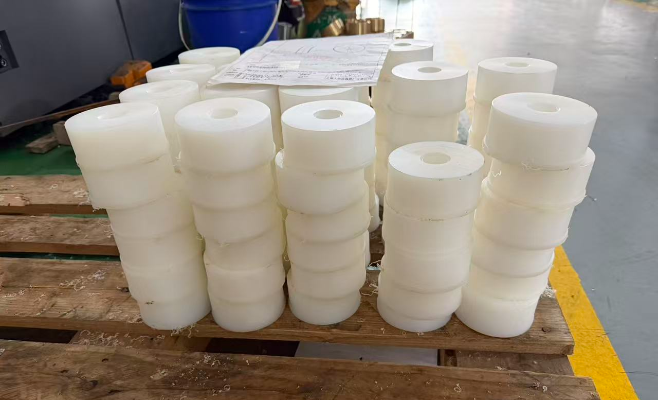
Acrylonitrile butadiene styrene is a thermoplastic family, not one fixed recipe. A drawing that says only “ABS” leaves the commercial grade, formulation, stock condition and supporting documents unresolved.
Why the label is not enough: ISO 19062-1 says materials with the same designation do not necessarily provide the same performance, and the standard does not supply application engineering, performance or processing data.
8-Check ABS Grade Evidence Screen
01
Manufacturer and grade
Name the commercial grade or define an approved equivalent boundary so a supplier can check the correct data sheet.
02
Material designation
State the referenced material specification, while keeping that specification separate from finished-part acceptance.
03
Temperature and environment
Define service exposure and failure consequences; don’t infer heat resistance from the family name.
04
Mechanical requirement
State which toughness, impact strength, rigidity, tensile strength or deflection outcome matters and how it will be approved.
05
Special exposure
Identify chemical, ultraviolet, electrical or flame-retardant requirements that need separate grade evidence.
06
Modification
Confirm whether additives, fillers or reinforcement are allowed because they can change properties and machinability.
07
Stock and batch
Define sheet, rod or block form, color and required lot documents; a photograph can’t establish any of them.
08
Proof type
Separate a general datasheet, supplier declaration, material record and finished-part test or approval.
Engineering review
Machining ABS Plastic: Drawing Review for Geometry, Heat, and Workholding
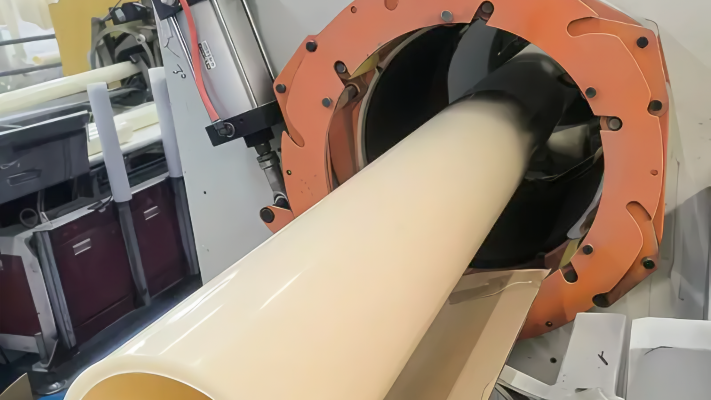
ABS plastic machining can fail at the drawing-review stage when thin walls, deep pockets, small internal radii, weak clamping areas or appearance surfaces aren’t identified. For CNC machined ABS, a machine list by itself doesn’t prove control of heat, chip formation, deflection or tool marks.
Part form × review path
| Part or input form | Questions to close | Review output |
|---|---|---|
| Sheet profile and holes | Thickness, edges, hole callouts, visible face | Path, support and edge-risk notes |
| 3D milled part | Deep pockets, thin walls, multi-side features, datums | Setup and tool-access questions |
| Turned geometry | Diameter, length, grooves, bores, coaxial callouts | Project-specific turning path review |
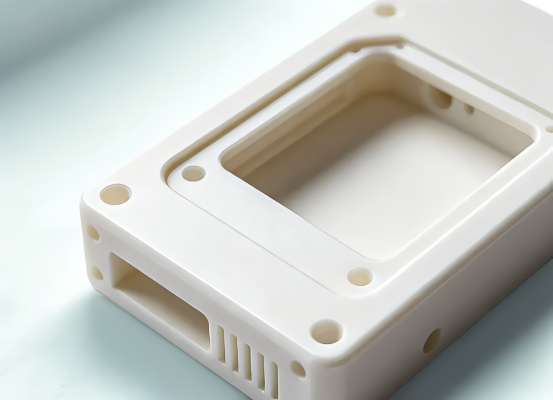
| Appearance part | Color, visible face, texture, handling and packaging | Surface and acceptance questions |
Research boundary: A 2026 ABS milling study tested 10 mm and 20 mm channels, a 1 mm thin wall, five cutting speeds from 25 to 125 m/min and feeds from 0.05 to 0.2 mm/rev. Its result is condition-specific evidence that geometry, path, speed and feed interact, not a spindle speed or feed rate recipe for your part.
Geometry risk → drawing input → review direction
| Risk | Input the buyer should mark | Direction to evaluate |
|---|---|---|
| Thin-wall deflection | Wall thickness, free length, functional face | Support, cut sequence and measurement state |
| Heat or poor surface finish | Visible faces, allowable marks, stock grade | Tool condition, chip evacuation, dry machining or coolant suitability |
| Small radii and deep cavities | Required radius, depth and access direction | End mill reach, rigidity and alternate geometry |
| Clamping distortion | Datum faces, clamp-free areas, final envelope | Soft jaws, staged release and reinspection |
| Burrs or stringy chips | Edge standard, hole exits and assembly faces | Tool geometry, chip control and edge acceptance |
“A tight number in a quotation does not close manufacturing risk when the grade, drawing revision, critical dimensions and inspection condition are still unclear.”
Questions list
Features, surfaces and datums that need clarification before quotation.
Risk feedback
Items that may change tool access, workholding, cutting operations or reinspection.
Version checkpoint
The drawing and model revision that must be aligned before scope is accepted.
Process selection
When to Machine ABS Instead of Injection Molding or 3D Printing
No process is the automatic low-cost winner. Compare a CNC machining service, molding supplier and 3D printing provider against the same material, design, inspection and change-control scope.
Decision condition
CNC machining
Injection molding
3D printing
Design is still changing
Re-review the updated model and drawing; no dedicated mold
Evaluate mold design and the effect of each tool change
Useful for fast shape checks; printed material behavior needs separate review
Target material state
Remove material from confirmed sheet, rod or block stock
Use a molding grade processed through the mold
Use a print feedstock and process that may not match stock material
Geometry constraint
Tool access, reach, workholding and internal radius
Draft, parting, gate, ejection and mold construction
Build orientation, support, layer and post-processing limits
Repeat demand
Review setup, cycle, inspection and stock supply
Review mold commitment against stable demand
Review build capacity, post-processing and consistency
Acceptance evidence
Agree drawing, measurement and record scope
Agree molded-part approval and tool-change control
Agree printed-material and finished-part validation
Process changes alter the evidence basis: ISO 2818 covers machining plastic test specimens, while ISO 294-1 covers injection-molded thermoplastic specimens and notes that mold design affects reproducible preparation, including for ABS. These standards do not choose a commercial route; they show why machined and molded evidence should not be treated as interchangeable.
Sourced decision example, not a Zhenling result
Faster and lighter did not mean cheaper
Baker Industries reported one 3D-printed ABS fixture that was 70% lighter, took about 50 hours to print and saved roughly one week compared with a machined aluminum route, while cost remained about equal. The case can’t set a universal price rule, but it shows why process choices must include accuracy, complexity, redesign cost and use conditions.
For an ABS prototype, casing, fixture or other machined parts, the useful question isn’t “Which process is best?” It’s “Which route produces the evidence and material state this decision requires, with an acceptable change path?”
MANUFACTURING PROCESS
ABS Prototype Machining and Repeat Production
A prototype that passes a bench check does not, by itself, lock the approved drawing, material record, inspection scope, packaging or rework path. Overseas sourcing adds communication, logistics and version-control risk that should be addressed before a purchase order moves into production.
Request a Manufacturing Review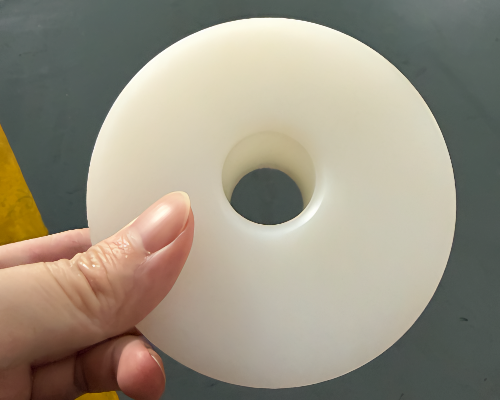
ORDER REVIEW
6-Step Drawing-to-Repeat-Order Path
01
Confirm the information boundary
Identify the drawing and model revision, ordinary confidentiality needs and approved contact channel. Restricted technical data must not be sent through a general inquiry form.
02
Review manufacturability
Mark grade, geometry, workholding, surface and inspection questions that could change scope.
03
Align the quotation
Record material, quantity, documents, packaging, destination and unresolved assumptions so competing offers can be compared.
04
Review a sample or first item
Define what’s inspected, who approves it and how feedback is recorded; a formal first-article report is included only when quoted.
05
Identify the approved basis
Align the purchase order, file name, drawing revision and material requirement before repeat work.
06
Recheck change conditions
Quantity, grade, design, inspection, packing or destination changes may trigger a new review.
Controlled-Data Boundary
U.S. Bureau of Industry and Security enforcement shows that sending controlled design information abroad for quotation can be an export, depending on classification and the circumstances. NIST SP 800-171 addresses systems that process, store or transmit controlled unclassified information; confirm legal eligibility and an approved channel before sharing restricted files, and don’t treat this page as legal advice.
Questions to settle before a repeat order
- Which drawing revision and material requirement were approved?
- Which dimensions control function, and under what measurement condition?
- Which appearance faces, edge conditions, labels and packaging details are recorded?
- What change requires another sample, review or approval?
Acceptance planning
ABS Part Tolerances, Surface Finish, and Inspection
Precision plastic machining isn’t defined by one advertised tolerance. Dimensional accuracy depends on the feature, datum scheme, wall section, material state, temperature, measuring method and the way the workpiece was held and released.
Conditioning is part of the measurement conversation. ISO 291 lists standard atmospheres including 23 °C/50% relative humidity and 27 °C/65% relative humidity, while ASTM D618 covers conditioning plastics for testing but is technically different; neither source proves Zhenling’s default inspection environment.

Requirement → review → evidence
| Requirement | Review question | Evidence that may be agreed |
|---|---|---|
| Critical dimension | What datum, wall, fit and function does it control? | Dimensional record or named inspection report |
| Surface quality | Which face is visible, and what tool marks or scratches are unacceptable? | Visual standard, photo or approved sample |
| Material | Which grade, color, form and document are required? | Agreed supplier or material record |
| Assembly feature | What mating part, clearance and measurement condition apply? | Fit check or agreed gauge method |
| Conditioning | How is the part stored before measurement? | Recorded conditioning and measurement condition |
| Batch coverage | Which features are sampled or checked on every part? | Quoted inspection frequency and release record |
[ 01 ]
Do not tighten every dimension
Mark the dimensions that control fit, sealing, alignment or assembly. Unnecessary tight tolerances can add setups and inspection without improving function.
[ 02 ]
Name the visible surfaces
“Excellent surface finish” isn’t an acceptance method. Define visible faces, permitted tool marks, edge condition and whether a bead-blasted appearance is requested and compatible.
[ 03 ]
Separate process from acceptance
Carbide or HSS tooling, climb milling, coolant and chip evacuation are process decisions, while the drawing should state the required result.
[ 04 ]
Ask what the report covers
Inspection, traceability and certificate scope should be named in the quotation instead of inferred from “quality control.”
Quotation scope
ABS Machining Cost, Lead-Time Drivers, and RFQ Inputs
ABS machining cost can’t be compared until the material, drawing revision, quantity, surface, tolerance, inspection and delivery scope match. An incomplete request may return a price quickly while leaving the most expensive assumptions unresolved.
8 Cost and Lead-Time Inputs
1.Grade and stock
Commercial grade ABS, color, type (sheet/rod/block), and whether there are documentation requirements.
Part envelope
Overall bounding box, thickness of wall sections, amount of material to be removed.
Feature access
Depth of features, minimum feature size, complexity of geometry across multiple sides, and internal corner radii.
Workholding
Workholding surface requirements, need for datum shifts or retooling, complexity or number of setups required.
Quantity and maturity
prototype, repeat demand, revision status and change expectation.
Surface and edges
Surfaces to be machined that would be visible, maximum acceptable tool mark, and any requirements regarding burr removal or overall cleanliness.
Inspection
critical features, measurement method, frequency and records.
8.Delivery
packaging, labels, documents, destination and requested date.
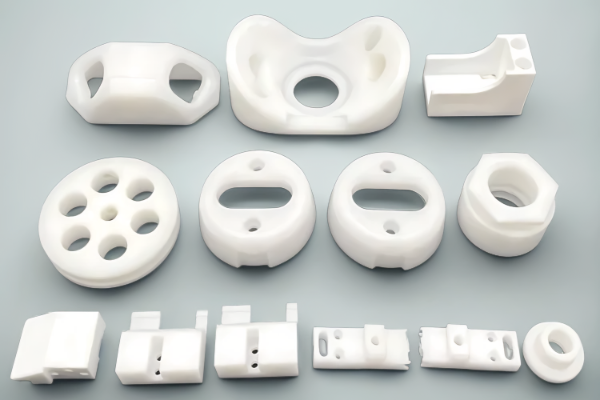
RFQ checklist
Design files
Current 3D model, controlled 2D drawing, revision identifier, datums, threads and critical callouts.
Material
Commercial grade or equivalency rule, color, stock form and required material document.
Order
Prototype and expected repeat quantities, requested date, destination and delivery terms.
Acceptance
Critical dimensions, surface and edge standard, inspection coverage, report and packaging needs.
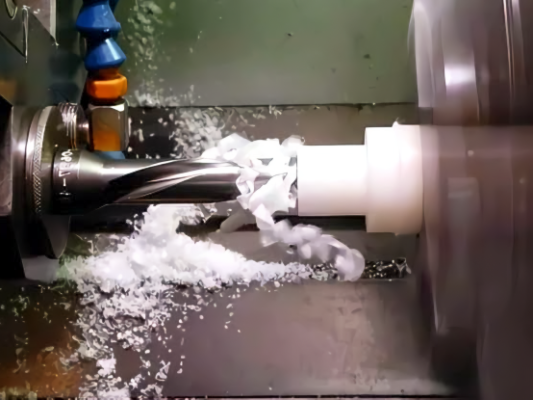
Inspection evidence is part of scope: NIST describes testing, inspection, certification and supplier declarations as distinct conformity-assessment activities. State which evidence the RFQ requires so suppliers do not price different assumptions.
Before sending files: the current popup hasn’t been verified for file upload or restricted-data handling. Use it to start the discussion; Zhenling should confirm the accepted file channel, completeness check and quotation scope afterward.
A buyer can then compare quote exclusions as carefully as the unit price. If one offer includes material evidence, inspection records or export packing and another does not, they are not equivalent offers.
Supplier qualification
How to Evaluate an ABS Machining Supplier
A supplier can own CNC machine tools and still lack public proof for one material, part geometry or control plan. Zhenling’s supplied profile describes a machining factory and international business, but its current public pages don’t verify ABS project records, certificate scope or plastic-specific shop controls.
Evidence is layered: NIST separates supplier declarations, testing, inspection, certification and management-system assessment. ISO’s ISO 9001 overview also concerns a management system, so a certificate cannot be treated as proof of a particular machined ABS part.
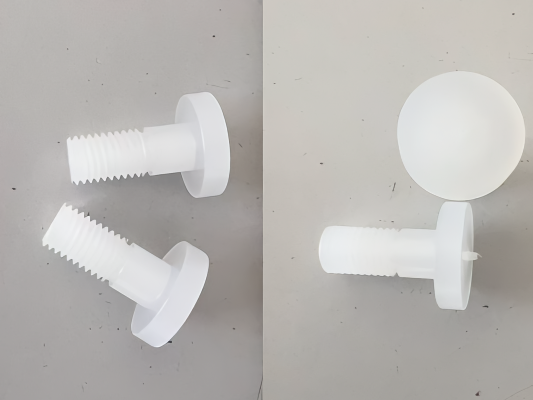
Capability Evidence Board
| Evidence layer | What to request | What it does not prove |
|---|---|---|
| Supplier statement | Named process, location, responsible contact and written scope | Finished-part conformance |
| System or third-party file | Issuer, holder name, standard, scope, status and expiry where applicable | ABS grade, tolerance or inspection result for your order |
| Machine and process evidence | Relevant equipment, workholding, chip/dust control and operator process | A fixed tolerance or surface on every geometry |
| Project record | Approved revision, material evidence, sample result and agreed inspection scope | Performance in an unstated end-use environment |
| Delivery record | Packaging, labels, documents, destination and exception process | A guaranteed date outside the accepted quotation |
TECHNICAL ENGINEERING TOOLS
Procurement questions
ABS CNC Machining FAQs
Can ABS be CNC machined?
A thermoplastic like ABS can be cut by CNC methods, but machinability and the final result depend on the commercial grade, stock form, geometry, tool condition, heat and acceptance method. Zhenling must confirm the proposed material and drawing before committing to the route.
Is machining ABS plastic the same as machining metal?
No. Heat behavior, chip formation, clamping response, burrs, surface marks and dimensional state need plastic-specific review even when similar machine tools are used.
Why might a machine shop decline a complete-looking 3D model?
A complete 2D requirement should identify datums, threads, critical tolerances, visible surfaces and revision status. A model can define shape without defining acceptance.
What makes two CNC quotes impossible to compare?
Material grade, revision, quantity, tolerance, surface, inspection, packaging and delivery must share the same scope. The lowest price may exclude evidence or handling that another supplier included.
What tolerances can Zhenling hold on machined ABS parts?
There’s no verified universal tolerance for this page. Submit the geometry, critical dimensions, datums, grade and measurement condition so capability can be checked for the project.
When should I compare CNC machining with injection molding or 3D printing?
Compare them when design maturity, demand, target material state, change cost, feature access or validation needs could alter the business case. Don’t use a generic volume threshold without matching the whole part and approval scope.
What should an ABS machining RFQ include?
Provide the current model and drawing, revision, commercial grade or equivalency rule, quantity, critical features, surface, inspection, packaging and destination. Use the contact form to confirm the accepted file-transfer method before sending files.
Does Zhenling have verified ABS certifications or case records?
Not on the current public site. Ask for certificate scope, validity and ABS project evidence that can be tied to your proposed material, process and quality requirements.
![Shop-Floor Carbon Steel CNC Machining Guide [2026]](https://zhenlingmetal.com/wp-content/uploads/2026/08/carbon-steel-cnc-machining-handbook-r2-featured-150x150.png)