Get in touch with Zhenling Company

Custom CNC Parts · Surface Finishing
Sand Blasting Services for CNC Parts
We supply sand-blasted CNC parts when scale removal, surface cleaning, coating preparation, or a controlled matte texture is part of a drawing-to-finished-component project. Before confirming the finishing route, we review the material, starting condition, required outcome, protected features, and acceptance method. Sand Blasting Services enquiries should include available media, substrate, prohibited conditions, target surface profile and follow-on coating requirement. Treat capability and timing as provisional. Written terms should identify the reviewed route, limits, records and released-part assumptions.
- Steel, cast iron, and aluminum
- Standard media: glass bead; aluminum oxide or fused alumina; garnet; plastic media where suitable; and steel shot or steel grit only for ferrous parts without an iron-contamination prohibition
- Drawing-led masking review
- Machining-to-finish coordination
Part scope
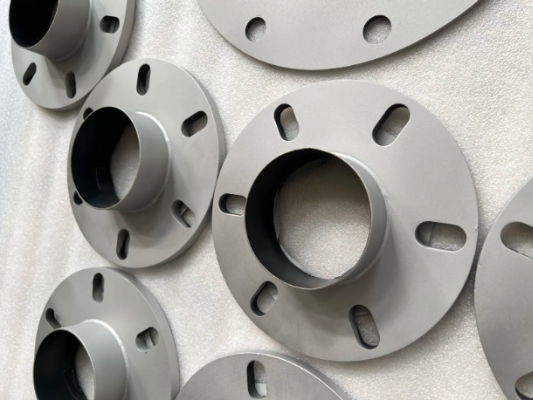
Custom machined steel, cast iron, and aluminum components
Primary outcomes
Remove scale, strip a defined layer, prepare for coating, or create texture
Risk controls
Mask threads, fits, datums, bores, sealing faces, and markings
Quote basis
Drawing, quantity, part envelope, initial surface, and target outcome
Acceptance basis
Written visual limit, approved sample, comparator, or named standard
Supply model
Machining and finish requirements managed as one custom-part package
PROCESS SPECIFICATIONS
Sand Blasting Capabilities for CNC Parts
A blast service can clean metal more aggressively than manual sanding and create a consistent visual result when the inputs and acceptance reference are controlled. For finished CNC parts, the finishing solution also needs to protect functional geometry that a general commercial cleaning job may not treat as critical.
01
Scale and oxide removal
Identify mill scale, heat scale, rust, or oxide by location and severity. State whether the goal is full removal, preparation for inspection, or a defined condition before paint or coating.
02
Texture creation
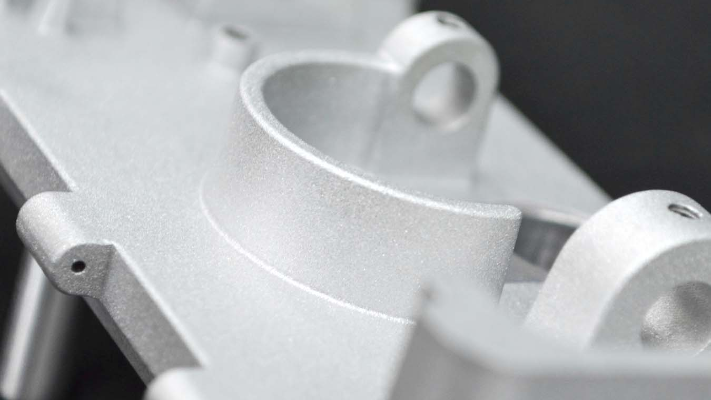
Use a representative image, approved sample, or comparator to define the finish. Words such as smooth, rough, clean, or uniform do not create a measurable acceptance limit by themselves.
03
Coating preparation
Name the coating or powder coating system and the surface preparation it requires. For applicable steel substrates, identify the required preparation grade under the selected standard.
04
Defined layer removal
Show the paint, coating, contamination, or residue that must be removed. Our review distinguishes removable surface material from base-metal features that must not be altered.
Our professional review confirms abrasive blasting services for CNC parts from the actual drawing and condition, not from the service name alone. Universal pressure, media, or cycle recipes are not published because each component needs its own review.
PROCESS SPECIFICATIONS
Materials and Starting Surface Conditions
Material identity changes how an abrasive interacts with the part, so steel, cast iron, and aluminum do not enter review under one generic setting. Add the alloy or grade, heat-treatment state, weld condition, previous finish, contamination, and any face that must remain as machined.
Published item
Our stated scope
Finish-review implication
Carbon steel
20# and 45#
State scale, rust, coating, or texture objective by surface.
Structural and alloy steel
Q235A and Q345D
Show the starting condition and downstream coating requirement.
Cr-Mo and bearing steel families
12CrMoV, GCr15, 25CrMo, and 42CrMo
Confirm hardness, protected geometry, and acceptance method.
Stainless steel
303, 304, 304L, 316, 316L, and 321
Review contamination control and the required final appearance.
Standard service route
Drawing-defined CNC and finishing review
The written quotation confirms the proposed route and responsibility.
Processing responsibility
Confirmed in the written quotation
Processing site and equipment responsibility remain order-specific.
For high-temperature, corrosive, or pressure service, we review material and hardness requirements against the operating environment. The selected finish must remain compatible with that material decision.
Steel
Define rust grade, scale, prior coating, heat tint, and the surface condition expected after removal. If an ISO 8501-1 grade applies, place it on the controlled drawing or purchase specification.
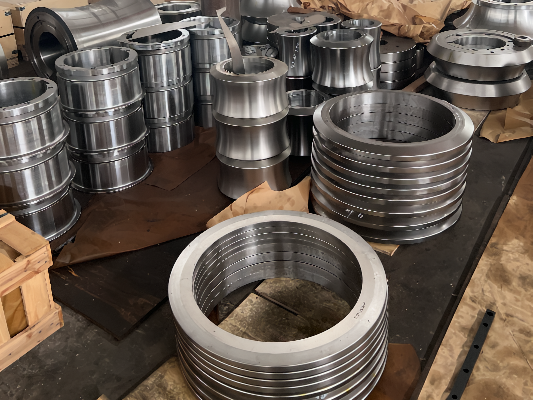
Cast iron
Identify casting skin, oxide, embedded contamination, porosity concerns, and machined faces. Protect sealing surfaces and precision bores before blasting.
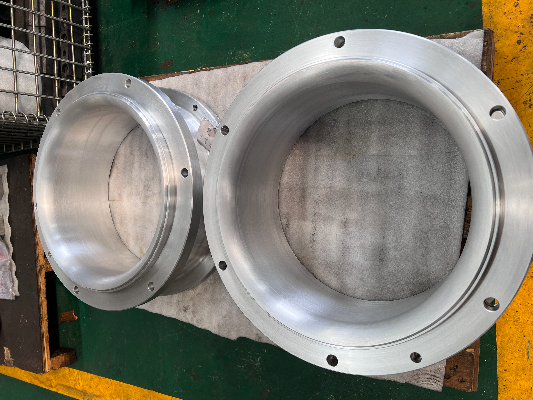
Aluminum
Aluminum needs a substrate-sensitive review because aggressive treatment can change appearance or damage delicate geometry. The trade-off between removal and preservation is resolved after the material, part shape, required texture, and protected features are known.
PROCESS CONTROL
Abrasive Media and Surface Outcomes
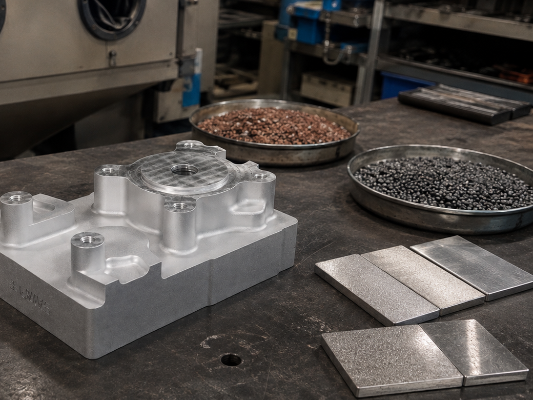
Zhenling’s standard blast-media scope includes glass bead, aluminum oxide or fused alumina, garnet and application-suitable plastic media. Steel shot or steel grit is limited to ferrous parts where iron contamination is not prohibited; free-crystalline-silica and quartz sand are not default media. For stainless steel, aluminum, titanium or copper with an iron-contamination prohibition, do not use iron-based media; the written quotation confirms media, target surface, protected areas and follow-on coating requirements.
Buyer goal
Inputs that control the route
Acceptance to define
Remove scale or rust
Material, initial severity, geometry, areas excluded from removal
Permitted residue, visual grade, or approved reference
Prepare for coating
Coating system, required surface preparation, cleanliness, timing
Named standard for the applicable substrate, coating specification, or agreed comparator
Create a matte finish
Material, starting roughness, visual direction, batch consistency
Approved sample and protected-face boundary
Clean before inspection
Contamination type, inspection method, inaccessible areas
What must be visible and what cleaning follows
Blast Outcome Control Map: move from material sensitivity → starting surface → required outcome → protected features → acceptance reference. This sequence helps prevent the common mistake of choosing grit or sand first and defining the result later.
Open the Outcome Control Map
PROCESS & SPECIFICATIONS
Drawing Controls, Masking, and Service Specifications
Threads, precision bores, datums, bearing seats, sealing faces, mating surfaces, identification marks, and finished dimensions can require protection. Mark them on the drawing instead of relying on a general note such as “mask critical areas.”
Protected-feature schedule
Assign an identifier to each face, thread, bore, fit, or mark that must not receive the abrasive stream. Define its required post-finish condition.
Boundary definition
Show where the blasted surface ends and the as-machined surface begins. Add an approved edge transition when appearance or assembly depends on that boundary.
Post-finish inspection
State which dimensions, fits, and visual areas need inspection after the finish. Include the measurement state when restraint or temperature can influence the reading.
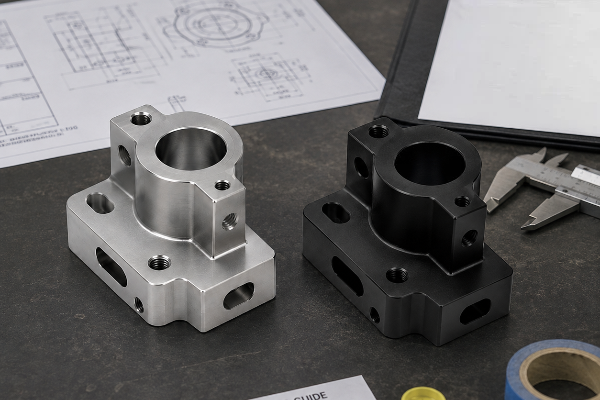
- Current drawing revision and part number
- Material grade and starting surface condition
- Protected features with clear boundaries
- Target texture, removal level, or coating preparation
- Approved sample, comparator, or named acceptance reference for the applicable substrate
- Cleanliness, handling, packaging, and traceability needs
COMMERCIAL SPECIFICATIONS
Pricing and Lead Times
Sand blasting cost and delivery timing depend on the part, not only on its outside dimensions. A quotation must account for starting-condition severity, accessible area, masking work, batch quantity, handling, inspection, cleaning, packaging, and the next operation.
Our quotation states the confirmed route, included operations, commercial assumptions, inspection scope, and schedule. Response times and production lead times are confirmed only after we review the project.
Price drivers
- 01 Part envelope, weight, and handling method
- 02 Removal load and required finish
- 03 Protected-feature count and masking complexity
- 04 Batch size, repeatability, and inspection scope
Schedule drivers
- 01 Drawing and acceptance readiness
- 02 Machining, welding, and heat-treatment sequence
- 03 Approved-sample or first-piece review
- 04 Post-blast cleaning, coating, inspection, and packing
QUALITY ASSURANCE
Surface Quality Control
A sound inspection plan separates cleanliness, texture, protected-feature condition, and dimensional acceptance. For applicable uncoated or previously coated steel substrates, ISO 8501-1:2007 provides written and photographic rust and preparation grades, but the buyer must still name the required grade and inspection scope.
ISO and AMPP-linked cleanliness systems use different grade language. Name the exact system in the RFQ rather than assuming that labels from separate standards are interchangeable. That is the mistake our inspection plan is designed to prevent.
Inspection rule: the risk is a disputed surface because broad words do not define the evidence needed for acceptance. At Zhenling, we close that gap by tying the drawing, approved sample, and inspection point to a named requirement such as ISO 8501-1:2007 when that standard fits the steel scope.
01 Before blasting
Record the material, starting surface, drawing revision, and protected areas. Where condition varies across a batch, identify the worst representative part.
02 During route approval
Confirm what the process may remove and what it must preserve. Align the route with the coating, paint, assembly, or inspection that follows.
03 After blasting
Check the agreed visual or standard reference, masking boundaries, protected features, and cleanliness. Perform dimensional verification where the drawing makes post-finish inspection mandatory.
04 Handoff control
Keep cleaned parts away from contamination and moisture that can compromise the next operation. Packaging and maximum handoff time should be stated when they matter to the coating system.
APPLICATIONS & CAPABILITIES
Parts We Review: Finished CNC Parts and Industry Applications
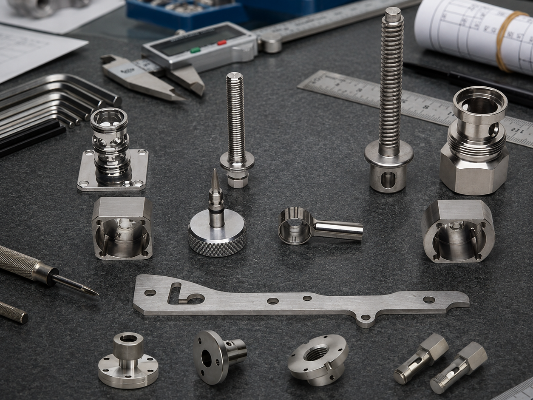
Zhenling’s standard service scope includes or can access CNC turning, milling, grinding, boring, wire-cut EDM, drilling, 3-axis, 4-axis and 5-axis machining, together with supporting fabrication routes for non-standard parts made from customer drawings or samples. The written quotation confirms the proposed route, processing responsibility and execution site without asserting equipment ownership or a specific equipment brand.
01 Pressure-vessel components
Custom flanges, valve bodies, plugs, bent-pipe components, and related machined parts can require cleaning or coating preparation within a controlled supply package.
02 Oil-gas separation equipment
Our component review covers scale removal, visual preparation, and protected-feature control before assembly and inspection.
03 Fluid-control parts
Sealing faces, fits, bores, and identification areas must be separated from any surface that receives a blasted texture.
Surface-Condition Review: send a representative part photo and identify the surfaces that matter. From that package, we list the additional surface information needed for quotation without treating the photo as a numerical specification.
Request a Surface-Condition Review
PROCESS EVALUATION
Process Limits and Better Alternatives
More aggressive blasting is not automatically better for a finished CNC part. The correct choice is the least risky process that reaches the required removal or preparation outcome without compromising material, geometry, cleanliness, or the next operation. ISO 8504-2 describes blast-cleaning methods; ISO 11124 covers metallic abrasives; ISO 11126 covers non-metallic abrasives; ISO 8501-1 covers steel surface-preparation grades; and ISO 8503 covers steel surface profile. These references define specified technical context and do not establish a Zhenling certification.
01 Keep a machined or polished surface
If appearance, sealing, bearing contact, or dimensional function depends on the as-machined surface, blasting can be the wrong choice unless that face is protected. Grinding or polishing may be more appropriate when a directional or low-roughness finish is required.
02 Remove soluble contamination
Abrasive treatment is not a substitute for every cleaning step. Parts washing or another approved cleaning method may be needed before or after blasting, depending on the contaminant and next operation.
03 Work on delicate geometry
Thin walls, sharp edges, fine threads, deep passages, and sensitive aluminum features need special review. Chemical stripping, controlled mechanical cleaning, or another route may reduce risk in specific cases.
04 Use another industrial preparation method
Grit blasting is not always the right preparation method. Depending on the substrate and required outcome, we may review wet blasting, parts washing, controlled mechanical cleaning, chemical stripping, or another suitable route.
ENGINEERING RESOURCES
Sand Blasting Evaluation Tools
Sand Blasting RFQ Readiness Score
Evaluate part envelope, starting conditions, drawing controls, and specification completeness.
Open Tool
→
Blast Outcome Control Map
Map material sensitivity against required surface outcomes and acceptance references.
Open Tool
→
Masking Complexity Estimator
Evaluate protection requirements for threads, precision bores, datums, and sealing faces.
Open Tool
→
Request a Sand Blasting Drawing Review
Use the checklist below to turn a general sand blasting enquiry into a reviewable CNC-part RFQ. Our quotation confirms the applicable manufacturing and finishing scope.
[01]
Attach
- Current 2D and available 3D files
- Part photos showing the starting surface
- Material grade and quantity
- Target date and destination
[02]
Mark clearly
- Surfaces to blast and surfaces to protect
- Threads, fits, datums, sealing faces, and bores
- Removal, texture, or coating-preparation goal
- Acceptance and inspection requirements
KNOWLEDGE BASE
FAQs: Sand Blasting Services
Send the current drawing, material grade, starting surface, target result, protected features, quantity, part envelope, acceptance basis, next operation, and delivery scope. Photos help when the initial condition is difficult to describe.
Our review covers sand-blasting requirements from grade, condition, geometry, required outcome and protected features. Standard media can include glass bead, aluminum oxide or fused alumina, garnet, application-suitable plastic media, and ferrous-only steel shot or grit where iron contamination is permitted; free-crystalline-silica and quartz sand are not default media.
Start with the required outcome and substrate. Before route confirmation, identify any iron-contamination prohibition, mask threads, sealing faces, bearing or mating surfaces, datums and critical dimensions, and submit thin walls, sharp edges, precision surfaces, unknown old coatings or regulated clean-use scenarios for drawing or sample review.
Any aggressive surface treatment can create risk at sensitive geometry, so critical features should be masked and identified for post-finish inspection. A blanket dimensional guarantee is not offered without drawing review.
Use an approved sample, comparator, representative photo with limits, or another controlled reference. Also define the boundary between blasted and as-machined surfaces.
No single process is best for every material, contaminant, geometry, and coating system. Name the coating requirements and let the review compare the removal target, profile need, cleanliness, and substrate risk.
![Shop-Floor Carbon Steel CNC Machining Guide [2026]](https://zhenlingmetal.com/wp-content/uploads/2026/08/carbon-steel-cnc-machining-handbook-r2-featured-150x150.png)