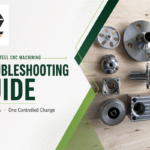
Robotics CNC Machining

Industrial Robot Parts CNC Machining Services

Robot-parts CNC machining refers here to RFQ review for drawing-defined mechanical components used around industrial robots; it is not the use of a robot to operate a CNC machine and does not establish Zhenling robotics project history. Define actuator, gearbox, end-effector, chassis, bracket or shaft interfaces against the intended assembly role. Robotics CNC Machining enquiries should include joint housings, reducer or end-effector interfaces, backlash or concentricity requirements and assembly acceptance. Schedule depends on the released inputs. Check route, limits, inspection evidence and exclusions before treating any date as firm.

Start with a non-sensitive summary of the project. Before sending drawings that contain customer intellectual property or export-controlled information, confirm the approved transfer route and authorization.

Industrial Robot Parts CNC Machining Services
  • Quote response Quotation timing is confirmed after RFQ review.
  • Prototype schedule Prototype schedule is confirmed in the written quotation.
  • Production schedule Production schedule is confirmed after quantity and route review.
  • Order quantity Minimum quantity and single-piece availability are confirmed per quotation.
  • Standard payment Payment method, deposit and balance timing confirmed in the written quotation.
  • Delivery terms Incoterm, destination and freight responsibility confirmed in the written quotation.
  • File formats STEP or IGES models with PDF, DWG, or DXF drawings.

CNC Machining Scope for Custom Robot Parts

Company-supplied profile information lists made-to-print metalworking and turning, milling, grinding, boring, drilling, wire-EDM and multi-axis equipment categories. Actual equipment, production site and availability must be confirmed for the order; any ASME Y14.5 drawing controls remain buyer-specified requirements.

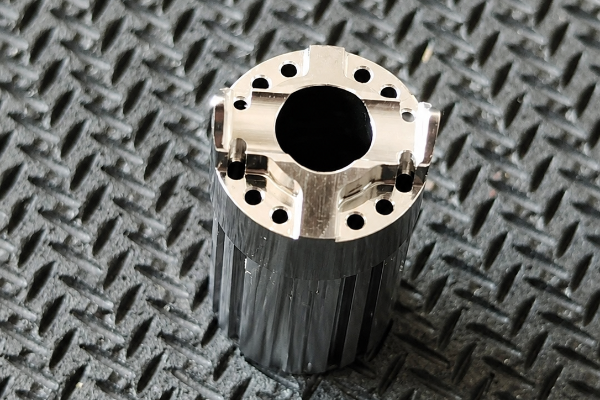
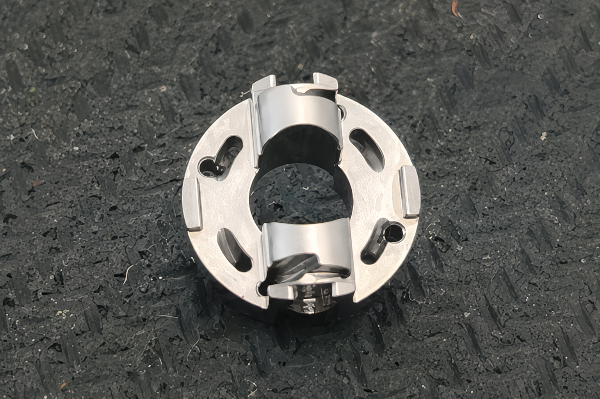
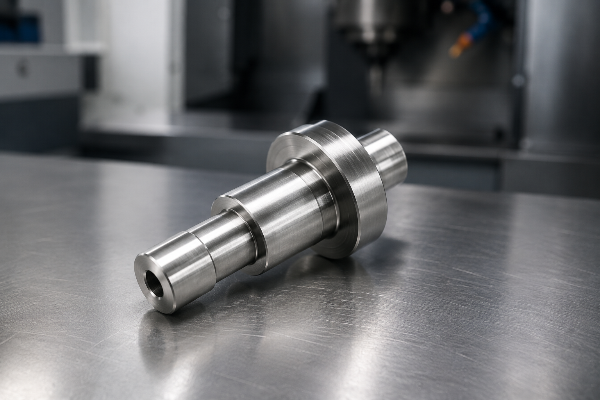
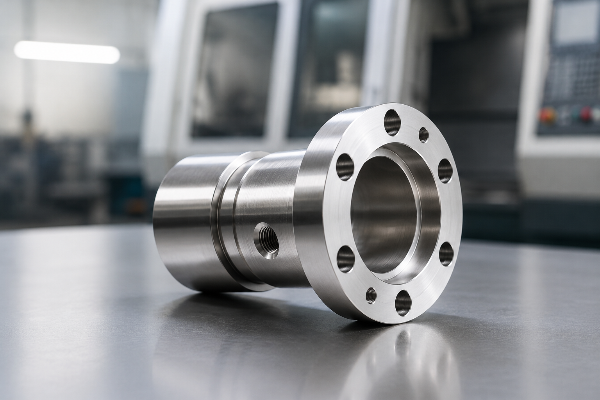
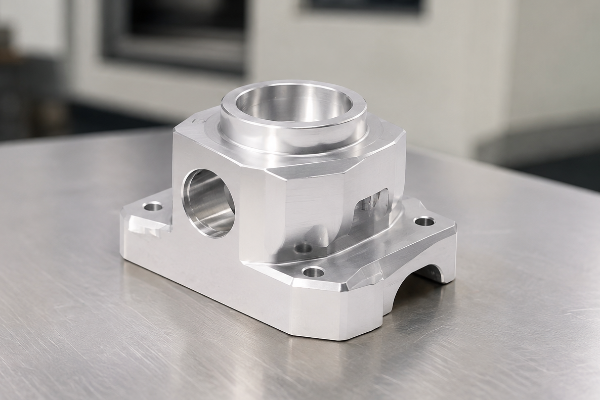
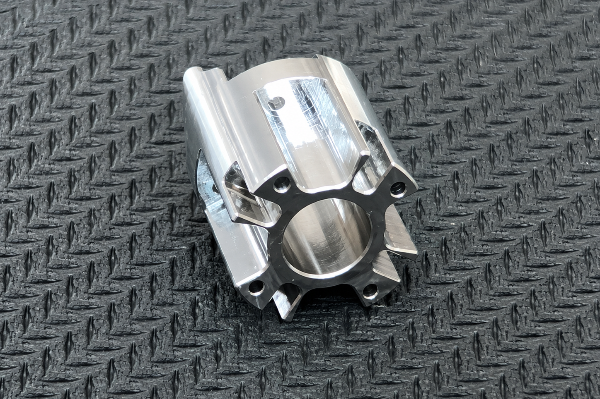
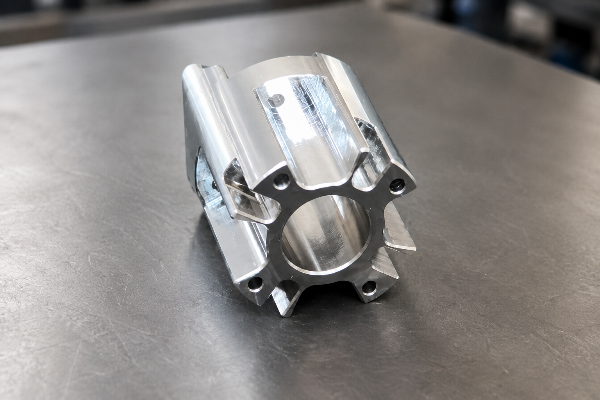
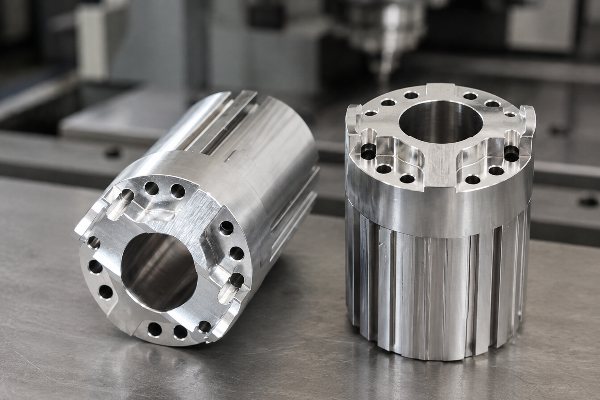
Illustrative custom-machined metal component geometry

Actuator and joint housings

During interface review, we examine bearing seats, motor or reducer interfaces, covers, wiring routes, and mounting faces as one chain. The motion axis comes first because apparently simple geometry can still create multi-face setup and verification work.

Gearbox components and shafts

Gearbox parts may connect shafts, bearings, seals, gears, motors, and output flanges. Our scope assesses the supplied metal part definition, while gear design, bearing selection, heat treatment, and system performance remain controlled by the buyer’s approved engineering requirements.

End-effector parts

Task-interface review covers tool plates, gripper bodies, fingers, brackets, adapters, and sensor mounts. For that review, we ask for flange location, fastener access, cable or air routing, edge condition, collision envelope, and the load path.

Robot chassis and structural components

For chassis work, we review frames, wheels, motor mounts, camera brackets, and mobile-platform hardware against stiffness, mass, access, and assembly needs. Clear fixture references also help separate machined parts return to the same system definition.

Robotics terminology and scope

In the robotics industry, custom robotic parts and robotic components serve many types of robots, but we review the metal component rather than the complete robotic arm or robot arm. A CNC robot is a different automation system; our scope is part manufacturing on a CNC machine.

SYS.RDY // CNC_CORE

Machining route review

  • CNC milling for prismatic faces, pockets, mounting patterns, and complex geometries
  • CNC turning for shafts, sleeves, wheel features, and rotational hardware
  • CNC machine selection follows the defined interfaces, access, and setup logic
  • Multi-axis machining when several interfaces must be reached with fewer reorientations
  • Grinding, boring, drilling, and wire-cut EDM considered where the drawing makes them relevant
Treat a robot-part definition as ready for review when the motion role, controlling revision, datum structure, assembly interfaces and validation question agree.
Robotics RFQ review note Process Review

Material Questions for Robot Part Drawings

Our routine manufacturing range includes aluminum alloys, carbon and alloy steels, stainless steels, nickel-based alloys, and other special metals. Material review considers the grade, condition, application, and finish together rather than approving a family name alone. Profile-method surface texture remains a separate drawing input under ISO 21920-1:2021.

Aluminum alloy material

Aluminum alloy

01

Questions for drawing review

Grade, temper, load path, threaded interfaces, wear surfaces, corrosion exposure, and finish requirement

Trade-off to expose

Lower mass buys easier motion, while contact wear, thread durability, stiffness, and coating compatibility may control the final choice

Carbon or alloy steel material

Carbon or alloy steel

02

Questions for drawing review

Exact grade, delivery condition, heat treatment, hardness zone, stock form, and corrosion protection

Trade-off to expose

Strength and wear resistance can add mass, heat-treatment distortion, grinding, or coating work

Stainless steel material

Stainless steel

03

Questions for drawing review

Grade, corrosion media, magnetic behavior, galling risk, weld or assembly condition, and surface requirement

Trade-off to expose

Corrosion resistance is not a substitute for the correct wear pair, fit, or hardness

Special alloy material

Special alloy

04

Questions for drawing review

Service temperature, chemical exposure, approved specification, traceability need, machining condition, and substitution rule

Trade-off to expose

Material availability and machining process may dominate lead time and cost

Surface and Edge Inputs for Assembly Review

For each surface finish callout, we check the functional surface, direction of lay where relevant, measurement basis, and relationship to post-processing. If the drawing invokes ISO 21920-1:2021, that edition and its profile-method surface-texture language become part of the buyer-controlled technical definition.

Functional surfaces

Identify bearing seats, seal paths, sliding contacts, datum simulators, clamp faces, and optical or sensor interfaces.

Edges and burrs

State edge breaks, protected sharp edges, thread starts, cross-holes, and any zone where a burr could enter a bearing, gearbox, cable path, or clean assembly.

Post-processing

Define coating, masking, hardening, polishing, cleaning, marking, and the drawing dimensions that apply before or after treatment.

Drawing-Definition Inputs Before Quotation

A CNC machine can still return an out-of-tolerance part when the drawing leaves the functional condition ambiguous. Before quoting, we look for that risk because programming cannot resolve an unclear requirement. When the drawing invokes ASME Y14.5, ISO 5459:2024, or ISO 1101:2017, we read its datums, location, orientation, form, and run-out requirements in the stated system.

Robotics CNC Machining project scope review
# Definition Input What the Scope Review Needs Why It Matters
01 Application Ordinary industrial use, operating environment, duty, and project criticality Separates a standard industrial review from regulated, safety-critical, aerospace, medical, defense, or export-controlled qualification
02 Motion role Rotational, linear, structural, locating, or tool-interface function Connects manufacturing precision to what the robot component must actually do
03 Drawing package The controlling 2D drawing, 3D geometry, revision, and conflict precedence Prevents a CNC program, inspection plan, or part production decision from using a stale definition
04 Datum system Functional datum features, order of precedence, and any setup or assembly relationship Controls how location, orientation, and repeatable measurement are established
05 Interfaces Bores, shafts, bearing seats, mounting faces, threads, dowels, flanges, gears, seals, and cable routes Focuses tight tolerances on the features that close the assembly chain
06 Surface state Material condition, heat treatment, coating, roughness, edge, cleaning, and marking requirements Shows when a dimension or surface is accepted in the manufacturing sequence
07 Acceptance evidence Required analysis, demonstration, inspection, test, sampling, condition, and report content Links each critical requirement to objective evidence instead of a generic quality-control claim
08 Quantity and stage Prototype, pilot, production, replacement, or revision; quantity band and requested date Shapes fixture, machine, material, inspection, and schedule choices

Precision is feature-specific

High precision is a drawing requirement tied to the functional interface, datum system, material condition, and verification method—not a standalone label for every feature.

Request a Project Scope Review

Robot Part Pricing & Lead-Time Factors

Custom robot part pricing starts with our defined manufacturing scope rather than a stocked catalog. Each quotation accounts for material, geometry, setup count, tolerances, quantity, tooling, inspection, post-processing, packaging, and the requested date.

Definition completeness

Cost/Time Impact

Conflicts and missing acceptance rules stop reliable planning

Required Action

Name the controlling revision and resolve 3D-geometry-versus-drawing precedence

Robotics CNC Machining Definition

Functional precision

Cost/Time Impact

Tight interfaces can add setup, fixture, machine, and verification work

Required Action

Control the functional features instead of applying tight tolerances to every surface

Robotics CNC Functional Precision

Material and condition

Cost/Time Impact

Stock form, heat treatment, hardness, distortion, and availability change the process route

Required Action

State grade, condition, substitution rule, and required records

Material and condition

Quantity and change stage

Cost/Time Impact

One prototype, a pilot kit, and repeat part production spread setup work differently

Required Action

Give the quantity band, annual demand context, and expected revision stage

Quantity and change stage

Inspection and finishing

Cost/Time Impact

Method, sampling, report content, coating, masking, and outsourcing add separate operations

Required Action

Define what must be confirmed in writing before release

Inspection and finishing

Commercial scope review

The lowest quote is not necessarily the lowest project risk when material, revision, acceptance evidence, or finishing scope is missing. The project review should close those inputs before price, lead time, order quantity, delivery terms, or inspection documents are treated as agreed.

Initiate Review

Inspection Requirements to Define Before Order

Quality planning starts with a measurable requirement and a stated acceptance method. If the datum, measurement condition, or required evidence is absent, we cannot plan reliable verification even when an isolated feature size appears acceptable.

Feature-level requirement

  • Feature and requirement identifier
  • Datum reference and material condition
  • Measurement or test method
  • Sampling or coverage expectation
  • Temperature, support, or assembly condition

Evidence-level requirement

  • Result format and unit
  • Drawing revision shown on the record
  • Material or process document requested
  • Disposition path for a nonconforming result
  • Approval owner before a batch proceeds

Inspection scope and order records

First-article or dimensional inspection scope is agreed during drawing review before production release. A dimensional or first-article inspection report ships when it is specified with the order.

Method follows the question

Analysis, demonstration, inspection, and test answer different questions; one route is not always sufficient or universally required. For each project, you define the evidence that releases the component, and we confirm the proposed method and record scope.

Robotics CNC Machining quality inspection

Project Inputs from Prototype Review to Production Release

ASME Y14.41 addresses the preparation and revision of digital product-definition data. For each build, we ask for a controlling drawing package, a clear validation question, and a recorded change decision.

Robotics CNC Machining for Prototype Review and Production Release
01

Non-sensitive introduction

share the part family, industrial application, development stage, quantity band, and target date; flag controlled data without sending it.

02

Definition alignment

we work from STEP or IGES models with PDF, DWG, or DXF drawings; name the controlling file, revision, conflict precedence, material, motion role, datums, and interfaces.

03

Scope review

compare the definition with the material route, machining process, setup sequence, finishing inputs, and verification requirements.

04

Prototype question

decide whether the build must validate fit, motion, load, wear, environment, appearance, or a combination.

05

Evidence and change decision

record what passed, what remains open, what changed, and which definition controls the next stage.

06

Production release

proceed after the approved definition, quantity, commercial scope, acceptance route, and delivery responsibilities agree.

Motion–Datum–Interface Definition Brief

Brief field Decision it supports
Application and criticality Sets the qualification boundary and excluded regulated categories
Motion role Connects the component to force, alignment, travel, or structural function
Authoritative drawing package Names the controlling drawing, 3D geometry, revision, and conflict precedence
Controlled datums Establishes how the part is located for assembly and verification
Assembly interfaces Maps the bearing, gearbox, motor, tool, shaft, seal, sensor, bracket, or chassis connections
Validation evidence Defines what analysis, demonstration, inspection, or test closes the question

When the Project Is Not Ready for Quotation

A quotation pauses when missing inputs would force our assumptions into the price or schedule. Close the gap first, or ask us for a limited scope discussion before detailed pricing.

Readiness gap
What it costs you
Where to look instead
01 No controlling revision
Programming, fixtures, and parts can follow different drawing packages
Issue a controlled 2D-and-3D package and state conflict precedence
02 No exact material or condition
Stock, machining, heat treatment, surface behavior, and acceptance can change
Set grade, condition, approved substitution rule, and required documents
03 No functional datum or interface map
A part can meet isolated dimensions yet miss the assembly intent
Map motion, mounting, bearing, shaft, flange, thread, seal, and sensor relationships
04 No validation question
A prototype may look complete without proving fit, load, wear, or environment
Choose the evidence route before choosing prototype material or process
05 Regulated or controlled project not qualified
Ordinary industrial scope review cannot replace application-specific compliance, safety, data, or export controls
Complete the required project and supplier qualification before sharing controlled information

ALT_ROUTE // 001

Alternative prototype routes

3D printing, plastic models, soft tooling, or an assembly fixture may be the right call when the immediate question is access, collision, or envelope rather than production metal behavior. The trade-off is that a plastic prototype can answer an envelope question without replacing metal evidence for load, wear, temperature, or corrosion. CNC machining is the wrong call when another route answers the current question faster without hiding the remaining risks.

Robotics CNC Machining Engineering Tools

Access our specialized calculators and planners to accelerate your robotic component development and streamline the CNC manufacturing process.

01 ACTIVE TOOL

Robot Part RFQ Readiness

Evaluate your 3D CAD models and technical drawings against our CNC manufacturing tolerances. Generate a pre-machining readiness checklist.

Access RFQ Planner
02 ACTIVE TOOL

Motion Datum Interface Brief

Define critical datum structures for robotic joint components. Ensure precise alignment and kinematic accuracy for your precision assemblies.

Access Interface Brief
03 ACTIVE TOOL

Prototype Validation Evidence Planner

Map out required inspection reports, CMM measurements, and material certifications to validate your early-stage robotic prototypes.

Access Evidence Planner

Request a Project Scope Review

Send a non-sensitive summary of the part family, application, quantity band, material family, project stage, and main interface question. That summary lets us decide what definition and qualification information is needed for the next discussion.

Request a Project Scope Review

Check Project Readiness

NDA terms and the approved transfer route, access, retention, confidentiality and export restrictions must be agreed before covered or controlled files are shared.

Industrial Robot Parts CNC Machining FAQ

Submit Inquiry

No. Our machining scope covers physical parts for industrial robotics, such as housings, shafts, end effectors, brackets, wheels, and chassis hardware. It does not include robot programming, automation cells, cameras, controllers, or manufacturing robots that tend a mill.

Our team can review actuator or joint housings, gearbox components, motor mounts, shafts, sleeves, tool plates, gripper parts, structural components, brackets, and chassis hardware. This is not a blanket manufacturing or performance approval; we confirm the feasible scope against the submitted definition.

An actuator housing package should identify the motion axis, bearing and reducer interfaces, motor or output flange, mounting faces, datum order, fasteners, seals, cable routes, material condition, surface requirements, and acceptance evidence. Use ASME Y14.5 or the applicable ISO geometrical-product-specification language consistently across the 2D drawing and 3D geometry.

Datums establish how bores, faces, shafts, gears, bearings, and covers relate during assembly and verification. ISO 5459:2024 defines datum-system terminology, while the product engineer still has to choose the functional features and precedence for the specific robot component.

Sometimes. A substitute may validate fit, access, assembly sequence, or a visual envelope, but it is not a substitute for the release material when load, stiffness, low friction, wear, temperature, corrosion, or surface finish controls the result.

We ask you to place tight tolerances on the functional interfaces and define the datum structure, material condition, and verification method. A blanket precision callout can add machine and inspection work without improving dimensional accuracy, repeatable movements, or assembly performance.

Pricing review covers material, complex geometries, machine setup, fixture strategy, quantity, machining processes, heat treatment, surface roughness, finishing, inspection, packaging, and the requested date. Our comparison uses the written scope rather than price alone because a low quote can hide missing tolerance, machining-time, or inspection assumptions.

Start with a non-sensitive summary: part family, ordinary industrial application, project stage, quantity band, material family, target date, and the main motion or assembly role. Ask for the approved file-transfer path before sharing unreleased CAD, customer-controlled data, or export-restricted hardware information.

Prototype, pilot, replacement, revision, and production-stage definitions for non-standard metal parts can enter our review. The scope review determines the candidate CNC milling, CNC turning, precision CNC machining, or supporting process route and records the commercial and acceptance items that still need written agreement.