Get in touch with Zhenling Company

Acrylic (PMMA) CNC Machining Services for Custom Industrial Parts
Acrylic CNC machining fails for three reasons, and machine capability is rarely one of them. The sheet grade was never specified, the tolerance was never tied to a temperature, and the optical clarity requirement arrived after someone had already cut acrylic to the outline. Each of those is a drawing problem that becomes a scrap problem four weeks later. Acrylic PMMA CNC Machining enquiries should include sheet or cast grade, thickness, optical surfaces, edge finish, protective handling and inspection needs. Price is not the only output. Ask the quotation to name the proposed route, capability boundary, records and timing assumptions.
We take PMMA work to drawing at our Jiashan plant. Our documented production record is metal, not acrylic, and this page sets out exactly which parts of that record carry across and which have to be established for your order — stated before you send files, not discovered after a first article fails.
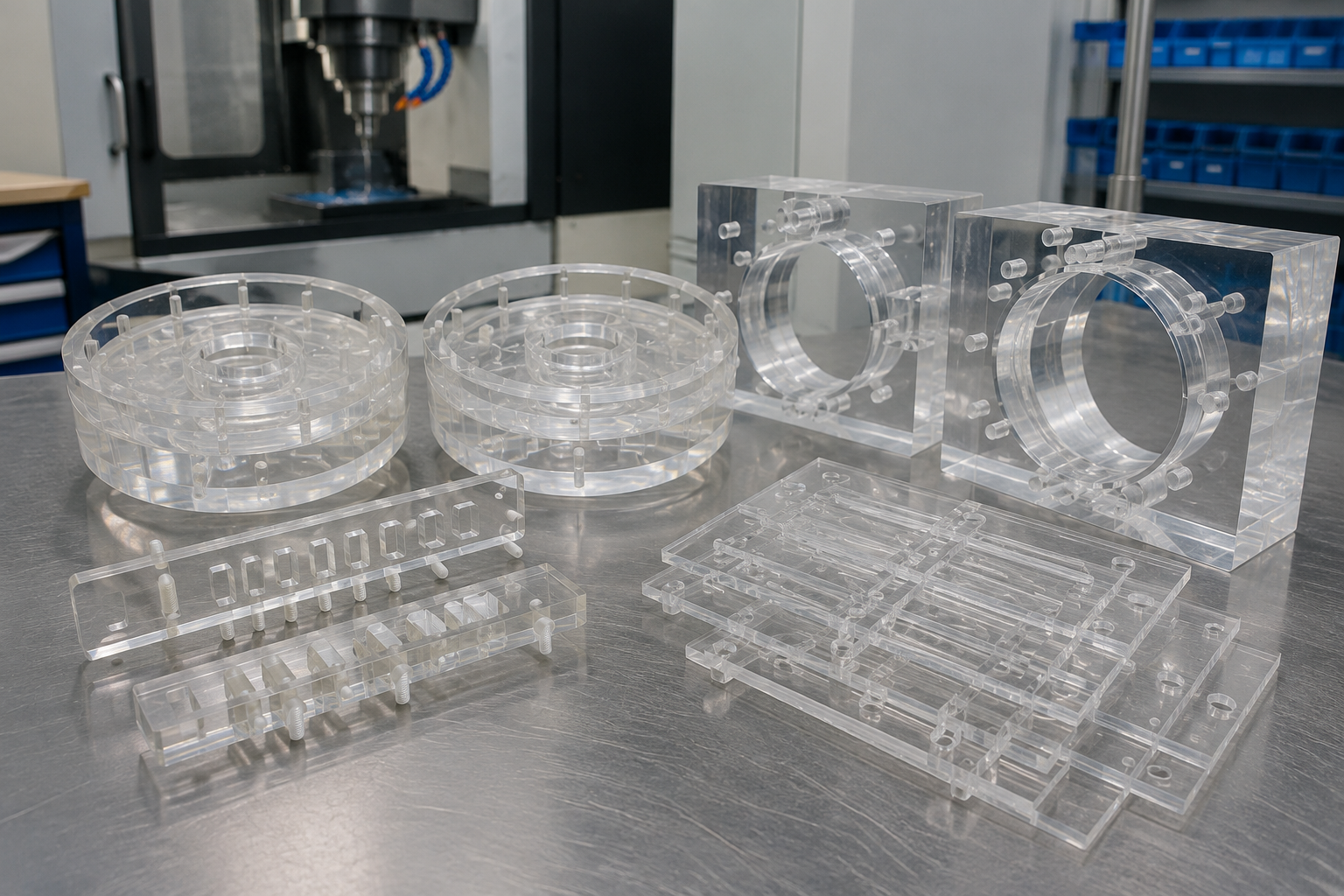
At a Glance — the six answers a buyer needs before sending files
-
Quoted per drawing
Industry-typical for custom work: pricing follows material, geometry, quantity and lead time rather than a fixed price list. The figure for your part comes back in a written quotation.
-
3–10 business days, prototypes
Industry-typical machining lead times: 3–10 business days for prototypes, roughly 1–3 weeks for small batches, 3–6+ weeks for production runs. Shipping is additional.
-
Single parts accepted
Single-part orders are the norm across custom CNC services, and most suppliers set no strict minimum order quantity on machined work.
-
±0.1 mm, industry-typical
Industry practice on machined PMMA sits around ±0.1 mm on general machined features. Tighter bands are assessed feature by feature at drawing review against a stated measurement temperature, and become a Zhenling figure only when they appear in a written quotation.
-
Quote in about 24 hours
Industry-typical quoting turnaround runs from instant automated quotes to engineer-reviewed quotes returned within about 24 hours on drawing-led work.
-
First-article inspection available
First-article inspection reports are a standard option across the industry, scoped per order. Sample charging and credit terms are settled in the enquiry.
Figures marked as industry-typical describe common practice among custom machining suppliers and are shown so you can sanity-check any quotation. They are not Zhenling commitments until they appear in a written quotation for your part.
Can Zhenling Machine My Acrylic Part?
Route selection comes from the drawing, not from the material name. A flat panel with bolt circles, a turned light-guide boss and a compound-angle housing are three different setups even when all three are cut from the same acrylic sheet.
Machining acrylic well is mostly a question of controlling heat and stress. A CNC machine removes material faster than PMMA can shed the heat that removal generates, so the cutter, the feed and the chip path decide whether you get a clean acrylic part or a melted one. Peer-reviewed milling studies on PMMA report that spindle speed, feed rate and cutting depth all measurably change machining temperature, surface roughness and chip morphology.7
FIG.01PMMA_OPTICAL_INSPECT
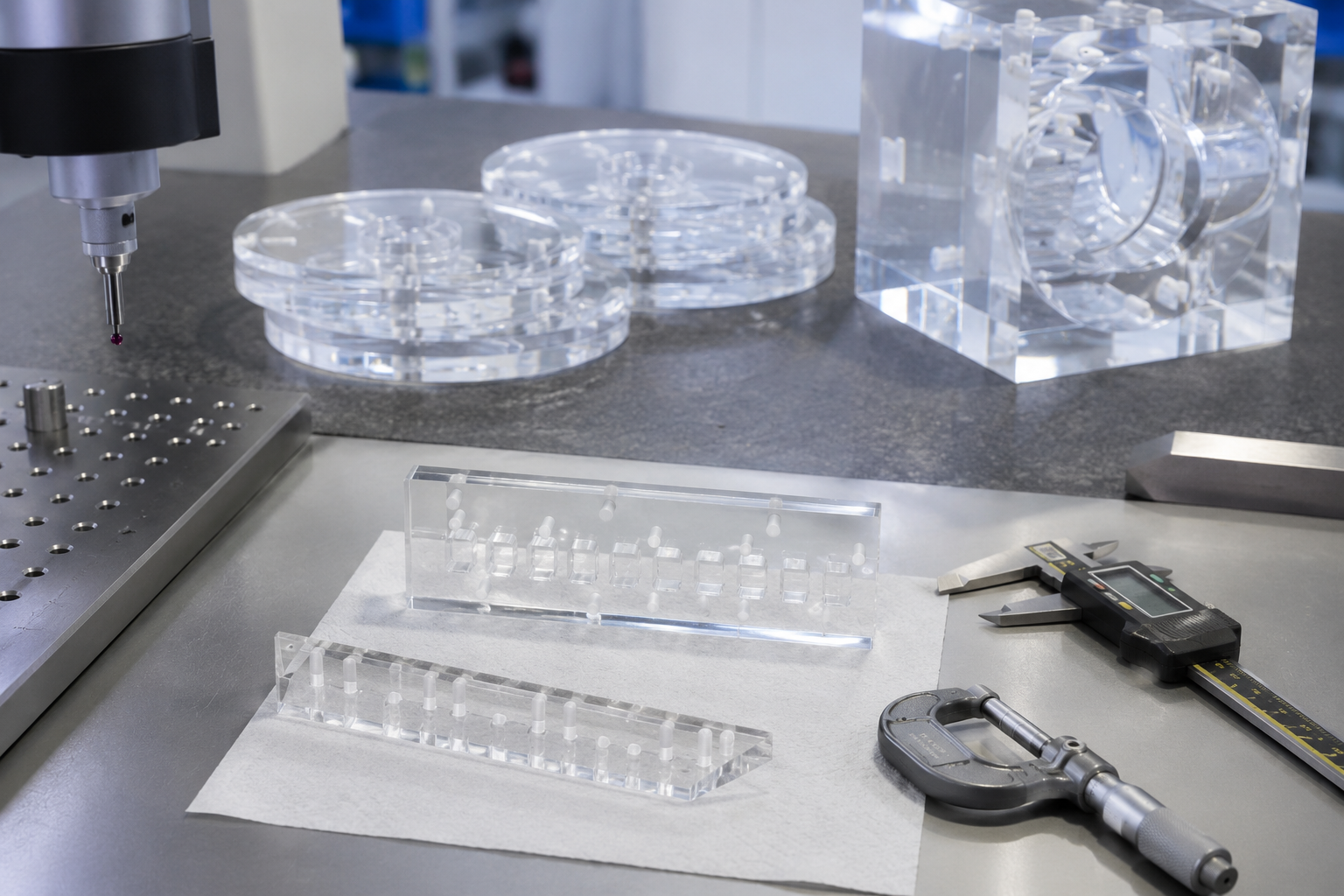
Jiashan Factory Processing Matrix
Running
CNC Milling
CNC Turning
CNC Boring
CNC Grinding
Wire EDM
Radial Drilling
3/4-Axis Centres
5-Axis Centres
This equipment list is real and it is ours. It also does not, by itself, promise any particular tolerance on your part. Process capability needs a defined specification, a stable process and observed data on the feature being made.
Part size depends on the travel and setup of the proposed machine, so state the overall envelope, thickest section and batch quantity. Drawing review confirms which machining centre and setup fit the part; minimum quantity is confirmed in the written quotation.
MATERIALSELECTOR.EXE
Stock-Decision Matrix
Almost every guide on acrylic milling gives the same instruction: always specify cast. On edge quality, solvent bonding and crazing resistance that instruction is correct. On the one dimension engineers actually put on drawings, it runs the other way.
Cast Acrylic Sheets≈ ±10%
Extruded≈ ±5%
Specification Rule
Extruded, when as-supplied thickness is functional
Cast Acrylic SheetsBelow 1%
Extruded1–3%
Specification Rule
Cast, for any viewed-through part above 6 mm
Cast Acrylic Sheets90–92%
Extruded88–91%
Specification Rule
Cast, for light guides and lenses
Cast Acrylic SheetsBonds to an optically clear joint
ExtrudedTends to craze around the joint
Specification Rule
Cast, without exception, for bonded assemblies
Cast Acrylic SheetsDiscrete chips, less gumming
ExtrudedSofter, more prone to melt and re-weld to the cutter
Specification Rule
Cast, for deep pockets and long cuts
Cast Acrylic SheetsHigher band
Extruded20–40% lower
Specification Rule
Extruded, for painted, laminated or hidden parts
On the waterjet row, kerf quality research ties the resulting edge to abrasive choice and operating conditions rather than to the process alone.9
Treat the ±10% and ±5% figures as typical published sheet values rather than acceptance limits. What a purchase order can enforce is the tolerance class in the governing sheet standard2 together with the specific mill datasheet, so name both rather than carrying a general comparison into a specification.
That is the trade-off in full: cast wins on everything you look through, extruded wins on the thickness you measure and the cost you pay. Naming the grade is not the same as specifying the material — ASTM D4802 separates cell cast material from continuously manufactured material and sets optical acceptance limits for the sheet itself.1
Process Route Matrix
Where acrylic CNC machining is the right route — and where it is not.
Thickness it suits3 mm to solid block
3D featuresPockets, bores, threads, compound angles
Thermal effectLocal heat at the cut, controlled by feed and chip clearance
Choose it instead…—
Thickness it suitsThin sheet, roughly up to 12 mm
3D featuresTwo-dimensional profiles only
Thermal effectHeat-affected edge with residual stress
Choose it instead…Your part is a thin cast sheet profile with a visible edge and no bores or pockets
Thickness it suitsThin sheet to thick plate
3D features2D profiles, limited inside-corner radius
Thermal effectNo thermal input at all
Choose it instead…The part is thick, thermally sensitive, and the edge will be hidden or post-finished
Thickness it suitsWall sections designed for flow
3D featuresDesigned-in features, no undercuts without side actions
Thermal effectMelt history built into every part
Choose it instead…The design is frozen and the annual quantity clears the tooling investment
Milling is not always the right answer for an acrylic part, and a supplier who never says so is not worth trusting on the cases where it is. Published CO2 laser research reports a measurable heat-affected zone on PMMA rather than none, with its extent driven by laser power and cutting speed.6
Typical acrylic parts and where they end up
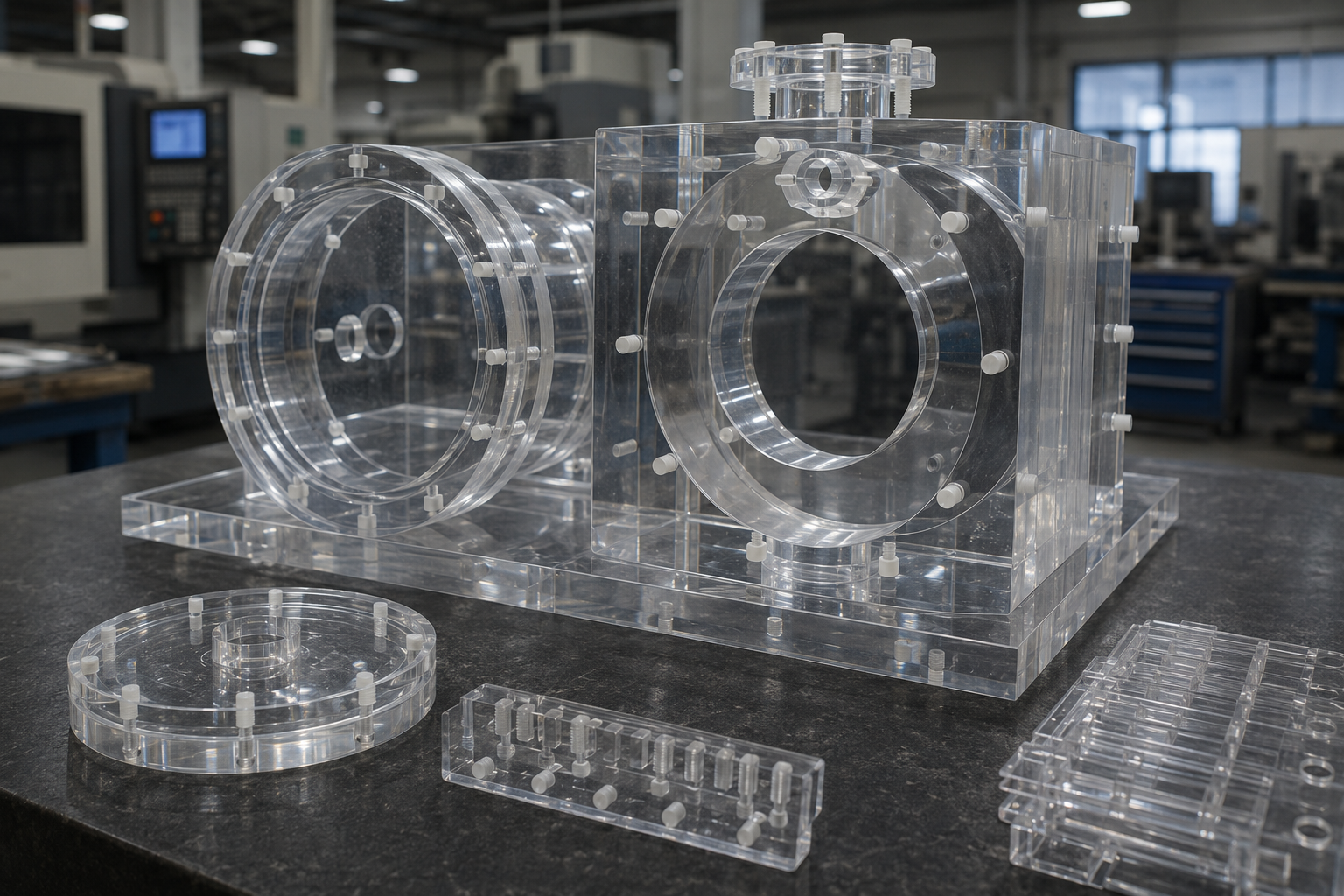
Optical windows and sight glasses, machine guards and safety panels, light guides and lamp covers, instrument panels and bezels, laboratory enclosures, and bored manifold blocks. Polymethyl methacrylate — PMMA, sold as acrylic — is specified as a lightweight alternative to glass across signage, lighting, automotive lens work and inspection windows.
Acrylic gives better optical clarity, surface hardness and UV stability than polycarbonate. Polycarbonate gives far higher impact resistance and is the safer thermoplastic where the part absorbs a blow, which is why polycarbonate CNC machining is the right route for guards and glazing that get struck. Where impact resistance drives the requirement, polycarbonate is correct and we will say so rather than claim the work.
Clarity Ladder — what each polishing step actually buys
Not sure whether your drawing should call out cast or extruded stock? Open the cast vs extruded selector → or run the process route selector to check milling against laser and waterjet — or send the part function and we will recommend cast or extruded in writing.
What Will It Cost, and What Moves the Number?
Custom CNC machining is typically quoted per drawing. Across the industry, pricing depends on material, geometry, quantity and lead time rather than a fixed price list, and leading services accept orders from a single part. The exact figure for your part comes back in a written Zhenling quotation.
We publish no savings percentage and no payback period for acrylic machining, because we hold no customer cost data that would make such a figure honest. Cost patterns vary too widely across geometry and quantity for one number to be useful to you.
Quote Variance Drivers
— what actually moves an acrylic quotation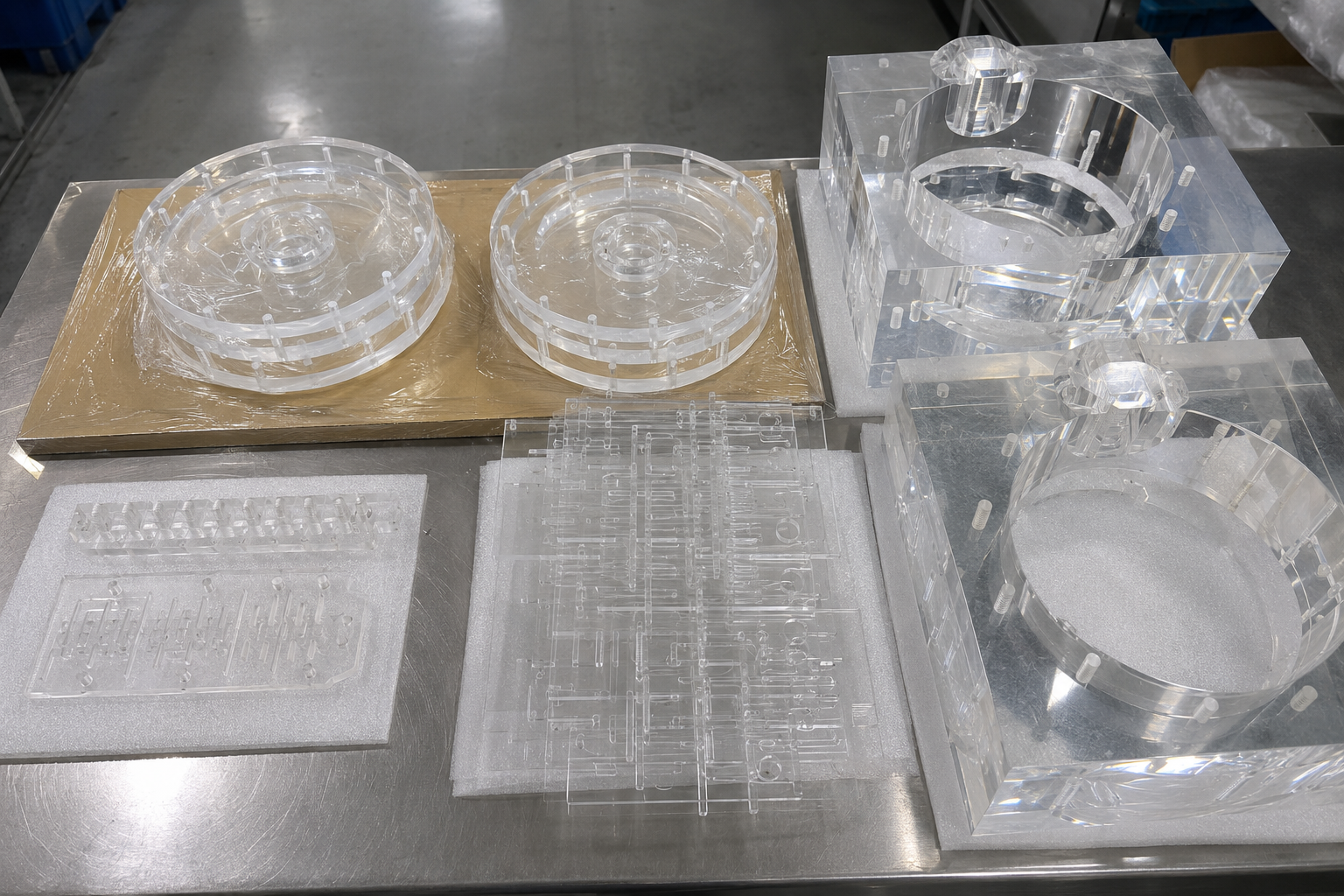
Stock grade and route
What changes the number
Cast against extruded, brand grade against generic, sheet utilisation on the nest
What to put in your enquiry
Specification, category, grade, and who sources the stock
Tolerance density
What changes the number
How many dimensions are flagged, not how tight the tightest one is
What to put in your enquiry
A general tolerance plus a short list of functional criticals
Setup count
What changes the number
Each datum transfer adds positional risk and machine time
What to put in your enquiry
Datum scheme and which features must share a setup
Finishing level
What changes the number
As-machined against blasted, sanded, flame or vapour polished
What to put in your enquiry
Which faces and edges, and the acceptance basis
Inspection coverage
What changes the number
Sampling against 100% on flagged features, and report format
What to put in your enquiry
Feature list, method, coverage and report content
Stress relief
What changes the number
Whether an annealing cycle is authorised between stages
What to put in your enquiry
Whether dimensional stability over weeks is required
Blanket tight tolerances can expand inspection scope and price. Mark functional dimensions, datums and acceptance methods so the written quotation can identify the required inspection coverage and commercial basis.
Why two quotations for the same model differ by a factor of three
Calling out “6 mm clear acrylic” is enough to get a price. It is not enough to get the same acrylic part twice. Two suppliers reading the same drawing can return very different numbers, and a quotation that undercuts the raw material cost usually signals a misread specification rather than a cheaper process.
PMMA CNC Machining RFQ Readiness Matrix
The cheapest quote is not necessarily the best commercial comparison because hidden scope can sit in material identity, removed stock, setups, deburring, inspection, finish, packaging or destination. Zhenling uses the following matrix to turn a drawing into a comparable request rather than promising an unsupported PMMA CNC machining price.
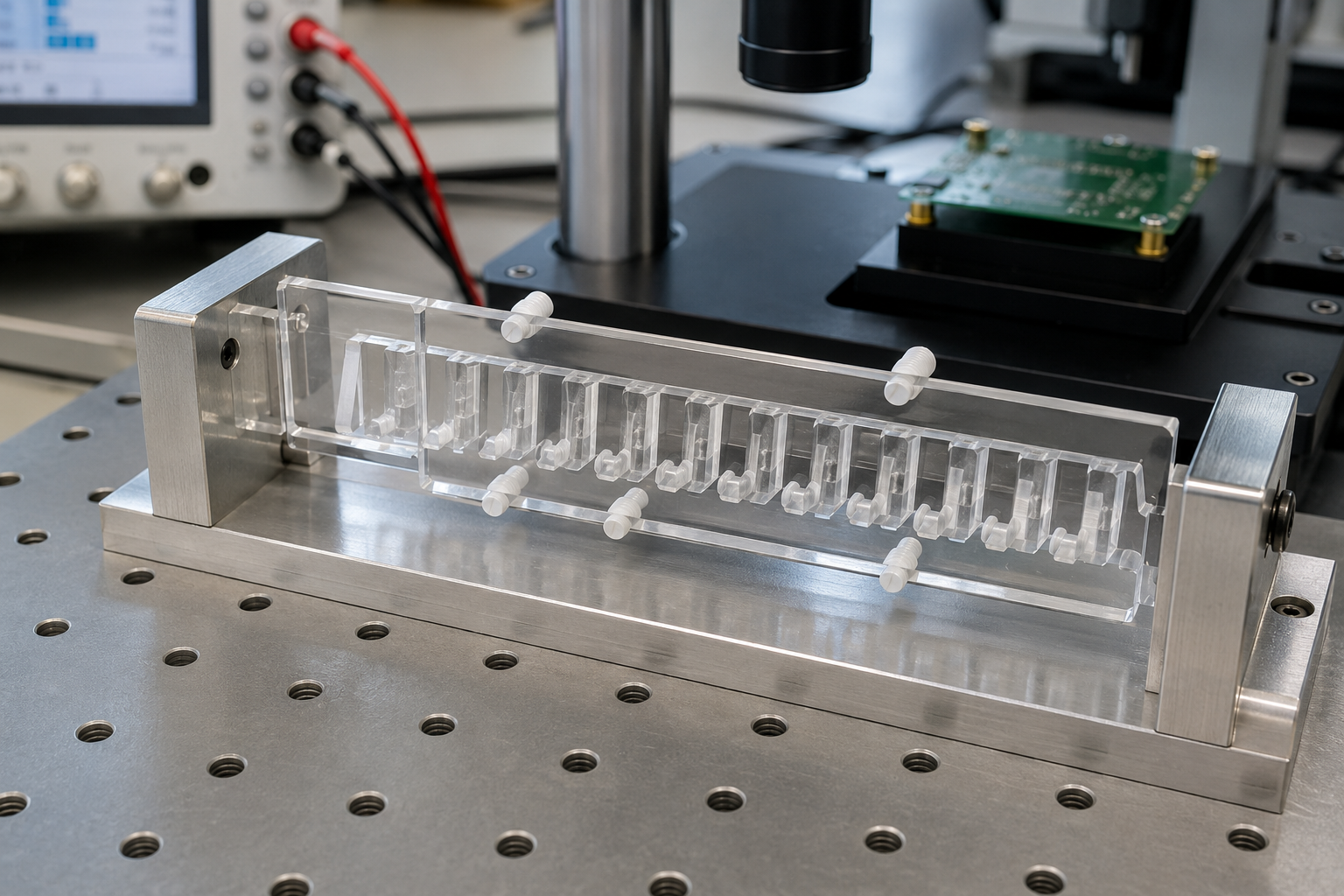
Buyer provides
Controlled 2D and 3D files, revision and reference sample role
Zhenling confirms
Readable geometry, conflicts and open questions
Quote effect
Scope clarity and engineering-review time
Buyer provides
Part function and buyer-required ASTM, ASME or other specification
Zhenling confirms
Applicable scope and supplier responsibility
Quote effect
Compliance and evidence work
Buyer provides
Exact UNS or grade, product form and temper or hardness
Zhenling confirms
Availability, acceptable source and substitution policy
Quote effect
Raw material, yield and risk
Buyer provides
Conductivity or resistivity target and critical interfaces
Zhenling confirms
Measurable requirement and evidence format
Quote effect
Material and inspection route
Buyer provides
Datums, dimensions, tolerances, fits, threads and sensitive edges
Zhenling confirms
Manufacturing and inspection route
Quote effect
Setups, tool access, inspection and rework risk
Buyer provides
Finish, plating, cleaning, masking, contact and appearance areas
Zhenling confirms
Source, sequence and protection plan
Quote effect
External processing, handling and lead-time assumptions
Buyer provides
Material, dimensional, first-article, final-inspection and marking needs
Zhenling confirms
Availability, method, sampling and format
Quote effect
Quality-documentation scope
Buyer provides
Prototype, batch quantity and realistic repeat forecast
Zhenling confirms
Setup and production route
Quote effect
Setup distribution and unit economics
Buyer provides
Surface protection, separators, labeling, destination and importer needs
Zhenling confirms
Pack method and logistics assumptions
Quote effect
Handling, freight and documentation
Buyer provides
Required arrival point and approval milestones
Zhenling confirms
Feasible schedule after all open items close
Quote effect
Capacity, external process and freight choices
PMMA Quote Comparability Bottleneck Map
MAT-01
Material
Grade, form, temper, availability and conductivity may control the quote before the machine is selected.
GEO-02
Geometry
Deep cavities, thin sections, several orientations and difficult deburring can add setups and handling risk.
ACC-03
Acceptance
Critical tolerances, sampling, report format and first-article requirements may alter the inspection plan.
SUR-04
Surface
Cleaning, plating, contact protection, appearance limits and packaging can become the controlling handoff.
DEL-05
Delivery
Quantity, approval timing, external processes, destination and document ownership can modify the commercial route.
Who Carries the Risk When Something Goes Wrong?
Risk on a machined order is allocated by the written acceptance basis, not by goodwill. Before production starts, the purchase order should name the flagged features, the measurement method, the temperature acceptance is judged at, the inspection coverage, the decision rule, and who owns scrap if supplied stock behaves differently from its description. First-article approval is the hold point: the batch is not released until those parameters are accepted. Ask every supplier you are comparing to put that same list in writing before quoting, including us.
Which Incoterm you agree is a risk decision, not only a freight one. Under the Incoterms rules that typically govern machined exports, the goods become yours at the plant gate under EXW, at the port of loading under FOB, and not until delivery at your door under DDP, so the term named in the quotation decides who carries loss, damage and customs exposure in transit.
Acrylic’s most expensive rejection is the one that passes dimensional inspection. Parts measure correct, ship, and come back because the viewing face reads hazy under the customer’s lighting. Nothing was machined wrong; the surface finish was never specified.
Thermal Drift Band — a tolerance without a temperature is not an acceptance criterion
Published values for PMMA linear thermal expansion cluster around 0.07 mm per metre per °C, in the region of six times that of steel. Treat it as an order-of-magnitude planning value and check the mill datasheet for any marginal dimension. That is why a ±0.01 mm figure quoted with no reference temperature, no correction statement and no uncertainty budget is a marketing number rather than an acceptance criterion.
| Feature length | ΔT = 2 °C | ΔT = 5 °C | ΔT = 10 °C |
|---|---|---|---|
| 50 mm | 0.007 mm | 0.018 mm | 0.035 mm |
| 100 mm | 0.014 mm | 0.035 mm | 0.070 mm |
| 300 mm | 0.042 mm | 0.105 mm | 0.210 mm |
| 500 mm | 0.070 mm | 0.175 mm | 0.350 mm |
The international reference temperature for dimensional measurement is 20 °C. Tolerance quoted against “the part” is not an acceptance criterion; tolerance quoted against three named dimensions at a stated temperature is.
Customer-supplied stock
Routine, once the enquiry defines the supplied condition, the allowance available, material identity, inspection expectations and who carries scrap risk if the stock behaves differently from its description. Unstated customer-supplied material is where disputes start.
Residual stress over time
State the section thickness and the dimensional stability you need over time, and stress relief becomes a planned operation rather than a later conversation.
Ferrous contamination
Plastic swarf separated from metal swarf is a handling requirement on a clear part, because contamination surfaces at your incoming inspection rather than ours.
Machining cannot fix sheet tolerance on a face nobody cuts
Cast PMMA sheet thickness runs at roughly ±10% against roughly ±5% on extruded, so if as-supplied thickness is functional, that is a purchasing decision, not a machining one.
Two commercial terms belong in the same email as the drawing
Export machining orders from China commonly run on a 30–50% deposit with the balance settled before shipment by T/T; that is industry practice among comparable suppliers rather than a Zhenling term, and the terms for your order are fixed in the quotation. NDAs are commonly signed on request across export machining suppliers, on either party template, so raise it before any file is opened for review.
What Can Zhenling Actually Prove?
Zhenling’s public record is metal. Carbon and alloy steels, stainless grades, nickel alloys and aluminium, made to drawing for pressure vessel, oil-gas separation and fluid control work. Buyers evaluating us for acrylic parts are entitled to know exactly how much of that record carries across, so here it is as a Capability Transfer Ledger in three columns rather than as a sales sentence.
CAPABILITY TRANSFER LEDGER
Everything in the third column is settled at drawing review and written into the quotation before any material is cut, and the first article is the point at which you accept or reject those established parameters ahead of batch release. That is the standard industry sequence for any first pairing of a shop and a material.
Company-supplied profile information states operation since 2006 from an 8,000 m² Jiashan site with a 6,000 m² workshop. Those facts do not establish PMMA experience, export volume or capability for a submitted part; grade, stock history, machining route, stability risks and inspection must be reviewed for the order.
Blanket tolerance without temperature or functional-fit context is not enough for PMMA process review. Identify the dimensions that mate or seal so fixture, pass strategy, conditioning and inspection can be evaluated for the order.
What each evidence document can and cannot prove
DOC-01
Material certificate or lot record
Supports
Identity and values explicitly covered by that document
Cannot replace
Finished-part dimensions or surface condition
DOC-02
Dimensional report
Supports
Measured characteristics under stated conditions, judged against documented traceability and reference-temperature practice
Cannot replace
Unmeasured features, or acceptance without an uncertainty budget
DOC-03
First article
Supports
Agreed characteristics on the released drawing revision
Cannot replace
Batch-to-batch control on its own
DOC-04
Batch records
Supports
Continuity of approved controls across the released lot
Cannot replace
Anything outside the contracted coverage rule
Buyers frequently treat a dimensional report as proof that a tolerance was met. It proves that a value was recorded. Whether that value can support an acceptance decision depends on the instrument, its calibration status and the uncertainty budget behind the result, together with a decision rule agreed in advance rather than argued afterwards.
Acrylic PMMA CNC Machining Tools
APP_01
Cast vs Extruded Selector
APP_02
PMMA Thermal Drift Calculator
APP_03
Process Route Selector
APP_04
Acrylic RFQ Completeness Check
FAQ: What Buyers Ask Before Releasing a PMMA Machining Order
There is no single honest number, because it depends on feature size, stock condition, setup count and measurement conditions. Industry practice on machined PMMA sits around ±0.1 mm on general machined features, tighter on individually flagged dimensions. Send the drawing with the functional dimensions marked and a measurement temperature stated.
Cast for optical clarity, solvent bonding, thermoforming and thick viewed-through sections. Extruded when as-supplied sheet thickness is a functional dimension, when the part is hidden, painted or laminated, or when the section is thin and cost matters. Extruded sheet also runs 20–40% lower on material cost per square metre at 6 mm.
Not by machining alone. A milled face carries tool marks that read as swirls in transmitted light, and no feed rate removes them entirely. Optical clarity is recovered afterwards through progressive wet sanding, flame polishing or vapour polishing, each with its own cost, dimensional allowance and compatibility limits. Treat polishing as a specified finishing operation, not an assumed one.
Acrylic gives better optical clarity, surface hardness and UV stability. Polycarbonate gives far higher impact resistance and is safer where the part absorbs a blow. Acrylic is also more sensitive to solvents and cleaning chemicals, which matters on laboratory and food-contact enclosures.
Yes. Plexiglas and Perspex are trade names for the same thermoplastic, PMMA, so Plexiglas machining, Perspex machining and PMMA machining all mean the same job. What matters on a drawing is not the trade name but the specification, category, grade and supplied condition, because those are what a purchase order can hold a supplier to.
Yes, once the enquiry defines the supplied condition, the allowance available, material identity, inspection expectations and who carries scrap risk if the stock behaves differently from its description. Customer-supplied material is routine; unstated customer-supplied material is where disputes start.
Whatever the purchase order scopes, named before production rather than after. Ask for the feature list, method, coverage and report format at enquiry stage so competing quotations are actually comparable.
![Shop-Floor Carbon Steel CNC Machining Guide [2026]](https://zhenlingmetal.com/wp-content/uploads/2026/08/carbon-steel-cnc-machining-handbook-r2-featured-150x150.png)