Get in touch with Zhenling Company

CNC Machining in China: Pressure-Boundary and Fluid-Control Metal Parts
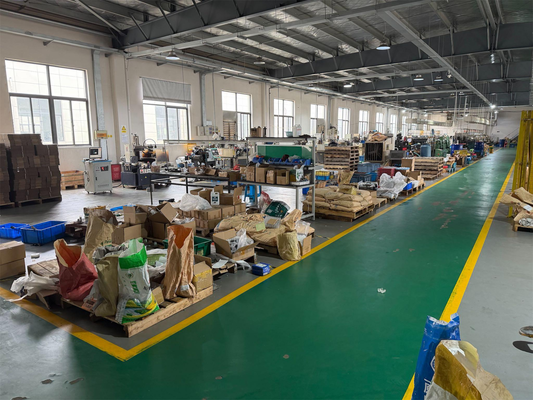
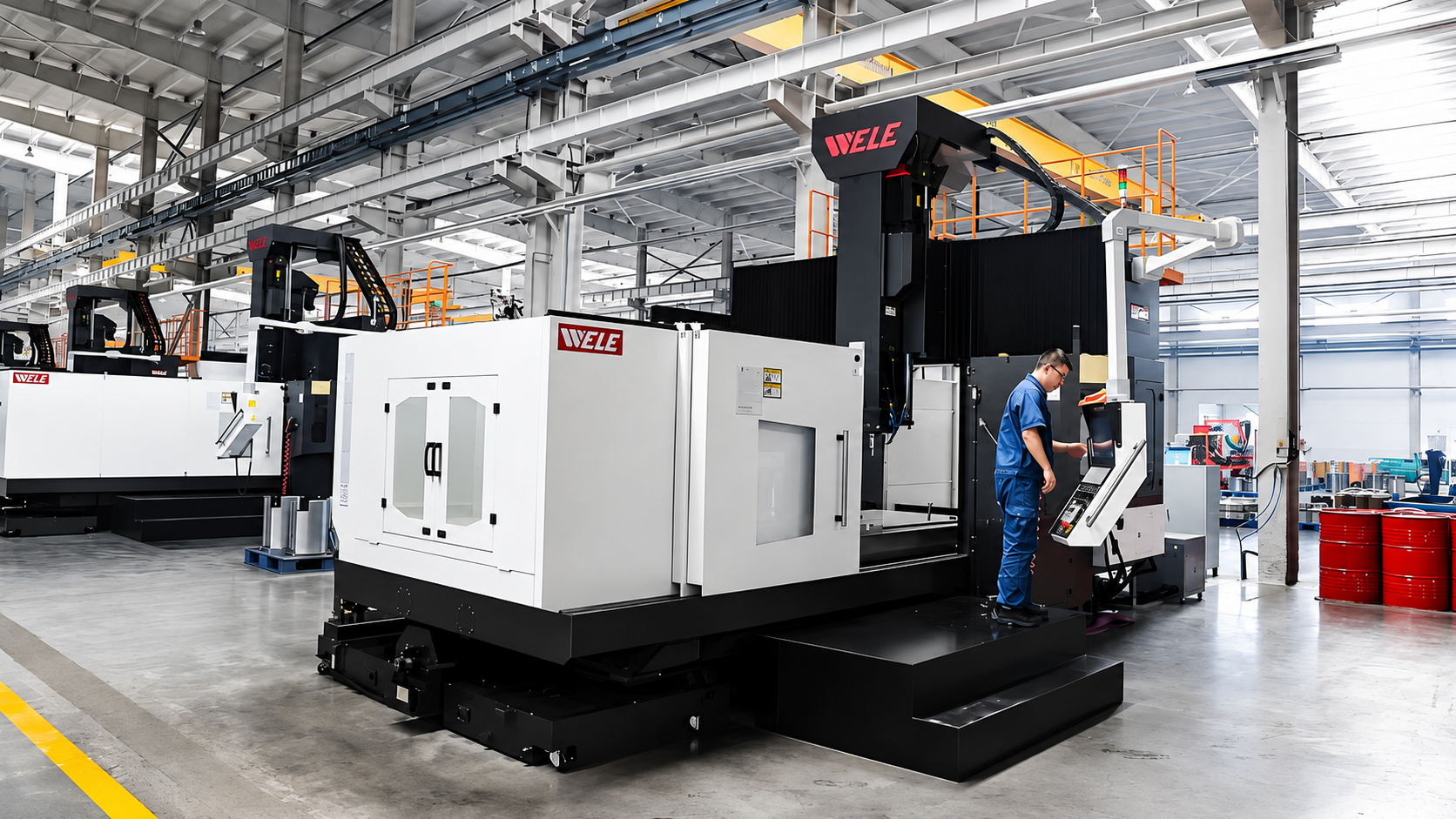
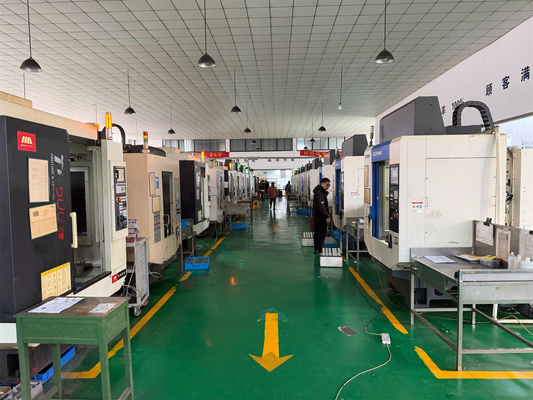
CNC machining China buyers usually need one thing settled first: can this shop hold my drawing. Shanghai Zhenling Hardware Co., Ltd. has machined non-standard metal parts to print since 2006, and runs its own plant in Jiashan, Zhejiang, for pressure-boundary, oil and gas separation and fluid control service. Send a drawing and a process engineer reads it before anything is priced.
Sample Policy
Samples are quoted and charged per part, and batch production starts only after you approve the first article
Your drawings are handled as confidential; we sign a mutual NDA on either party’s template before your files are reviewed.
Response and lead time
Quote turnaround
Within 24-48 hours on business days, reviewed by an engineer
Prototype lead time
3-10 business days after drawing approval
Small-batch lead time
5-20 business days after drawing approval
Order terms
Minimum order
No minimum order quantity on machined work; single pieces are accepted
Default general tolerance
ISO 2768-m unless your drawing specifies otherwise
Files accepted
STEP, IGES, Parasolid or SolidWorks with 2D drawings in PDF, DWG or DXF
- Engineer-reviewed quote within 24-48 hours
- Prototypes in 3-10 business days
- ISO 2768-m as the default general tolerance
- No minimum order quantity
Machining Capability Lines
Four capability lines carry the work: machining processes, materials, surface finishing, and the industries the finished parts go into. Each line has its own detail page; this page is where you pick the one that matches your part.
As a CNC machining manufacturer working to customer drawings, we publish capability rather than a catalog, because nothing here is a stock item.
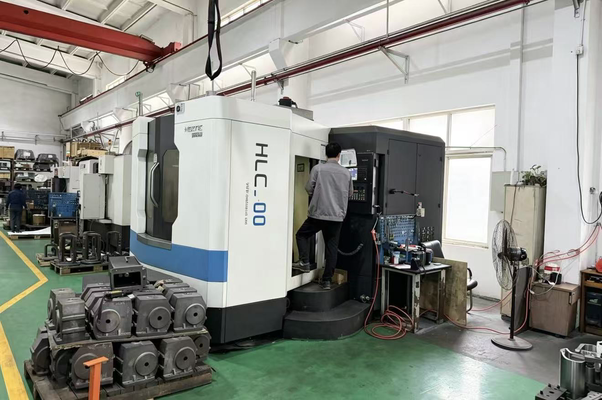
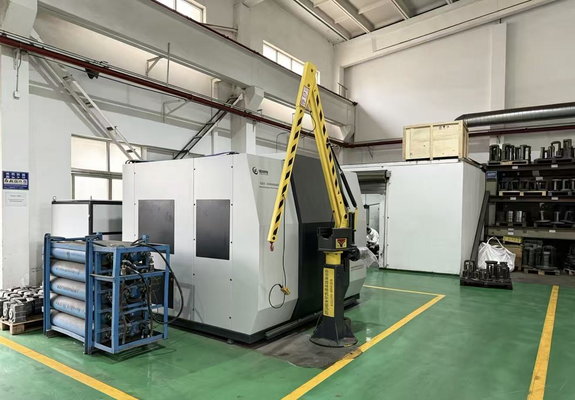
Work we take on
- Custom CNC machining service: custom parts and machining parts made to your drawing, from a single first-off piece through to repeat production parts
- Rapid prototype work before tooling is committed, and low-volume production for short runs
- On-demand manufacturing services: nothing is stocked, and every job starts from your files
- CNC parts in metal, with engineering plastics running as a separate line
- The metal fabrication steps that sit around machining — shearing, plate rolling, pressing and welding — where an assembly needs them
Zhenling runs as a precision machine shop rather than a volume house, which shows up in how jobs are scheduled. Any high precision feature gets the setup and the check it needs; the rest of the part runs on the general class. Rapid prototyping and production batches go through the same drawing review, so the first-off part and the hundredth are made against the same acceptance criteria.
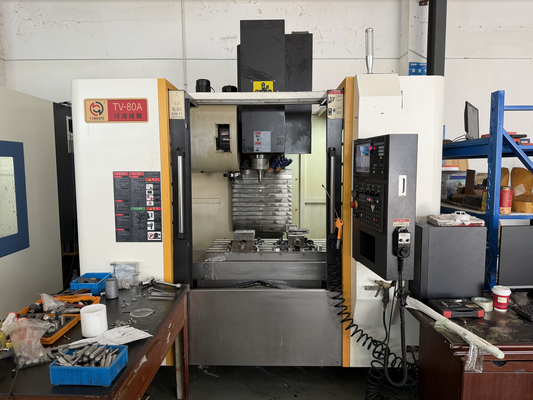
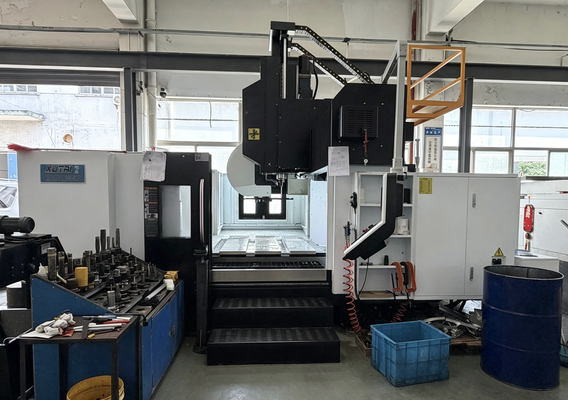
CNC Machining Service — the full capability page
Process lines, machine categories, material selection for high-temperature, corrosive and high-pressure service, tolerances, quality control and the full commercial terms. Start there if you already know the process you need.
Parts we machine most often
- Flanges and flanged bodies
- Rollers
- Bent pipe and pipe components
- Valve bodies
- Plugs and closures
- Complete machine assemblies and their machined components
Materials We Machine To Drawing
Our material record is metal first: bearing steel, carbon and alloy steel, stainless steel, nickel-based alloys for chemical service, and aluminum alloys. Engineering plastics run as a separate service line, and plastic parts are quoted with their own material behavior in mind rather than treated as soft metal.
Cross-Standard Grade Table
Most of our stock book is written in GB designations, and most of our overseas inquiries arrive in ASTM, AISI or EN. This table is the bridge. Read it as a cross-reference to the closest known grade rather than as an equivalence, because cross-referenced grades are close but not interchangeable: chemistry ranges and mechanical requirements need not overlap between standards, and the grade named on your drawing is the one we buy to.
| GB designation | ASTM / AISI cross-reference | EN cross-reference | Where it shows up in our work |
|---|---|---|---|
| Q345D | A572 Gr. 50 (also A656) | S355J2 (1.0577), S355N (1.0545) | Structural and pressure-boundary bodies. The trailing letter is the impact-test grade; D is tested at minus 20 degrees Celsius. Q345 was redesignated Q355 in GB/T 1591-2018 and both designations still arrive on drawings |
| Q235A | A36 family, low-carbon structural | S235 family | General fabricated brackets and non-critical bodies. Family-level cross-reference; confirm against the standard named on your drawing |
| 20# / 45# | 1020 / 1045 | C22 / C45 family | Turned shafts, plugs, bushings. Family-level cross-reference on the EN column; state the delivery condition with the grade |
| 42CrMo | 4140 / 4142 | 42CrMo4 (1.7225) | High-stress shafts, valve bodies, fasteners in quenched and tempered condition. We also machine 25CrMo and 12CrMoV; their cross-references are confirmed at drawing review rather than read across from this row |
| GCr15 | 52100 | 100Cr6 (1.3505) | Bearing seats and rings. Cross-referenced by grade family; confirm the composition range against the standard named on your drawing before substituting |
| 304 / 304L / 316 / 316L / 321 | Same designations internationally | 1.4301 / 1.4307 / 1.4401 / 1.4404 / 1.4541 | Fluid control, sealing faces, wetted parts |
| C276 / 904L | Same designations internationally | 2.4819 / 1.4539 | Strongly corrosive chemical service |
One line on your inquiry saves a round trip: give the grade and the condition or impact grade you need. Not sure which grade suits the service condition? Shortlist an alloy for your service condition before you send files.
Materials: selection matrix and the full grade list
Grade-by-grade pages plus the selection matrix for high-temperature, corrosive and high-pressure service. Start there when the grade is still open; the lists below are the direct route when it is settled.
Metals
Engineering plastics — a separate service line
Another grade
Send the grade with your drawing and we confirm availability, condition and price in the quotation. Grades outside the list above are quoted the same way, against the full material line.
Surface Finishing And Heat Treatment
Parts ship as-machined with edges broken unless your drawing calls out a finish. Where a finish is called out, we process to the specification on your drawing and name in the quotation which steps run in our workshop and which run with a partner processor, together with the days they add.
Surface finishing: specifications and thickness ranges
Process-by-process pages with the specification each finish is called out against and the dimensional allowance it needs. The table below routes you to the right one.
-
IDFinish ProcessWhat it is for (Application)Execution Location
-
01Hardening, tempering, annealing, stress relief and case hardening to the condition your drawing setsIn-house or partner processor; named in your quotation
-
02Restores the corrosion-resistant film on stainless after machiningPartner processor
-
03Mild corrosion resistance on steel with almost no dimensional changePartner processor
-
04Zinc, zinc-nickel, copper and tin coatings on machined steelPartner processor
-
05Even coating thickness on complex internal geometryPartner processor
-
06Surface hardness and corrosion resistance on aluminumPartner processor
-
07Color and weather protection on assemblies and housingsPartner processor
-
08Visible-face appearance and sealing-face smoothnessIn-house or partner processor; named in your quotation
-
09Uniform matte texture, scale removal, coating preparationIn-house or partner processor; named in your quotation
Tolerances, Inspection States and Standards
Our default general tolerance class is ISO 2768-m. That is the number a buyer needs before anything else, because a drawing that names no general tolerance class gets one default in our shop and a different default in another. Get that one line wrong and the problem surfaces at incoming inspection on your side, not at ours.
We ask for the general tolerance class before we quote, not after the first article. A drawing that names no class gets one default here and a different one somewhere else, and that gap does not surface until the parts are measured on your dock. Settling it on paper costs one line; settling it on the dock costs a shipment.
— Zhenling Engineering Team, JiashanInch values above are converted from the standard, which is published in millimeters. Geometric characteristics such as flatness, perpendicularity and run-out sit outside that class: ISO 2768-2 was withdrawn in 2021 and ISO 22081 took its place, so a general geometrical specification now has to be stated on the drawing rather than inherited from a class letter. Drawings still marked ISO 2768-mK are quotable, and we machine and check the geometrical characteristics your drawing calls out against the datums your drawing sets, rather than substituting a default.
Where a tolerance call is worth paying for
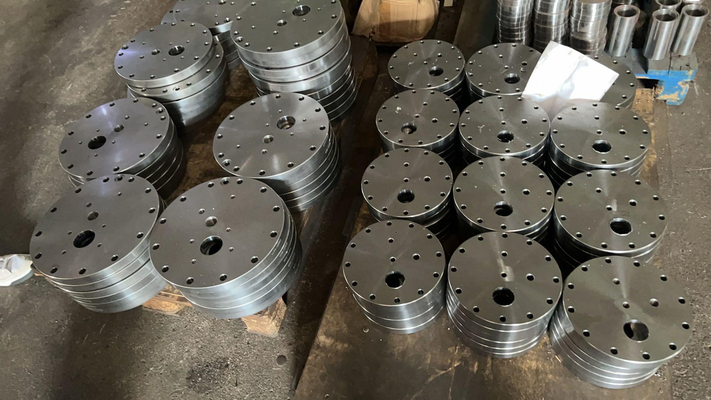
Tighten the band on a valve body seat or a hydraulic shaft journal and it buys you a part that seals and runs true; the same band on a clearance hole buys you an extra check and nothing else. That is the trade-off to price feature by feature, and over-constraining a drawing is an expensive mistake on incoming inquiries, because it books grinding and inspection time against dimensions that carry no function. Precision CNC work, in-house grinding and dimensional inspection are aimed at the features your drawing marks, not at every dimension on it.
Where the rest of the tolerance detail lives
Geometric tolerancing practice, surface condition and the standard lead times that go with each class are set out in full on the CNC machining service page.
Pricing Mechanism, Lead Times and Commercial Terms
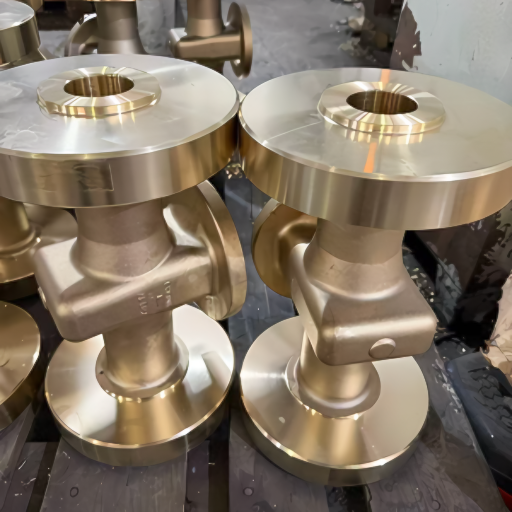
An instant quote engine prices a shape. A pressure-boundary part in 42CrMo is priced by an engineer who reads the drawing, and the answer comes back within 24-48 hours on business days. There is no fixed price list for made-to-drawing work.
-
DriverEffect on costHow to reduce it
-
Material grade and conditionNickel alloys and quenched and tempered steels cut slower and wear tooling faster than free-machining stockName the service condition, not only the grade, so we can propose the cheapest grade that still meets it
-
Tolerance bandEvery feature tighter than the general class adds a cut, a check, or bothTighten only the features that carry function; leave the rest on the general class
-
Number of setupsEach re-fixturing adds handling time and a datum transferAllow one datum face big enough to hold on, and avoid features that force a fourth setup
-
Finishing and heat treatmentOutside processes add days and a second transport legAsk which steps are in-house when the schedule is tight
-
Batch sizeSetup cost is spread across the run; a single piece carries all of itAsk for a price break at the quantity you would realistically reorder
-
Order stageLead timeWhat it covers
-
Prototype or first article3-10 business daysMachining after drawing approval, before any outside finishing
-
Small batch5-20 business daysMachining after drawing approval, first article included
-
Production run3-10 weeksScheduled with your quotation, confirmed against material availability
Lead time starts when the drawing is approved and excludes outsourced finishing and international transit. Priority scheduling is available on request and is priced in the quotation; feasibility is confirmed at drawing review.
The full quoting breakdown, including how each process line is scheduled, sits on the CNC machining service page.
Payment and trade terms
Payment is a 30-50% deposit with the balance due before shipment, by wire transfer. We ship EXW, FOB or DDP; other Incoterms on request and confirmed in the quotation.
Counting the landed cost, not the unit price
The quoted price of a machined part is one line of what it eventually costs you. The rest is freight, origin and destination charges, duty and brokerage, inspection you choose to buy, and the working capital sitting in transit stock. Ask every supplier which of those sit inside their number and which do not, then compare on the same basis.
Where a competitive number actually comes from
Competitive pricing on made-to-drawing work comes from setup efficiency and material yield rather than from a discount table. The cost-effective choice is usually the widest tolerance your part can actually live with, because every band tighter than the general class buys another cut and another check. High-quality here means measurable: the part either matches the drawing it was accepted against, or it does not.
Quality Control and Shipping Documents
Acceptance is settled on paper before the machines start, then checked against that same paper before the parts leave. The sequence below runs on every made-to-drawing order.
-
Drawing review
grade, condition, general tolerance class, called-out features, datums and finishing scope are read and confirmed with you before the quotation is issued. -
First article
the first part off the setup is measured against your drawing and approved before the balance of the batch runs. -
In-process checks
the features your drawing calls out are checked during the run, against the datums your drawing sets. -
Final check before packing
dimensions are verified against the approved first article and the drawing revision named on the order. -
Documents
the paperwork agreed at order stage travels with the goods.
Every export order ships with a commercial invoice and packing list, plus material certificates when your purchase order calls for them.
CERT_DATA
What a material certificate on a machined part actually is
For machined work the meaningful document is the mill’s certificate for the stock we cut, not a certificate the machine shop writes after cutting. Under EN 10204 a type 3.1 certificate is issued by the material manufacturer and validated by its authorized inspection representative, who is independent of the manufacturing department, and it reports tests on the batch actually supplied. A type 2.2 reports the manufacturer’s general production data rather than your batch, and a 3.2 adds a countersignature from your representative or an official inspector.
The question worth asking
So the question to put to any supplier is not whether they will send a certificate. It is which type, issued by whom, and whether it traces to the stock your parts were cut from. Name the type you need on the purchase order and it is priced and supplied with the goods.
QA_CHECK_MATRIX
Five checks worth running on any China supplier, including us
- Look up the business license and unified social credit code in the public corporate registry and confirm the legal entity you are contracting with.
- Ask which processes run inside the shop and which go outside, then ask how many days each outside step adds.
- Ask for the mill certificate type for your stock before you order, not after.
- Ask what the first-article report will contain and against which drawing revision.
- Ask for a video walk through the working area during production hours, rather than a photograph set.
From Drawing to Delivered Part
Send your files
A 3D model and a dimensioned 2D drawing, with quantity and target date.
Drawing review and manufacturability notes
A process engineer reads the print and comes back with manufacturability (DFM) notes on anything ambiguous or expensive.
Written quotation
Price, lead time, Incoterms, finishing scope and the documents that will ship, in one document.
Machining
Cut on the process line chosen at review, with the first article approved before the batch continues.
Acceptance criteria
We carry the criteria we agreed. Parts are measured against the same written criteria used at first-article approval, on the drawing revision named on the order.
Packing and shipping
Packed for the Incoterm quoted, with the agreed documents traveling with the goods.
Six Lines That Set Your Price
Trade press on quoting is consistent about where cross-border jobs go wrong: incomplete prints, handwritten annotations and outdated revisions, with the details that drive cost being specifications, threads, processes, materials and geometric callouts. The six lines below are what turn an inquiry into a 24-48 hour quotation instead of a round trip.
| Line we need | Why it changes the price | If you leave it out |
|---|---|---|
| Grade and condition | Cutting behavior and stock cost both move with the condition, not just the grade | We quote the wider reading, which is the more expensive one |
| General tolerance class | Sets what every unmarked dimension has to hold | We apply ISO 2768-m and say so on the quotation |
| Called-out features and datums | Determines setups, checking time and which features get measured | We ask before quoting, which costs a day |
| Finishing scope | Outside steps add days and a transport leg | The quotation assumes as-machined |
| Quantity and reorder intent | Setup cost is spread over the run | Single-piece pricing carries the whole setup |
| Documents required | Certificate type and report scope are priced, not free | Only the commercial invoice and packing list ship |
SYS.ROUTING
Not sure which process line your part belongs on?
Route your part to the right process
and bring the answer with your inquiry.
Part Families and Service Conditions
Pressure-Boundary Scope
The work we do most is machined components that sit on or near a pressure boundary: flanges, valve bodies, plugs, bent pipe components, rollers, and the machined parts of complete machine assemblies. The service conditions behind them are pressure containment, oil and gas separation, and fluid control.
Why the scope is stated narrowly
Sealing faces, flange facings and bores that must stay round under load are a different job from a cosmetic housing. The difference shows up in how the part is fixtured, what gets measured, and which grades are worth quoting.
Machining notes by grade
- Stock condition and chip control when cutting carbon steel — the steels most flange and plug work sits in.
- Cutting 42CrMo by hardness and geometry — how the delivery condition changes the approach.
- Sequencing cuts around heat treatment on tool steel — what to rough and what to leave.
Each sector page routes to the materials and processes that sector usually needs. They are an index, not a record of past programs.
Browse by industry
Where We Are Not the Right Supplier
Sourcing machining in China is often cheaper on the part price. It is not always cheaper on the delivered job, and the cases where it stops working are predictable enough to name.
SCOPE NOTE
Get Instant Quote →
One scope note. This page covers machined components supplied to your drawing. Complete pressure-vessel fabrication is a different scope and is not quoted from this page.
Precision CNC Machining Evaluation Tools
01
General Tolerance Class Comparator
Compare international tolerance standards for precise manufacturing. Ensure your designs align with standard CNC machining capabilities.
ACCESS TOOL
02
Cross Standard Grade Table
Easily match material grades across ISO, ASTM, and DIN standards. Select the optimal equivalent metal for your project.
ACCESS TOOL
03
Quote Window Scorer
Evaluate the feasibility and turnaround time of your RFQ. Optimize your technical submission for faster vendor response.
ACCESS TOOL
04
Landed Cost Per Part
Calculate the total cost of ownership including shipping and tariffs. Make informed procurement decisions for overseas manufacturing.
ACCESS TOOL
Send Your Drawing for a Quote
One 3D model, one dimensioned drawing, a quantity and a target date are enough to start. A process engineer reads it and comes back within 24-48 hours on business days.
Your drawings are handled as confidential and a mutual NDA is available before you send files. No minimum order quantity on machined work, so a single first-off part is a normal inquiry.
Send Your Drawing for a Quote
Files to send
-
01A 3D model in STEP, IGES, Parasolid or SolidWorks
-
02A dimensioned 2D drawing in PDF, DWG or DXF
-
03Grade and condition, and the general tolerance class
-
04Quantity now, and the quantity you would realistically reorder
-
05Finishing scope and any documents your purchase order needs
-
06Target date
What does Zhenling actually machine?
Non-standard metal parts made to your drawing: flanges, valve bodies, plugs, bent pipe components, rollers, and the machined components of complete machine assemblies. The service conditions we work in most are pressure containment, oil and gas separation and fluid control.
Which materials do you machine?
Bearing steel, carbon and alloy steel, stainless steel, nickel-based alloys including C276 and 904L, and aluminum alloys. Engineering plastics run as a separate service line with their own pages.
Which ASTM or EN grade matches the GB grade on my inquiry?
The cross-reference table above covers the grades we stock most often: Q345D against A572 Gr. 50 and S355J2, 42CrMo against 4140 and 42CrMo4, GCr15 against 52100 and 100Cr6, 20# and 45# against 1020 and 1045. Read these as closest-known cross-references rather than equivalences, because chemistry ranges can differ between standards, so name the grade you want on the drawing and that is the one we buy.
Which general tolerance do you work to?
ISO 2768-1 class m for linear and angular dimensions, unless your drawing specifies otherwise. Under that class a 100 mm dimension carries plus or minus 0.3 mm and a 300 mm dimension carries plus or minus 0.5 mm. Features that need tighter control are called out on the drawing and confirmed at review before the quotation goes out.
How is precision held on a pressure-boundary part?
By settling the acceptance criteria before cutting rather than after. The drawing review fixes the datums, the called-out features and the finishing scope; the first article is measured against that drawing and approved before the batch continues; the run is checked against the same datums. Sealing faces and bores that have to stay round are fixtured and sequenced for that, not treated as general profile work.
Which surface finishes do you offer, and which run in house?
Heat treatment, polishing, brushing and blasting run in our workshop or with partner processors; passivation, plating, anodizing and coating run with qualified partner processors. The quotation names which steps go outside and how many days each adds.
How much does CNC machining China cost, and what moves the number?
China CNC machining service cost is not a list price; made-to-drawing work is quoted per part, so the honest answer starts with the drivers: material grade and condition, tolerance band, number of setups, finishing scope and batch size. Two quotes for the same part can sit far apart simply because one assumes the general tolerance class and the other assumes every dimension is critical. Compare offers on landed cost rather than unit price, because freight, duty, brokerage, inspection and transit stock all sit outside the part number.
How long does a quote take, and can I get an instant quote?
Within 24-48 hours on business days, reviewed by an engineer. Marketplaces let you get instant quote results from a pricing algorithm and will be faster on the clock; what comes back here instead is manufacturability notes alongside the number, because a person reads the print rather than a machine reading a shape. Sending a complete drawing package is what keeps the reply inside that window.
What are your lead times for prototypes, small batches and production?
Prototypes ship in 3-10 business days after drawing approval, small batches in 5-20 business days, and production runs are scheduled at 3-10 weeks and confirmed with your quotation. Lead time starts at drawing approval and excludes outsourced finishing and international transit.
Is there a minimum order quantity?
No minimum order quantity on machined work; single pieces are accepted. Setup cost is spread across the run, so a one-off carries the whole setup in its price. Ask for a price break at the quantity you would realistically reorder.
What are your payment terms and Incoterms?
A 30-50% deposit with the balance due before shipment, by wire transfer. We ship EXW, FOB or DDP; other Incoterms on request and confirmed in the quotation.
Will you sign an NDA before reviewing my drawings?
Your drawings are handled as confidential; we sign a mutual NDA on either party’s template before your files are reviewed. Send the template you already use and we work from that rather than asking you to accept ours.
Which file formats do you accept?
STEP, IGES, Parasolid or SolidWorks 3D files with 2D drawings in PDF, DWG or DXF. A 3D model alone is quotable, but without a dimensioned drawing there is nothing that states the tolerance class, the datums or the finish.
What ships with my order?
A commercial invoice and packing list ship with your order, with material certificates when your purchase order calls for them. Batch production starts only after you approve the first article, and that approval is the acceptance record the final check is made against.
What should I compare when I put two machining quotes side by side?
Six lines settle most comparisons.
- Which general tolerance class the price assumes
- Whether finishing is inside the number or added later
- Which Incoterm the price is quoted on
- What documents are included, and of which type
- Who actually machines the part
- Who sets the price
When you shortlist CNC machining companies in China, most will answer the first four; the last two are what separate a direct shop from a marketplace listing, because on a marketplace the price you see and the price the shop receives are two different numbers and the spread is not published. Distance already makes a problem harder to sort out, and an intermediary between you and the shop adds a second layer to it. That is the argument for knowing which Chinese CNC shop is holding your drawing, rather than which platform took the order.