Get in touch with Zhenling Company

Polypropylene (PP) CNC Machining
Polypropylene (PP) CNC Machining Services
Polypropylene machining is reviewed against the specified PP grade, stock condition, geometry, thermal sensitivity, tolerance datum and inspection plan. Axis route, achievable tolerances, application suitability, documentation and delivery terms are confirmed against the actual drawing and written quotation. Polypropylene CNC Machining enquiries should include PP grade, stock condition, temperature or chemical exposure, geometry and dimensional acceptance. Record the proposed route, measurement method, deliverables, exclusions, price basis and schedule in the quotation for the released part, together with every unresolved manufacturing or acceptance assumption.
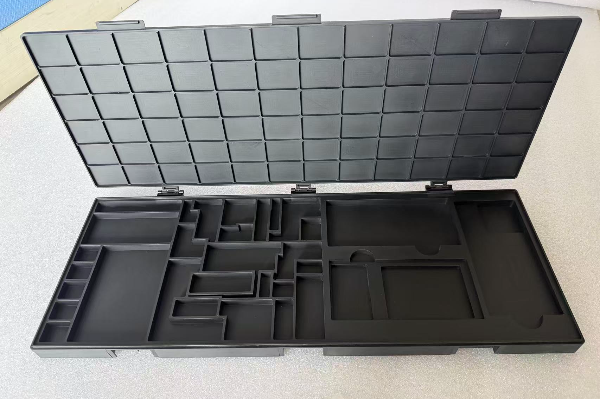
- PER DRAWING Quote-Reviewed Tolerance
- PER GEOMETRY Wall Condition
- 3/4/5-Axis Mills & Lathes
- ORDER-SPECIFIC DOCUMENTATION
- 0.89–0.92 g/cm³ PP Density
- ORDER-SPECIFIC Destination Documents
- 20 Years CNC Machining (since 2006)
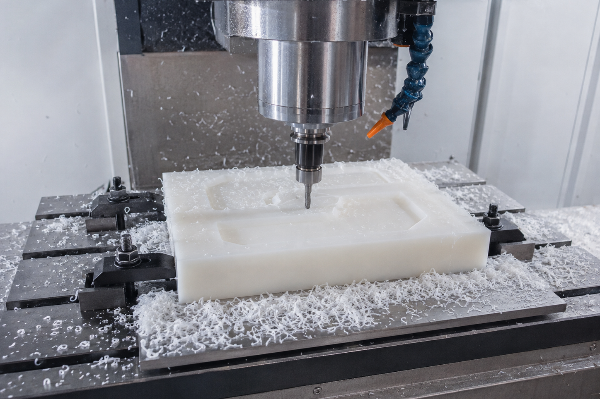
PP CNC Machining Challenges, and How We Solve Them
CNC machining polypropylene means lathing or milling a homopolymer or copolymer semi-crystalline thermoplastic – it’s part of the polyolefin family – to finished polypropylene parts, rather than 3D print or inject mould it. Cutting polypropylene presents very different machinability challenges than steel, aluminum or even a range of other plastics and for that reason, many general machinists have difficulty when producing to specification parts for the chemical, medical-relevant or semiconductor industries.
PP Thermal Profile
One of the key properties of polypropylene is a relatively low melting point: approx. 160 – 170 C. This is well below the temperature at which cutting action produces problematic heat-build-up in metal – which doesn’t cause a problem, but can melt and gum up on PP if spindle speed, tooling geometry, and coolant flow aren’t matched for such low temperatures.
Expand Material Comparison
In comparison to most metals, PP is also soft, with low stiffness. If a cutting tool is operated at speeds appropriate for a metal, excessive heat buildup at the cutting-tool interface causes gumming, warping, long stringy chips, poor surface finishes, or an unacceptable burred edge instead of a clean one. Sharp cutting edges with the correct rake angle avoid all of this.
Industry Authority Hook: PP machining parameters by operation type
| Operation | Spindle Speed | Feed / Depth of Cut | Tool Geometry |
|---|---|---|---|
| Turning (lathe) | 600–1,200 RPM | 0.067–0.5 mm/rev, 1.5–2mm depth | 0–5° rake, 45–60° tip angle |
| Milling / Routing | 2,000–6,000 RPM | Light, consistent chip load | High positive rake, sharp edge |
Polypropylene cutting conditions depend on grade, stock form, tool geometry, heat input, fixture support and feature geometry. Proposed process windows and tolerances remain order-specific.
Housekeeping Note
Fine PP dust and chips are also worth a housekeeping note, not just a part-quality one: plastic dusts, including polyolefins like PP, are identified by OSHA as capable of forming an explosible concentration once particle size, dispersal, and an ignition source line up, and routine removal of dust buildup is standard practice for any shop generating it. It’s a shop-floor detail that’s easy to miss if PP is a bolt-on to an otherwise all-metal process, rather than a material the shop already runs housekeeping procedures around.
Parameter Baselines
Turning and milling parameters differ by roughly an order of magnitude in spindle speed — a direct result of tool/workpiece geometry, not a single “PP speed” number. Figures above are baseline for standard homopolymer/copolymer PP; glass-filled or otherwise compounded grades get their parameters adjusted per-material during setup.
Speed vs. Feed Dynamics
Even so, most machining houses get one part of this backwards. The instinct is to treat feed rate and spindle speed the same way, but they pull in opposite directions on PP: raise the feed rate and cutting resistance goes up, while higher spindle speeds – the lever most worth adjusting – actually bring resistance down. Combined with sharp tool geometry using high positive rake angles (+9°) and a fine air-blast for cooling (sufficient in almost all cases), that’s how tight tolerances get held on polypropylene without distortion or deformation, once feeds and speeds are dialed in for the material.
Holding Tight Tolerances
Polypropylene can deflect, heat and recover differently from metal during machining. Review the PP grade, stock condition, wall geometry, cutter, support, thermal control, datum plan and measurement method for the submitted part. No general tolerance band or anonymous machining result is used as proof of order capability; the drawing and written quotation control the accepted requirement.
Zhenling’s PP Machining Capability, Equipment, Tolerance & Selection
Applicable machine route, achievable tolerance, wall condition and inspection method are reviewed for the submitted PP grade and geometry and confirmed only in the written quotation.
Capability Snapshot
Material
PP homopolymer and copolymer grades, with glass-filled options available.
Processes
3/4/5 axis CNC milling and turning, and secondary welding and surface finishing.
Fixturing
Soft jaws for simple geometry, though thin-wall sections frequently benefit from using custom fixtures – vacuum or mechanical clamps – to prevent clamp-induced deformation.
| Part Type | Recommended Process | Typical Tolerance | Best Fit For |
|---|---|---|---|
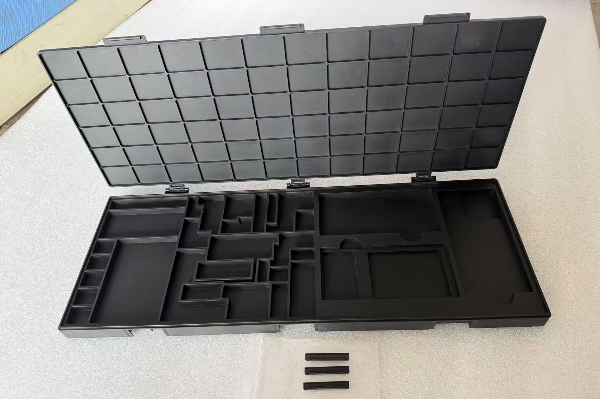
| Thin-wall enclosures / trays | 3-axis milling + snap-fit features | Per drawing and quotation | Tank accessories, lab trays |
| Rotationally symmetric (fittings, valve parts) | CNC turning | Per drawing, geometry and measurement review | Chemical tank valve & fitting components |
| Complex multi-face geometry | 4/5-axis milling | Per drawing and quotation | Semiconductor jigs & carriers |
PP is checked for dimensional accuracy at first article inspection and again at batch closure – PP’s tendency to deform (creep) slightly while under stress is a known failure mode that we fixture into the process, not something we notice only at final inspection. Good dimensional stability on PP depends on a fixturing and tooling discipline, not good fortune – the same precision machining discipline we apply across our metal work.
Polypropylene vs. Nylon, Delrin, HDPE & PTFE, Choosing the Right Engineering Plastic
PP isn’t the perfect answer all the time, and selecting it from a “most plastic for CNC milling” chart without consulting your actual application has us re-ordering the wrong material. Its low cutting forces do make it genuinely easy to machine once parameters are established – that ease of machining is the reason for its popularity. Here’s how it compares to the other four machinable plastics customers most regularly request we compare to it, expressed in published physical data instead of “high/medium/low” ratings.
| Material | Density (g/cm³) | Tensile Strength (MPa) | Izod Impact (J/m) | Chemical Resistance |
|---|---|---|---|---|
| Polypropylene (PP) | 0.89–0.92 | 25–40 | 20–100 | Excellent vs. acids, alkalis, most solvents |
| Nylon (PA 6,6) | ~1.14 | 82 | 40–110 | Good, but absorbs moisture — can dimensionally drift in humid use |
| Acetal / Delrin (POM) | ~1.41 | 70 | 75–130 | Good vs. solvents; low friction, holds tight tolerance well |
| HDPE | ~0.95 | 15–40 | 20–210 | Best-in-class vs. acids, alkalis, industrial process fluids |
| PTFE | ~2.15–2.2 | 10–40 | 160 | Outstanding — resists nearly all chemicals |
Tensile strength and Izod impact from a single consistent published mechanical-properties reference; density from standard material data. Full sourcing in References below.
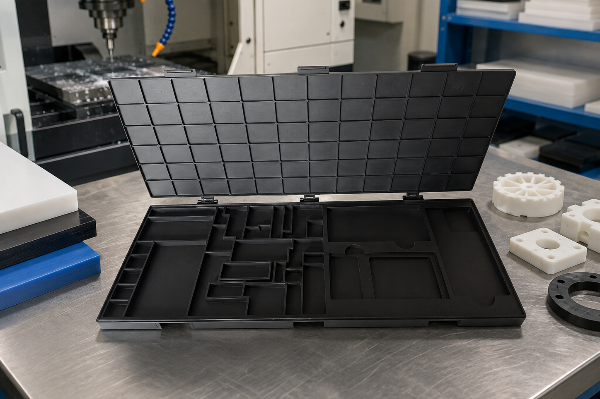
PP, HDPE, POM, nylon and PTFE offer different balances of chemical resistance, stiffness, moisture response, wear and cost. Compare the exact grades against the service fluid, temperature, load, dimensional stability and inspection requirements; no one alternative is treated as the only viable material without application-specific evidence.
Not sure which material fits your application?
Download PP Capability & Tolerance Sheet (PDF)Applications, Chemical Tanks, Semiconductor & Medical-Adjacent Parts
PP can be considered where chemical resistance, low density or fatigue behaviour matters. The three application groups below are RFQ contexts, not Zhenling customer-history or qualification claims.
01
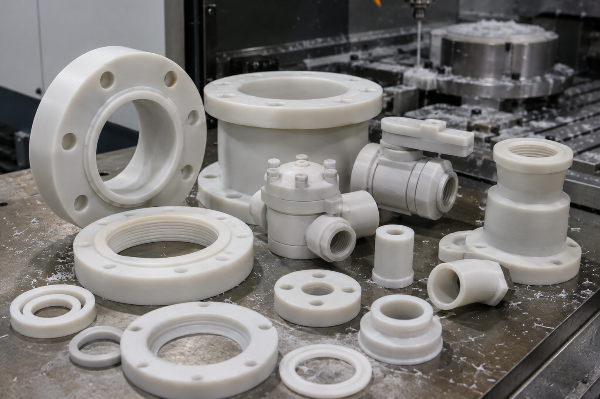
Chemical Tank & Processing Components
Valve fittings, tank liner components, gasket/seal adjacent hardware (where the part is in direct or near-direct contact with acids/alkalis/process fluids). Extensive performance data on polypropylene chemical resistance over a broad spectrum of acids, alkalis, and solvents has been published in the materials-science literature, which is why PP appears across water and chemicals processing equipment in general.
02
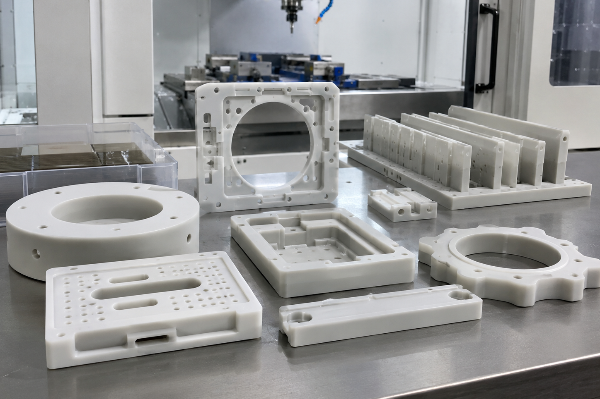
Controlled-Environment Part Review
For jigs, carriers or fixture parts used in a controlled environment, the buyer must define material, particle, cleaning, packaging and final-assembly responsibility. This page does not claim cleanroom qualification or production history for Zhenling.
03
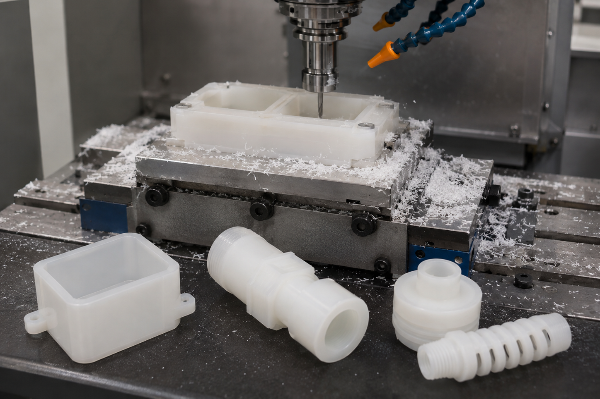
Medical-Adjacent Components
This page does not claim medical-device qualification for Zhenling. For any regulated application, the buyer must define component scope, material evidence, quality-system requirements, validation owner and release criteria before a supplier is approved.
Qualification & Order Documentation
Standards named in a drawing or purchase order define technical requirements; they do not by themselves establish a Zhenling certification. Any certificate used for supplier qualification must identify its legal owner, site, scope, number and validity, while PP order documentation is confirmed in the written quotation.
BUYER-SPECIFIED
Destination requirementsORDER REQUIREMENTS
Drawing and order scopeEST. 2006
20 yrs CNC machiningNeed order-specific qualification documents for procurement review?
WhatsApp Our Engineering Team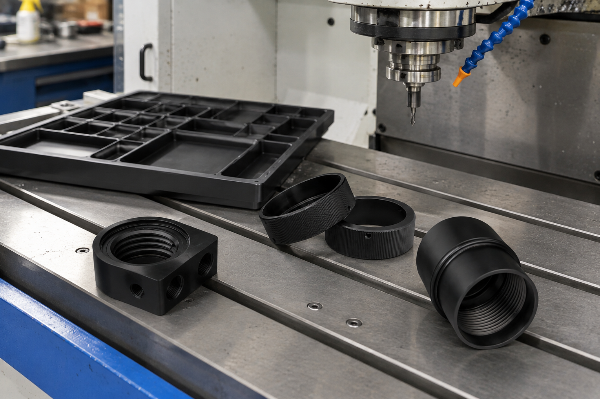
Procurement Guide, Quote, Lead Time & Quality Process
Two information inquiries customers make most frequently before they’ll provide a drawing: what influences the cost, and how the quote-to-deliver process actually goes.
Pricing Factors Framework
Polypropylene machining cost per part varies depending on part geometry, order volume, PP grade (standard vs. glass-reinforced), tolerance tightness, and whether welding or finishing are performed afterward. Zhenling doesn’t publish a standard price schedule because those variables interact too significantly across our in-house CNC process for a flat rate to be meaningful – a generic catalog price isn’t always the right call once wall thickness and tolerance vary this much between drawings, so all quotes are drawing-specific.
Up to 8× Lighter
than steel by density — a real freight-weight reduction on every export shipment, on top of PP’s lower per-kg material cost
Avoid the Most Common Quote Delay
PP quote timing can slip when grade, wall condition, tolerance datums, quantity tiers or inspection method are incomplete. Provide those inputs with the drawing; written quotation will confirm feature-specific limits and timing rather than applying a universal tolerance, wall thickness or delay estimate.
Lead-time in the polypropylene machining process is driven by part complexity and order volume, and is established as part of your quote, not provided as a generic standard. Here’s how it runs:
- [01] Upload drawing – email us your CAD model or drawing, even if it’s only in preliminary form.
- [02] Design for Manufacturability & quoting – we identify manufacturability issues associated with your geometry before offering a quote.
- [03] Sample / first article – a first-article part is sent or validated prior to batch manufacturing.
- [04] Batch manufacturing – complete order runs of finished parts, utilizing the same fixturing and parameters validated at sample stage.
Polypropylene (PP) CNC Machining Tools
01
Material Selector
Compare properties and identify the optimal PP grade for your specific application requirements.
Access Tool
02
Freight Weight Calculator
Estimate shipping weights for PP machined components to optimize logistics and freight cost planning.
Access Tool
03
Tolerance Checker
Verify achievable CNC machining tolerances for Polypropylene parts based on ISO 2768 standard guidelines.
Access Tool
04
Quote Readiness Checklist
Ensure all technical drawings and specifications are complete before submitting a PP machining RFQ.
Access Tool
05
Turning Milling Parameters
Access recommended feed rates and spindle speeds for efficient PP CNC milling and turning operations.
Access Tool
Can polypropylene be machined?
Yes – PP is CNC milled and turned in a conventional fashion, though it requires a different spindle speed, tooling, and coolant or lubricant strategy than either metal or Delrin.
How machinable is polypropylene, or does it fight back?
It’s not a happy material unless you’re set up with a tool it will behave for. Machining it like it’s a metal will do absolutely nothing good for this stuff. Run it with a blunt, low-rake tool and it will just gum up on the cutting edge, melt locally along the tool path, and throw long stringy chips that jam on the way out instead of clearing the cut the way curled metal chips do. Get the cutting speeds, sharp tools with a fine edge and positive rake, and the feed rate right for PP specifically, and it cuts cleanly, not fighting you all day.
What tolerances can be achieved with CNC PP parts?
Achievable PP tolerances depend on grade, stock condition, geometry, wall section, fixture support, datum plan and measurement method. Written quotation confirms the feature-specific tolerance and inspection scope for the submitted drawing.
How does CNC plastic machining differ from metals?
Lower stiffness requires a fixture plan that controls clamp-induced deflection, while lower melting temperature changes heat and chip control. Tooling, equipment route, workholding and process parameters must be reviewed for the specified grade, geometry and quantity rather than inferred from a steel-machining setup.
How much does it cost to get PP parts machined?
We base prices on size, complexity of shape, quantity, tolerance and finishing – please send a drawing for a
custom quotation
Why outsource your plastic machining when you can bring production in-house?
Polypropylene machining requires material-specific tooling, fixture support, heat and chip control. Compare suppliers by the proposed route, equipment availability, workholding, process parameters, inspection method and evidence for the actual grade and drawing; do not infer cross-material capability from a machine-axis label.
![Shop-Floor Carbon Steel CNC Machining Guide [2026]](https://zhenlingmetal.com/wp-content/uploads/2026/08/carbon-steel-cnc-machining-handbook-r2-featured-150x150.png)