Get in touch with Zhenling Company

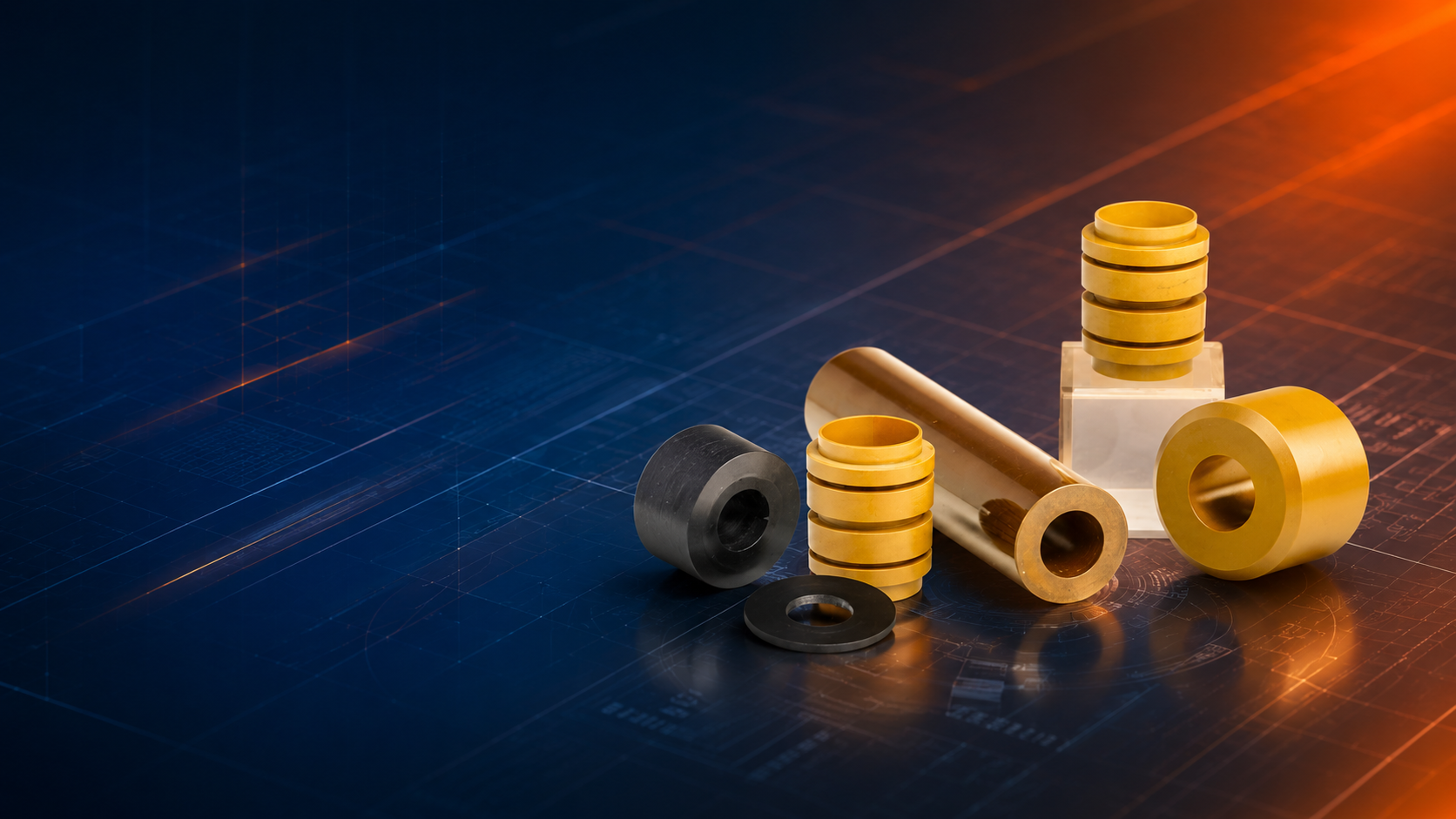
PAI (Torlon) CNC Machining Built Around Your Drawing
Zhenling reviews the grade, filler, stock form, critical features, dimensional state, quantity, and inspection evidence before committing to a machining plan. That’s the practical route to custom Torlon parts that match the print, not a generic plastic-machining promise. PAI Torlon CNC Machining enquiries should include grade, service temperature and load, stability-critical geometry, finish and inspection. Confirm the order-specific route and measurement boundary in writing. Keep unresolved record or schedule assumptions visible.
PAI CNC machining is a strong route for low-volume, made-to-print components that need the heat, strength, wear, or electrical behavior of a high-performance thermoplastic. Results still depend on the exact grade, blank condition, geometry, process sequence, and measurement state.
What Zhenling does differently
We use your print to separate assumptions from requirements. Each quotation records what must be confirmed before material sourcing, programming, machining, inspection, documentation, and export packing.
Established 2006 Company history
8,000 m² site Jiashan factory
3-, 4- & 5-axis Company-listed machining centers
Drawing to shipment Custom manufacturing workflow
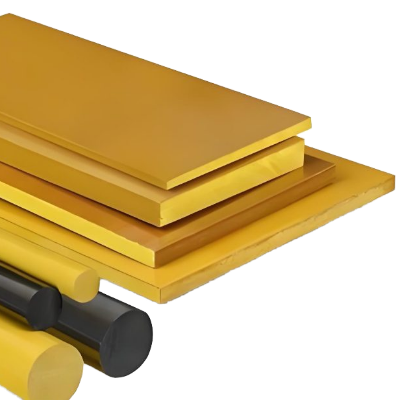
PAI CNC Machining for Severe-Service, Made-to-Print Parts
Torlon® is Syensqo’s trade name for a polyamide-imide family used where ordinary engineering plastics may not provide the required combination of mechanical strength, temperature capability, wear resistance, low friction, chemical resistance, or electrical performance.
Commercial decision checkpoint
The buyer risk is choosing a material name before the failure mode is understood, because load, heat, media, friction, and geometry can change the right call. Unlike a generic service listing, Zhenling CNC engineers start with the drawing and RFQ; the trade-off remains visible. Attach your print to request a custom engineering quote.
01
Start with the function
A bearing, bushing, seal, wear pad, valve seat, electrical insulator, or guide component loads the material in a different way. Pressure, speed, fluid exposure, mating material, temperature, and duty cycle belong in the review.
02
Match the grade to the risk
Unfilled and reinforced grades don’t share one property set. Compressive strength, flexural behavior, coefficient of friction, creep, abrasive filler content, thermal expansion, and moisture response can change the decision.
03
Approve the evidence package
A dimensional check, a first-article report, a material certificate, and lot traceability are different deliverables. Your purchase order should state which evidence must travel with the machined parts.
A material name does not define a finished component. Your drawing, operating conditions, material specification, process plan, and acceptance evidence define the job together.
Syensqo’s Torlon PAI page lists stock shapes for machining and application families including bearings, seals, valves, compressor parts, bushings, and thrust washers. These are candidate uses, not evidence that every geometry or service condition is suitable.
Service-page test
Buyers searching for a Torlon machining service face a common risk: a generic supplier page may name the polymer without resolving grade, condition, or acceptance evidence. Zhenling builds the inquiry around your RFQ and drawing because those controls define the part. Request a drawing review before treating any web specification as a project commitment.
Choose the PAI Grade, Filler, Specification, and Stock Form
“Torlon” isn’t a complete material callout. A quote should identify the grade or candidate grade, reinforcement, governing specification and revision, stock form, certificate requirement, and supplier condition.
Property labels need a controlled source. Marketing labels such as high strength or superior strength and stiffness don’t approve a grade; verify the mechanical properties against the current material-supplier data for the exact product and condition. Procurement teams handling CNC plastics should identify PAI as a specific plastic material, not a generic family name. For aerospace and automotive programs, attach the applicable drawing, specification, revision, customer requirements, and substitution restrictions.
Grade and filler
An unfilled or natural grade of Torlon PAI does not behave like a wear-resistant grade containing graphite or PTFE. Reinforcement affects stiffness, wear, thermal expansion, machining response, and inspection strategy.
Exact manufacturer grade, acceptable equivalent policy, and whether substitution requires written approval.
Specification
ASTM D5204-22 classifies PAI materials, but Scope 1.4 says the callout is not intended for material selection.
Standard, revision, line callout, suffixes, and any drawing-specific property or test requirement.
Stock form
Rod, plate, tube, molded blank, and other shapes create different material-removal, access, grain-orientation, and stock-allowance questions.
Required form, blank restrictions, certificate, lot policy, and whether customer-supplied stock is allowed.
Material condition
Moisture, cure history, residual stress, storage, and stabilization can affect a dimensional result.
Supplier condition, required processing sequence, storage limits, and the condition in which final inspection applies.
Service environment
High temperature, fluid contact, load, speed, electrical duty, and mating material determine whether PAI is the right polymer.
Continuous and peak conditions, media, load, motion, life expectation, and failure mode to avoid.
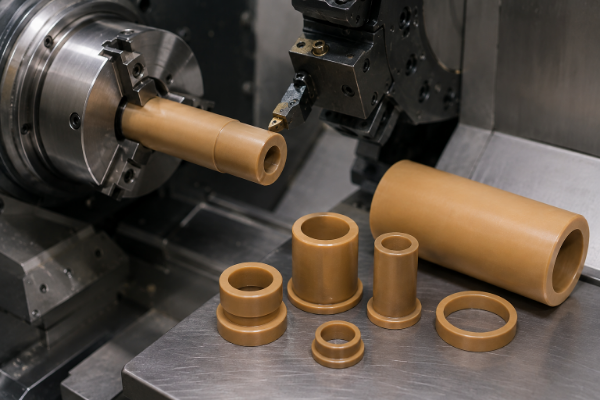
Syensqo describes 4203L as an unfilled grade with high impact strength and good electrical characteristics. A 4203 or 4203L callout still needs the specified stock supplier, form, certificate, and condition.
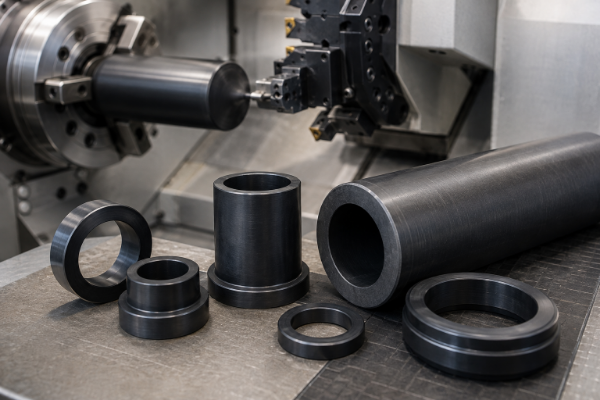
Drake identifies Torlon 4301 as a graphite- and PTFE-filled general-purpose wear grade and maps its stock to ASTM D5204 PAI022L15 and AMS 3670/3B. That mapping is supplier evidence, not an automatic design approval.
Protect Critical Dimensions by Defining the Measurement State
A tight tolerance is incomplete when the drawing does not specify which dimensions are critical, how they relate to datums, and what material and environmental state applies to the acceptance measurement.
Precision decision checkpoint
A buyer can face inspection failure because an unstated moisture or temperature condition creates a measurement mismatch. Whereas a generic tolerance table hides that risk, Zhenling CNC precision review connects the datum, critical feature, condition, and evidence package. Submit your drawing and RFQ to request a feature-specific quote.
Moisture belongs in the review
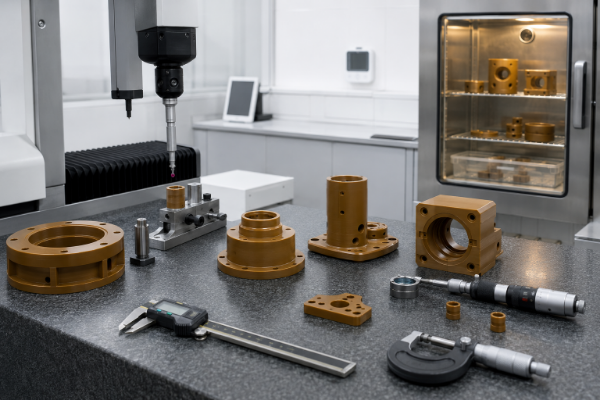
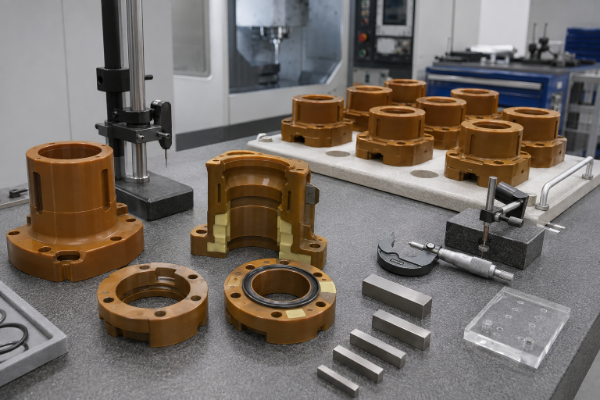
Ensinger states that PAI absorbs moisture and that uptake can cause dimensional change. This doesn’t create a universal conditioning cycle. It creates a question the drawing owner and machining supplier must resolve.
Is the part accepted as supplied, or is it accepted as supplied following a specified conditioning step?
What temperature and humidity assumptions apply during inspection?
Will the service environment be different from the inspection environment?
What fit, bore, wall, flatness, position, or seal attribute is most sensitive?
Allocate precision to function
Applying the tightest tolerance to every feature can add machine time, tool changes, setups, temperature-management effort, and inspection cost without improving performance.
- Mark critical-to-quality dimensions and datum relationships.
- Separate functional surfaces from clearance or cosmetic geometry.
- Surface finishes apply if critical for sealing, friction or assembly, wear.
- Define the report format and sampling plan before production.
No universal tolerance is published here
Zhenling confirms a project tolerance only after reviewing the exact PAI grade, blank size, geometry, feature access, wall sections, quantity, process sequence, and measurement state. Send the drawing for a feature-level response.
Measurement-state checkpoint
Dimensional stability can fail when inspection condition and service condition don’t match. The root cause is often an unstated moisture or temperature assumption, not a simple machine error. Zhenling uses the RFQ to expose that risk; request a feature-level drawing review before assigning a tight tolerance.
How We Plan a PAI Machining Job
A repeatable result starts before a mill, lathe, drill, grinder, or 5-axis machine moves. Its workplan must connect material condition, setups, tool access, distortion risk, coolant compatibility, inspection, and release evidence.
Workplan decision checkpoint
Process risk grows when machining, stabilization, and inspection are treated as separate guesses, because one step can move or expose a feature controlled by another. Unlike a copied speed-and-feed recipe, Zhenling CNC engineers build the workplan around your specification; Zhenling won’t claim a universal cycle. Share the drawing and stock data to request an engineering quote.
STEP 1
Drawing review
Confirm revision, CAD-to-drawing authority, datums, critical dimensions, finish, edges, threads, and inspection notes.
STEP 2
Material review
Confirm grade, filler, specification, stock form, certificate, lot expectation, and condition before sourcing.
STEP 3
Process review
Plan workholding, rough and finish sequence, tool access, abrasive filler response, thermal input, and any conditional stabilization step.
STEP 4
Inspection plan
Define when the part is measured, which features are checked, what instruments are appropriate, and what report must ship.
STEP 5
Release and packing
Verify revision, quantity, identification, documents, edge protection, cleanliness, packing, and export instructions.
Tooling and heat are project variables
Carbide or other cutting tool choices, feeds, speeds, coolant or dry-machining decisions, chip control, and tool-change criteria depend on the grade, filler, geometry, and qualified supplier data. Filled grades can be abrasive; the process plan must account for tool wear without copying a competitor’s recipe.
Annealing and post-cure are conditional
Post-machining annealing, stress relief, or re-cure may be relevant for some stock conditions and service requirements. Zhenling won’t apply a generic cycle from a web page. The specified grade, stock supplier documentation, section size, drawing, and end-use requirement must govern the agreed sequence.
Process boundary
The honest trade-off is that polyamide-imide machining needs a project workplan, while a public page can only define review boundaries. Zhenling won’t claim a universal cutting or post-cure recipe. Send your drawing, stock documentation, and inspection callouts to request an engineering review.
Ensinger’s PAI machining page supports a design- and tolerance-led planning approach. CDC/NIOSH also identifies polymer machining as a dust-generation route, so dust control and housekeeping belong in process planning. That source doesn’t prove any specific Zhenling control or exposure result.
What Changes PAI Machining Price and Schedule
PAI CNC machining price can’t be reduced to a material name. A useful quotation converts the drawing into a cost-driver and risk-control map.
Commercial-scope checkpoint
Budget risk appears when a supplier must guess at grade, tolerance, inspection, or repeat volume, because hidden assumptions surface as requoting or delay. Unlike an instant generic number, Zhenling CNC precision review keeps the trade-off and exclusions in the RFQ. Include prototype and production quantities with the drawing to request a custom quote.
Material
Grade, filler, stock form, blank size, certificate, supplier availability, customer-supplied stock, and lot controls.
Geometry
Part envelope, material removal, thin walls, deep features, small holes, threads, tool access, undercuts, and number of orientations.
Precision
Critical tolerance, GD&T, surface finish, measurement state, inspection method, sampling, report, and first-article scope.
Program
Prototype quantity, production quantity, repeat forecast, design maturity, secondary work, packing, destination, and requested date.
Decisions that can reduce avoidable cost
- Tighten only function-critical features.
- Submit the controlled drawing and 3D model together.
- Resolve material grade, stock form, and certificate before procurement.
- State inspection evidence before quotation, not after machining.
- Quote prototype and expected production quantities together.
No claim of cost savings or investment payback period is made. Every outcome depends on the specifics of the individual project.
Independent example, not a Zhenling case
Production route can change with volume
A 2014 PlasticsToday case described small load-carrying bearings machined from PAI plate for a prosthetic-foot application. The manufacturer considered injection molding for larger production volume.
Volume checkpoint
This narrow lesson is useful: do not assume machining is always the lowest-cost route. Geometry, qualification status, tooling investment, revision risk, and repeat volume determine the better option.
Quote checkpoint
PAI CNC machining price can be wrong when a buyer asks for a number before grade, geometry, tolerance, evidence, and volume are defined. Those drivers explain why two apparently similar RFQs can produce different workplans. Zhenling reviews the controlled drawing and program assumptions; request a custom quote with both prototype and repeat quantities.
Use Machining When Flexibility and Drawing Control Matter
PAI is not automatically the best polymer
Ensinger notes that PEEK may be a better choice where moisture-related dimensional stability is the primary concern. Material substitution still requires the design owner’s approval and a full review of temperature, load, wear, chemical, electrical, and compliance requirements.
Route checkpoint
Machining is not always the right production route, and PAI is not always the right polymer. The trade-off is driven by design maturity, volume, tooling investment, moisture risk, and functional duty. Send your RFQ so Zhenling can review the machining case without pretending to approve the material.
Polymer-to-metal checkpoint
If the design owner is also evaluating a metal route, compare the same load, temperature, media, weight, wear, tolerance, and validation requirements before opening a titanium CNC machining or stainless steel CNC machining workstream.
Custom Torlon Parts We Can Review from Your Print
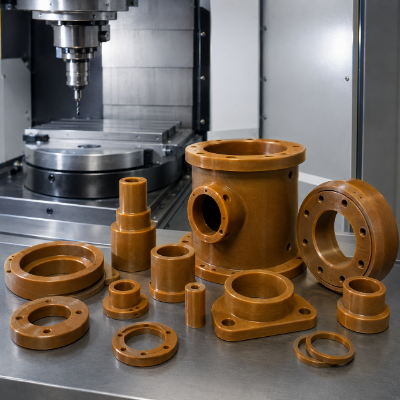
The following are potential candidate part families for engineering review and not a statement that any single grade is suitable for all applications, or that Zhenling has manufactured any of these parts.
Application decision checkpoint
Application risk is hidden when a bearing, seal, valve, or insulator is reduced to a catalog name, because each failure mode loads the polymer differently. Unlike a generic parts list, Zhenling CNC engineers review the drawing, duty, and acceptance criteria together. Attach your custom part RFQ to request a made-to-print quote.
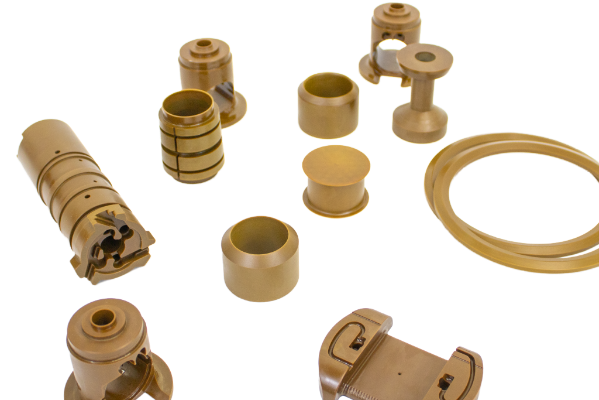
Bearings & bushings
Load, speed, mating surface, lubrication, wear, clearance, and temperature define the review.
Seals & valve seats
Media, pressure, temperature, surface finish, deformation, and leakage criteria matter.
Wear rings & pads
Friction, counterface, debris, edge condition, and wear-resistant grade selection are linked.
Electrical components
Voltage, creepage, heat, mechanical load, and exact grade data need design-owner confirmation.
Compressor components
Fluid, pressure, temperature cycling, motion, and dimensional acceptance drive planning.
Thrust washers
Load face, thickness, flatness, wear, finish, and mating material should be identified.
Guides & insulators
Geometry, mounting, thermal exposure, dielectric function, and surface condition are reviewed together.
Custom geometry
Send the 2D drawing and 3D model for milled, turned, bored, drilled, ground, or multi-axis features.
Why Buyers Bring Complex Prints to Zhenling
Supplier decision checkpoint
A buyer risk is treating machine count as proof of part capability, because equipment, material, geometry, process control, and inspection must work as one system. Unlike a broad factory claim, Zhenling CNC precision review makes the trade-off project-specific; Zhenling won’t claim an unreviewed tolerance. Provide your drawing and RFQ to request a capability response.
Established manufacturing base
Shanghai Zhenling Hardware Co., Ltd. was established in 2006. Its company profile lists an 8,000 m² Jiashan site with a 6,000 m² workshop serving domestic and export work.
Multi-process equipment
Zhenling’s company profile lists CNC turning, milling, grinding, boring, radial drilling, and wire-cut equipment, plus multiple 3-axis and 4-axis centers and imported 5-axis machining centers.
Made-to-drawing workflow
Zhenling’s broader custom-manufacturing model starts from customer drawings or samples. For PAI, the drawing is paired with material, condition, inspection, documentation, and shipment requirements before a commitment is made.
This equipment list describes general factory capacity. It doesn’t prove that every PAI part needs five-axis machining, that every feature is achievable, or that a specific tolerance is guaranteed. Those decisions belong to the project review.
What to Send for a Useful PAI Machining Quote
An incomplete RFQ creates supplier risk because missing revision, material, quantity, or inspection data forces assumptions and can delay release. Unlike a form that only collects contact details, Zhenling CNC engineering review checks the drawing and specification package. Send the 10 fields below to request a custom quote.
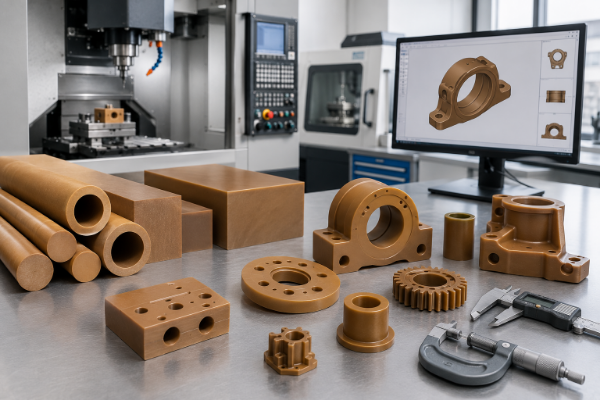
Design and material
- Controlled PDF drawing with current revision.
- STEP or other agreed 3D model.
- Exact PAI grade, filler, brand-equivalence rule, and governing specification.
- Stock form, material certificate, lot, and customer-supplied-material requirements.
- Prototype quantity, production quantity, annual forecast, and repeat-order plan.
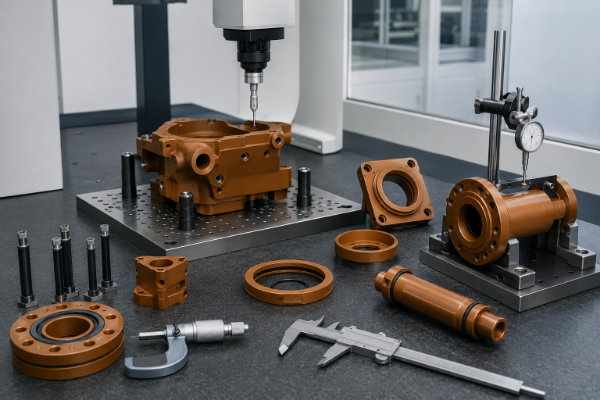
Function and acceptance
- Operating temperatures, load, speeds, media, electrical duty, and mating material.
- Critical features, datum system, fits, finish, edges, threads, and cosmetic criteria.
- Material and environmental state required for final measurement.
- Inspection report, first article, certificate, marking, and traceability requirements.
- Required delivery date, destination, packing, and import-document instructions.
An incomplete RFQ can delay sourcing, programming, inspection planning, and delivery because the supplier must guess or reopen the quotation. Zhenling uses the 10-field checklist to remove that ambiguity. Send your drawing and specifications to request a quote that states its assumptions.
PAI Machining Engineering Tools
Send the Drawing Before You Lock the Grade, Process, or Price
Zhenling will review the material callout, critical features, stock form, process risks, inspection evidence, quantity, and delivery inputs. You receive a project-specific response instead of an unsupported website promise.
What tolerance can Zhenling hold on a machined PAI part?
There’s no responsible universal answer. Achievable tolerance depends on the exact grade and filler, blank size and condition, geometry, wall section, datum strategy, feature access, process sequence, quantity, inspection method, and measurement state.
Torlon 4301 orders require review of work support, tool wear, burrs, taper and feature control. Mark the critical features on the drawing and send the material specification for a feature-level response; no forum account is used as capability evidence.
Can you quote a part when the drawing only says “Torlon”?
Zhenling can begin a clarification review, but “Torlon” alone is not a production-ready material specification. Your RFQ should identify the grade or candidate grade, filler, governing standard and revision, stock form, certificate, substitution policy, and service environment. ASTM D5204 is a classification system and explicitly says it is not intended to select the material for an application.
Do machined PAI parts need annealing or post-cure?
Some grades, stock conditions, removed sections, geometries and service requirements may justify stress relief, annealing, re-cure or a defined conditioning state. The drawing and material documentation must define any water soak or conditioning step before final machining and inspection. Follow the specified grade, stock supplier documentation, cure history, section size, critical dimensions, operating environment and the design owner’s requirements; then record the agreed sequence in the quotation or control plan.
Is Torlon 4301 always the best grade for a bearing or wear part?
No. Grade approval still depends on the current manufacturer data, load, speed, counterface, lubrication, temperature, chemical exposure, impact, geometry, and dimensional requirements.
What makes a PAI CNC machining quotation change?
Main drivers include grade and stock availability, blank size, material removal, feature access, setups, thin sections, critical tolerances, surface finish, threads, conditional stabilization, inspection evidence, secondary operations, quantity, revision maturity, packing, and destination. Submit prototype and production quantities together when possible so the process route can be reviewed at both stages.
Can Zhenling support prototype and repeat production?
Zhenling’s company profile lists CNC turning, milling, grinding, boring, drilling, wire-cut equipment, and 3-, 4-, and imported 5-axis machining centers. Moving a specific PAI part from prototype to repeat production depends on drawing approval, material supply, process validation, inspection evidence, capacity, and commercial review.
![Shop-Floor Carbon Steel CNC Machining Guide [2026]](https://zhenlingmetal.com/wp-content/uploads/2026/08/carbon-steel-cnc-machining-handbook-r2-featured-150x150.png)