Get in touch with Zhenling Company

Material Condition, Heat Treatment and Inspection Decisions
The alloy steel CNC machining decisions are more tractable if the drawing, material condition, critical features, quantity, and acceptance requirements are received as a controlled whole. This page is to provide the handoff document structure for custom alloy steel components rather than an assurance for a certain grade, processing sequence, cost, schedule, or result. Alloy Steel CNC Machining enquiries should include grade, material condition, heat-treatment route, distortion allowance, critical dimensions and inspection. Keep open questions visible. Capability, records and timing become order-specific only when the written quotation closes those questions.
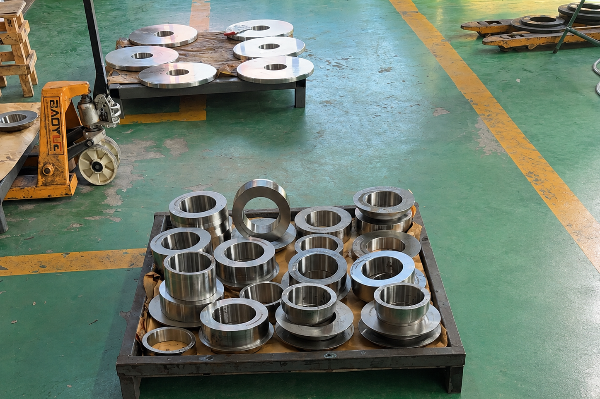
Start the RFQ with controlled inputs
-
Drawing package
2D drawing, controlled 3D model, revision, and feature notes.
-
Material boundary
Grade, applicable standard, product form, and stated condition.
-
Acceptance boundary
Inspection method, records, responsibility, and document format.
-
Commercial boundary
Quantity, split releases, packaging, and required clarification points.
When Alloy Steel Parts Need an Engineering Review Before Machining
A drawing-only request leaves the revision authority, model relationship, datum scheme, and inspection intent undefined. The NIST paper Model Based Definition (2016) discusses MBD as one possible route toward a fully defined product. This page employs it as a historical documentation model rather than a current rule or proof of Zhenling’s activities when identifying which controlled inputs belong in an RFQ.
Buyer pain point: the same grade name may arrive with different standards or conditions
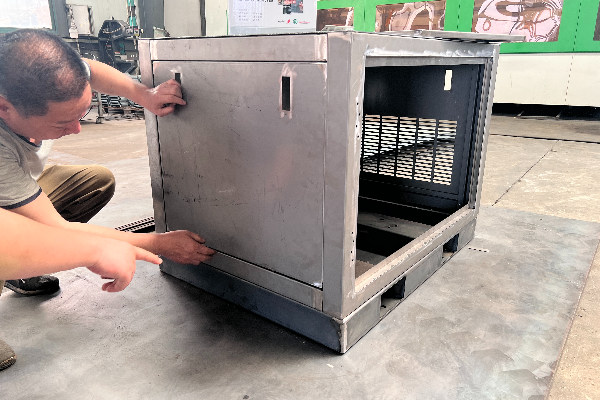
“Alloy steel” and a familiar grade label don’t settle the applicable standard, product form, heat-treatment state, or part-level performance requirements. Rather than infer machinability from a search term, put the controlled specification and condition beside the geometry that drives the review.
For an alloy steel parts manufacturer review, geometry isn’t just a shape file: it’s the context for critical faces, threads, thin sections, interfaces, and measurement access. A request for “parts with excellent mechanical properties” isn’t a requirement, and a request for high strength and toughness, tensile behavior, corrosion resistance, or wear resistance must have an applicable requirement and acceptance method.
01
Identify the controlled drawing and its revision priority.
02
Mark functional geometry and dimensional callouts that require a defined inspection approach.
03
State whether customer-supplied material, a defined product form, or a documented material route is in scope.
04
Flag conflicting notes before a supplier treats them as assumptions.
[SYS_OUT // REV_01]
[DFM_REQ_ACTIVE]
Review output to request
Ask for a written list of open inputs, the document that controls each pending point, and the person responsible for supplying the missing evidence. This doesn’t prove that a design is manufacturable; it creates an auditable starting point for deciding whether the next review should address material, geometry, tooling, inspection, or commercial scope. A design-for-manufacturability (DFM) question belongs in that review; the term itself doesn’t prove a route or result.
That sequence may assist with one common outsourcing pain: the information gathering and decision-making process associated with qualification is a project control discipline, rather than a symptom of delays or ineffectiveness. NIST’s principles regarding evaluation of a supplier treat adequate specification as core criteria rather than an appendix.
Custom Alloy Steel Parts: Material Condition, Heat Treatment, and Critical Features
Material designation cannot be actionable until the RFQ links the requested grade to its applicable standard, product form, condition, and requisite documentation. ASTM A29/A29M is one example of how a buyer should use the relevant bar specification rather than treat a shorthand grade name as a complete order. Search phrases such as steel grades, case-hardening steel, and manufacturing materials describe categories, not purchase requirements.
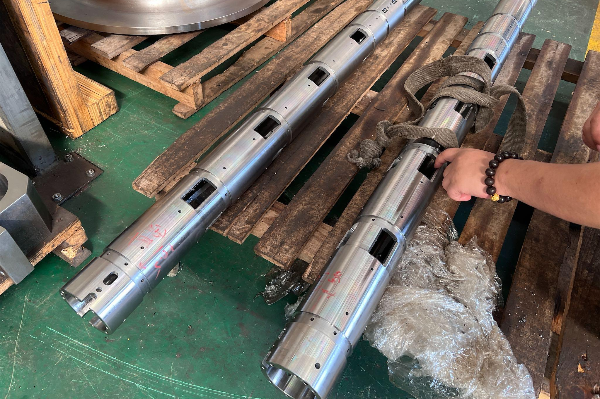
Classification boundary
Classification boundary
1215, 1018, O1, 4130, alloy steel 4140, 4340, 42CrMo, and 42CrMo4 may appear in search and sourcing language. Tool steel, their names, apparent similarity, or search co-occurrence don’t prove equivalence, suitability, availability, or a Zhenling supply commitment. Search labels such as “alloy steel 1215,” “alloy steel 4340,” and “carbon steel” aren’t treated here as proof of classification, equivalence, or availability.
Condition boundary
Condition boundary
Annealed, pre-hardened, case-hardening, carburizing, air-hardening, resulfurized, low-carbon, and other condition terms require the governing document and intended part context. Machinability in the annealed condition can’t be generalized to another state, machine, tool, or design.
Requirement boundary
Requirement boundary
Hardness levels, dimensional stability, ductility, fatigue strength, chromium, nickel, manganese, vanadium, alloying elements, and low carbon content aren’t substitutes for a controlled requirement. They belong in the material, drawing, or acceptance record when applicable. Heat treatment should be requested as a condition to verify rather than a listing of manufacturing capability. That industry reference documents considerations surrounding heat treatment in various process industries, but it doesn’t dictate the appropriate method for any steel part requested—the PO, drawing, standard, and review must govern that.
Critical-feature prompt
Critical-feature prompt
For custom alloy steel parts, list the feature, its functional role, its tolerance or surface finish callout, the required record, and the acceptance owner. This makes a material-condition question traceable to a part feature rather than leaving it as a generic request for precision machining.
Counterintuitive boundary: more descriptors do not make a grade specification
Adding phrases such as good machinability, excellent wear, exceptional strength, or high mechanical performance can’t fill a missing standard and condition. Those terms may help the buyer explain intent, but the drawing and applicable requirement must say what’s to be accepted and how that requirement is evidenced. Neither “wear-resistant” nor “machinable” is an acceptance criterion without a controlled standard and method.
A material test certificate is useful only if the item being tested, the standards applied, traceability and delivery condition have been appropriately defined. When an order calls for a steel inspection document, ISO 10474 is one scope reference to review; it doesn’t certify the machining facility. That document alone doesn’t confirm conformance to all notes on the drawing, and the certificate request ought to live near the acceptance process description.
CNC Milling, CNC Turning, and Complex Feature Planning
Choosing CNC milling, CNC turning, or combined routing depends on the controlled part definition, not a website capability catalog. NIST’s work on integrated CAM/CNC control systems relates to the information relationship of design and manufacturing, but it isn’t evidence of a particular shop’s machine inventory or part result.
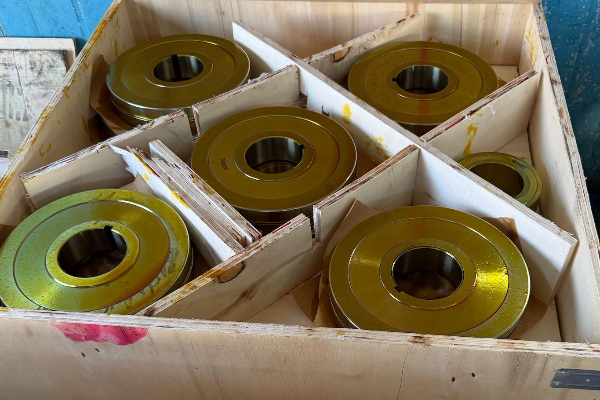

RFQ EVALUATION MATRIX
| RFQ Package State | Files and Fields Present | Clarifications Still Required |
|---|---|---|
| Drawing only | PDF drawing; nominal dimensions; general note block. | Revision authority, 3D relationship, material condition, inspection method, quantity release, and document list. |
| Drawing + controlled 3D/revision | PDF drawing; native or neutral 3D model; revision identifier; datum and critical-feature notes. | Applicable standard, material form and condition, acceptance sampling, traceability, packaging, and record format. |
| Complete RFQ package | Controlled 2D/3D data; revision priority; material standard and condition; quantity; acceptance plan; document, label, and packaging requirements. | Only project-specific conflicts, open technical assumptions, and contract/PO priorities that need written disposition. |
Planning questions before a routing label
A machining review may need to separate metal cutting access from the choice of cutting tool, workholding, inspection sequence, and any later secondary processes. It can’t assume tool life, machine parts routing, or a precision machined outcome from an abbreviated description, because each depends on the controlled material state and feature requirements.
The matrix presented here isn’t a performance comparison or listing of the superiority of suppliers, but the status of the documents that had been provided versus the questions that are still open. Modern Machine Shop’s analysis of rotary tables is a related guide to planning manufacturing and shouldn’t be taken to prove any aspect of Zhenling process configuration.
Alloy Steel RFQ Readiness Matrix
This alloy steel RFQ Readiness Matrix is a handoff framework for supplier, engineering, and procurement review. It isn’t a substitute for a drawing, purchase order, applicable standard, contract, inspection plan, or acceptance rule; it merely makes their interrelatedness visible before production runs are discussed.
Why this framework is different
Quality control isn’t a generic promise here. The matrix forces the buyer to connect a material request, an inspection process, a record, and the rule that decides acceptance; that connection is more useful in practice than treating documentation as an afterthought.
Handoff test
If the buyer can’t point to the controlled file, applicable requirement, and acceptance owner for a matrix row, that row is an open clarification rather than a completed specification. This test prevents a polished RFQ from hiding an unresolved contract or inspection decision.
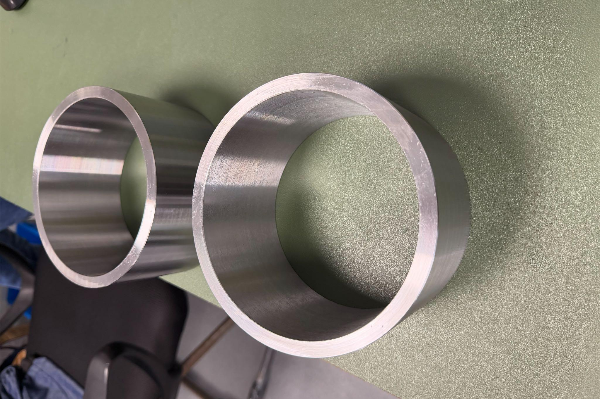
REF_IMG: CNC-PROCESS
Process Execution
Use the matrix to draft a clarification list that can then be reviewed with the RFQ. NIST’s procurement guide endorses the general principle that conditions and evaluation methods must be described.
DRAFT CLARIFICATION LISTQuality, Acceptance, and Evidence Requirements for Custom Steel Components
Quality evidence requires identifying the object, requirements, provider, limitations and supporting records. As ISO/CASCO describes these characteristics in the context of attestations of conformity, a broad label, such as a certificate, should not serve as a replacement of a part-specific acceptance plan.
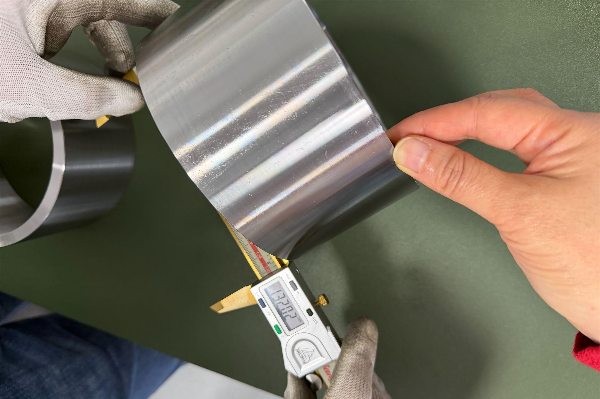
Drawing evidence
Link dimensional requirements, surface finish, and critical features to the controlled revision and measurement method.
Material evidence
Link the stated grade, standard, condition, product form, and requested traceability to the order requirement.
Inspection evidence
Link inspection processes, sampling rules, report format, and acceptance responsibility to the applicable criteria.
A certificate with a clearly defined object, scope, provider, and authorization chain (accreditation, etc.) may be helpful. It isn’t, however, proof that a custom machined part meets its tolerance, surface finish, repeatability, accuracy and repeatability, or performance specifications unless the records and scope link that part’s characteristics to the attestations.
CE & ASME are evidence-boundary questions
CE marking concerns applicable product legislation and conformity responsibilities, rather than a universal machining-company badge. ASME evidence requires the relevant authorization, code, product context, and mark applicability; neither name should be used as a Zhenling claim on this page without those documents.
Record-chain check
For each claimed requirement, ask which document identifies the part, which record shows the inspection or declaration, which revision was used, and who had authority to accept a deviation. A document title alone can’t close that chain, and a management-system certificate isn’t always evidence of a product-level conformity decision.
Relevant sources are the European Commission’s information on CE marking and ASME’s description of its mark. They don’t mean that a customer’s part requires either pathway or that any supplier holds it.
Zhenling Manufacturing Context And Project Evidence
When evaluating a proposal for machining services, the buyer needs project evidence that relates to the entity, stated scope, and the required steel components. Rather than publish unsupported, general claims of company scale, equipment, exports, applications, certifications, capacity, precision or delivery speeds, this document outlines requested documents for review by the buyer.
Entity
legal name, address, responsible contact, and relationship to the quoted work.
Scope
certificate or authorization object, issue date, issuer, and applicable activity.
Equipment-to-part link
process record that connects equipment to the relevant operation.
Quality records
drawing revision, inspection record, material evidence, and acceptance disposition.
Permissioned case
customer permission, scope, documented outcome, and source record.
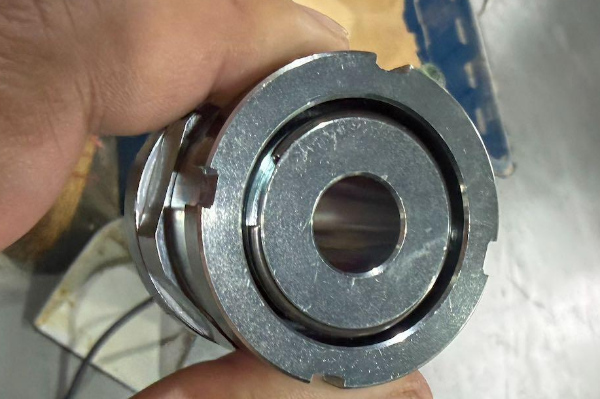
Case-Study Evidence Status
No customer result is published in this draft because a permissioned case record hasn’t been supplied for public use. A future case study should name the approved scope, evidence source, buyer permission, and reviewable outcome rather than using an anonymized claim to imply a result.
Counterintuitive as it seems, a scoped certificate isn’t worthless: ISO describes certification and accreditation as separate types of evidence. But it isn’t proof of a particular alloy steel part, process route, or acceptance result by itself; the buyer should connect it to the pertinent records.
Evidence Is Stronger When It Is Linked, Not Larger
A long equipment list, a broad market statement, or an unscoped customer logo isn’t a substitute for a record that connects the relevant operation to the part and its controlled revision. The buyer can request permissioned, reviewable project evidence rather than accepting volume as a proxy for applicability.
Evidence Request For An Alloy Steel Parts Manufacturer
Ask whether the supplier can identify the entity making the statement, the document’s scope, the relationship between an equipment/process record and the part, the inspection record’s revision, and any customer permission behind a case reference. This is a due-diligence checklist, not an allegation about any company.
From RFQ to Engineering Clarification: What Shapes Your Quote
Read the quotation as the definition of a given scope, not as a replacement for missing information about project planning inputs. For alloy steel CNC machining processes, the answers to questions regarding material conditions, drawing revisions, quality records, material quantity, packaging instructions, and confidentiality profoundly influence the review path and must be treated as clarification issues, not merely a prompt for speed.
-
01
Send the controlled technical package and clearly identify the revision priority.
-
02
State the material grade, applicable standard, product form, and condition without assuming cross-standard equivalence.
-
03
List critical features, surface requirements, and the acceptance method or open questions.
-
04
State quantity, releases, documents, labels, packaging, and confidentiality concerns.
-
05
Review written clarifications against the PO, contract, and acceptance rule.
Bronze decision card: No assumed ROI
No assumed ROI is stated because this draft has no verified cost, price, rework, throughput, or delivery evidence. Review six inputs before comparing commercial scope: controlled revision; material standard and condition; critical geometry and tolerance; quantity and release pattern; inspection and document requirements; packaging, labeling, and confidentiality requirements.
Scope checkpoint before comparison
When comparing machining services or CNC services, record what’s included, excluded, customer-supplied, and still subject to written clarification. This avoids a false comparison between quotes that use different drawing revisions, material conditions, inspection records, or packaging assumptions.
Discuss Drawing and Confidentiality Requirements through a normal contact path; this page doesn’t state that sensitive files are securely uploaded, retained, or governed by an existing NDA.
Initiate Technical ContactAlloy Steel CNC Machining Engineering Tools
Alloy Steel RFQ Readiness Scorecard
Audit CAD files and GD&T specifications for manufacturability prior to RFQ submission. Ensure all critical tolerances are accurately defined.
Alloy Steel Material Order Line Builder
Standardize BOM parameters. Generate precise order lines specifying alloy grades, temper states, and secondary processing requirements.
Alloy Steel Quote Scope Comparator
Align multi-vendor quotation scopes. Objectively evaluate true machining costs, lead time disparities, and process exclusions.
Alloy Steel Critical Feature Evidence Planner
Outline required quality documentation for high-precision components, from material certifications (MTRs) to FAI CMM inspection reports.
Include the controlled drawing package and revision, material grade and applicable standard, stated condition, critical features, quantity, acceptance requirements, document needs, packaging, and open questions. That RFQ Matrix is a way to organize these inputs; it doesn’t replace the governing documents.
![Shop-Floor Carbon Steel CNC Machining Guide [2026]](https://zhenlingmetal.com/wp-content/uploads/2026/08/carbon-steel-cnc-machining-handbook-r2-featured-150x150.png)