Get in touch with Zhenling Company

Drawing-led process review
Swiss Machining Part-Fit Review for Custom Components
Begin with the part, not the machine label. Before proposing a Swiss-machining route, Zhenling Metal reviews the geometry, material condition, critical features, inspection requirements and RFQ assumptions for small, slender or intricate turned parts. Swiss Machining enquiries should include diameter, length-to-diameter ratio, guide-bushing fit, features, quantity and inspection needs. Resolve material, geometry and measurement risks first. Price and timing should follow the documented route, not an equipment category.
-
01
Evidence before numbers
No tolerance, capacity, cycle time or savings figure enters the route unless its scope can be checked.
-
02
Route before price
Written quotation identifies the assumed production route, site, external processes and buyer dependencies.
-
03
Method before report
Inspection evidence is linked to the drawing characteristic, datum, method, frequency and acceptance rule.
-
04
Screen before transfer
Non-sensitive part-fit inputs come first; protected technical files follow an approved secure transfer route.
Part features before capability claims
Swiss Machining for Small, Slender and Complex Parts
In Swiss-type turning, the sliding headstock feeds bar stock through a guide bushing, allowing cutting close to the point of support. That support doesn’t decide the route by itself; stock condition, bushing fit, tool access and production requirements remain connected.
The honest version
Swiss machining isn’t always the right call for a small part. Zhenling engineers compare the drawing, CNC turning route and inspection burden before recommending a process.
Request a drawing-specific part-fit review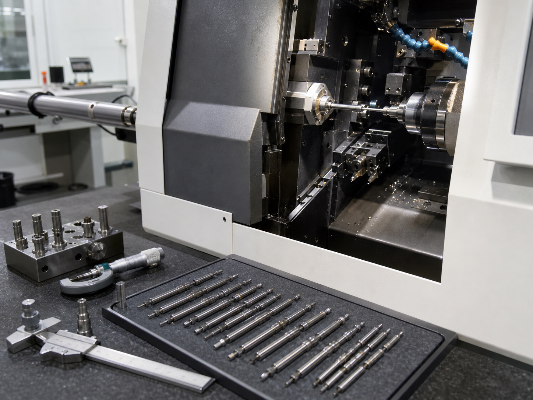
Slender geometry
- Long turned features relative to diameter
- Deflection-sensitive diameters or tapers
- Support strategy needs early review
Small features
- Fine threads, grooves or cross holes
- Short distances between critical features
- Burr control and measurement access
Operation mix
- Turning plus drilling or milling features
- Potential secondary machining
- Cutoff and back-working considerations
Repeat demand
- Prototype, bridge or production run
- Setup effort across forecast quantities
- Revision stability and release plan
Why the guide bushing is not a universal answer
Bushing fit and bar preparation influence support, friction and process consistency. A long component may be machined in shorter sections instead of across its full unsupported length. Rules of thumb vary by context, so Zhenling doesn’t publish a universal length-to-diameter cutoff on this page.
Review for Swiss machining
- Use this route when support near the cut, feature consolidation or repeatable bar-fed production may solve a drawing-level problem.
- Flag the features driving process choice.
- Confirm accessible tools and inspection methods.
Compare another route
- Conventional CNC turning or mill-turn can be the better choice when geometry, stock form, access, setup economics or equipment availability points elsewhere.
- Compare total operations, not machine names.
- Keep the final decision in the written quote.
Part-Fit Review and Process Planning
A good Swiss CNC machining review bridges the drawing to a viable process and a result that can be verified. When stock, tolerance and production-control assumptions aren’t explicit, those risks can shift after purchase and create commercial exposure.
Buyer voice translated into RFQ controls
Buyers ask how to package a CNC service request efficiently; the checklist below defines the engineering evidence. Small-order buyers value a clear route comparison rather than an automatic Swiss-machine label. Unlike a machine-list page, this review doesn’t turn unverified equipment into a capability claim.
Request a specific drawing and tolerance reviewGeometry package
- Controlled 2D drawing and 3D model
- Datums, threads, radii and edge conditions
- Critical-to-function characteristics
Material definition
- Grade and governing specification
- Bar form, condition and hardness
- Certification or traceability needs
Commercial demand
- Prototype and production quantities
- Forecast, release and revision status
- Target date and delivery destination
Dimensional intent
- Critical tolerances and fits
- Geometric controls and datum strategy
- Measurement access and acceptance rule
Surface and edge state
- Roughness, coating or passivation
- Deburring and cleanliness expectations
- Cosmetic and functional zones
Inspection records
- First-article or sample request
- Dimensional report content
- Material and process documentation
Send only non-sensitive screening information first
Start with the part envelope, material family, feature summary, quantity range and destination.
Use an approved secure transfer route for controlled, export-restricted or confidential technical data. Confirm confidentiality, storage and access policies before sending the full design package.
Swiss Part-Fit Decision Matrix
| Drawing signal | Review for Swiss | Compare conventional turning | Engineering clarification |
|---|---|---|---|
| Slender turned feature | Support near the cutting point may help. | Check whether chucking and tail support are sufficient. | Provide actual geometry, datum plan and stock condition. |
| Multiple axial and radial features | Explore feature consolidation in one route. | Compare separate turning and milling operations. | Confirm tool access, back-working and burr risk. |
| Prototype or small batch | Possible when geometry or operation mix justifies setup. | May reduce setup if the part is straightforward. | Quote both routes when economics are unclear. |
| Demanding material condition | Review tooling, cooling, stock and inspection implications. | Compare rigidity, access and proven process history. | State grade, heat treatment, hardness and certification. |
| Critical geometric control | Map the characteristic to process and inspection steps. | Consider whether separate operations improve access. | Define datum simulation and acceptance records. |
| Unstable annual demand | Evaluate setup across realistic releases. | Compare flexible scheduling and available equipment. | Share forecast confidence and minimum release quantity. |
“A useful quotation makes the proposed route, open assumptions and verification plan visible. If those items are not confirmed, the answer should remain conditional.”
Material name is the start of the review
Swiss Machined Parts, Materials and Application Fit
Candidate Swiss-machined parts include pins, shafts, bushings, threaded components, fasteners and small valve-related parts. Material risk remains because heat treatment, hardness, stock condition and turning strategy affect wear, deformation and inspection needs.
Material-fit decision
A familiar grade isn’t always an approved Swiss-machining route. Zhenling engineers compare condition, surface, burr and precision inspection requirements for each application.
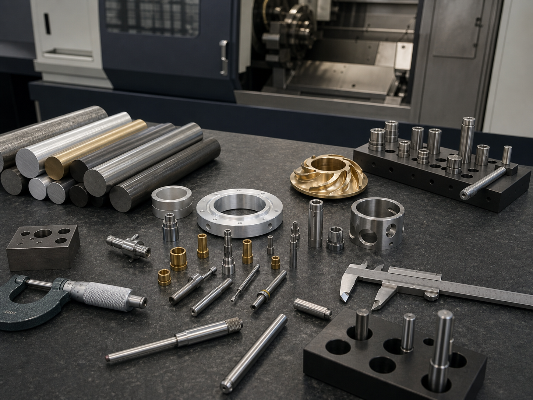
HOVER TO REVEAL DATA
Geometry language buyers use
Intricate parts and precision parts can contain simple turned features or genuinely complex geometries. Complex components and intricate components still need feature-by-feature access, support and measurement review. Labels never replace the controlled drawing.
Application labels need evidence
Automotive or medical device use can change documentation, validation and change-control expectations. A cutting tool, coolant plan and inspection method must suit the stated material condition. Application names don’t establish regulatory or high-precision capability.
Rotational core
- Pins and locating elements
- Shafts and stepped diameters
- Bushings and sleeves
Functional details
- Threads, grooves and undercuts
- Cross holes, flats and wrench features
- Sealing, mating and flow-related features
Downstream requirements
- Coating, heat treatment or passivation
- Cleaning, packaging and identification
- Assembly or secondary operation interfaces
Material families Zhenling can place under review
No suitability promise from a grade list
Heat treatment, hardness and microstructure can affect cutting forces and tool life. Cooling method, tool access, chip control and surface requirements can also influence the process route. Material certificates won’t replace a manufacturability and inspection review.
| Material question | Why it changes the route | RFQ evidence |
|---|---|---|
| What is the supplied condition? | Hardness and heat-treatment state influence cutting behavior and verification. | Material specification, condition and hardness range. |
| Is bar stock controlled? | Diameter, straightness, surface and preparation can affect support and feeding. | Stock form, mill condition and any preparation requirement. |
| Which surfaces are functional? | Tool path, burr control and secondary processing depend on functional zones. | Drawing notes, roughness and coating or passivation callouts. |
| Which records are required? | Traceability and inspection scope affect sourcing, handling and quotation. | Material certificate, process certificate and report expectations. |
Choose by geometry, not by label
Swiss Machining vs Conventional CNC Turning
Swiss turning isn’t automatically more precise, faster or less expensive for every part. Purchasing risk rises when buyers compare a Swiss lathe with a conventional lathe by label instead of comparing material, setup, secondary operations, inspection and release quantity.
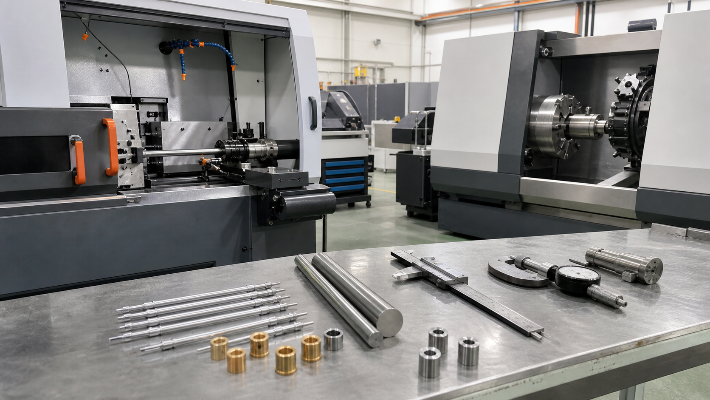
Three process questions buyers compare
- What’s the difference between CNC and Swiss?
- What’s the difference between Swiss machining and turn mill machining?
- What’s the difference between a screw machine and a Swiss machine?
A familiar process isn’t always the best route;
request a specific drawing and tolerance comparison.
| Decision factor | Swiss-type route | Conventional CNC turning route | Quotation question |
|---|---|---|---|
| Work support | Guide-bushing support close to the cutting zone may reduce unsupported overhang. | Chuck, collet, tailstock or other support is arranged around the part. | Which feature is sensitive to deflection? |
| Feature sequence | Turning and compatible live-tool features may be consolidated. | Turning may be followed by milling, drilling or another setup. | Which features truly need one setup? |
| Stock requirements | Bushing and feed strategy can make stock condition important. | Stock preparation follows the selected chucking and support plan. | What bar form and preparation are quoted? |
| Setup economics | Tooling, bushing and program preparation must be spread across the release. | A simpler setup may suit straightforward or low-quantity work. | What quantity and forecast justify each route? |
| Secondary work | Potentially fewer transfers when accessible features are combined. | Separate operations may improve access or flexibility. | Which secondary steps remain in the price? |
| Inspection strategy | Feature relationships may benefit from a consolidated process, but still require verification. | Multiple setups require clear datum transfer and inspection planning. | How will each critical characteristic be accepted? |
For stable rotational geometry
Compare the proposed route with Zhenling’s CNC turning service for drawing-defined parts when the component doesn’t require near-cut guide-bushing support.
For multi-face access
Review 5-axis CNC machining for complex metal parts when angled faces, deep access or compound geometry drive the setup.
Swiss may deserve review when
- Slender geometry makes near-cut support relevant.
- Several compatible features could share a route.
- Repeat releases justify setup and control effort.
- Bar-fed production matches the stock strategy.
Conventional turning may be better when
- Geometry is short, stable and straightforward.
- Stock form or feature access doesn’t fit the proposed setup.
- A flexible low-quantity route reduces preparation.
- Separate operations provide a clearer inspection path.
Verification follows the drawing
From Drawing Review to Inspection
The drawing revision must remain consistent from RFQ through shipment. A revision or datum mismatch can make otherwise acceptable work unusable, so Zhenling engineers tie machining, inspection and document release to the approved drawing.
Translate quality language into acceptance evidence
Tight tolerances need a drawing-defined feature, datum, method and acceptance rule.
“High precision,” “high-quality” and “consistent quality” aren’t substitutes for task-specific measurement evidence. Precision parts require a precision plan that identifies uncertainty, frequency, records and disposition authority.
-
01
RFQ intake Register the drawing revision, quantity, material and delivery basis.
-
02
Route review Compare production options, stock, special processes and open risks.
-
03
Inspection plan Map critical characteristics to methods, frequency and records.
-
04
Approval point Confirm whether a sample, first article or other release is required.
-
05
Final release Verify agreed documents, packaging, identification and shipment status.
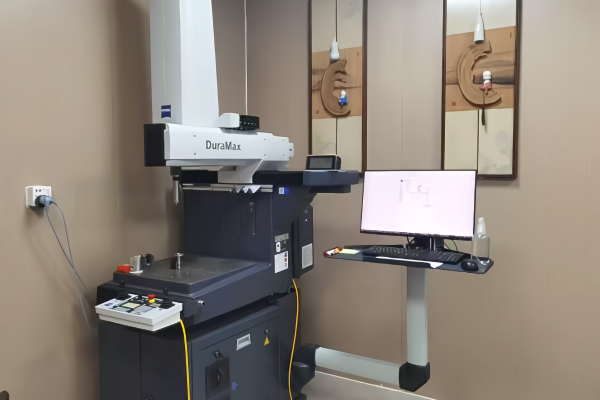
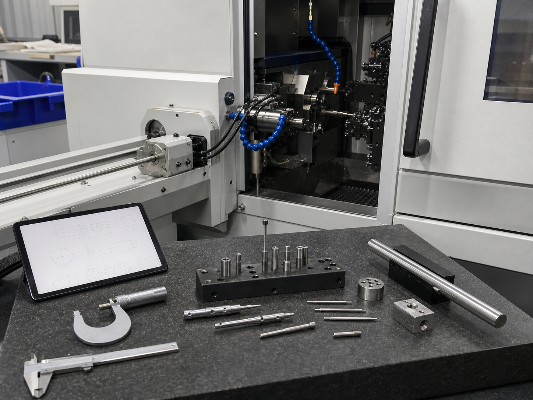
Inspection equipment pictured in the supplied Swiss-machining folder
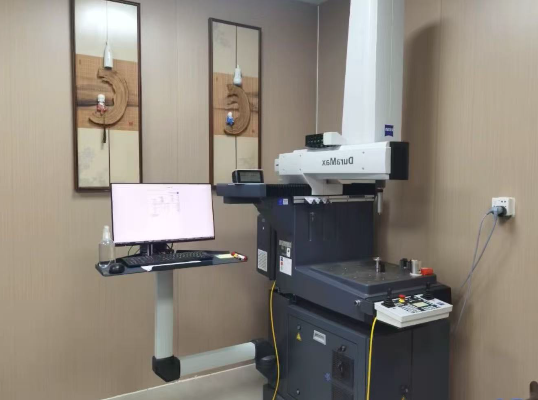
Coordinate-measuring inspection equipment pictured in user-supplied material. Equipment identity and applicable project scope require confirmation.
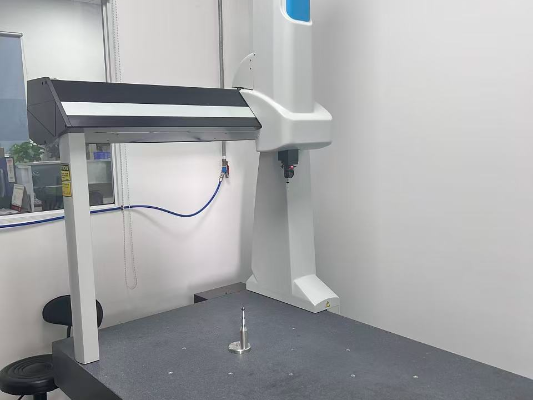
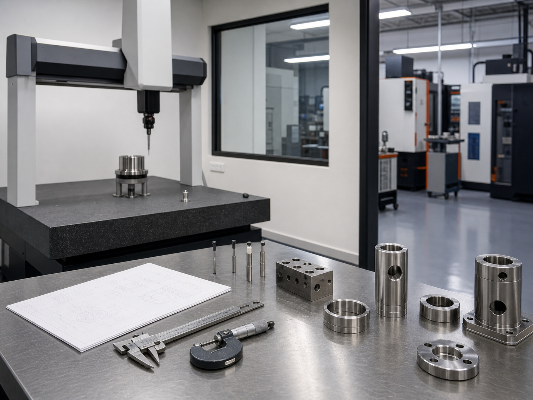
Inspection activity pictured in the supplied folder. That image alone does not establish calibration status, uncertainty or report coverage.
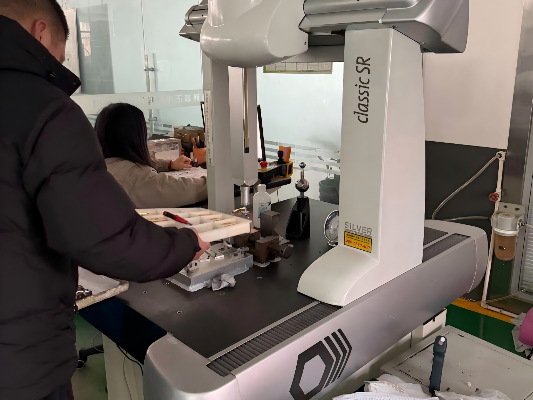
Coordinate-measuring setup pictured for context. Drawing-specific method, traceability and acceptance criteria must be stated in writing.
Metrology scope before confidence
ISO 10360-2 and NIST guidance show why equipment acceptance, calibration context and task-specific uncertainty are not interchangeable.
A CMM report isn’t always sufficient unless the method, datum, characteristic and acceptance rule match the purchase requirement.
What a CMM image does not prove
- Calibration data and measurement-specific factors are both needed to estimate task-specific uncertainty.
- ISO 10360-2 provides acceptance and reverification tests for a limited class of contacting-probe Cartesian CMMs.
- An image doesn’t show that the equipment covers every feature, tolerance or Swiss-machined part in a project.
Before quotation
- Critical-characteristic list
- Datum and acceptance interpretation
- Required report and certificate types
Before production release
- Approved drawing revision
- Sample or first-article decision
- Nonconformance and deviation authority
Before shipment
- Agreed inspection record
- Material and special-process documents
- Identification, packaging and destination checks
No fixed price without a fixed scope
Swiss Machining Cost, Lead Time and RFQ Requirements
A responsible Swiss-machining quote doesn’t begin with a universal public price per part. The real exposure is a hidden scope mismatch: material, geometry, quantity, inspection records, secondary operations and delivery requirements all shape price and schedule.
Commercial reality before a number
- UC Davis Tech Foundry separates materials, setup and processing, staff time and machine time in its project-cost guidance, reinforcing the need for a scoped estimate.
- Shops compare recurring outsourced Swiss spend with in-house cost, but the trade-off changes with knowledge, setup, utilization and inspection responsibility.
- Zhenling engineers state the quote basis rather than invent a universal lead time or savings rate.
Bronze evidence level
Eight cost drivers, zero invented savings claims
- Material and stock form
- Heat treatment or hardness
- Feature complexity
- Tolerance and surface controls
- Quantity and release pattern
- Secondary processes
- Inspection documentation
- Packaging and destination
Minimum RFQ package
Useful first engineering response
- Controlled 2D drawing and available 3D model
- Material grade, specification, form and condition
- Prototype, order and forecast quantities
- Critical tolerances, fits and geometric controls
- Surface, edge, cleanliness and special-process notes
- Inspection, certificate and traceability requirements
- Target delivery date, destination and packaging
- Proposed process route and production-mode disclosure
- Open manufacturability and measurement questions
- Stock and secondary-process assumptions
- Sample or approval recommendation
- Quotation inclusions, exclusions and validity basis
- Inspection documents included in the offer
- Schedule stages and buyer dependencies
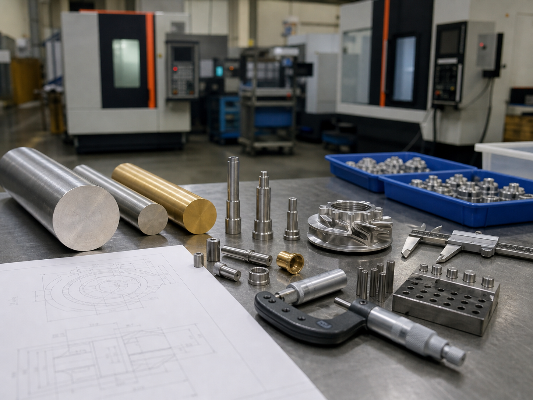
Lead time is a sequence, not a single machine-hours number
Clarify
Resolve files, material, features and acceptance requirements.
Source
Confirm stock, tooling, special processes and any external provider.
Approve
Complete sample or first-article activity if the order requires it.
Produce
Run the approved route with revision and nonconformance controls.
Release
Complete inspection, documentation, packing and transport handoff.
Download the buyer-ready checklist
Use the printable checklist to align engineering, quality and procurement before the RFQ is released.
Attach only non-sensitive information until the approved transfer route is confirmed.
Engineering Planning & Review Tools
Evaluate part geometry, compare manufacturing routes, and define quality requirements with our structured engineering tools before quotation.
TOOL. 01
Swiss Part-Fit Screening Checklist
Assess material, geometry, and critical features to determine suitability for Swiss-type turning.
Open Tool
TOOL. 02
Swiss vs Conventional Turning Route Comparison
Analyze setup, support, and operation sequence differences to select the optimal machining route.
Open Tool
TOOL. 03
Inspection and Document Planner
Define required documentation, sampling plans, and measurement methods to ensure traceable quality.
Open Tool
Make the next decision auditable
Request a Swiss Machining Part-Fit Review
Provide a non-sensitive geometry summary, material family, quantity, critical features and destination. Zhenling Metal can then identify the questions that must be resolved before quoting a Swiss-machining route.
Purchase-oriented answers
FAQ: Swiss Machining Purchase Questions
What parts are a good fit for Swiss machining?
Slender turned features, compact complex details and repeat bar-fed demand deserve review. Actual geometry, stock, quantity and inspection requirements still decide the route.
How is Swiss machining different from conventional CNC turning?
A Swiss-type machine feeds stock through a guide bushing and supports it close to the cutting zone, while conventional turning uses a different workholding and support arrangement. A better route controls the drawing’s features with a clear setup, secondary-operation and inspection plan.
What materials can be reviewed for Swiss machining?
Zhenling can place carbon steel, alloy steel, bearing steel, stainless steel, aluminum alloy and selected nickel-based or corrosion-resistant alloys under review. Grade, heat-treatment condition, hardness, stock form and required evidence determine whether a specific route can be quoted.
Is Swiss machining cost-effective for prototypes or small batches?
It can be, especially when part geometry or operation consolidation offsets setup effort, but there’s no universal minimum quantity. A route comparison should include preparation, stock, secondary work, inspection and the expected release pattern.
What tolerances can be quoted?
Tolerances can be quoted only after the drawing, material, feature relationships, process route and inspection method are reviewed. This page intentionally publishes no Zhenling Swiss-machining tolerance range because no machine-specific capability evidence has been approved for publication.
What files and specifications are needed for a quote?
Provide a controlled 2D drawing, available 3D model, material specification, condition, quantities, critical characteristics, surfaces, required documents, destination and target date. Begin with non-sensitive screening data if confidentiality or export-control restrictions may apply.
Can inspection reports be included?
Request the exact report content in the RFQ and purchase order. Quoted scope should confirm characteristics, method, sampling or full-report basis, applicable equipment, material or process certificates, record format and retention expectations.
Does Zhenling own Swiss-type CNC equipment?
Available source material doesn’t establish ownership of a Swiss-type machine, so the draft makes no such claim. Ask the quotation to identify the production site, proposed equipment route and any externally provided process.
- Confirm who controls the drawing revision.
- Name the inspection and nonconformance owner.
- Record the production site and country-of-origin basis.
- Require written notice before the approved route changes.
Is ground bar always required for Swiss machining?
No universal statement is reliable because the answer depends on guide-bushing design, machine configuration, stock condition and part requirements. Your RFQ should state the quoted stock form, straightness basis, surface condition and any preparation assumption.
- Ask whether the proposed bushing contacts the bar.
- Confirm how stock variation will be controlled.
- Keep machine-specific exceptions out of general purchasing rules.
- Compare added stock preparation with the process benefit.
![Shop-Floor Carbon Steel CNC Machining Guide [2026]](https://zhenlingmetal.com/wp-content/uploads/2026/08/carbon-steel-cnc-machining-handbook-r2-featured-150x150.png)