Get in touch with Zhenling Company

Last updated: October 2026
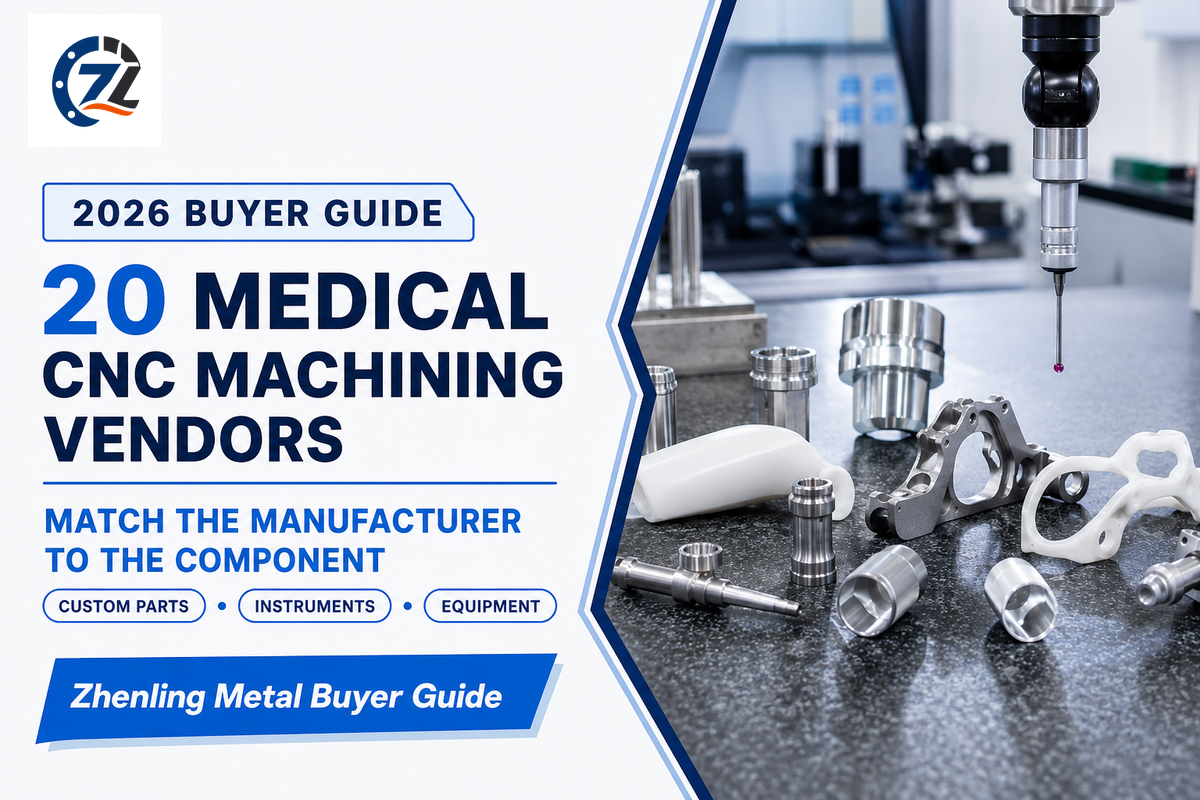
The best medical device cnc machining service vendors depend on the component: Zhenling Metal for drawing-based custom parts, Tecomet for orthopedic programs, and Cadence for miniature instruments. This guide compares 20 manufacturers by their actual machining offer, medical applications and purchasing fit, rather than claiming one company leads every category.
Quick Picks
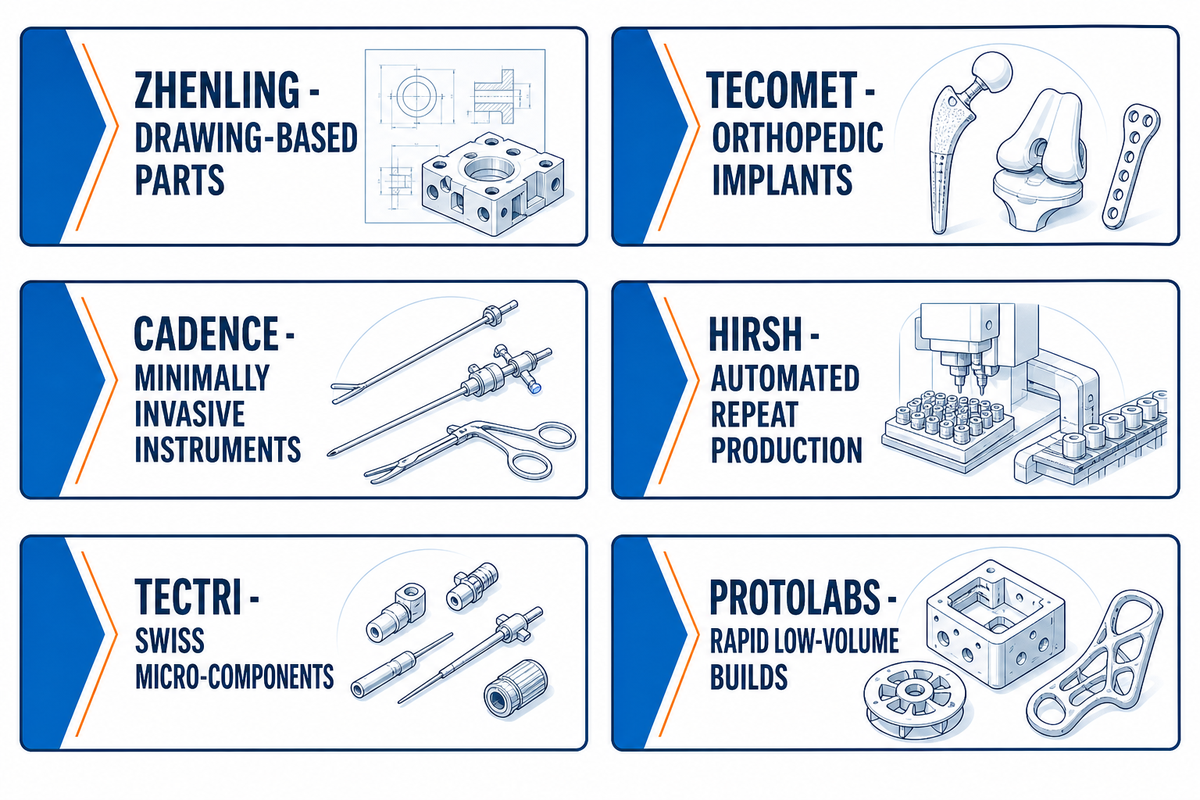
- Best for drawing-based custom components: Shanghai Zhenling Hardware Co., Ltd. (Zhenling Metal).
Disclosure: This guide is published by Zhenling Metal. We list ourselves first because this is our website, not because we claim to be the market leader. The other 19 vendors are grouped by what they are best for, in no particular order within each group.
- Best for orthopedic implants: Tecomet.
- Best for minimally invasive instruments: Cadence.
- Best for automated repeat production: Hirsh Precision.
- Best for Swiss-machined micro-components: Tectri.
- Best for rapid, low-volume builds: Protolabs’ own factories.
How We Selected These Vendors
Company information was verified against official websites and public sources in October 2026. Selection required owned CNC machining capabilities and documented medical work. Trading-only companies, brokers, sourcing platforms, directories and machine-tool sellers were excluded, as were manufacturers lacking medical evidence. The shortlist covers North America, Europe and Asia without country quotas. Company websites supply capability claims; the Best For labels express editorial judgments about purchasing fit. Protolabs qualifies through its own factories, not its partner network.
Medical CNC Machining Service Vendor Comparison
The following analysis compares a manufacturer’s documented ability against a customer’s specific business requirement.
Headquarters identify the business, not necessarily the shipping factory. Founded years follow published company history: Viant, Elos, Takashima and Integer include predecessor roots; Precipart’s date records its U.S. beginnings. Those dates don’t represent years spent machining medical parts. Tecomet and Orchid are one entry following their May 2026 merger.
For example, Greatbatch’s annual report distinguishes its founding from the later incorporation date used in legal records.
| No. | Company Name | Headquarters | Founded Year | Best For | Brief Introduction | Main Products | Key Advantages | Potential Disadvantages | Official Website |
|---|---|---|---|---|---|---|---|---|---|
| 1 | Shanghai Zhenling Hardware Co., Ltd. (Zhenling Metal) | Shanghai, China | 2006 | Drawing-based custom CNC machining for precision medical-device components | Own Jiashan workshop supplies non-finished components to approved drawings. | Housings, mounts, manifolds, fittings | Drawing-led milling and turning | Finished-device release remains with buyer | zhenlingmetal.com |
| 2 | Hirsh Precision | Frederick, Colorado, USA | 1979 | Automated repeat production | Medical precision manufacturer connecting prototypes, machining and assembly. | Medical components and assemblies | 5-axis cells and automation | Some finishes use partners | hppi.com |
| 3 | Protomatic | Dexter, Michigan, USA | 1971 | Prototypes and short runs | Custom machine shop serving medical and diagnostic development projects. | Orthopedic parts, cytometer components | Development-focused machining and CMM inspection | Short-run emphasis | protomatic.com |
| 4 | Protolabs | Maple Plain, Minnesota, USA | 1999 | Rapid low-volume builds | Digital manufacturer with owned factories and a separately identified network. | Metal and plastic medical parts | Digital quoting and manufacturability feedback | Owned-factory geometry limits apply | protolabs.com |
| 5 | Tecomet | Woburn, Massachusetts, USA | 1963 | Orthopedic manufacturing programs | Implant and instrument manufacturer combined with Orchid in 2026. | Implants, instruments, cases | CNC, forging and finishing | Orthopedic specialization adds less to simple housings | tecomet.com |
| 6 | Viant | Foxborough, Massachusetts, USA | 1968 | Metals plus assembly | Medical contract manufacturer combining component processes and device assembly. | Bone screws, instruments, tubing | Swiss machining and metallurgical testing | Integrated scope exceeds a machining-only order | viantmedical.com |
| 7 | Elos Medtech | Göteborg, Sweden | 1923 | Orthopedic parts and procedure kits | Medical manufacturer combining metal processing, plastics and packaged products. | Implants, instruments, procedure kits | CNC, EDM and assembly | Kit integration may be unnecessary for individual hardware | elosmedtech.com |
| 8 | Cadence | Staunton, Virginia, USA | 1985 | Minimally invasive components | Contract manufacturer integrating precision machining with laser processes. | Instrument components and assemblies | LaserSwiss combined processing | Specialized processes add little to uncomplicated brackets | cadenceinc.com |
| 9 | Tegra Medical | Franklin, Massachusetts, USA | 2007 | Sharp components and devices | Medical contract manufacturer spanning development, components and assembly. | Wire and tubing, needles, instruments | Swiss machining and development support | Sharp-component focus is less relevant to external hardware | tegramedical.com |
| 10 | Autocam Medical | Kentwood, Michigan, USA | 2005 | Surgical cutting tools | Medical machining specialist producing instruments and implant components. | Drill bits, drivers, screws, plates | Milling, turning and cutter grinding | Orthopedic emphasis rather than equipment integration | autocam-medical.com |
| 11 | Tectri | Court, Switzerland | 1998 | Complex medical micro-components | Acrotec manufacturer machining precision medical and implant parts. | Micro-components and implants | Multi-axis turning and milling | Micro-part specialization adds less to large housings | tectri.com |
| 12 | Precipart | Lyss, Switzerland | 1950 | Motion control and complex milling | Custom mechanical-component manufacturer serving medical equipment and instruments. | Gears, catheter ports, milled parts | Mechanical engineering and machining | Component focus, not complete device manufacture | precipart.com |
| 13 | Norman Noble | Highland Heights, Ohio, USA | 1946 | Micro-machined implant geometries | Medical manufacturer combining micro-machining with nitinol laser processing. | Bone plates, screws, spine cages | 5-axis micro milling and turning | Implant-focused processes exceed ordinary housing needs | nnoble.com |
| 14 | Kremin | Frankenmuth, Michigan, USA | 1983 | Swiss-turned medical components | CNC shop supplying precision components for diagnostic and surgical applications. | Diagnostic and orthopedic components | Citizen and Star Swiss equipment | Component supply, not finished-device development | kremininc.com |
| 15 | Owens Industries | Oak Creek, Wisconsin, USA | 1944 | Small, difficult medical parts | CNC shop combining micromachining, turning and EDM. | Diagnostic and surgical components | Thin-wall and complex-feature experience | Less differentiation on simple bulk hardware | owensind.com |
| 16 | Takashima Sangyo | Chino, Nagano, Japan | 1945 | Miniature turned medical parts | Precision manufacturer with orthopedic and dental contract manufacturing. | Bone screws and dental components | Hollow miniature-part machining | Small-part focus limits relevance to large structures | takashima.co.jp |
| 17 | DEK | Shenzhen, China | 2002 | Mixed CNC and EDM features | Manufacturer machining metal and plastic components for medical applications. | Housings and precision medical parts | Milling, turning, wire and sinker EDM | Device assembly needs separately defined scope | dekmake.com |
| 18 | Integer | Plano, Texas, USA | 1970 | Components within device programs | Medical manufacturer with CNC capabilities distributed across specialist facilities. | Device components and assemblies | Machining plus downstream manufacturing | Processes vary by site | integer.net |
| 19 | ARCH Medical Solutions | Bloomfield Hills, Michigan, USA | Not publicly disclosed | U.S. multisite medical machining | Contract manufacturer of implants, instruments and medical robotics components. | Instruments, implants, end effectors | CNC, finishing and assembly | Manufacturing route must identify responsible facilities | arch-medical.com |
| 20 | PEKO Precision Products | Rochester, New York, USA | 1966 | Medical capital equipment | Contract manufacturer combining in-house machining and complete equipment builds. | Class I/II equipment and subsystems | CNC, sheet metal and system assembly | Equipment focus, not implant micro-components | pekoprecision.com |
Custom Components, Prototypes and Repeat Production
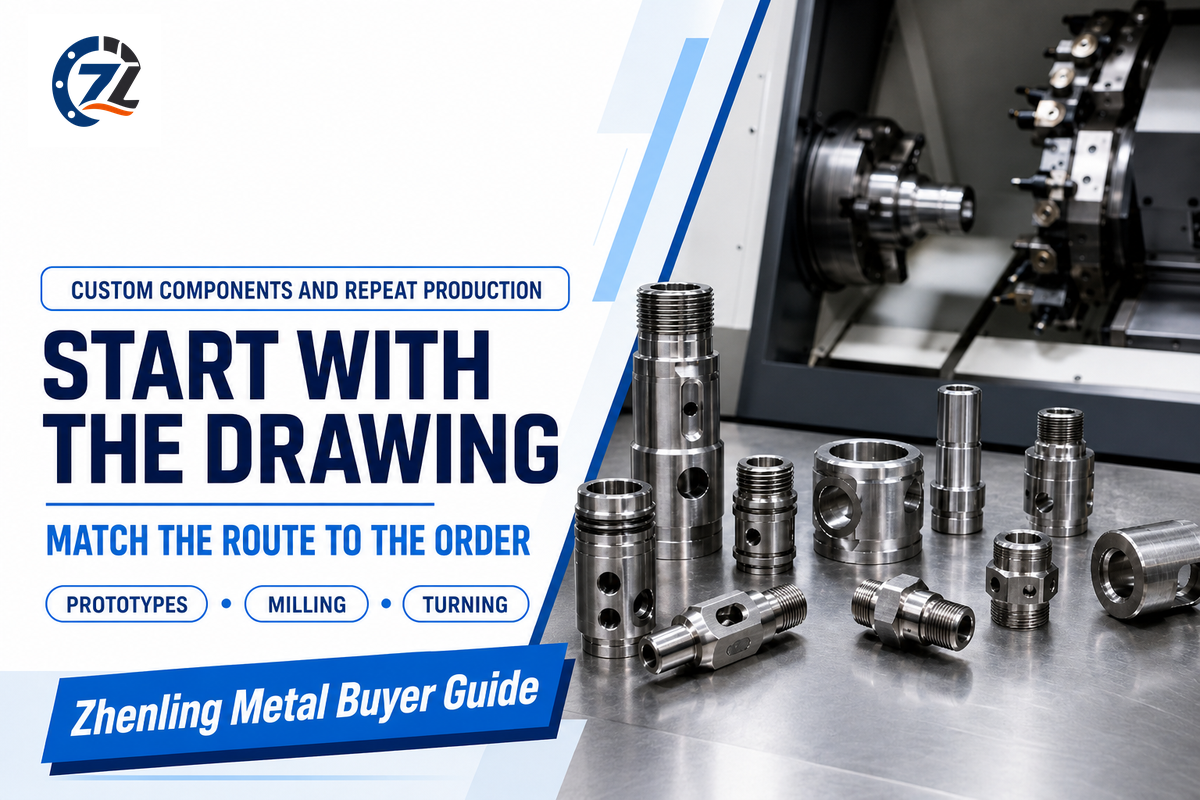
1. Shanghai Zhenling Hardware Co., Ltd. (Zhenling Metal): Best for drawing-based custom CNC machining for precision medical-device components
Shanghai-founded Zhenling operates its own Jiashan workshop and machines non-finished components to approved drawings. Its medical scope includes housings, mounts and fittings, with stainless grades such as 316L. STEP and IGES files support review of the drawing-controlled medical machining scope. Downstream cleaning, sterilization and finished-device release remain the device manufacturer’s responsibility.
Official website: zhenlingmetal.com
2. Hirsh Precision: Best for automated repeat production
Hirsh connects medical prototypes with repeat component production and assembly. According to its website, two Fastems systems support seven 5-axis mills and more than 100 pallets, a useful combination when repeat orders need managed machine loading. The company lists ISO 13485 certification. Some finishing operations use supplier partners, so the machining and finishing route can span different businesses.
Official website: hppi.com
3. Protomatic: Best for prototypes and short-run medical parts
Protomatic’s CNC machining for the medical industry covers short-run orthopedic and diagnostic components, including parts for cytometers. CMM inspection supports work where drawing changes need dimensional feedback, and its medical page lists ISO 13485. That makes the Dexter shop relevant to engineering-led builds. Prototypes and short-run production are its stated emphasis, rather than a volume-first procurement offer.
Official website: protomatic.com
4. Protolabs: Best for rapid low-volume builds in owned factories
As a CNC machining service provider, Protolabs combines digital quoting with milling and turning in its own factories. Its medical page distinguishes indexed milling and a 0.25 by 0.25 inch minimum part size from the separate Network offering. Low-volume buyers gain early manufacturability feedback. Geometry outside those factory limits belongs to a different sourcing route, even when the same website advertises it.
Official website: protolabs.com
Orthopedic and Surgical Manufacturing Programs
5. Tecomet: Best for orthopedic implants and instruments
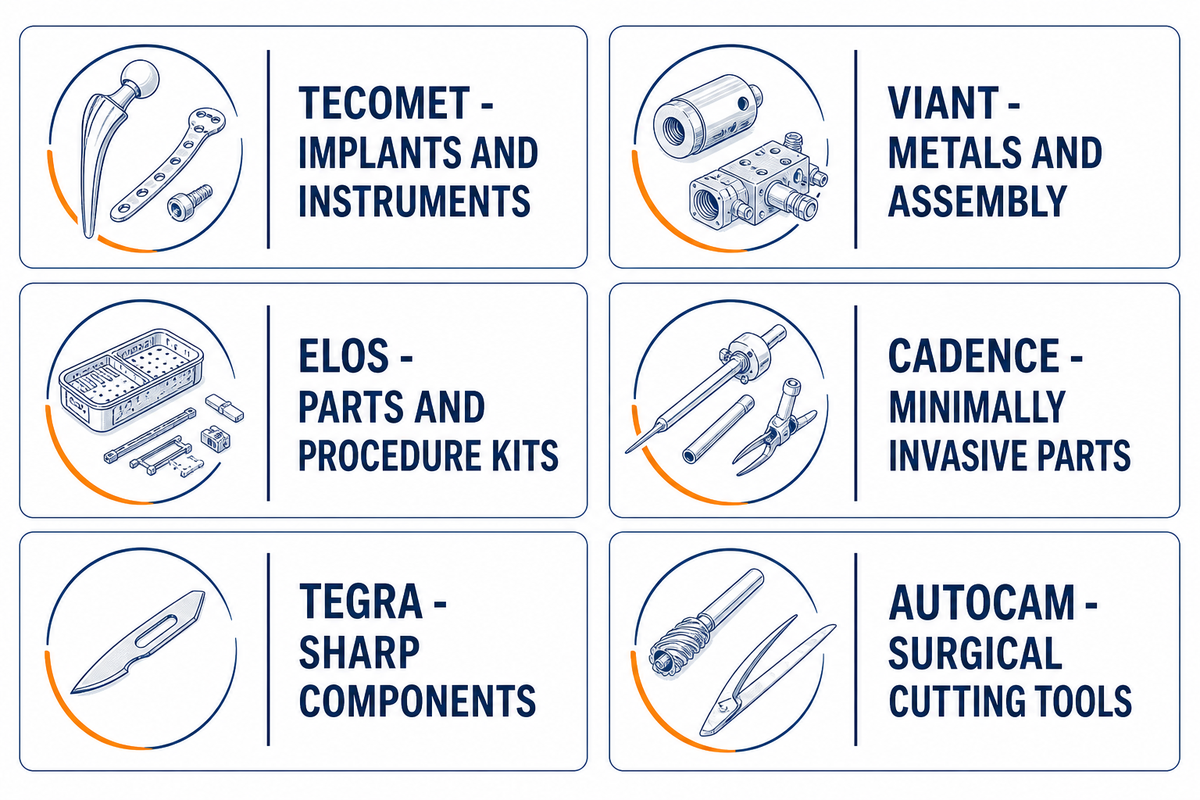
Tecomet combines precision CNC machining with forging, casting and finishing for orthopedic implants and instruments. Its LaunchRight center supports prototyping and pilot manufacturing, so the offer extends beyond established production. Orchid joined the combined business in May 2026. Those orthopedic processes offer less purchasing value when the requirement is simply a diagnostic-equipment housing.
Official website: tecomet.com
6. Viant: Best for metal components requiring assembly
Viant’s metals offer combines Swiss machining, forming and finishing with assembly for products such as bone screws and instruments. In-house laboratories list SEM/EDS metallurgical analysis, useful when a program needs more than dimensional inspection. Its 1968 heritage marks a predecessor medical manufacturing facility. The integrated offer involves a broader scope than a machining-only component order.
Official website: viantmedical.com
7. Elos Medtech: Best for orthopedic parts and procedure kits
Elos combines CNC machining and EDM with metals and plastics processing for orthopedic products. Finished assemblies and procedure kits suit buyers who want component manufacture connected to packaging. Its 1923 roots began in woodworking, not medical machining. A kit-based program brings little extra value to a buyer sourcing only basic equipment hardware.
Official website: elosmedtech.com
8. Cadence: Best for minimally invasive instrument components
Cadence applies precision CNC machining and laser processing to minimally invasive components. Its LaserSwiss process combines 6-axis Swiss machining with laser cutting and welding, reducing the need to transfer a delicate part between separate processes. CNC machining enables these complex medical components to retain fine features through fewer handoffs. A simple bracket gains little from that specialized process combination.
Official website: cadenceinc.com
9. Tegra Medical: Best for sharp components and device builds
Tegra’s medical contract manufacturing includes Swiss turning services, multi-axis milling, wire and tubing processing. Its GENESIS Tech Center connects prototyping and product development with later manufacturing and assembly. Sharp components and surgical instruments are a clear fit for this offer. External equipment hardware is less closely matched to that specialization.
Official website: tegramedical.com
10. Autocam Medical: Best for precision surgical cutting tools
Autocam Medical combines milling, turning and cutter grinding for production of medical drill bits, drivers and orthopedic parts. The company describes a 100,000-square-foot facility and global headquarters in Kentwood, and lists ISO 13485 certification. These capabilities connect cutting geometry with high-precision manufacturing. Its orthopedic focus is less aligned with complete diagnostic-equipment integration.
Official website: autocam-medical.com
Micro-Components and Complex Precision Machining
11. Tectri: Best for complex medical micro-components
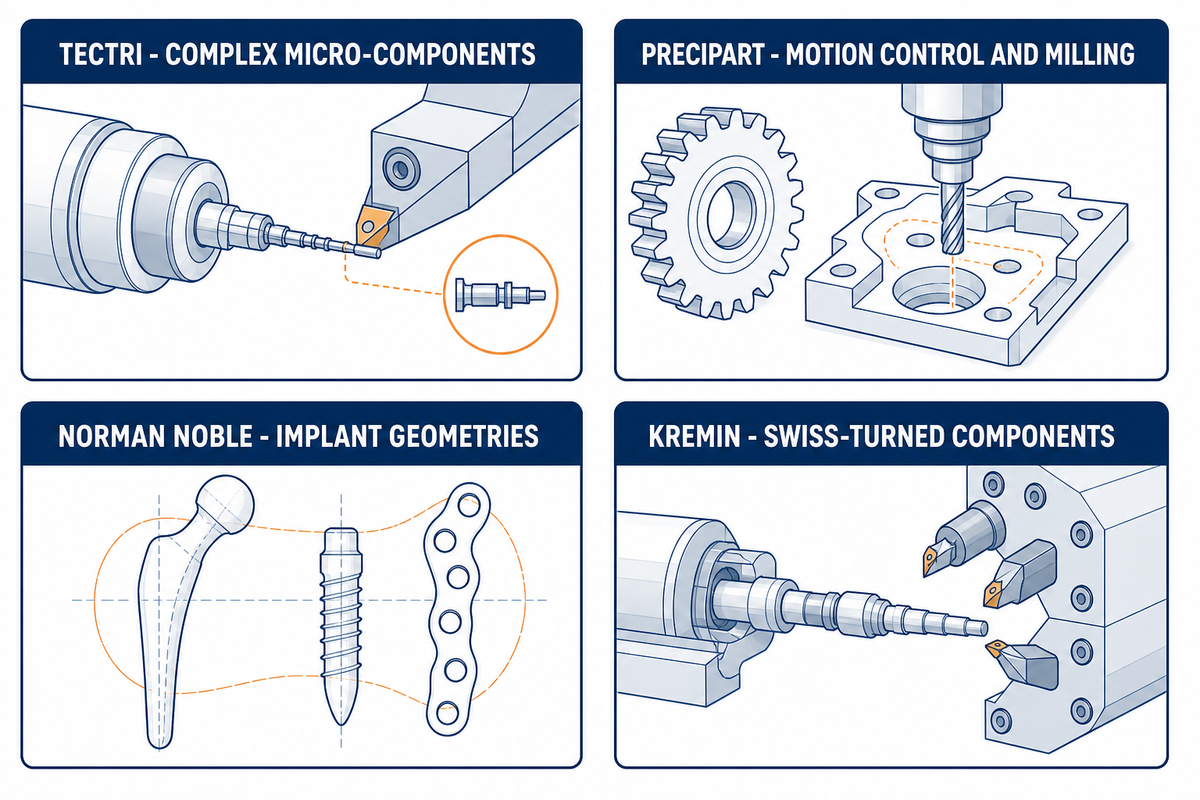
Tectri, part of Acrotec, machines medical micro-components and implants in Switzerland. The company describes lathes with up to 11 axes and machining centers with up to 40 tool heads, supporting complex parts with several features. Court is its headquarters; Bévilard is a production location. This micro-part emphasis is less relevant to large, uncomplicated housings.
Official website: tectri.com
12. Precipart: Best for medical motion control and complex milling
Precipart combines mechanical engineering, gears and CNC milling for medical applications. Published examples include catheter ports, cervical plates and dental drill bits; its milling offer covers 3, 4 and 5 axis work. The 1950 date records its U.S. beginnings, while its published group headquarters is Lyss. Component and motion-control expertise doesn’t amount to complete device manufacture.
Official website: precipart.com
13. Norman Noble: Best for micro-machined implant geometries
Norman Noble’s medical work includes 5-axis micro milling and turning of bone plates, extremity screws and spine cages. Nitinol laser processing adds a different route for implant designs requiring fine cut patterns. Its history starts in 1946, with headquarters now in Highland Heights. Ordinary equipment housings rarely need this concentration of implant-oriented processes.
Official website: nnoble.com
14. Kremin: Best for Swiss-turned medical components
Kremin uses Citizen and Star Swiss machines with live tooling for turned and milled medical features. Its published medical applications span orthopedic, diagnostic and interventional components, and its quality page lists ISO 13485. Completing features in one setup can reduce handling between operations. The documented offer remains component machining, rather than finished-device development.
Official website: kremininc.com
Specialist Parts and Medical Equipment Integration
15. Owens Industries: Best for difficult small medical parts
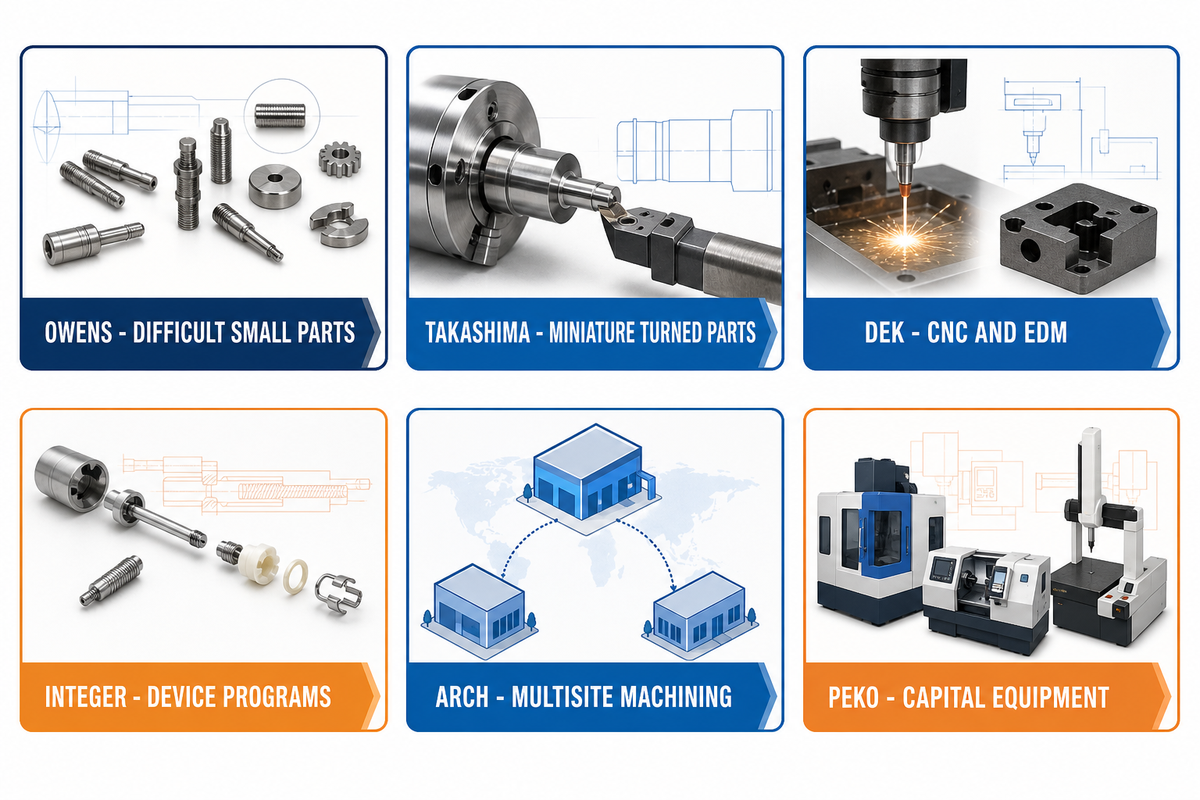
Owens combines advanced 5-axis CNC machining, EDM and precision turning at its Wisconsin shop. One published diagnostic example is a 6061-T6 blood-gas-analyzer rotor with 0.010-inch cell walls, showing the thin-wall work behind its positioning. That example is project-specific, not a universal tolerance promise. Uncomplicated bulk hardware offers less reason to choose this specialist route.
Official website: owensind.com
16. Takashima Sangyo: Best for miniature turned medical parts
Takashima’s medical contract manufacturing includes orthopedic bone screws and dental components. Its hollow bone screw example has a 0.5 mm wall and 45 mm length, a concrete illustration of miniature machining. The Chino company’s 1945 roots predate its medical work. Buyers of large medical-equipment structures need a different fit from this small-part specialization.
Official website: takashima.co.jp
17. DEK: Best for components combining CNC and EDM
DEK’s Shenzhen operation supplies CNC machining for medical applications, including metal and plastic housings. CNC machining offers accessible milled features; wire and sinker EDM reach sharp corners that constrain the machining process. According to its medical page, the manufacturer lists ISO 13485. Finished-device assembly and release require a separately defined scope beyond component machining.
Official website: dekmake.com
18. Integer: Best for machined components within device programs
Integer combines component production with wider medical manufacturing across specialist sites. Quakertown West lists CNC Swiss screw machining, 7-axis milling and EDM. Its 1970 founding date refers to predecessor Greatbatch, not adoption of the Integer name. Because capabilities are distributed by location, the process route may involve several facilities rather than one machine shop.
Official website: integer.net
19. ARCH Medical Solutions: Best for U.S. multisite medical machining
ARCH Medical Solutions supplies CNC-machined implants, instruments and surgical robotics components. End effectors and navigated tools sit alongside finishing and assembly services in its published offer. This combination suits programs with several component families. A multisite contract manufacturing route still needs a named facility responsible for each machining and finishing operation.
Official website: arch-medical.com
20. PEKO Precision Products: Best for medical capital equipment
PEKO combines in-house CNC machining, sheet metal work and system assembly in Rochester. Its solutions for medical equipment include diagnostic machines, mass spectrometry and laboratory automation, emphasizing Class I/II equipment. This makes it relevant when machined parts must become a working subsystem or machine. Individual implant micro-components fall outside that central purchasing fit.
Official website: pekoprecision.com
How to Choose a Medical Device CNC Machining Vendor
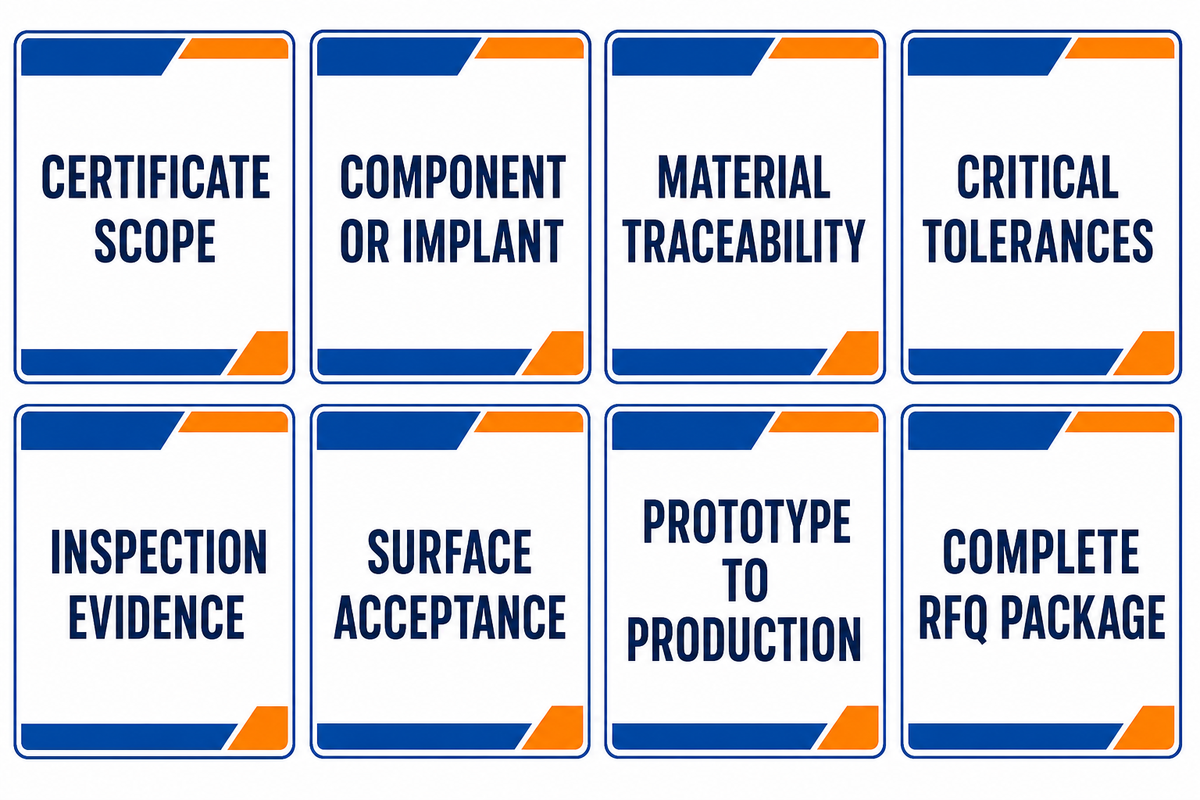
CNC machining within the scope of the medical industry allows the consideration of components for medical devices and laboratory equipment. More advanced CNC machines alone do not confirm consistent quality or compliance with the required quality standards. Eight checks need to be considered in evaluating machining capabilities, inspection and commercial scope before comparing quotations.
1. Check the actual certificate scope
Match the certificate’s legal entity, site, expiry and activities to the proposed factory. ISO 13485 covers medical-device quality management; ISO 9001 is not an equivalent. A certificate helps qualify a quality system, but does not approve every material or component.
2. Separate device components from implant components
Medical device housings, surgical tools and medical implants have different validation and quality requirements. Diagnostic equipment doesn’t imply low risk, especially where fluid paths or patient-contact surfaces are involved. For materials and devices in contact with patients, define cleaning, biocompatibility and traceability requirements based on their intended use.
3. Specify material traceability
Certain metals (e.g. titanium, stainless steel and aluminum alloys) may be machined into medical components; specify and track their grade, condition and batch identity through production alongside the finish and size of the device, with application-specific material choices. For materials (e.g. stainless steel) used in medical equipment, corrosion resistance may not establish the required finish or suitability for the intended use and patient contact.
4. Put tolerances on the critical features
Identify datums, fits and the features that require high precision. A machine’s positioning specification isn’t a finished-part tolerance. Compare milling access and feature geometry with turned-feature requirements; reserve tight tolerance callouts for functions that need them.
5. Agree on inspection evidence
Establish first-article reporting requirements, sampling plans and measurement methods for repeat deliveries. Establish procedures for monitoring and reporting dimensional verification for repeatable deliveries. A CMM must reach and measure the feature under evaluation within an acceptable uncertainty. Strict quality control means components that meet agreed acceptance criteria, not simply an acceptance report that has been issued.
6. Define final surface acceptance
Agree on burr limits, surface roughness, edge and other conditions, and requirements for cleaning and packaging. Inspection may be required after coating or polishing to assess conformity with acceptance criteria for the delivered part. Determine who controls and assesses the conformity of the critical outside finishing operations against the final surface requirements.
7. Match prototype capability with production scale
Rapid prototyping proves a design iteration; repeat production also needs tooling, revision control and stable inspection. Ask how the manufacturing process transfers from prototype to production. Multi-face 5-axis machining may reduce setups, but doesn’t remove the need for fixtures or validation.
8. Send a complete RFQ package
Send the same drawing revision, STEP or IGES model, quantities, material and final-finish requirements to each vendor. Separate setup, tooling, inspection documents and recurring unit cost. Include packaging acceptance and the required lead time; the medical-component RFQ checklist helps organize these inputs.
Do
- Name the factory.
- Define final acceptance.
- Separate setup costs.
Don’t
- Borrow group credentials.
- Assume implant suitability.
- Compare incomplete quotations.
Frequently Asked Questions
Which is the best medical device CNC machining service vendor for custom parts?
Match the manufacturer to the component.
The best fit depends on the drawing and the required delivery scope. Zhenling Metal suits drawing-based, non-finished custom components; implant-focused work calls for a manufacturer with the relevant process and qualification scope. Compare similar component families, materials and inspection requirements before choosing. Whether you need a prototype or recurring deliveries, send the same specification to shortlisted vendors. In the medical field, a general machining service provider is not automatically qualified for every medical instrument or patient-contact part.
Who are the largest medical device CNC machining manufacturers?
Group size is not a CNC-only ranking.
Tecomet, Integer, Viant and Elos Medtech are examples of manufacturers with broad medical operations. Their total businesses include activities beyond CNC machining, so group revenue or site counts do not provide a comparable global ranking for this service alone. Large programs may benefit from several manufacturing locations and integrated processes. A smaller precision machine shop can still be the better purchasing fit when the work requires a defined component family, direct engineering access and a limited production scope.
Are Chinese medical device CNC machining vendors reliable?
Assess the factory and order requirements.
Chinese manufacturers can be suitable sources when their actual factory, processes and quality arrangements match the project. Nationality does not establish precision and reliability. Apply the same supplier qualification to Chinese and overseas candidates: review relevant work, establish material traceability, agree on first-article acceptance and resolve finishing responsibilities. Zhenling and DEK have different published offers, so they should not be treated as interchangeable simply because both manufacture in China. The intended use determines the required evidence.
How much does medical CNC machining cost?
Pricing requires a defined drawing package.
Medical CNC machining is quoted by material, geometry, tolerances, quantity, finishing and inspection scope. Setup and documentation can change the economics of small orders. Compare quotations against identical drawings and acceptance requirements; a generic per-part price cannot represent these different manufacturing obligations.
What is the difference between a medical CNC machining manufacturer and a supplier?
Identify who performs the machining.
A manufacturer performs the machining; a supplier may manufacture, distribute or coordinate outside work. The terms can overlap. Identify the actual production site and its responsibilities before ordering, including which business controls subcontracted finishing, inspection records and any changes to the approved process.
Do medical CNC machining companies need ISO 13485 certification?
Use the project’s qualification requirements.
Certification requirements depend on the project, customer quality system and applicable regulatory pathway. ISO 13485 addresses medical-device quality management; ISO 9001 is not a substitute. Determine the required certification and process scope with the device manufacturer’s quality team before qualifying a machining source.
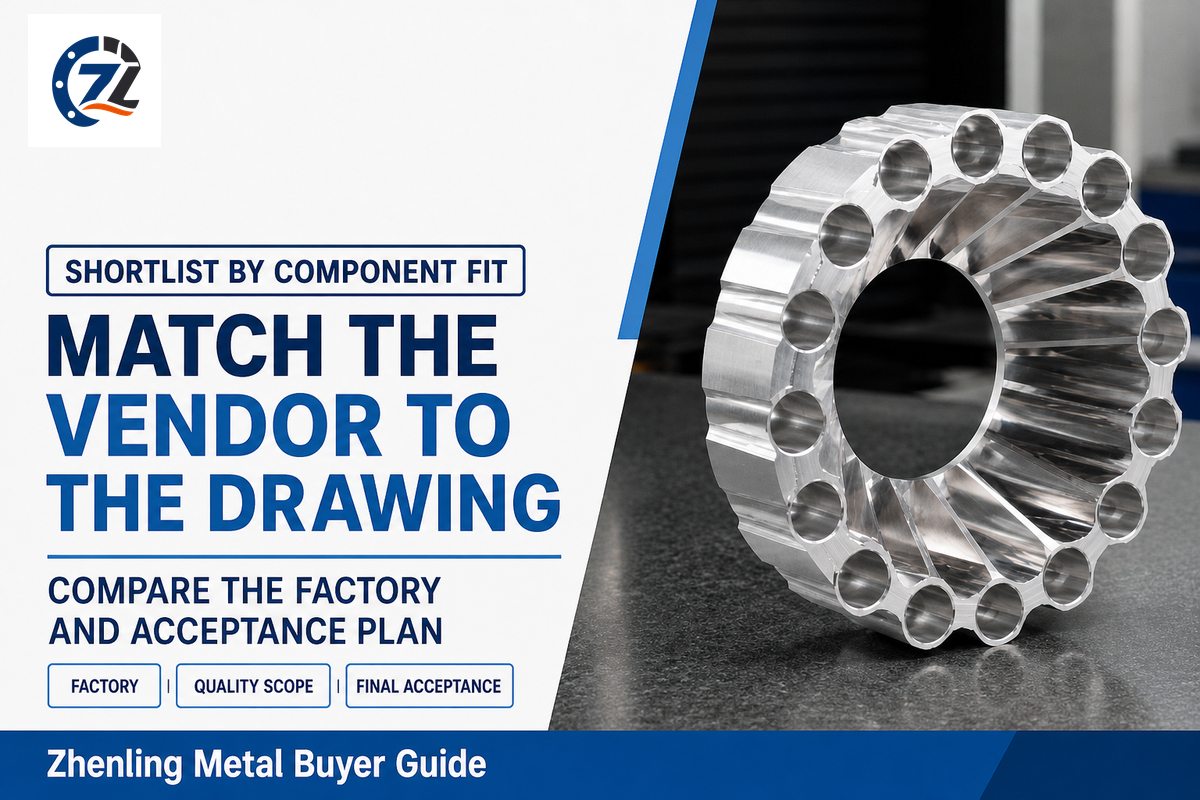
Conclusion: Match the Vendor to the Drawing
Key takeaway
Shortlist by component fit, then compare the factory, quality scope and delivered-part acceptance plan. Company size and machine count cannot replace those decisions.
Use design-for-manufacture guidance to resolve avoidable geometry constraints before requesting quotations. A reliable partner for precision CNC machining works to clearly defined drawings and acceptance requirements.
Request a Drawing Review from Zhenling Metal
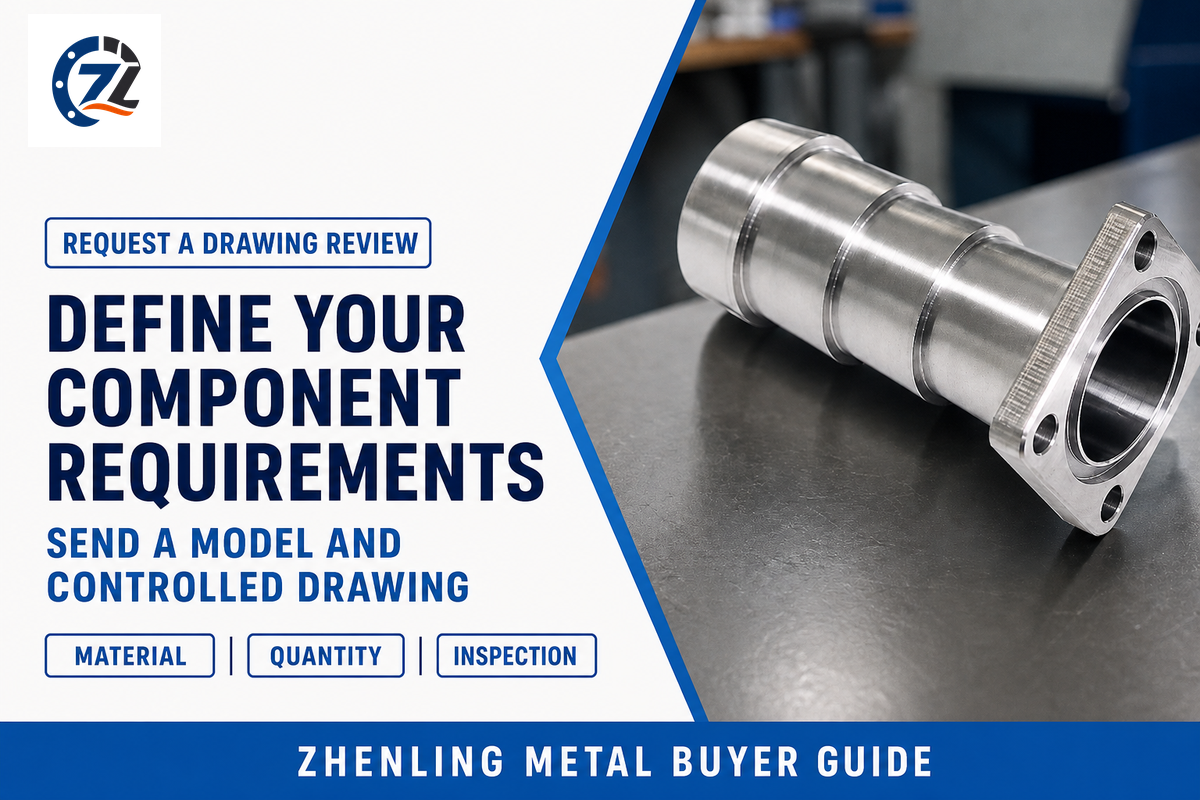
For CNC machining projects, send your STEP or IGES model with the drawing, material, quantity and inspection requirements. Zhenling can review the machining route for custom non-finished components; the device manufacturer retains product qualification and release responsibilities. Contact Zhenling Metal with your drawing package to discuss the defined scope.
References & Sources
Company profiles draw on the official capability, history and location pages of the manufacturers named in the comparison. Published examples describe those companies’ work, not a guarantee for another drawing.
- ISO 13485:2016, medical-device quality management systems — International Organization for Standardization.
- Greatbatch annual report: founding and incorporation history — company filing hosted by the U.S. Securities and Exchange Commission.