Get in touch with Zhenling Company

Tool Steel CNC Machining
Tool Steel CNC Machining for Custom Parts
Tool steel machining starts with the drawing, the supplied material state, and the acceptance evidence, not a generic route name. Send enough information for engineering, procurement, and management to see what’s still open before anyone compares quotes. Tool Steel CNC Machining enquiries should include grade, annealed or hardened condition, grinding or EDM allowance, heat treatment and inspection. Resolve material, geometry and measurement risks first. Price and timing should follow the documented route, not an equipment category.
-
01
Drawing
Geometry and revision to review
-
02
Material state
Specification, supply condition, traceability
-
03
Critical features
Dimensions, surfaces, and functional areas
-
04
Verification
Measurement and acceptance questions
-
05
Quote input
Quantity, post-processing, and documents
Prevent Tool Steel Machining Surprises Before You Request a Quote
A late question about a critical tolerance, supplied condition, or inspection record can change the route discussion after an RFQ is already circulating. Practitioner discussion about incomplete or unusually tight tolerances is useful buyer evidence for asking early, but it isn’t a manufacturing standard or proof about any supplier.
Pain: hidden assumptions
A drawing may carry geometry without naming the material specification, heat-treatment sequence, or functional surfaces that make the geometry meaningful.
Cause: one label, many variables
“Tool steel” and a route name don’t settle tool steel machinability, material traceability, acceptance responsibility, or the order of related operations.
Action: create a review record
Attach the revision-controlled drawing and make the unknowns visible instead of treating them as supplier assumptions.
For a tolerance or inspection question, ISO 14253-1:2017’s decision-rule and measurement-uncertainty scope is a boundary reference only: it does not establish a material, route, cost, or supplier capability for this order.
Note: Search terminology is not a material specification
Search results may use alloy steel as a family label, mention alloy constituents such as chromium or tungsten, or associate tool steel with wear resistance. Those words don’t confirm the grade, chemistry, supplied state, or availability for an order.
Treat carbide as a tooling question only when the drawing package and responsible process review make it relevant.
Keep material, tooling, and performance assumptions open until the required evidence is reviewed.
This list guards against a false sense of completeness; it’s a buyer checklist, not a certification or approval. It also gives management a reason to compare quotation assumptions, not just line items.
SYS.SEQ // RFQ-04
Start the RFQ with these named inputs
01
Exact material specification and supplied state.
02
Heat-treatment sequence, stated hardness requirement, and traceability request.
03
Critical dimensions, datum scheme, key surfaces, and any surface finish requirement.
04
Quantity, post-processing, documentation, and acceptance-rule questions.
Use the Tool Steel RFQ State-to-Process-to-Verification Review Matrix
Machining hardened steel can’t be reduced to a machine name or a material label. This matrix traces a practical pre-quote path: supplied-state and drawing evidence lead to candidate route questions, then verification questions, and finally quote assumptions that a buyer can check.
Route names only start the review. Drawings must identify material state, critical surfaces, records and acceptance decisions before quotations are comparable.Tool-steel RFQ review note
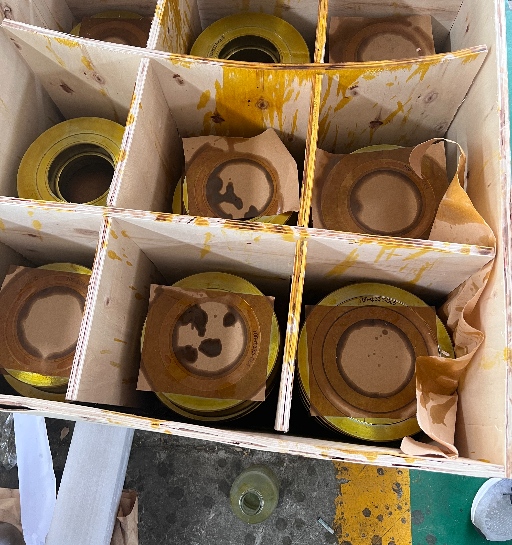
Pre-quote path variables
| State and drawing input | Candidate route question | Verification information to name | Quote boundary to resolve |
|---|---|---|---|
| Material specification, supplied state, traceability | Which route needs review against the supplied condition? | Who provides material evidence and how is it linked to the part? | Material assumption remains visible until confirmed. |
| Heat-treatment sequence and hardness requirement | Does timing before, between, or after candidate operations require a separate review? | Which document or responsible party confirms the stated requirement? | No route or result is assumed from a hardness label. |
Geometry and acceptance rows
| State and drawing input | Candidate route question | Verification information to name | Quote boundary to resolve |
|---|---|---|---|
| Critical surfaces, geometry, corner areas, and allowance | Should milling, turning, grinding, or wire cutting be assessed for those specific features? | What surface, geometry, and measurement evidence is requested? | Criticality must be written into the RFQ. |
| Acceptance rules and final-use constraints | Which candidate route needs a review of subsequent machining or finishing? | What rule, record, and decision authority apply near a limit? | Conformity is not decided by this matrix. |
Choose CNC Milling, Turning, Grinding, or Wire Cutting for Tool Steel Parts
Zhenling reports equipment categories including CNC wire cutting, turning, milling, grinding, boring, radial drilling, and 3/4/5-axis machining centers. That company-level overview is a starting point for drawing review, but it doesn’t prove tool-steel availability, a specific route, tolerance, surface finish, or project result.
Published trade coverage treats hard milling and electrical discharge machining as complementary routes shaped by geometry, deflection, finish, and scheduling. Hard milling is not always the better choice, and electrical discharge machining isn’t a universal substitute.
| Candidate route | Drawing evidence to bring | Question to resolve before quote comparison | Boundary |
|---|---|---|---|
| CNC milling / cnc milling steel | Critical faces, pockets, transitions, datum references | Which surfaces and geometric transitions need route-specific review? | No cutter, chip, spindle, or result is implied. |
| Turning | Rotational features, shoulders, runout-related requirements | Which dimensions or surfaces require an agreed measurement record? | Route remains a candidate pending drawing review. |
| Grinding | Named ground surfaces, finish requirement, acceptance rule | What measurement method and responsibility must be documented? | No finish or dimensional outcome is promised. |
| Wire cutting | Cut surfaces, corners, allowance, downstream operations | What kerf, corner, post-process, and verification questions apply? | Research context is not a supplier capability claim. |
How to use the route matrix
Read the matrix horizontally rather than as a menu of guaranteed services. A milling question may begin with a face or pocket but still need a written view of adjacent transitions and the inspection record; a wire-cutting question may begin with a profile but still leave allowance and later finishing open.
Proof boundary for route selection
Ask which features should be evaluated, which surfaces are critical, and what evidence closes the question. Don’t treat a declared equipment category as proof that the finished part has been approved.
Action for the drawing package
Mark any feature where a later operation, allowance, or inspection record affects function. A machining service can then answer the right question instead of guessing the buyer’s acceptance logic.
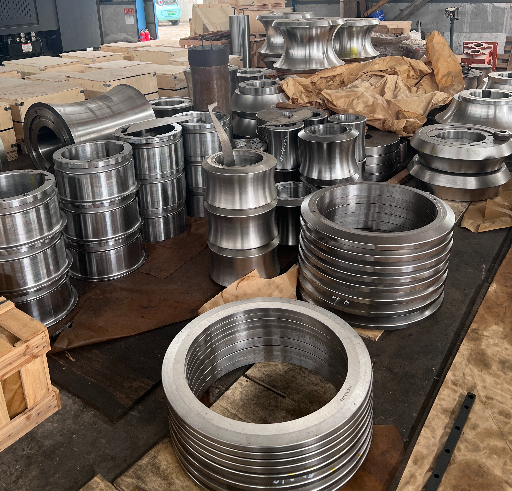
Separate Manufacturing, Measurement, and Conformity Decisions Before Production
A finished dimension and a final conformity decision aren’t interchangeable records. ISO 14253-1:2017 addresses decision rules near specification limits and measurement uncertainty, so a buyer should name the acceptance rule, measurement need, and decision responsibility before treating a result as conforming; it does not establish a material, route, cost, or supplier capability.
01
Manufacturing plan
Record only the candidate route, sequence questions, and the party responsible for confirming them.
02
Measurement plan
Record critical characteristics, requested records, measurement needs, and the method still requiring agreement.
03
Conformity decision
Record the acceptance rule, available evidence, and the authorized decision maker; don’t replace this with an inspection label.
04
Responsibility boundary
Identify the customer, material or heat-treatment party, manufacturer, inspection party, and final accepting party as applicable to the order.
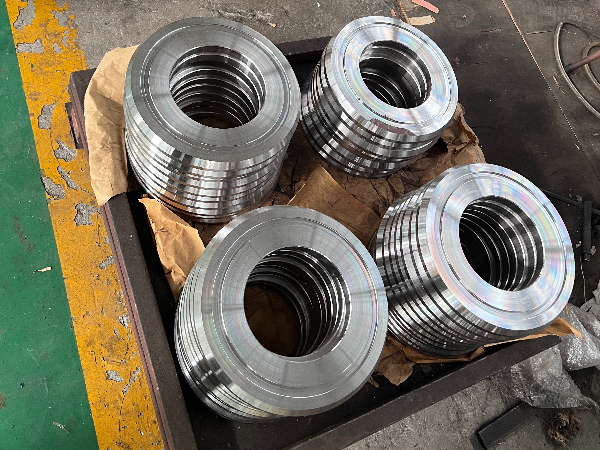
This separation matters when surface finish, measurement uncertainty, documentation, or a drawing change could alter the basis of acceptance. It prevents a common handoff failure: one person reads a measurement record as manufacturing approval while another treats it as a conformity declaration. For tool steel parts, the RFQ should name the requested record and responsible decision maker; page copy can’t transfer that authority between contract parties.
Read this as an evidence comparison
| Decision area | Evidence or question | Responsibility to confirm |
|---|---|---|
| Manufacturing | Candidate route and unresolved state or geometry questions | Responsible manufacturing review party |
| Measurement | Critical features, requested record, method, and uncertainty consideration | Party designated to plan or perform measurement |
| Conformity | Acceptance rule, evidence basis, and near-limit decision rule | Authorized decision maker named by the order |
| Change control | Drawing revision, material-state change, or revised acceptance need | Parties named in the order’s change process |
This comparison is deliberately about evidence, questions, and responsibility rather than suppliers or performance. It gives procurement a way to flag a quote that names inspection without identifying an acceptance rule, and it gives engineers a place to record a measurement need without accidentally representing it as a release decision. For management, the value is governance: a changed drawing revision, heat-treatment instruction, or required record remains visible as a decision trigger.
Project records must confirm each role for the order rather than copy it from this page.
A measurement record alone doesn’t authorize manufacturing release or a conformity conclusion.
Adjacent-Sector Manufacturing Context for Pressure, Separation, and Fluid-Control Equipment
Zhenling was founded in 2006 and reports a Jiashan factory on an 8,000 m² site with a 6,000 m² workshop, plus domestic and export divisions. A common assumption is that adjacent pressure, separation, or fluid-control work proves suitability for a tool-steel order. Zhenling will not claim that connection without project evidence, so these company facts don't establish a tool-steel project, regulated-order history, or component fit.
No export-share figure is used for tool-steel service capability. Confirm destination, export documents, jurisdictional requirements, packaging and delivery responsibility for the order.
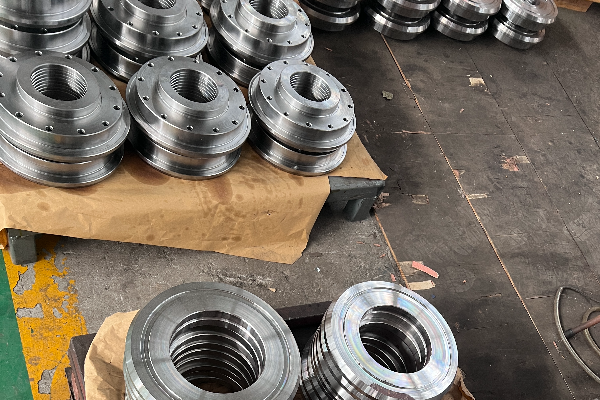
Useful context
Adjacent equipment language can help a buyer explain the operating environment and interfaces that matter to a drawing review.
Missing proof
No supplied record verifies tool steel components, material state, performance, certification coverage, or an outcome in any named sector.
Required action
Submit the application constraints, drawing, materials information, and acceptance requirements for project-specific review.
Documentation, Certification Scope, and Change-Control Questions for International Orders
A certificate label is not necessarily proof that a requested part or order is covered. ASME's certificate-holder and program-scope description supports a scope-check question only, so procurement should request scope evidence instead of inferring order applicability from a company-level name; it does not prove material, route, cost, or supplier capability for this order.
TO CONFIRM
DRAWING REVISION
TO VERIFY
CERTIFICATE NUMBER
TO VERIFY
SCOPE & ACTIVE STATUS
TO VERIFY
PART / ORDER APPLICABILITY
| Document question | Why it matters | Boundary |
|---|---|---|
| Which drawing revision and change record govern the order? | It identifies the geometry and acceptance basis being reviewed. | Do not assume an unstated change-control process. |
| Which material, heat-treatment, and traceability records are requested? | It connects supplied state to the contract evidence. | Requirements are contract- and criticality-specific. |
| Which certificate number, scope, and active status apply? | It separates a credential label from auditable scope. | No active, applicable credential was supplied here. |
| Who accepts measurement and final conformity evidence? | It assigns a decision responsibility before delivery. | Do not infer jurisdictional or order-level coverage. |
Tool Steel Machining Quote: What Affects Price and Lead-Time Review
A tool steel machining quote is harder to compare when material state, geometry, quantity, inspection, post-processing, and documents sit inside different assumptions. Qualitative supplier guidance identifies these as cost-review inputs, but it doesn't prove a price, lead time, minimum order quantity, capacity, or return for this page.
Two peer-reviewed studies frame the review boundary: a machining cost-and-time estimation study (DOI 10.21608/auej.2017.19195) ties estimation to workpiece and cutting-operation parameters and notes small-quantity/job-shop difficulty; a machining-time estimation study identifies part size, feature area, and work material as model inputs for bidding or make-or-buy decisions. Neither source supports a Zhenling price or lead-time claim.
-
01
Material and state
Name the specification, supplied condition, traceability, hardness requirement, and heat-treatment sequence to be reviewed.
-
02
Geometry and quantity
Supply the revision, critical features, quantity, and any sample or staged-delivery question without assuming a commercial commitment.
-
03
Evidence and documents
List measurement records, acceptance rules, post-processing, and document scope required for a valid comparison.
Bronze quote-risk / ROI card
No verified tool-steel price, lead time, capacity, minimum order quantity, or project ROI is available. The defensible commercial benefit is a clearer comparison of assumptions before a buyer commits: identify the variables, request the evidence, and keep unresolved items attached to the quote.
When comparing tool steel CNC machining services, procurement teams should send the same input package to every candidate and record each exception. CAD, 2D drawings, tolerances, surface finish, material grade, volume, post-processing, and documentation are useful question prompts, not universal requirements or proof of supplier performance.
If quote assumptions include a measurement or acceptance decision, ISO 14253-1:2017's decision-rule and measurement-uncertainty scope is relevant to that limited question only; it does not support a material, route, price, or supplier-capability conclusion.
-
01
RFQ Package Builder
Streamline your quoting process by compiling all necessary CAD files, material specs, and tolerance requirements into a standardized package.
Open -
02
State Process Verification Worksheet
Validate your tool steel machining workflow with a structured checklist ensuring all metallurgical and dimensional standards are met.
Open -
03
Quote Comparability Checker
Objectively evaluate multiple vendor proposals by standardizing cost variables, lead times, and machining capabilities.
Open
FAQ: Tool Steel CNC Machining for Drawing Review and RFQ Preparation
These questions keep the page focused on an RFQ decision, not a general machining lesson. Each answer points back to evidence that needs review for a particular part; none establishes a Zhenling tool-steel capability, material recommendation, or production result.
01
Is tool steel hard to machine?
01
Hardness is only one input. Send the specification, supplied state, and critical features for review.
02
Can you CNC machine steel?
02
A CNC route is a drawing-review question, not a blanket page promise. Mark the features that affect material state, measurement, and subsequent operations before requesting a quote.
03
Is it possible to machine hardened steel?
03
Supplied state, heat-treatment sequence, geometry, critical surfaces, and verification needs shape the review. A published experiment may help frame questions, but it can't decide the route, settings, inspection plan, or production result for your part.
04
What is the best tool steel for machining?
04
No universal best grade exists. Send application priorities and traceability requirements for engineering review.
![Shop-Floor Carbon Steel CNC Machining Guide [2026]](https://zhenlingmetal.com/wp-content/uploads/2026/08/carbon-steel-cnc-machining-handbook-r2-featured-150x150.png)