Get in touch with Zhenling Company

Last updated: October 2026
The best wire edm machining service vendors depend on the drawing: consider Zhenling Metal for combined machining inquiries, KLH for automated repeat work, Cer-Mac for high-nickel alloy features, and Microtec for miniature wire-cut parts. XACT suits overflow RFQs, while Wire Cut Company publishes separate capabilities for thick sections and tapered cuts.
A shop with the smallest advertised tolerance could still be the wrong choice for your part. Wire access, stock thickness, inspection and the delivery route all matter. This report analyzes 20 service companies and explains how to even the playing field for US and Chinese quotations without presuming which location offers the better price.
Quick Picks for Different Wire EDM Jobs
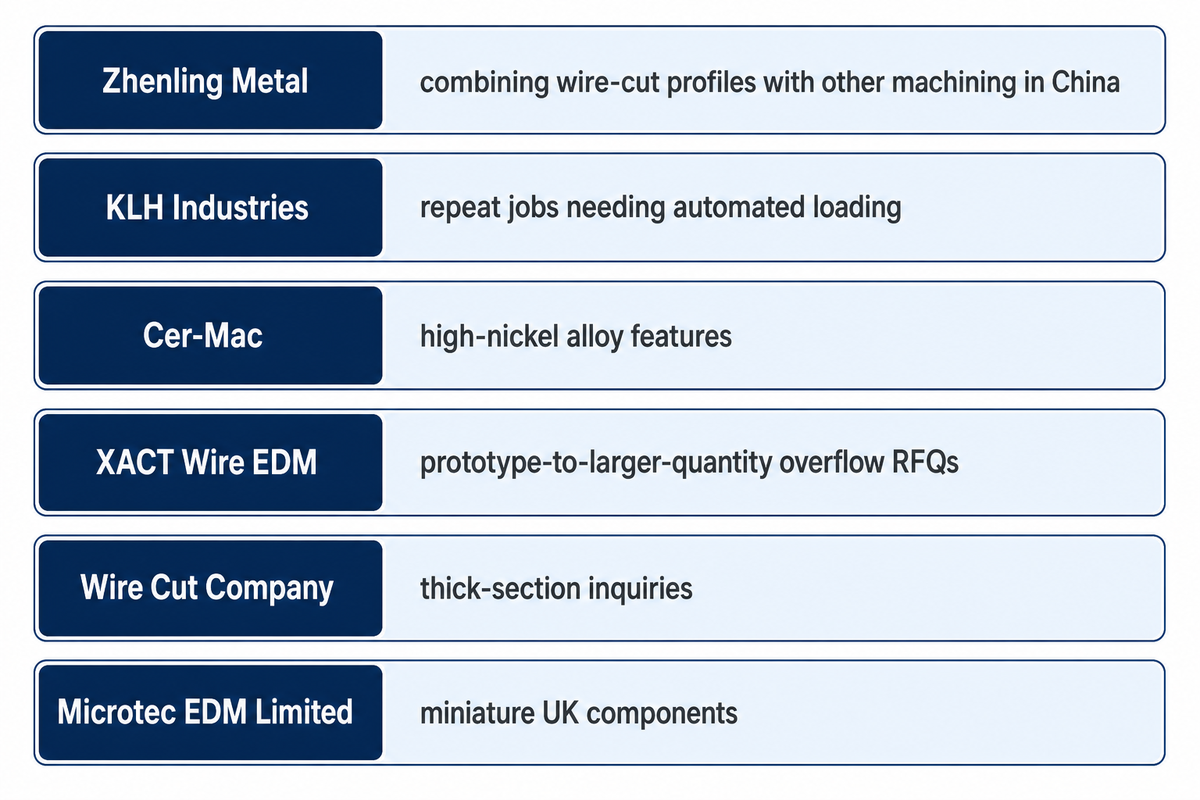
Start with the most challenging element of your order. These picks connect a published capability to a buying situation; they aren’t awards, or an evaluation of overall company quality.
- Best for combining wire-cut profiles with other machining in China: Zhenling Metal, with drawing review and order-specific written acceptance.
- Best for repeat jobs needing automated loading: KLH Industries, whose wire EDM services include redundant automation cells.
- Best for high-nickel alloy features: Cer-Mac, which specifically identifies Inconel 718 work.
- Best for prototype-to-larger-quantity overflow RFQs: XACT Wire EDM, with a dedicated EDM machine pool and dimensional inspection.
- Best for thick-section inquiries: Wire Cut Company, with separately stated cutting-thickness and taper limits.
- Best for miniature UK components: Microtec EDM Limited, with 20-micron wire and contact/optical measurement.
Disclosure: This guide is published by Zhenling Metal. We list ourselves first because this is our website, not because we claim to be the market leader. The other 19 manufacturers are grouped by what they are best for, in no particular order within each group.
How We Selected These Wire EDM Service Vendors
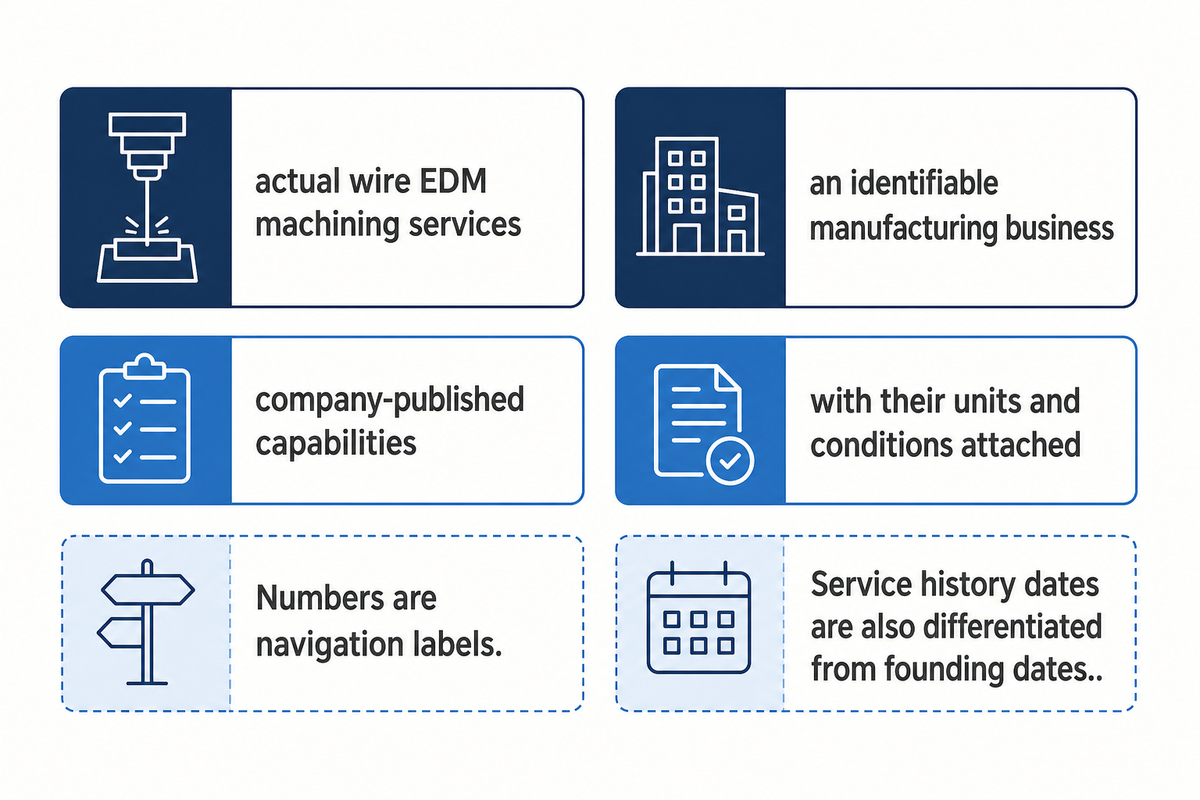
The information was checked against official company, service, equipment, history and quality pages, in addition to other public records, in October 2026. Inclusion required evidence of actual wire EDM machining services at an identifiable manufacturing business. Equipment-only sellers, directories, sourcing platforms and intermediaries without their own documented machining operation were excluded. Companies included in this report are located in the United States, China, the United Kingdom and Germany.
Numbers are navigation labels. These wire EDM companies are compared using company-published capabilities, with their units and conditions attached, rather than a scored competition. An equipment manufacturer can qualify when it also runs a documented contract-machining department, as bes does. Operating locations, as well as registered offices, are labeled separately from stated headquarters. Service history dates are also differentiated from founding dates.
20 Wire EDM Service Vendors Compared
Select a few companies for a more detailed drawing review based on the table provided. The date column shows what the source establishes as a founding year, reported opening, or stated manufacturing/service history. “Not publicly disclosed” indicates a missing founding year. The strengths and limits describe the published service route, not the guaranteed performance for every drawing.
| No. | Company Name | Headquarters | Founded / Published history | Best For | Brief Introduction | Main Services | Key Advantages | Potential Disadvantages | Official Website |
|---|---|---|---|---|---|---|---|---|---|
| 1 | Zhenling Metal | Jiashan, Zhejiang, China; operating location | 2006 | Combined machining RFQs in China | Drawing-based metal machine shop | Wire EDM, turning, milling, grinding | Mixed processes; first-article approval before batches | Overseas transit weakens emergency replacement fit | https://zhenlingmetal.com/ |
| 2 | Petersen Precision | Redwood City and Roseville, California, USA; operating locations | 1966 | Flat two-dimensional production parts | Production and tool-and-die manufacturer | Wire EDM, grinding, fine blanking, lapping | Multipass precision; as-needed lights-out production | Published route centers on flat stock and 2-D forms | https://www.petersenprecision.com/capabilities/wire-edm |
| 3 | KLH Industries | Germantown, Wisconsin, USA; corporate headquarters | 1987 | Automated repeat EDM orders | Precision supplier originating in wire EDM | Wire EDM, fast-hole EDM, CNC machining | Redundant automation; fine-wire features | 2 Ra microinch finish requires multiple passes | https://www.klhindustries.com/services/edm-machining/wire-edm |
| 4 | Owens Industries | Oak Creek, Wisconsin, USA; operating location | 1944 | Small and medium mixed-feature parts | High-mix precision machine shop | Wire EDM, multi-axis milling, turning | Integrated machining; programmable inspection equipment | Published standard EDM lead time is workload-dependent, at 12 weeks | https://www.owensind.com/ |
| 5 | United Centerless Grinding & Thread Rolling | East Hartford, Connecticut, USA; operating location | 1960; reported opening | Fixtured EDM with grinding | Grinding and EDM service shop | Wire EDM, sinker EDM, EDM drilling, grinding | Custom fixtures; three EDM methods | Documented thickness and taper capped at 16 in and 20 degrees | https://www.unitedcenterlessgrinding.net/wire-edm |
| 6 | Maroney Company | Northridge, California, USA; operating location | 1955 | Programmed rotary-axis EDM | Precision and EDM machining company | Multi-axis wire and sinker EDM | Rotary motion; complementary cavity machining | Blind cavities require the sinker route | https://maroneycompany.com/services/electrical-discharge-machining/ |
| 7 | Ephrata Precision Parts | Denver, Pennsylvania, USA; operating location | 1972; manufacturing history | Parts needing several EDM methods | Custom precision parts manufacturer | Wire, die-sinking and hole-drilling EDM | Four-axis linear-motor machines; cavity and drilling support | AQ325L group lists 8.8 in thickness; other models needed beyond it | https://www.ephrataprecision.com/ |
| 8 | The Wire Shop | Mentor, Ohio, USA; operating location | Not publicly disclosed | Tooling with waterjet preparation | Custom EDM and machining shop | Wire EDM, 3-axis machining, waterjet, grinding | In-house waterjet; six four-axis wire machines | Published wire-cut thickness ends at 15 3/4 in | https://thewireshop.com/ |
| 9 | Cer-Mac | Telford, Pennsylvania, USA; operating location | 1969 | Inconel 718 and high-nickel parts | Precision machining service company | Wire EDM, RAM EDM, milling, turning | High-nickel specialization; detailed geometry limits | 15-degree taper rating is tied to 10.25 in thickness | https://www.cermac.com/wire-edm/ |
| 10 | XACT Wire EDM | Waukesha, Wisconsin, USA; headquarters; Cary, Illinois, second site | 1984 | Overflow wire EDM RFQs | Dedicated wire EDM contract supplier | Wire EDM, small-hole EDM, prototyping | Over 45 EDM machines; CMM, SPC and video inspection | Wire geometry needs straight connections between upper and lower profiles | https://www.xactedm.com/wire-edm/ |
| 11 | Adron Tool Corp. | Sussex, Wisconsin, USA; operating location | Not publicly disclosed | Heavy workpieces and production EDM | Specialist production EDM job shop | Wire, sinker and small-hole EDM | 74 wire machines; stated heavy-workpiece handling | Published handling claim ends at 10,000 lb | https://www.adron.com/ |
| 12 | Wire Cut Company | Buena Park, California, USA; operating location | 1978 | Thick sections with machining support | EDM shop with grinding and milling | Wire, sinker and micro EDM; grinding | Thick-cut scope; CAD/CAM engineering support | 30-degree tapers stop at 15 in thickness, alongside a separate 48 in cutting-thickness claim | https://wirecutcompany.com/wire_EDM.html |
| 13 | EDM Intelligent Solutions | Bartlett, Illinois, USA; operating location | Not publicly disclosed | Microfeatures with dimensional metrology | EDM and micro-manufacturing specialist | Fine-wire EDM, micro milling, grinding, 3-D measurement | 20 µm wire; dimensional and roughness inspection | Stacking requires compatible sheet-part geometry | https://www.edmdept.com/manufacturing-services-full-details/wire-edm/ |
| 14 | South Shore Manufacturing | Hanson, Massachusetts, USA; operating location | 1985; wire EDM service history | Medical-component procurement | Precision wire EDM machining company | Wire EDM and precision machining | Stated ISO 13485:2016; CAD/CAM and reverse engineering | Largest published wire envelope is 33 × 20 × 16 in | https://www.southshoremanufacturing.com/ |
| 15 | Rogers Wire EDM Service | Arvada, Colorado, USA; operating location | 1992; Colorado service history | Colorado-area machining support | Wire electrical-discharge job shop | Wire EDM, vertical milling, CNC EDM drilling | Mill for preparation; separate start-hole machine | Listed wire machines each allow 15.75 in maximum part height | https://www.rogerswireedm.com/ |
| 16 | T and G Engineering | West Byfleet, Surrey, UK; operating location | 1975 | Complex parts with complementary machining | Subcontract precision machining supplier | Wire/spark erosion, 5-axis work, turning, grinding | Broad machining mix; named Agie/Charmilles wire equipment | Process limit: wire erosion requires conductive stock | https://www.tgengineering.co.uk/wire-erosion/ |
| 17 | Cheshire Wire Erosion | Sandbach, Cheshire, UK; registered office | 1995 | Alloy parts using several EDM methods | Family-run subcontract EDM company | Wire-cut, die-sinker and small-hole EDM | Three EDM routes; stated nondisclosure policy | Largest XY and tallest Z travel belong to different machines | https://www.cheshirewireerosion.co.uk/ |
| 18 | Microtec EDM Limited | Shoeburyness, Essex, UK; operating location | 2001 | Traceable miniature prototype-to-batch work | Wire and spark-erosion specialist | Micro EDM, wire/sinker EDM, toolmaking, inspection | 20-micron wire; probe and optical CMM inspection | Some additional inspection and documentation cost extra | https://microtecedm.co.uk/ |
| 19 | Werkzeugtechnik Schmitz | Troisdorf, Germany; operating location | Not publicly disclosed | Tool and mold subcontract work | Contract EDM machining provider | Wire, sinker and start-hole erosion | Three erosion methods; CAD/CAM integration | Simple high-volume shapes can carry unfavorable wire-erosion unit costs | https://www.werkzeugtechnik-schmitz.de/drahterodieren-lohnfertigung |
| 20 | bes Funkenerosion | Fluorn-Winzeln, Germany; operating location | 1983 | Tall or heavy subcontract EDM parts | Machine manufacturer with contract-machining departments | Wire/sinker EDM, EDM drilling, milling | Published size/weight limits; in-house electrode production | Wire starts at 0.15 mm; cutting height reaches 800 mm | https://bes-edm.de/lohnfertigung/ |
Drawing-Led and Integrated Machine Shops
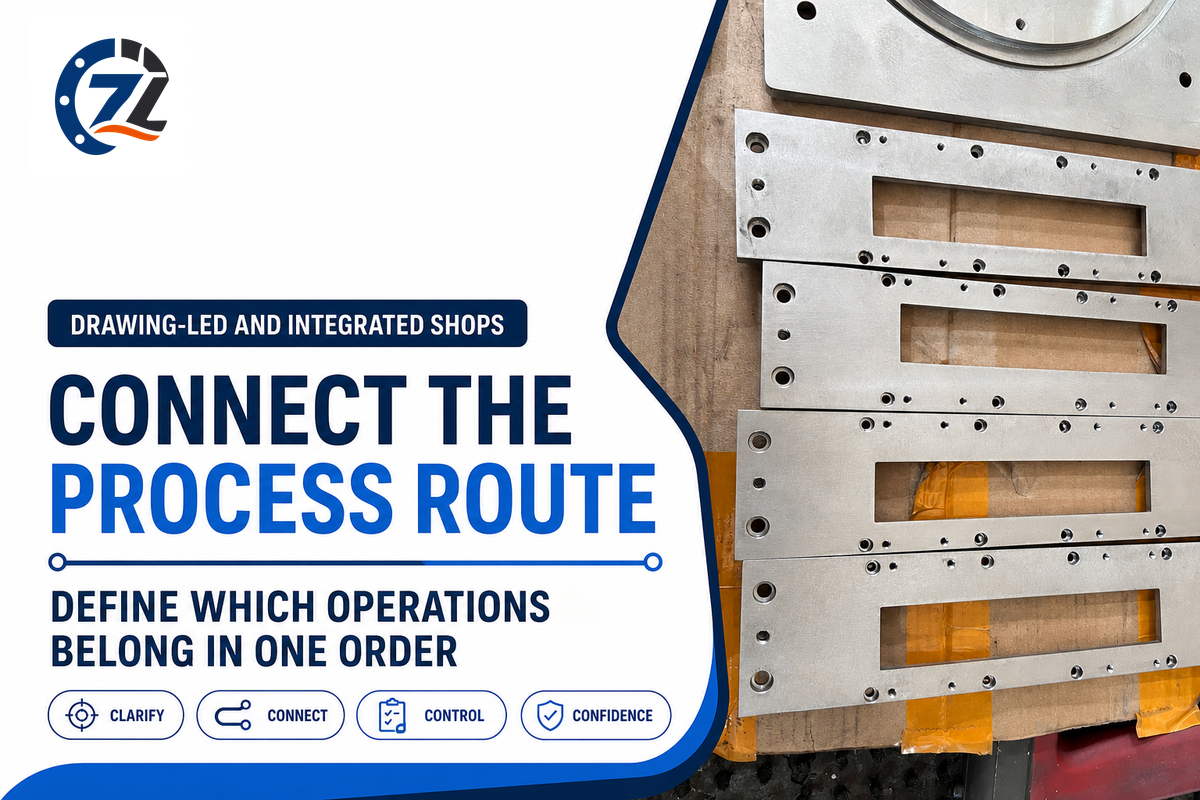
These companies offer manufacturing services including wire EDM alongside other processes. That combination matters when a part needs a turned diameter, milled pocket or ground datum before the wire-cut feature. The broader CNC machining service scope is useful context for deciding which operations belong in one purchase order.
1. Zhenling Metal: Best for combined machining inquiries in China
Operating location: Jiashan, Zhejiang, China; company-described workshop · Founded: 2006 · Type: drawing-based precision machine shop
Official website: https://zhenlingmetal.com/
Main services and scope: wire-cut electrical discharge machining, CNC turning, milling, grinding, boring and radial drilling; 3-, 4- and imported 5-axis machining centers listed by the company · Order basis: minimum quantity, single-piece acceptance, schedule, tolerances and inspection subject to written quotation
Zhenling combines wire-cut EDM with turning, milling and grinding in its published equipment profile, a useful starting point for metal parts whose critical features require more than one process. The company describes first-article approval before batch production, so the drawing review can establish the accepted part before repeat quantities proceed. According to its website, machining runs in its own Jiashan workshop; its metal equipment-part RFQ scope includes hardened profiles and features inaccessible to rotating tools, without implying semiconductor qualification. Emergency replacements needed within a few days are a poor fit because international transit adds time beyond the machining schedule.
2. Petersen Precision: Best for flat two-dimensional production parts
Operating locations: Redwood City and Roseville, California, USA · Founded: 1966 · Type: precision parts and tool-and-die manufacturer
Official website: https://www.petersenprecision.com/capabilities/wire-edm
Main services: wire EDM, fine blanking, grinding, lapping and CNC machining · Published capabilities: flat stock 5 in thick or more; internal corners down to R 0.008 in · Quality: ISO 9001, according to the company
Petersen states that multipass cuts creating custom two-dimensional metal parts can hold better than ±0.0001 in, giving buyers a specific process condition to associate with its precision claim. Lights-out operation supports 24/7 production as needed, and the EDM department can transfer tool-and-die machines to customer-part work for larger orders. That production arrangement makes Petersen relevant when repeat flat profiles need capacity alongside related finishing or tooling work, rather than an isolated prototype operation. The published offer concentrates on flat stock and 2-D forms, so it doesn’t establish a general freeform three-dimensional wire-cutting route.
3. KLH Industries: Best for automated repeat EDM jobs
Corporate headquarters: Germantown, Wisconsin, USA · Founded: 1987, as a wire EDM shop · Type: precision machining supplier
Official website: https://www.klhindustries.com/services/edm-machining/wire-edm
Main services: wire EDM, fast hole EDM and CNC machining · Published capabilities: ±0.0001 in tolerance; stated 24 × 16 × 14 in envelope; 30-degree taper · Quality: Nadcap Nonconventional Machining accreditation including wire and fast-hole EDM, according to KLH
Two separate, redundant automation cells allow KLH to support repeat production with automated loading and 24/7 operation, a concrete advantage when machine attendance would otherwise constrain the order. KLH also lists 0.0012 in wire producing a 0.0010 in radius, which makes its fine-feature capability more useful to a designer than a general precision label. Its site describes larger projects beyond the stated envelope as possible, so that envelope is a published reference rather than an absolute shop ceiling. The advertised 2 Ra microinch surface finish requires multiple passes, and a quotation for that finish must include the additional machining route.
4. Owens Industries: Best for small and medium mixed-feature parts
Operating location: Oak Creek, Wisconsin, USA · Published manufacturing history: since 1944 · Type: high-mix precision machine shop
Official website: https://www.owensind.com/
Main services: 3-, 4- and 5-axis milling, wire EDM machining, turning, micromachining and finishing · Published EDM detail: 0.002 in fine wire and 0.0005 in positional accuracy · Quality: ISO 9001:2015 and AS9100, according to the website
Owens brings milling, turning and EDM into the same service mix for small to medium-sized parts, which suits components with both rotating-tool features and wire-cut details. Programmable Swiss and German inspection equipment adds a measurement route alongside that machining capability, according to the company. Its EDM page also describes 5-axis wire EDM with a fully integrated submersible indexer; buyers comparing this with five-axis cutting routes should keep the motion and process distinctions clear. A published 12-week standard EDM lead time, dependent on workload, makes this a weak starting point for urgent replacement orders.
5. United Centerless Grinding & Thread Rolling: Best for fixtured EDM with grinding
Operating location: East Hartford, Connecticut, USA · Reported opening: 1960 · Type: precision grinding and EDM service shop
Official website: https://www.unitedcenterlessgrinding.net/wire-edm
Main services: wire and sinker EDM, EDM drilling and precision grinding · Equipment: two AgieCharmilles CUT 200 Sp machines; 23.6 × 15.7 × 16.5 in travel, distinct from 41.3 × 32.3 × 16.3 in workpiece dimensions · Quality: AS9100D and ISO 9001:2015, according to the website
Custom fixtures and multiple setups let United address features in different directions, a practical benefit for parts that can’t be completed from a single wire orientation. United offers wire, sinker and drilling EDM in the same shop, with grinding available for complementary precision surfaces. The Gateway’s February 2020 company feature reports that United opened in Hartford in 1960; this dates the reported business opening, while the current service page states wire tolerances of ±0.0002 in. Parts above the published 16 in cutting thickness or 20-degree taper fall outside the documented wire route.
6. Maroney Company: Best for programmable rotary-axis EDM
Operating location: Northridge, California, USA · Founded: 1955 · Type: precision and electrical-discharge machining company
Official website: https://maroneycompany.com/services/electrical-discharge-machining/
Main services: multi-axis CNC sinker and wire EDM with programmable rotary axes · Equipment highlight: Charmilles FI440CC with servo-controlled rotary axis · Quality: AS9100D and ISO 9001:2015 stated by the company; DDTC/ITAR registration separately listed
Programmable rotary axes, including the company’s “Turn While Burn” description, give Maroney a machining option beyond holding the workpiece still for a fixed wire profile. Multiple sinker EDM machines add a complementary cavity-making route, so a part with different feature types can be considered across both electrical discharge methods. This is a useful fit when an engineering drawing requires motion during machining and the supplier’s process proposal needs to explain how each feature will be generated. A blind cavity belongs to the shaped-electrode sinker process in this offer; the described wire route is for through-cuts.
7. Ephrata Precision Parts: Best for combined wire, cavity and drilling EDM
Operating location: Denver, Pennsylvania, USA · Published manufacturing history: since 1972 · Type: custom precision parts manufacturer
Official website: https://www.ephrataprecision.com/
Main services: wire EDM, die-sinking EDM and hole drilling EDM · Equipment: four Sodick AQ325L units listed at 9.8 × 13.7 × 8.8 in, plus AQ750L, VL400Q and VL600Q models · Quality certification: not publicly disclosed in the reviewed company material
Ephrata identifies four-axis Sodick equipment with glass scales, linear motors and small-wire options, giving its precision EDM offer a specific machine basis. Die-sinking and EDM hole drilling complement the wire service, which helps when a component combines a cut-through profile with a cavity or drilled access feature. The company’s broader custom-parts role makes it relevant to buyers who want several EDM operations considered within one manufacturing plan rather than as unrelated purchases. The four AQ325L machines list 8.8 in part thickness; taller work needs a different listed model, not an assumption that the four-machine group can take it.
8. The Wire Shop: Best for tooling with in-house waterjet preparation
Operating location: Mentor, Ohio, USA · Founded: not publicly disclosed · Type: custom machine shop specializing in wire EDM and related processes
Official website: https://thewireshop.com/
Main services: wire EDM, 3-axis CNC machining, waterjet and grinding · Equipment scope: six wire EDM machines with four-axis, submerged and unsubmerged cutting · Quality certification: not publicly disclosed in the reviewed company material
In-house waterjet gives The Wire Shop a preparation route for blanks before more detailed EDM or machining work, making the service mix useful for tooling purchases. Six wire machines offer submerged and unsubmerged four-axis cutting, according to the company, rather than a single generic wire-cutting setup. The shop describes its CAD-to-final-product route as in-house, so a die or mold inquiry can address stock preparation and subsequent precision features together. Its wire EDM page states a maximum part thickness of 15 3/4 in; taller sections exceed that published cutting capacity regardless of the separate waterjet offer.
9. Cer-Mac: Best for Inconel 718 and high-nickel alloy components
Operating location: Telford, Pennsylvania, USA · Founded: 1969 · Type: precision machining service company
Official website: https://www.cermac.com/wire-edm/
Main services: wire EDM, RAM EDM, turning, milling, lapping and grinding · Published capabilities: ±0.00015 in for small complex shapes; 41.3 × 32.3 × 12 in workspace; 3,307 lb; 0.004 in wire and 0.003 in radius · Quality: ISO 9001:2015 certified by ABS-QE, according to Cer-Mac; ITAR registration separately stated
Cer-Mac specifically identifies Inconel 718 and other high-nickel alloys as a specialty, which gives buyers of difficult stock a more relevant starting point than an undifferentiated material list. Published wire, radius, workspace and taper figures make its wire cut EDM offer easier to screen against a drawing before requesting detailed machining solutions. The combination with turning and grinding is useful when the same component has cylindrical or finished datum surfaces, as discussed in the broader turning operation overview. Its 15-degree taper rating applies at 10.25 in thickness, so that angle can’t be detached from the thickness condition.
Specialist Wire EDM Shops
A provider of wire EDM services may be an extension to an existing production line. Machine allocation and other fine-feature work and measurement may be more important than performing a long list of unrelated processes. Compare the wire EDM capabilities that support your bottleneck, then read the order conditions behind the headline.
10. XACT Wire EDM: Best for overflow production RFQs
Headquarters: Waukesha, Wisconsin, USA; second site in Cary, Illinois · Founded: 1984 · Type: dedicated wire EDM contract supplier
Official website: https://www.xactedm.com/wire-edm/
Main services: wire EDM, small hole EDM services, prototyping, reverse engineering and laser marking · Published scope: ±0.0001 in tolerances, parts up to 16 in thick and four-axis contours · Quality: ISO 9001:2015, according to XACT
XACT lists over 45 EDM machines and three-shift operation, providing a dedicated pool for manufacturers seeking overflow EDM contract services. CMM, statistical process control and video inspection support its production work, with measurement considered alongside the cutting operation. The company advertises services nationwide and invites a quote on wire EDM orders from 1 to 100K+ parts; that’s its stated RFQ range, with actual order capacity and scheduling established through the quotation. Its wire process requires straight-line connections between the upper and lower profiles, so arbitrary spherical or helical shapes don’t fit that described geometry.
11. Adron Tool Corp.: Best for heavy workpieces and production EDM
Operating location: Sussex, Wisconsin, USA · Founded: not publicly disclosed · Type: production wire and sinker EDM job shop
Official website: https://www.adron.com/
Main services: production wire EDM, conventional/sinker EDM and small-hole drilling · Equipment: 74 high-speed wire EDM machines and eight CNC sinkers listed by the company · Quality: Nadcap, ISO 9001:2015 and AS9100 listed on the website; ITAR registration separately stated
Adron combines wire, sinker and small-hole EDM service categories, allowing a production inquiry to address both through-profiles and complementary features. The published 74-machine wire pool and workpiece handling up to 10,000 lb make heavy EDM parts a specific reason to consider the shop. Its About page separately identifies more than 55 Mitsubishi wire EDM machines within the equipment description, a brand subset rather than an additional machine total. A workpiece above the stated 10,000 lb handling limit falls outside this documented offer, even if its geometry would otherwise suit wire machining.
12. Wire Cut Company: Best for thick sections with CAD/CAM support
Operating location: Buena Park, California, USA · Founded: 1978; incorporation stated as 1981 · Type: EDM shop with grinding and machining support
Official website: https://wirecutcompany.com/wire_EDM.html
Main services: wire, sinker and micro EDM, hole drilling, grinding and vertical machining · Published tolerance: ±0.0002 in · Quality information: website links AS9100/ISO 9001 and NADCAP EDM certificate documents bearing 2014/2015 filenames
Wire Cut Company separately lists cuts up to 48 in thick and 30-degree tapers up to 15 in thick, giving a thick-section buyer two usable capability descriptions. Complete CAD/CAM engineering assistance supports its wire cut EDM services, with a grinding department and vertical machining center available for related operations. That combination is worth considering when a large section needs both an EDM profile and more conventional features, with one process plan addressing their relationship. The 48 in cutting-thickness statement doesn’t extend the 30-degree taper rating beyond 15 in thickness, so a thick tapered part can’t be selected on the larger number alone.
13. EDM Intelligent Solutions: Best for microfeatures with integrated metrology
Operating location: Bartlett, Illinois, USA · Founded: not publicly disclosed · Type: precision EDM and micro-manufacturing service provider
Official website: https://www.edmdept.com/manufacturing-services-full-details/wire-edm/
Main services: wire and fine-wire EDM, sinker EDM, micro milling, precision grinding and 3D measurement · Published details: five-axis EDM, 30 µm finished holes and feature aspect ratios up to 38:1 · Quality: AS9100D and ISO 9001:2015 registration stated by the company; ITAR registration separately listed
EDM Intelligent Solutions publishes a micro-wire route using wire down to 20 µm, with fine-wire tolerances of 1 µm and below stated for that service. Three-dimensional measurement and roughness measurement accompany the machining offer, giving miniature wire EDM parts an inspection route as well as a cutting route. Its combination of micro milling and precision electrical discharge machining is a useful fit when feature access and measurement are equally difficult on the same small component. The productivity advantage of stacked sheets applies only when the part geometry allows simultaneous cutting, so a stacking assumption doesn’t belong in every micro-part quotation.
14. South Shore Manufacturing: Best for medical-component procurement
Operating location: Hanson, Massachusetts, USA · Published wire EDM service history: since 1985, under the former Jack’s Machine Company identity · Type: precision wire EDM machining company
Official website: https://www.southshoremanufacturing.com/
Main services: wire EDM and precision machining services · Published capabilities: tolerances as close as ±0.0001 in; finishes as fine as 8 microinches · Quality: AS9100D, ISO 9001:2015 and ISO 13485:2016, according to the website; ITAR registration and firearms licensing listed separately
South Shore explicitly lists ISO 13485:2016 alongside its other quality certifications, giving medical-component buyers a relevant quality-system starting point. CAD/CAM and reverse engineering accompany lights-out machining, which supports inquiries where a production route must be developed from the supplied design information. The service specification includes prototypes, low- and high-volume work, and blanket orders, making the shop relevant to both initial development and planned releases. Its largest published wire work envelope is 33 × 20 × 16 in, so a component larger than that envelope needs a different documented machine route.
15. Rogers Wire EDM Service: Best for Colorado-area EDM with machining support
Operating location: Arvada, Colorado, USA · Published history: serving Colorado since 1992 · Type: wire electrical-discharge machining job shop
Official website: https://www.rogerswireedm.com/
Main services: wire EDM, vertical milling and CNC EDM drilling · Equipment: AgieCharmilles CUT P550 Pro and CUT 300, each listing 21.6 × 13.77 in travel; HAAS VM2 mill · Quality certification: not publicly disclosed in the reviewed company material
Rogers lists vertical milling alongside wire EDM, giving the shop a preparation option for stock and complementary features before precision wire EDM cutting begins. A separate CNC EDM drilling machine supports start-hole work, which matters when the wire must enter an internal profile rather than begin at an outside edge. For buyers looking for EDM services near a Colorado production site, that combination offers a local inquiry route with named equipment and clearly stated machine dimensions. Both listed wire machines have a maximum part height of 15.75 in, placing taller work outside the documented wire capacity.
International Shops for Cross-Border RFQs
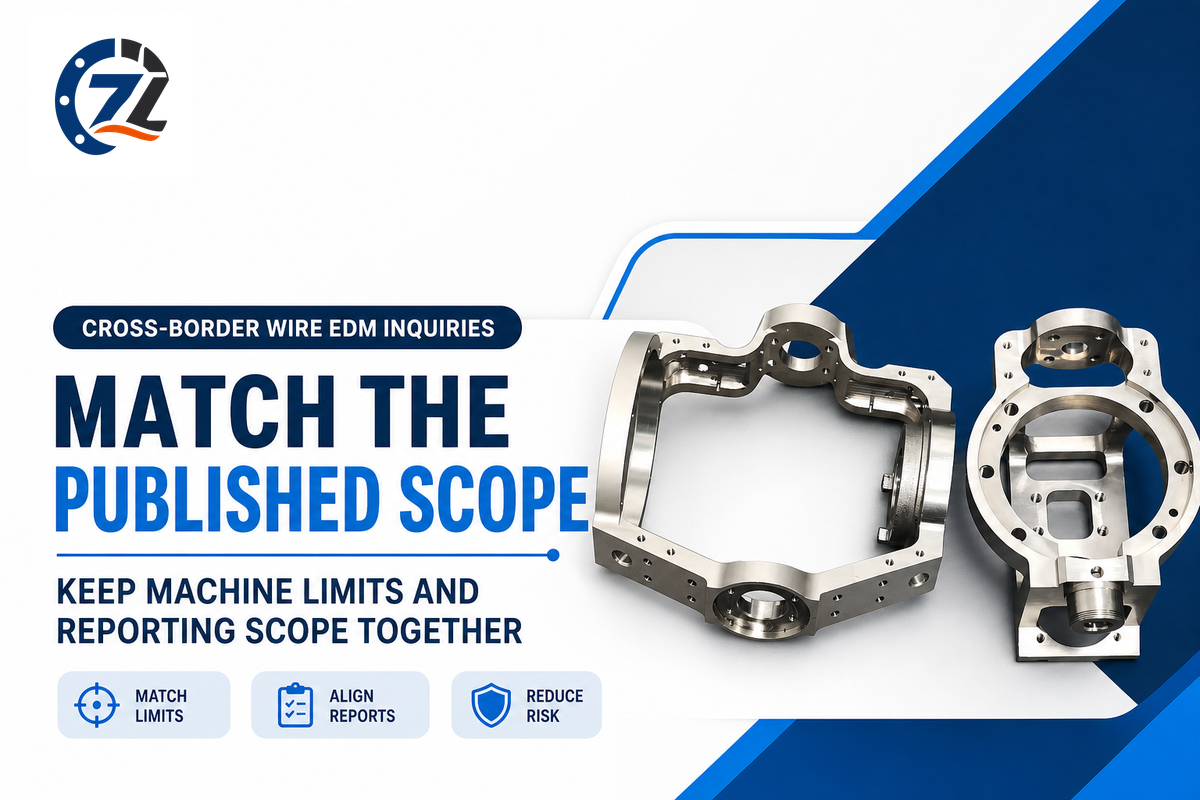
The German and British shops below document options for wire-erosion and microfeatures, and can be included in a global comparison. Location alone won’t establish price advantage. Evaluate their production services against the same drawing and acceptance requirements as American wire EDM and China quotes.
16. T and G Engineering: Best for wire erosion with complementary machining
Operating location: West Byfleet, Surrey, UK · Founded: 1975 · Type: subcontract precision machining supplier
Official website: https://www.tgengineering.co.uk/wire-erosion/
Main services: wire erosion, spark erosion, 5-axis machining, milling, turning, grinding and 3-D CAD design · Equipment: Agie Cut 2000, Cut 3000S, AGIE P800 WEDM, Charmilles 440 CC and two Drill 20 fast-hole machines · Quality: ISO 9001:2015, according to the website
T and G combines wire erosion with five-axis machining, turning and grinding, giving complex components or assemblies several complementary manufacturing routes. Its named Agie and Charmilles wire machines provide a concrete equipment basis for that offer, while the two fast-hole machines support access-hole work. Buyers developing a part with both wire-cut and rotating-tool features can therefore discuss the whole machining sequence, including datum preparation and later finishing, within one inquiry. The relevant process limit is electrical conductivity: nonconductive stock needs a different machining method, a wire-erosion requirement rather than a restriction unique to this supplier.
17. Cheshire Wire Erosion: Best for alloy parts using several EDM methods
Registered office: Sandbach, Cheshire, UK, per Companies House · Established: 1995 · Type: family-run subcontract EDM company
Official website: https://www.cheshirewireerosion.co.uk/
Main services: wire-cut EDM, die-sinker EDM and small hole EDM · Machine travels: Sodick AQ900L, 900 × 600 × 400 mm; AG600LH, 600 × 400 × 500 mm · Quality: ISO 9001 stated by the company
Cheshire lists three complementary EDM methods, allowing an alloy-component inquiry to cover wire profiles, cavities and small holes within its service range. A stated nondisclosure policy addresses how customer work is handled, which is useful when sending controlled designs for subcontract quotation. The About page describes 15 workshop machines operating seven days a week, while the published plant list identifies the different travels available on particular wire machines. Its widest XY travel and tallest Z travel belong to different models, so the two specifications can’t be combined into a single 900 × 600 × 500 mm machining envelope.
18. Microtec EDM Limited: Best for traceable miniature components
Operating location: Shoeburyness, Essex, UK · Founded: 2001 · Type: wire and spark-erosion specialist
Official website: https://microtecedm.co.uk/
Main services: wire/sinker EDM, micro EDM, subcontract machining, toolmaking and inspection · Plant highlight: GF Cut 1000 micro-wire machines and a Sarix micro-erosion machine · Quality: ISO 9001:2015 and product traceability, according to the website
Microtec states that its micro EDM machinery uses 20-micron wire and maintains tolerances below 3 microns, making miniature features a specific reason to consider its service. A Hexagon probe CMM and Nikon optical CMM complement machining inspection, offering different measurement approaches for small precision machined components. Prototype-through-production work and product traceability connect those technical capabilities to a buying situation where the first small batch may lead to repeat orders. Some additional inspection and documentation services carry an extra charge, so a more extensive reporting package adds scope beyond the basic part price.
19. Werkzeugtechnik Schmitz: Best for tool and mold subcontract work
Operating location: Troisdorf, Germany · Founded: not publicly disclosed · Type: contract EDM machining provider
Official website: https://www.werkzeugtechnik-schmitz.de/drahterodieren-lohnfertigung
Main services: contract wire erosion, sinker erosion and start-hole erosion for tooling and mold applications · Measurement: Wenzel tactile CMM and Keyence optical systems · Quality: DIN ISO 9001; the quality page states certification since 1999
Schmitz offers wire, sinker and start-hole erosion, giving tool and mold work three related electrical discharge machining solutions within the published service range. Company-specific text describes CAD/CAM integration, so design data and the erosion route are discussed as connected stages of the job. Tactile and optical measurement add inspection options to that workflow, with named Wenzel and Keyence systems identified on the quality page rather than a machining tolerance inferred from metrology accuracy. For simple shapes at larger quantities, the company’s wire-erosion discussion identifies slower removal and higher unit cost as disadvantages, making those jobs less compelling candidates for this process.
20. bes Funkenerosion: Best for tall or heavy subcontract EDM parts
Operating location: Fluorn-Winzeln, Germany · Founded: 1983 · Type: EDM machine manufacturer with its own contract-machining departments
Official website: https://bes-edm.de/lohnfertigung/
Main services: wire EDM, sinker EDM, EDM drilling, milling and electrode manufacture · Wire specifications: workpiece 1000 × 1300 × 800 mm, 3000 kg; axis travels 800/600/800 mm; Sodick ALC 800 GH among listed machines · Quality certification: not publicly disclosed in the reviewed company material
bes publishes workpiece dimensions, axis travel and weight limits separately, giving heavy-part buyers a usable basis for screening a drawing before an inquiry. In-house electrode manufacturing supports complementary sinker work, so its contract offer extends beyond running a wire through a large section. The company dates its subcontract EDM services to 1983 and machine production to 2000, making its service department relevant to this list despite also selling equipment. Wire diameters start at 0.15 mm and maximum cutting height is 800 mm, placing finer-wire or taller work outside that documented wire offer.
How to Choose a Wire EDM Shop
An appropriate EDM supplier connects the drawing to a machining process and an acceptance plan. Buying “precision wire EDM services” without those details leaves the critical decision unfinished: who will make each feature, under which conditions, and how will the finished part be accepted?
How do I choose the right wire EDM machining company for my project?
Choose a shop whose documented route fits the material, feature geometry and required inspection, then compare its written offer with the same requirements sent to other suppliers. Separate machine accuracy from quoted part tolerance. A useful response identifies the machine route, critical datums, surface requirements, first-article evidence and responsibility for any outside processing.
A large number of EDM wire cutting machines helps only when suitable machines are available for your job. An experienced wire EDM team should be able to explain the process for your detailed drawing, especially how a thin wall remains supported as material is removed. Before ordering, verify certificate scope and current dates for the named entity and site, especially when a page links older documents; process accreditation, quality-system certification and trade registration answer different questions.
Wire-Path Fit Screen
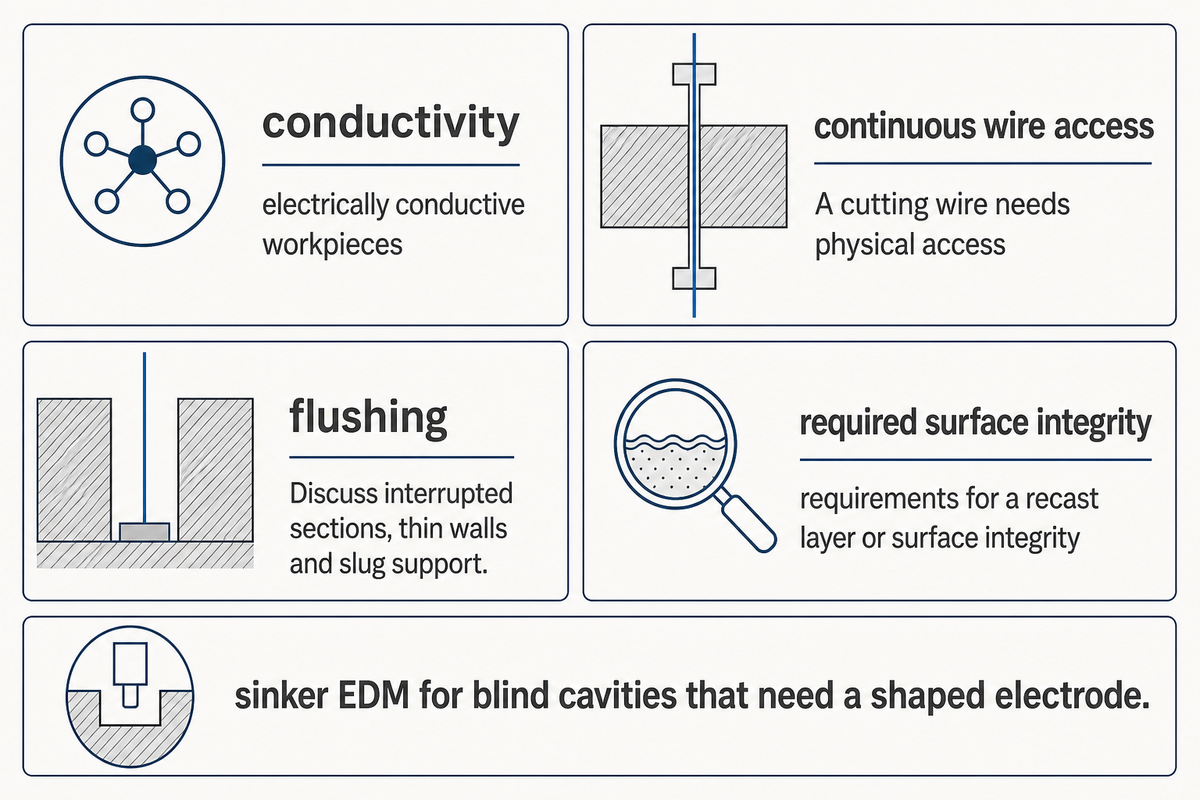
The Wire-Path Fit Screen checks conductivity, continuous wire access, flushing and required surface integrity, prior to a buyer selecting a supplier.
The following eight checks will help you decide whether to proceed with the drawing as is, revise the drawing or select another process:
- Define material and condition. Give the exact grade, stock form and heat-treatment condition. A general steel entry can’t replace a specified hardened tool steel, and stainless steel machining requirements may differ by grade and condition.
- Trace the wire path. Mark through-features, entry edges, start holes and areas where the guides or fixtures could interfere. A cutting wire needs physical access as well as electrically conductive stock.
- Match one machine. Consider the sizes, weights, travel, taper and thickness of the workpieces. Multiple machines with different strengths don’t form a single larger combined envelope.
- Set dimensional acceptance. Identify datums, critical dimensions and the inspection condition. The wire EDM machine’s positioning claim does not automatically become the finished component’s guaranteed engineering tolerance.
- State the required surface roughness in units, and any requirements for a recast layer or surface integrity. Ask for the proposed pass sequence, test method, report and responsible laboratory or shop.
- Resolve flushing and workholding. Discuss interrupted sections, thin walls and slug support. Removing material can release stock stress even when the cutting process has little mechanical force.
- Assign the complete process route. Identify who performs preparation, heat treatment, grinding and finishing. If alloy steel part production involves outside operations, give each operation an owner and an acceptance point.
- Approve inspection and release timing. Agree on first-article reports, material records, sampling, traceability and the point when repeat production may begin. Include these in the price and schedule.
What can wire EDM cut?
Wire electrical discharge machining cuts electrically conductive workpieces along a path that the wire can physically follow. Hardened steels and other alloys can be conductive, but conductivity alone doesn’t indicate an acceptable order. Other considerations include the condition of the material, its thickness, the accessibility of the wire, the type of flushing, and the surface-integrity acceptance.
EDM technology uses controlled discharges between an electrode and the workpiece to remove material. That explains why hardness doesn’t create the same tool-loading problem as conventional machining, but it doesn’t make every conductive material equally straightforward. A narrow internal profile needs an entry route; a fragile remaining section needs support. Fine-wire machining, also called small wire EDM, changes the feature scale but still needs workable access and flushing. For titanium parts, the material-specific drawing requirements should also define the surface condition required after cutting. Describe the feature and acceptance requirement before choosing the method of machining.
When should I choose wire EDM over milling or sinker EDM?
Choose wire EDM for a feasible through-profile when a rotating tool cannot efficiently produce the required geometry or material condition. Consider milling for accessible pockets and bulk material removal, and sinker EDM for blind cavities that need a shaped electrode. The decision follows feature access and acceptance, not a general preference for one technology.
A thin slot in hardened stock can favor the EDM process; an open pocket with generous tool access may favor milling for accessible features. Wire EDM and sinker EDM also have different tooling and access requirements, so “EDM” isn’t a complete process instruction. Traditional machining methods apply mechanical cutting forces, while EDM removes material through localized discharges. Low mechanical force doesn’t mean no thermal surface effects, and neither process eliminates the possibility of movement after material removal. For a mixed-feature component, the answer may be a planned sequence of milling, heat treatment, wire cutting and finishing.
Do
- Attach the controlled drawing revision.
- Keep taper and thickness conditions together.
- Name the required inspection deliverables.
Don’t
- Combine separate machines into one capacity claim.
- Substitute inspection accuracy for machining tolerance.
- Assume every finishing operation is included.
How to Compare US and China Wire EDM Quotes
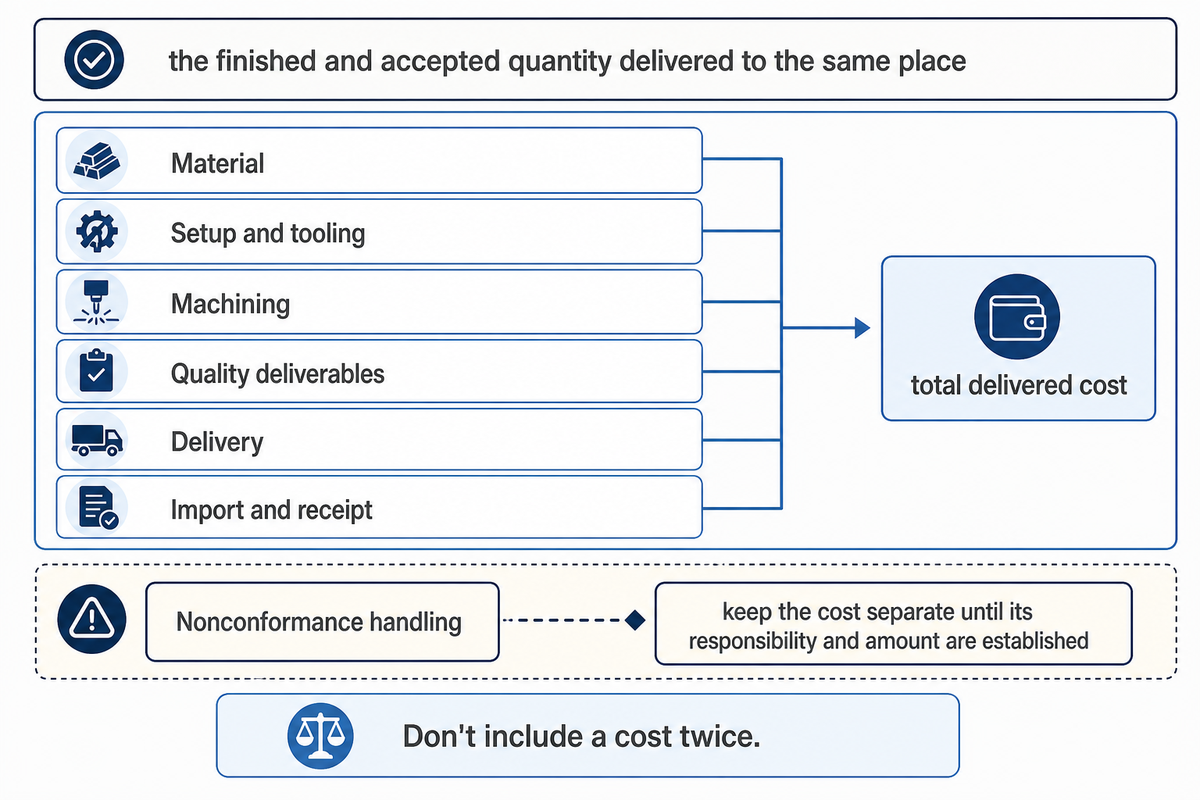
For a full order, consider China, assuming the manufacturing and delivery route works. For a short replenishment cycle, or for a handoff in the US, consider a US shop. Neither of these establishes the lower cost. Consider the cost of the finished and accepted quantity delivered to the same place.
Send an identical drawing revision, material grade and condition, quantity, dimensional tolerances, surface requirements and inspection package to each shop. Specify the delivery address, packaging and ownership of supplied material. For a carbon steel component order, for example, the stock condition and corrosion protection belong in both requests; leaving them open can produce quotes for different products.
Is wire EDM expensive?
If several finish passes, fine-wire EDM, difficult flushing, or long cuts are required, consider Wire EDM for a process quote, as it may cost more than another comparable process. It can also make a drawing practical when traditional machining would need a different feature design or difficult tooling. Evaluate a quoted process against the feature, not hourly rates.
The EDM machining cost should reflect setup, cutting conditions and the inspection package. A low piece price may exclude first article or material prep, which may be included by another shop. Ask for the same quantity breakpoints and release schedule if the order will repeat. Separate one-time engineering or fixturing charges from recurring charges, then identify whether the quote assumes one shipment or several.
Build the comparison from the suppliers’ actual written line items.
The following categories prevent a low machining price from concealing a higher delivered cost:
- Material: Stock, prep, supplied-material handling, and any scrap allowance.
- Setup and tooling: Programming, fixtures, and electrodes (if used). Also, determine if these costs recur.
- Machining: Agreed cuts and finish passes, as well as secondary turning, milling, or grinding.
- Quality deliverables: inspection, material documents, first-article reports and any outside surface-integrity testing.
- Delivery: packaging, freight, insurance and the costs assigned to each party by the quoted delivery terms.
- Import and receipt: applicable customs duties and taxes, brokerage, and receiving inspection, using current inputs for the actual shipment.
- Nonconformance handling: What are the costs associated with handling nonconformance?
Responsibility for rework? Replacement parts? Return freight? Repeat inspection?
The total delivered cost is the total of the production and buyer-paid delivery, import, and receipt costs for the agreed shipment. Don’t include a cost twice. If there’s exposure for nonconformance, consider the cost and responsibility, but keep the cost separate until its responsibility and amount are established. The cost per accepted part is the total actual cost, less credits, divided by the number of accepted parts. Prior to receipt of the parts, any assumed accepted quantity is an estimate.
Lead time requires similar considerations. Distinguish drawing approval, material availability, machining, outside processing, inspection, dispatch and transit. A commitment to finish machining doesn’t give the time of arrival of the parts at your receiving dock. Agree on the response route for a rejected first article and the point at which a batch is released, especially when time-zone differences or international freight make a corrective loop longer.
Local US quotation
- Use the controlled drawing and acceptance package.
- Price delivery to the stated receiving location.
- Assign first-article and rework responsibility.
China export quotation
- Use the same drawing and acceptance package.
- Price the full shipment to that receiving location.
- Assign the same first-article and rework obligations.
FAQs About Wire EDM Vendors
Can I request custom wire EDM services for my manufacturing project?
Yes; define the feature and acceptance package first.
Send the controlled drawing, material condition, quantity and required inspection with your custom wire EDM inquiry. Include a model when it helps explain geometry, but identify which document controls dimensions. An EDM machining service should return a proposed route and commercial offer tied to those requirements. First-article approval can establish the accepted part before a repeat order, with any design changes approved explicitly.
Can electrical discharge machining handle hard metals?
Hardness alone does not rule out EDM.
Electrically conductive hardened metals can be suitable because electric discharge machining removes material through discharges rather than a cutting edge pressing into the stock. The selected route still needs to handle the grade, condition and geometry. A hardened tool-steel component may also have recast-layer, roughness or dimensional acceptance requirements that change the finishing and inspection plan, so material hardness is only one part of feasibility.
What is the difference between wire EDM service and sinker EDM service?
The electrode geometry changes the accessible features.
Wire EDM uses a moving thin wire to generate a profile along an accessible path through the workpiece. Sinker EDM uses a shaped electrode to generate features such as blind cavities. A supplier offering wire and sinker EDM can propose different routes for different features on the same part, but the electrode preparation, setups and inspection still belong in the quotation. Small-hole drilling may add the entry required for an internal wire cut.
What surface finish (Ra) can I realistically expect from wire EDM on tool steel?
Use a part-specific finish proposal with explicit units.
Ra depends on the material, machine route and finish passes. KLH ties its published 2 Ra microinch claim to multiple passes; that value isn’t a universal tool-steel guarantee. Put the required finish and measurement method in the order.
Which is the best wire EDM service vendor for my drawing?
The decisive feature should determine the shortlist.
The best EDM choice is the shop that can explain a feasible route for your critical feature and accept the required measurement and delivery obligations. For miniature details, compare EDM Intelligent Solutions and Microtec’s fine-wire scopes. For large sections, read Wire Cut Company’s taper conditions and bes’s separate workpiece, travel and height limits. For an integrated China order, Zhenling’s drawing review can address wire-cut features alongside other machining. A supplier that can offer precision wire EDM may still be unsuitable when its proposed route leaves the hardest feature, inspection requirement or delivery obligation unresolved. Start with a few matched candidates and compare their written responses to the same package.
Who operates the largest EDM shop?
No common size metric establishes one winner here.
“Largest EDM shop” could mean machine count, floor area, staffing or available production capacity. Mixed fleets of EDM systems also need a common counting basis. This guide compares published service fit, so it doesn’t assign that title.
Build a Drawing-Based Shortlist
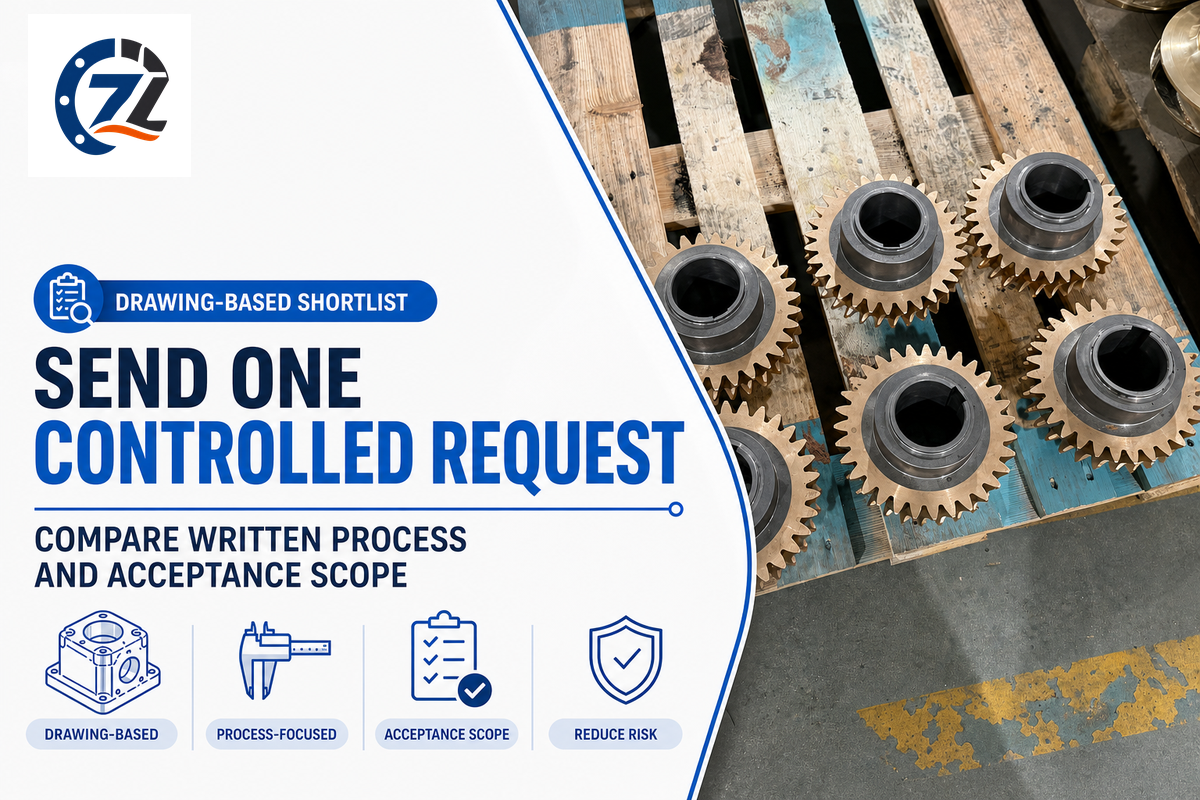
Select suppliers around the difficult feature and send a controlled request to each. Specify drawing revision, material condition, quantity, finish and inspection. Also indicate the destination. Ask the shop to identify its proposed process and exclusions in writing. That gives you a basis for comparing accepted parts and delivered cost instead of machine slogans.
For a Zhenling inquiry, provide the complete drawing package, and use the service scope linked above. Minimum quantity, single-piece acceptance, lead time, tolerances and inspection are defined through the written quote. A request for multiple machining operations is more effective if it identifies surfaces which will be turned, milled, ground or wire-cut, and how the part will be accepted.
Key takeaway
A useful wire EDM shortlist connects each drawing to a feasible cutting path, defined inspection and a complete delivered quotation. Company size and country are context; the proposed part-specific route determines the purchase.
References & Sources
Company capabilities and histories are attributed to their published service, equipment, history and quality pages; their official addresses appear as plain text in the comparison and profiles. Public-record and publication references used for specific history or address fields are listed below.
- Companies House: Cheshire Wire Erosion Limited, registered office and incorporation record; the registered office isn’t identified as the machining location.
- The Gateway: United Centerless Grinding & Thread Rolling, February 2020 company feature reporting the 1960 opening.