Get in touch with Zhenling Company

Last updated: October 2026
The best automotive CNC parts companies include Linamar for integrated production, Cox Manufacturing for small turned components, Protolabs for prototypes, and Zhenling Metal for drawing-led custom components. The right shortlist follows the component and order stage: a forged production part, a machined casting and a development prototype need different manufacturing routes.
Companies with significant machining capacity can still be the wrong place to send a particular drawing. Automotive buyers need to separate a manufacturer of CNC machined parts from a CNC machine builder, and distinguish recurring production programs from custom manufacturing for development. These twenty manufacturing companies cover large integrated manufacturers as well as specialty shops. The manufacturing role is made explicit.
Quick Picks
- Best for drawing-led custom metal components: Zhenling Metal.
- Best for integrated machining and assembly programs: Linamar.
- Best for forged powertrain and chassis components: Bharat Forge.
- Best for recurring small turned parts: Cox Manufacturing.
- Best for copper automotive connectors: Luvata Welshpool.
- Best for digital prototype and low-volume procurement: Protolabs.
Disclosure: This guide is published by Zhenling Metal. We list ourselves first because this is our website, not because we claim to be the market leader. The other 19 manufacturers are grouped by what they’re best for, in no particular order within each group.
How We Selected These Automotive CNC Parts Companies
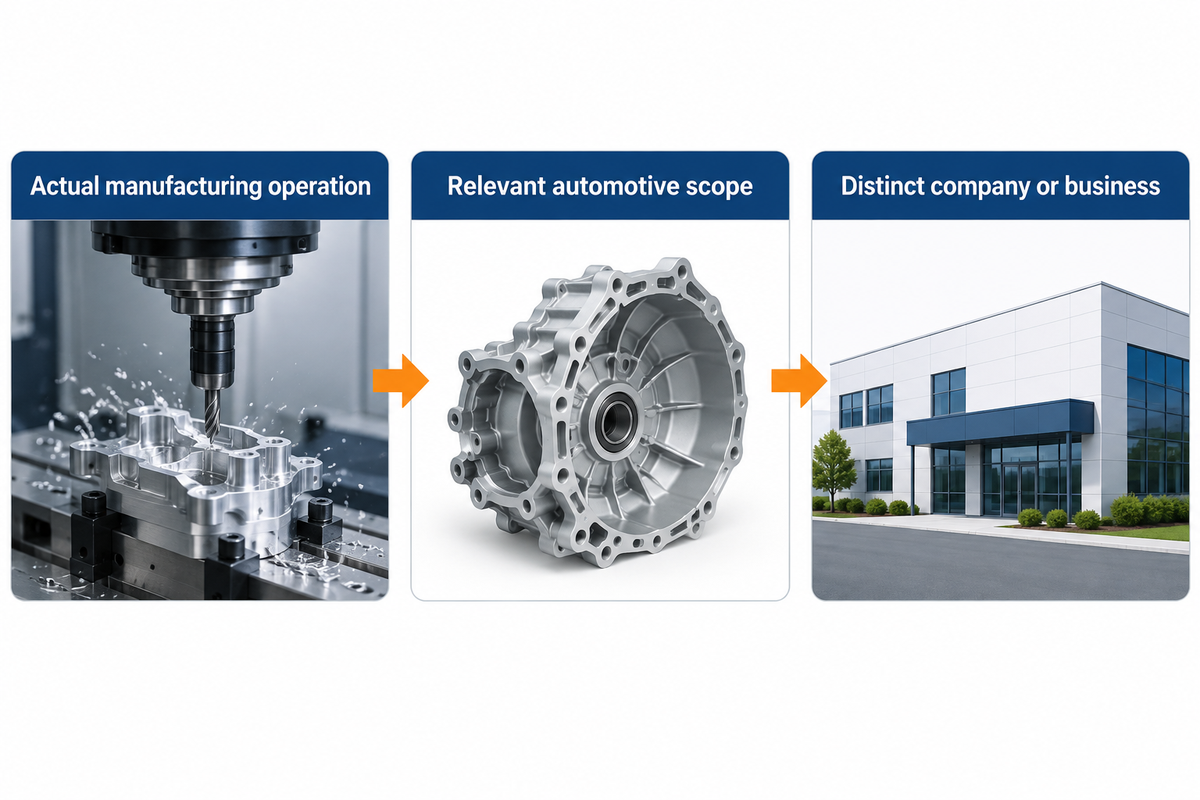
Company data was verified by official company websites, histories, application pages and public data in October 2026. Inclusion required evidence of an actual manufacturing and machining operation, a relevant component or automotive application, and a distinct company or business. The global scope excluded equipment sellers, distributors, pure trading companies, sourcing-only platforms, directories, used equipment sellers, etc. Manufacturers with their own factories and additional partner capacity remain eligible, and that situation is clearly stated.
The numbers are reference numbers and not performance positions. A parent and its network or acquired automotive operations are counted once. Best-for descriptions are editorial matches between the published scope of manufacturing and a purchasing task; they aren’t test results, price awards or buyer production program approvals.
Automotive CNC Parts Companies Compared
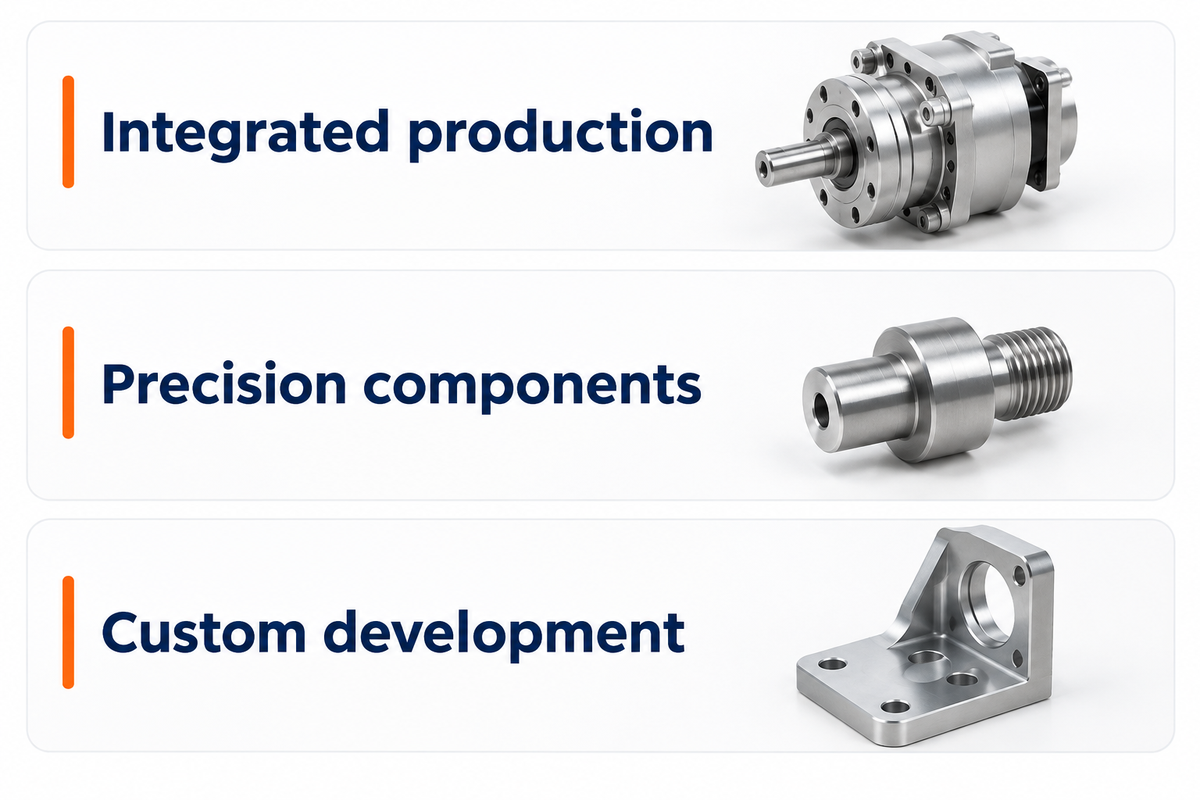
The Automotive Order-Fit Map positions the deliverable first: integrated production, precision components or custom development work. Headquarters and founding details align with company histories; parent company and incorporation details are also aligned. Missing histories are left unconfirmed rather than guessed.
| No. | Company Name | Headquarters | Founded Year | Best For | Brief Introduction | Main Machined Components | Services | Key Advantages | Potential Disadvantages | Official Website |
|---|---|---|---|---|---|---|---|---|---|---|
| 1 | Zhenling Metal | Shanghai, China | 2006 | Drawing-led RFQs for custom automotive metal components | Drawing/sample review with owned Jiashan production | Custom metal components made to drawing or sample | CNC milling, grinding, boring, drilling and fabrication; automotive scope agreed per drawing | Custom drawing review | No stocked replacement catalogue | https://zhenlingmetal.com/ |
| 2 | Linamar | Not confirmed | 1966 | Recurring programs needing machining and assembly | Automated machining linked to assembly | Machined cast, forged and formed components and integrated assemblies | Multi-axis CNC milling, turning, drilling, automated production and assembly testing | Integrated machining cells | Program-oriented route | https://www.linamar.com/ |
| 3 | Impro Precision | Hong Kong | 1998 | Fuel-system parts and machined cast components | Machining plus casting businesses | Fuel injectors, high-pressure connectors, EV motor rotor rods and valve spools | Precision machining, investment casting and sand casting | Named global machining locations | Process/site choice matters | https://www.improprecision.com/ |
| 4 | Sansera Engineering | Bengaluru, India | 1981 | Forged components with integrated machining | Forging and heat treatment integration | Precision forged and machined automotive components | Forging, in-house heat treatment and machining | Bidadi machining investment | Forging-led scope | https://sansera.in/ |
| 5 | Bharat Forge | Pune, India | Not confirmed | Forged powertrain and chassis components | Automated forged-component production | Crankshafts, connecting rods, steering knuckles and transmission shafts | Automated forging and machining lines, design, testing and validation | Powertrain and chassis families | Not a billet-prototype route | https://www.bharatforge.com/ |
| 6 | Musashi Seimitsu Industry | Toyohashi, Aichi, Japan | 1938 (foundation); 1944 (incorporation) | Integrated formed and finish-machined parts | Forming through assembly | Automotive components and assemblies | Forging, lathing, heat treatment, finishing and assembling | Connected production stages | Integrated component programs | https://www.musashi.co.jp/en/ |
| 7 | CIE Automotive | Bilbao, Spain | 2002 (current group); roots in 1996 | Automotive parts across multiple machining technologies | Several machining technologies | Differential housings, wheel hubs, injection rails and transmission shafts | CNC turning, milling, grinding and gear machining | Turning through gear processing | Capabilities spread across plants | https://www.cieautomotive.com/ |
| 8 | Nemak | Monterrey, Mexico | 1979 | Lightweight cast components with machining | Lightweight cast-component production | Automotive lightweight components and battery housing assemblies | Casting, machining and robotic assembly demonstrated at Romania operations | Casting-to-assembly site example | Casting-led route | https://www.nemak.com/ |
| 9 | Ryobi Limited | Fuchu, Hiroshima, Japan | 1943 | Automotive die castings with finished features | Die manufacture through assembly | Automotive die-cast components | Prototype development, die manufacture, casting, machining and assembly | In-house machining after casting | Die tooling route | https://www.ryobi-group.co.jp/en/ |
| 10 | Hirschvogel | Denklingen, Germany | 1938 | Formed automotive components supplied ready for installation | Formed steel and aluminum parts | Forged and machined automotive components | Steel and aluminum forming with subsequent machining and finishing | Ready-to-install finishing | Forming-first offer | https://www.hirschvogel.com/en/ |
| 11 | MacLean-Fogg Component Solutions | Mundelein, Illinois, USA (parent corporate office) | 1925 (parent company) | Formed fasteners and machined powertrain parts | Formed fasteners and engineered parts | Fasteners, machined powertrain components and engineered automotive components | Cold forming, hot forging, CNC machining, multi-spindle machining and rotary transfer machining | Named CNC production sites | Facility-specific processes | https://www.macleanfoggcs.com/ |
| 12 | Sundram Fasteners | Chennai, India | 1966 | Automotive fasteners and powertrain component families | Fastener and powertrain businesses | Fasteners, powertrain components, cold-extruded parts and pumps | Hot forging, precision machining and component manufacturing | Korkadu machining operation | Defined component families | https://sundram.com/ |
| 13 | Stecker Machine | Manitowoc area, Wisconsin, USA | 1973 | Contract machining of complex castings | Complex casting contract machining | Complex machined cast components | In-house CNC machining with castings supplied by partner foundries | Foundry partner coordination | Casting sourced from partners | https://www.steckermachine.com/ |
| 14 | Cox Manufacturing | San Antonio, Texas, USA | 1956 | High-volume small turned automotive components | Recurring small turned components | Valve keepers, dowel pins, bushings, splined shafts and brake components | Swiss CNC turning, multi-spindle cam automatics and CNC mill-turn | Swiss and multi-spindle routes | Small-part volume focus | https://www.coxmanufacturing.com/ |
| 15 | EMC Precision | Elyria, Ohio, USA; additional Sheridan, Indiana operation | 1925 | Turned components needing finishing and assembly | Machining with downstream operations | Automotive bushings, steering, axle and brake components, transmission valves and shafts | CNC turning and milling, centerless grinding, heat treatment and value-added assembly | Grinding and assembly options | Multi-sector documentation scope | https://emcprecision.com/ |
| 16 | Luvata Welshpool | Welshpool, Wales, UK | 1943 (Dawson Shanahan heritage) | Copper automotive connectors and formed precision parts | Copper parts and connector production | Copper EV/PHEV connectors and diesel/hydrogen injector sleeves | Precision cold forming, CNC machining, copper machining and assemblies | Cold forming plus Swiss machining | Copper specialization | https://luvata.com/contact-luvata/luvata-welshpool/ |
| 17 | Protolabs | Maple Plain, Minnesota, USA | 1999 | Digital procurement for prototypes and low-volume parts | Digital factory and network routes | Custom machined automotive prototypes and low-volume components | CNC machining alongside injection molding, additive manufacturing and sheet metal | Prototype and low-volume focus | Factory/network distinction | https://www.protolabs.com/ |
| 18 | WayKen | Shenzhen, China | Not confirmed | Custom prototypes and low-volume machined components | Custom metal and plastic manufacture | Custom metal and plastic prototypes and production components | Three-axis and five-axis CNC machining with in-house machining and post-processing | In-house machining and finishing | Wider process resource integration | https://waykenrm.com/ |
| 19 | MNB Precision | Coventry, UK | 1980 | UK precision engineering for unusual component work | UK cross-sector precision engineering | Custom precision components including housings, pistons and con rods | In-house CNC turning, milling, shot peening, spark erosion and wire erosion | Machining and erosion in-house | Oil-and-gas core focus | https://www.mnbprecision.com/ |
| 20 | RapidDirect | Shenzhen, China | 2009 | Custom parts with digital quoting and multiple processes | Owned factory with partner network | Custom CNC-machined metal and plastic components | CNC machining, injection molding, sheet metal and additive manufacturing | Digital multi-process workflow | Partner capacity included | https://www.rapiddirect.com/ |
Zhenling Metal: Drawing-Led Custom Components
1. Zhenling Metal: Best for drawing-led RFQs for custom automotive metal components
Headquarters: Shanghai, China · Founded: 2006 · Type: Manufacturer and trading business with its own Jiashan machine shop
Official website: https://zhenlingmetal.com/
Main products: Custom metal components made to drawing or sample
Core capabilities: CNC milling, grinding, boring, drilling and fabrication; automotive scope agreed per drawing
Certifications / notable work: Own plant in Jiashan, Zhejiang, supporting drawing or sample-based orders (according to its website).
Zhenling offers custom metal components through a CNC machine shop in Jiashan, starting with a controlled drawing or sample when the process route still needs discussion. The Shanghai business operates its own plant in Jiashan, and its automotive service page organizes enquiries around component geometry, materials and acceptance requirements rather than named vehicle programs. That makes the company a practical enquiry option for custom metal parts whose turning, milling or fabrication scope still needs to be agreed. Its offer is built-to-drawing work rather than stocked aftermarket replacement parts, so a buyer seeking a retail part number should use a catalogue supplier instead.
Integrated Automotive Production and Machining
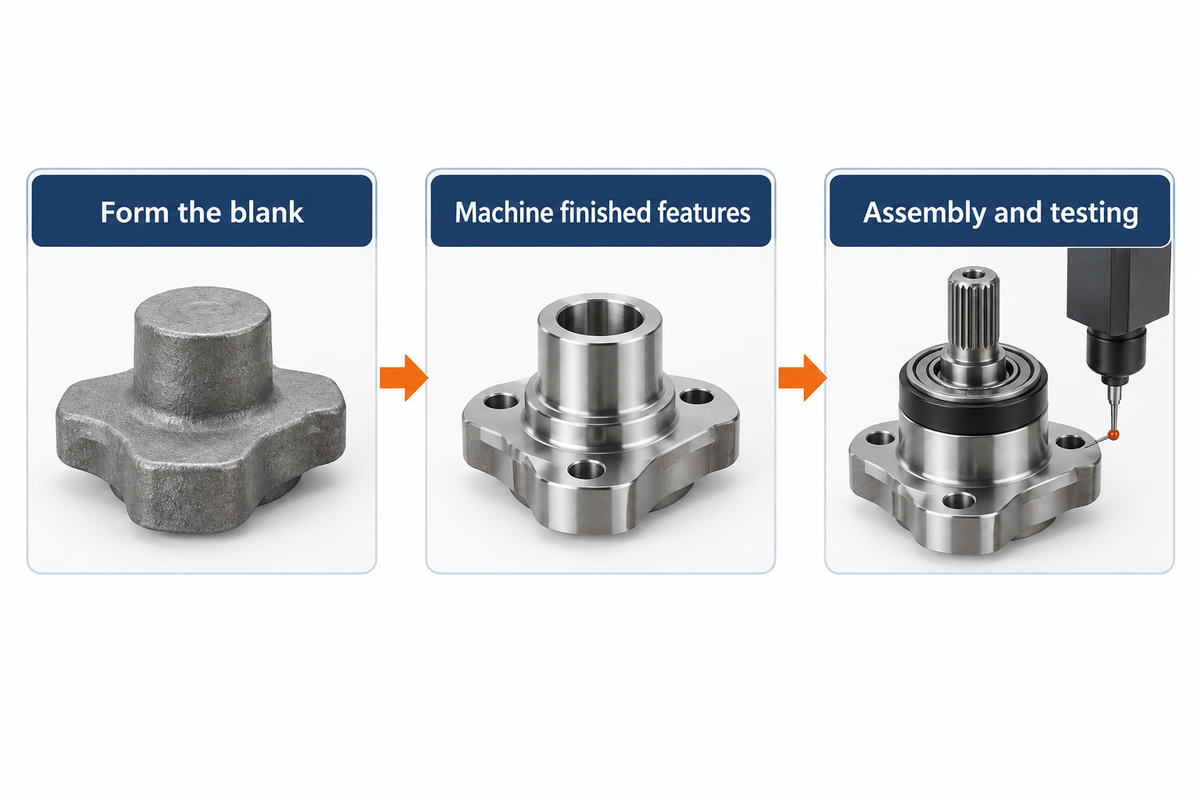
These manufacturers integrate machining with other methods of producing components (e.g. forming, casting or assembly). Their published scope is helpful for programs that require engineered manufacturing chains, beyond simple cutting operations.
2. Linamar: Best for recurring programs needing machining and assembly
Headquarters: Not confirmed · Founded: 1966 · Type: Integrated component manufacturer and assembly supplier
Official website: https://www.linamar.com/
Main products: Machined cast, forged and formed components and integrated assemblies
Core capabilities: Multi-axis CNC milling, turning, drilling, automated production and assembly testing
Certifications / notable work: Combines automated high-volume machining cells with assembly and testing (according to its website).
Linamar combines component machining with assembly, which makes it relevant when the deliverable is more than a loose finished part. Its machining and assembly operation describes automated high-volume cells as well as multi-axis CNC work on cast, forged and formed blanks, bringing the blank route and downstream operations into the same production discussion. For recurring programs, that combination is useful when assembly interfaces and testing need to be considered alongside CNC cutting, rather than treating the machined feature as an isolated purchase. The procurement fit is an integrated production program, so a small design experiment should be evaluated through a prototype-oriented route rather than assuming the group’s scale guarantees a useful one-piece quotation.
3. Impro Precision: Best for fuel-system parts and machined cast components
Headquarters: Hong Kong · Founded: 1998 · Type: Vertically integrated casting and precision machining manufacturer
Official website: https://www.improprecision.com/
Main products: Fuel injectors, high-pressure connectors, EV motor rotor rods and valve spools
Core capabilities: Precision machining, investment casting and sand casting
Certifications / notable work: Official automotive page links plant-level IATF 16949 and ISO 9001 certificates. Publishes automotive precision-machining locations in Turkey, Mexico and China (according to its website).
Impro gives automotive buyers a choice of component-making routes within one manufacturing group, including precision machining and two casting businesses. Its automotive page names high-pressure connectors, fuel injectors and EV motor rotor rods, providing a more concrete basis for an enquiry than a general claim to serve the automotive industry. The machining locations listed in Turkey, Mexico and China also make geography part of the sourcing discussion, particularly where delivery and production transfer are important. Because the offer spans several process businesses, a comparison needs to identify the intended manufacturing plant and process instead of assuming that an investment-casting capability and a machined-from-bar capability are interchangeable.
4. Sansera Engineering: Best for forged components with integrated machining
Headquarters: Bengaluru, India · Founded: 1981 · Type: Integrated forging and precision engineering manufacturer
Official website: https://sansera.in/
Main products: Precision forged and machined automotive components
Core capabilities: Forging, in-house heat treatment and machining
Certifications / notable work: Its published history records a new Bidadi machining facility commissioned in 2024 (according to its website).
Sansera is a useful candidate when the component concept begins with a forged blank and continues through machining, rather than a part cut entirely from standard stock. Its official history traces incorporation in Bengaluru and later automotive production, while the published manufacturing story includes its own forging and heat-treatment operations. Commissioning a Bidadi machining facility in 2024 is a specific example of the company’s machining investment, and supports its position in a shortlist for integrated precision engineering. This is a forging-led supplier relationship, so an enquiry for a simple one-off billet part should be compared with job-shop offers instead of assuming that a larger industrial footprint automatically produces the most suitable development route.
5. Bharat Forge: Best for forged powertrain and chassis components
Headquarters: Pune, India · Founded: Not confirmed · Type: Forging-led automotive and industrial component manufacturer
Official website: https://www.bharatforge.com/
Main products: Crankshafts, connecting rods, steering knuckles and transmission shafts
Core capabilities: Automated forging and machining lines, design, testing and validation
Certifications / notable work: Automotive product families include front axles, control arms and input/output shafts (according to its website).
Bharat Forge’s automotive offer covers component families such as crankshafts, connecting rods, front axles and steering knuckles. The company describes fully automated forging and machining lines, so the machining capability is tied to a documented component-production route. This combination is relevant when a buyer wants the material-forming stage and finished features considered together, especially for powertrain or chassis programs whose blank geometry is part of the engineering task. Its program-oriented forging offer differs from ordering an arbitrary billet prototype, and a comparison should preserve that distinction instead of using the same delivery expectation for both types of supplier.
6. Musashi Seimitsu Industry: Best for integrated formed and finish-machined parts
Headquarters: Toyohashi, Aichi, Japan · Founded: 1938 (foundation); 1944 (incorporation) · Type: Integrated automotive component manufacturer
Official website: https://www.musashi.co.jp/en/
Main products: Automotive components and assemblies
Core capabilities: Forging, lathing, heat treatment, finishing and assembling
Certifications / notable work: Its official production system links forging through machining and finishing to assembly (according to its website).
Musashi’s production system explicitly connects forging, lathing, heat treatment, finishing and assembly, which is the reason for including it in this group. Its corporate profile distinguishes the company’s foundation from legal incorporation, an important detail when comparing a long-established manufacturing business with a newer trading or platform identity. A component that needs several of these operations can benefit from a sourcing conversation that addresses their sequence, since the last machined feature can’t be considered independently of the material and earlier operations. Musashi’s offer follows this integrated production route, so it should be evaluated alongside other formed-component suppliers rather than treated as a stand-alone machine shop purchasing billet for every drawing.
7. CIE Automotive: Best for automotive parts across multiple machining technologies
Headquarters: Bilbao, Spain · Founded: 2002 (current group); roots in 1996 · Type: Multi-technology automotive component manufacturing group
Official website: https://www.cieautomotive.com/
Main products: Differential housings, wheel hubs, injection rails and transmission shafts
Core capabilities: CNC turning, milling, grinding and gear machining
Certifications / notable work: Publishes soft and hard turning, multi-spindle machining and gear-processing capabilities (according to its website).
CIE Automotive publishes a broad machining technology portfolio, including soft and hard turning, multi-spindle machining, milling, grinding and gear processing. Its listed products extend from injection rails and crankshaft caps to differential housings, wheel hubs and gearbox components, giving buyers specific families to match against their own drawing. The group’s present identity dates to the 2002 combination described in its history, while the earlier 1996 roots explain why different dates can appear in company summaries. Process capability is distributed across manufacturing plants, so CIE is most useful in a shortlist when the enquiry identifies the relevant technology and component family rather than assuming one plant performs every operation listed for the group.
8. Nemak: Best for lightweight cast components with machining
Headquarters: Monterrey, Mexico · Founded: 1979 · Type: Lightweight automotive component manufacturer
Official website: https://www.nemak.com/
Main products: Automotive lightweight components and battery housing assemblies
Core capabilities: Casting, machining and robotic assembly demonstrated at Romania operations
Certifications / notable work: Romania operations describe the chain from casting and machining to automated robotic assembly (according to its website).
Nemak belongs in a casting-led shortlist because its lightweight-component business includes downstream machining, with the Romanian operations providing a clear site-level example. Those facilities describe the value chain from aluminum die casting through machining to automated robotic assembly, while the group’s company history includes battery housing assembly developments. This is useful for automotive parts where the casting and finished interfaces need a coordinated production route, rather than buying a casting and then arranging unrelated machining capacity. Nemak’s offer therefore differs from a small batch machined wholly from solid material, and its 2026 integration of GF Casting Solutions’ automotive business is kept within this single entry rather than counted as another supplier.
9. Ryobi Limited: Best for automotive die castings with finished features
Headquarters: Fuchu, Hiroshima, Japan · Founded: 1943 · Type: Die-casting manufacturer with in-house machining and assembly
Official website: https://www.ryobi-group.co.jp/en/
Main products: Automotive die-cast components
Core capabilities: Prototype development, die manufacture, casting, machining and assembly
Certifications / notable work: Publishes an in-house production chain extending from prototypes and dies through machining and assembly (according to its website).
Ryobi’s published manufacturing system covers prototypes, die design and manufacture, casting, machining and assembly within its own production chain. That scope makes the company relevant for buyers of automotive die-cast components who need finished interfaces rather than an unfinished casting alone. The combination also changes how a project should be framed: the casting design, die route and later machining belong to the same component discussion, while a prototype cut from solid stock can follow a different path. Ryobi is consequently a candidate for a die-casting-led program, with tooling considerations that differ from billet machining, rather than a general-purpose answer to every short-run CNC enquiry.
10. Hirschvogel: Best for formed automotive components supplied ready for installation
Headquarters: Denklingen, Germany · Founded: 1938 · Type: Forged and machined steel and aluminum component manufacturer
Official website: https://www.hirschvogel.com/en/
Main products: Forged and machined automotive components
Core capabilities: Steel and aluminum forming with subsequent machining and finishing
Certifications / notable work: Its Schongau operation is described as a finishing plant for ready-to-install components (according to its website).
Hirschvogel focuses on steel and aluminum components that are formed and then machined for automotive applications. Its company information identifies the finishing role of the Schongau operation, as well as machining within its wider manufacturing footprint, supporting inclusion as a manufacturer of finished components rather than merely a source of forged blanks. This route suits a buyer whose specification requires the formed material and subsequent machining to be considered together, especially when the finished part is intended to enter an assembly rather than undergo more work elsewhere. The core offer starts with formed components, so a highly varied set of billet geometries should be assessed through a separate custom-machining shortlist.
Precision CNC Turning and Machined Components
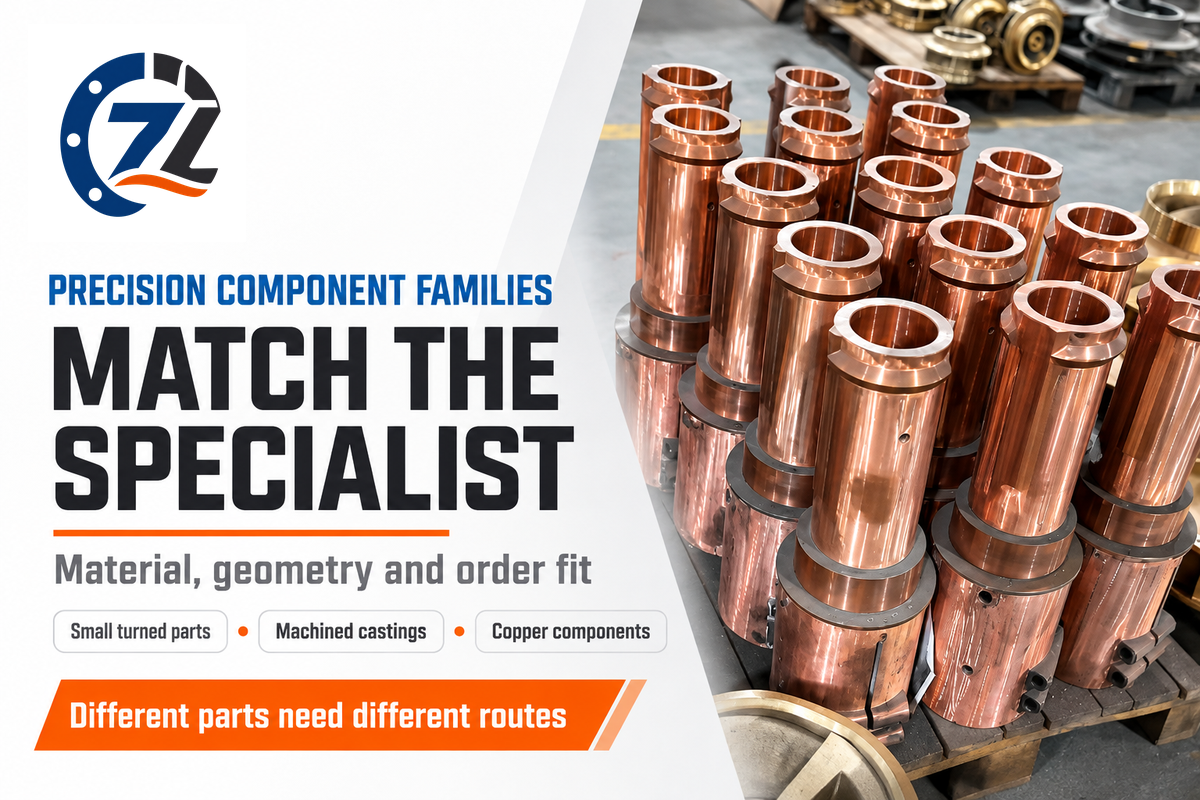
These specialist manufacturers are focused on families of components and process combinations. Their differences include small part turning, machining of complex castings, copper, and finishing and assembly after machining.
11. MacLean-Fogg Component Solutions: Best for formed fasteners and machined powertrain parts
Headquarters: Mundelein, Illinois, USA (parent corporate office) · Founded: 1925 (parent company) · Type: Automotive fastener and engineered component manufacturer
Official website: https://www.macleanfoggcs.com/
Main products: Fasteners, machined powertrain components and engineered automotive components
Core capabilities: Cold forming, hot forging, CNC machining, multi-spindle machining and rotary transfer machining
Certifications / notable work: Names CNC machining at Metform, MacLean Curtis and Saegertown facilities (according to its website).
MacLean-Fogg Component Solutions combines forming technologies with machining across its fastener and engineered-component businesses. The published technology list identifies CNC machining at Metform, MacLean Curtis and Saegertown, and distinguishes these operations from multi-spindle screw machining and Hydromat rotary-transfer work. Buyers can use that detail to route an enquiry for a powertrain component or formed fastener toward a production process, rather than treating all small metal parts as an identical turning job. Availability remains facility-specific across the component businesses, and the 1925 date refers to the parent company’s history rather than a claim that every current division or factory began in that year.
12. Sundram Fasteners: Best for automotive fasteners and powertrain component families
Headquarters: Chennai, India · Founded: 1966 · Type: Automotive precision component and fastener manufacturer
Official website: https://sundram.com/
Main products: Fasteners, powertrain components, cold-extruded parts and pumps
Core capabilities: Hot forging, precision machining and component manufacturing
Certifications / notable work: Its official contact directory identifies a hot-forged and precision-machined parts operation at Korkadu (according to its website).
Sundram Fasteners is more useful to this comparison as a component manufacturer than as a general list of fastener products. Its official business description includes powertrain components, cold-extruded parts and pumps, while the contact directory separately identifies the hot-forged and precision-machined parts operation at Korkadu. That pairing establishes a machining role and helps a buyer distinguish between ordering a defined component family and seeking an unrestricted CNC job-shop service. For an enquiry involving fasteners or powertrain parts, the relevant business and manufacturing route should lead the shortlist, since Sundram’s published offer is organized around those component businesses rather than an instant-quote platform for any uploaded geometry.
13. Stecker Machine: Best for contract machining of complex castings
Headquarters: Manitowoc area, Wisconsin, USA · Founded: 1973 · Type: Contract CNC machining manufacturer for complex castings
Official website: https://www.steckermachine.com/
Main products: Complex machined cast components
Core capabilities: In-house CNC machining with castings supplied by partner foundries
Certifications / notable work: Separates its machining role from the partner-foundry casting supply chain (according to its website).
Stecker’s role is contract machining of complex cast components, with the casting supply chain involving partner foundries. This distinction matters for a buyer deciding whether to purchase finished castings or arrange machining of an existing blank, because machining responsibility and foundry responsibility are separate even when the supplier coordinates the work. The company’s own history dates to 1973, and its published description supports an enquiry centered on the machining stage rather than a claim that Stecker pours its own castings. Partner-foundry production is the specific boundary of this offer, so the buyer should compare it as a machining-led casting supply arrangement rather than an entirely in-house foundry-to-finished-part operation.
14. Cox Manufacturing: Best for high-volume small turned automotive components
Headquarters: San Antonio, Texas, USA · Founded: 1956 · Type: High-volume precision screw-machined component manufacturer
Official website: https://www.coxmanufacturing.com/
Main products: Valve keepers, dowel pins, bushings, splined shafts and brake components
Core capabilities: Swiss CNC turning, multi-spindle cam automatics and CNC mill-turn
Certifications / notable work: ISO 9001:2015 stated on its automotive page. Automotive offer includes PPAP/FMEA support and JIT/Kanban supply arrangements (according to its website).
Cox Manufacturing’s automotive page names valve keepers, dowel pins, bushings, splined shafts and brake components. Those families align with its use of Swiss CNC turning, multi-spindle cam automatics and CNC mill-turn equipment, making it a useful candidate for recurring small-component production. The same page describes PPAP and FMEA support along with JIT and Kanban supply arrangements, which connects the machining offer to how repeat parts can enter a buyer’s supply chain. Its published specialization is high-volume small-part work, so large cast housings and irregular one-off fabrications belong in a different comparison even though they also fall under the broad label of automotive parts.
15. EMC Precision: Best for turned components needing finishing and assembly
Headquarters: Elyria, Ohio, USA; additional Sheridan, Indiana operation · Founded: 1925 · Type: Precision machining and assembly manufacturer
Official website: https://emcprecision.com/
Main products: Automotive bushings, steering, axle and brake components, transmission valves and shafts
Core capabilities: CNC turning and milling, centerless grinding, heat treatment and value-added assembly
Certifications / notable work: Official site displays ISO 9001:2015 and IATF certification marks linked to quality information. Lists automotive machining for both prototype and production quantities (according to its website).
EMC Precision offers a machining route that extends beyond turning and milling into centerless grinding, heat treatment and value-added assembly. Its automotive application list includes bushings, steering, axle and brake components, transmission valves and shafts, and explicitly covers prototype as well as production quantities. That makes the company relevant when finishing operations or an assembly deliverable need to be part of the purchase, instead of comparing only the time spent at the lathe or mill. Automotive is one of several sectors in EMC’s business, so the enquiry still needs to identify the documentation required for the specific automotive order rather than infer that every cross-sector job follows the same submission process. Its listed Ohio and Indiana operations provide a US production route; buyers requiring local manufacture in another country need a different geographic option.
16. Luvata Welshpool: Best for copper automotive connectors and formed precision parts
Headquarters: Welshpool, Wales, UK · Founded: 1943 (Dawson Shanahan heritage) · Type: Precision cold-forming and machining manufacturer, formerly Dawson Shanahan
Official website: https://luvata.com/contact-luvata/luvata-welshpool/
Main products: Copper EV/PHEV connectors and diesel/hydrogen injector sleeves
Core capabilities: Precision cold forming, CNC machining, copper machining and assemblies
Certifications / notable work: Welshpool page provides IATF 16949 and ISO 9001 certificate documents. Publishes cold-formed and Swiss-machined EV connector products (according to its website).
Luvata Welshpool is the current identity to use for the operation formerly known as Dawson Shanahan. The site’s copper-component offer includes EV and PHEV connectors and injector sleeves, with cold forming, precision CNC machining and assembly among the published services. For buyers of conductive automotive components, that material and process focus provides a useful reason to shortlist the Welshpool business instead of relying on a generic claim about precision metal work. Its specialization is narrower than a general aluminum or steel machine shop, while the 1943 date describes the operation’s Dawson Shanahan heritage rather than the foundation of the wider Luvata group.
Custom Parts, Prototype and Low-Volume Machining
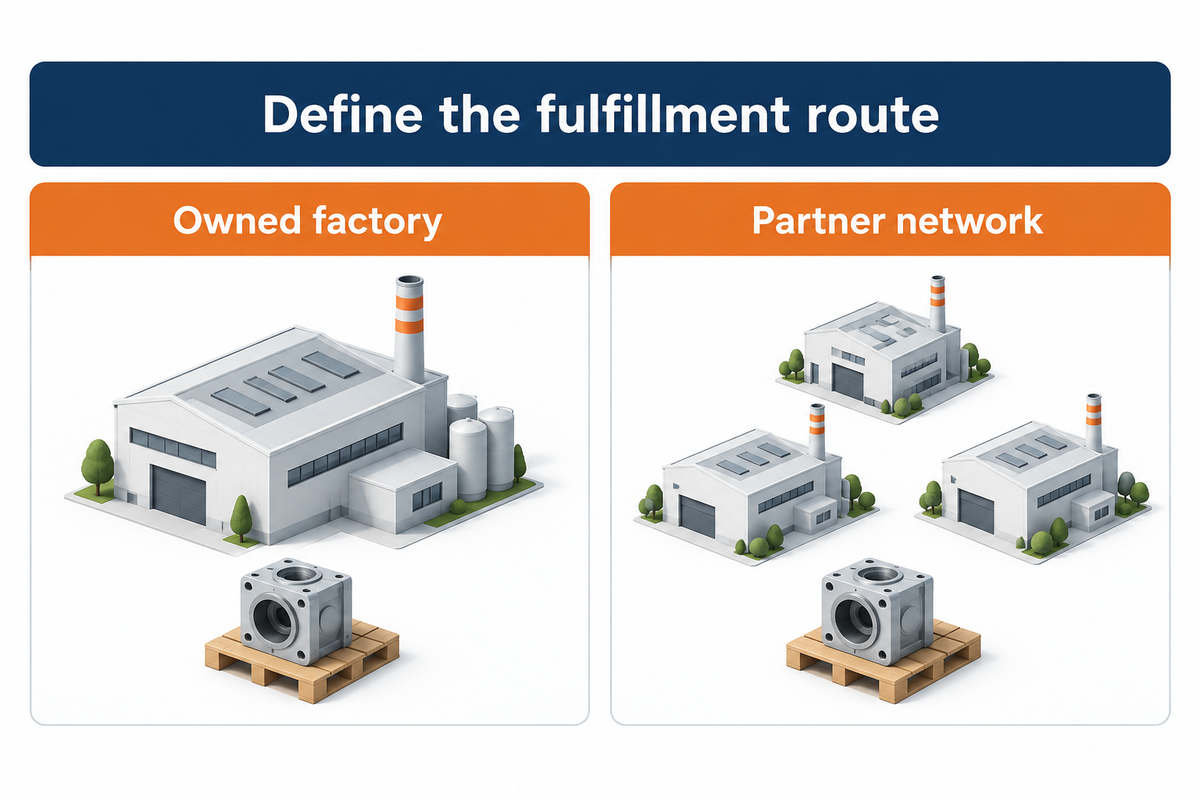
Custom CNC machining services support development and smaller-volume orders through different factory and service models. A digital interface, owned factory and partner network are separate parts of that model, so the profiles identify the manufacturing role as well as the available processes. These CNC machining companies provide machining solutions for a defined component rather than equipment for the buyer’s own workshop.
17. Protolabs: Best for digital procurement for prototypes and low-volume parts
Headquarters: Maple Plain, Minnesota, USA · Founded: 1999 · Type: Digital manufacturer with owned factories and a separate manufacturing partner network
Official website: https://www.protolabs.com/
Main products: Custom machined automotive prototypes and low-volume components
Core capabilities: CNC machining alongside injection molding, additive manufacturing and sheet metal
Certifications / notable work: Automotive page lists quality documentation including ISO 9001; scope depends on service and facility. Distinguishes its digital factories from Protolabs Network on its own company page (according to its website).
Protolabs combines its own digital manufacturing factories with a separate partner network, and the two routes should stay visible in a comparison. Its automotive offer addresses prototypes and low-volume parts across conventional, electric and autonomous vehicle development, with CNC machining sitting alongside additive, molding and sheet-metal processes. This is useful when a development team needs custom components while the design is still changing, or wants to compare manufacturing routes without treating a prototype order as a released serial-production program. Owned-factory and network orders have different fulfillment and capability scopes, so the selected route is part of the order definition.
18. WayKen: Best for custom prototypes and low-volume machined components
Headquarters: Shenzhen, China · Founded: Not confirmed · Type: Machining manufacturer with in-house production and wider manufacturing resources
Official website: https://waykenrm.com/
Main products: Custom metal and plastic prototypes and production components
Core capabilities: Three-axis and five-axis CNC machining with in-house machining and post-processing
Certifications / notable work: Official about page states ISO 9001, IATF 16949 and ISO 14001 certification. Official company page identifies a 35,000 sq. ft. manufacturing factory (according to its website).
WayKen describes itself as a machining manufacturer in Shenzhen, with a manufacturing factory and in-house machining and post-processing. Its published CNC machining capabilities cover metal and plastic prototypes as well as production parts, with three-axis and five-axis work. WayKen also serves industries such as aerospace alongside its automotive work. This combination is relevant when a buyer needs a custom component during development and wants the machining discussion to include other prototype processes, while the company’s automotive scope also includes functional and visual component applications. The offer draws on wider manufacturing resources across China as well as in-house work, so it should be understood as an integrated service arrangement rather than a promise that every optional process is performed inside one building.
19. MNB Precision: Best for UK precision engineering for unusual component work
Headquarters: Coventry, UK · Founded: 1980 · Type: Precision engineering and machining manufacturer
Official website: https://www.mnbprecision.com/
Main products: Custom precision components including housings, pistons and con rods
Core capabilities: In-house CNC turning, milling, shot peening, spark erosion and wire erosion
Certifications / notable work: Company history describes in-house machining and erosion capabilities under one roof (according to its website).
MNB Precision brings a UK precision-engineering route to the shortlist, including CNC turning, milling and wire EDM among its in-house operations. Its company history identifies Coventry facilities, while the client-sector page explicitly includes automotive alongside other industries and lists a broad precision-component repertoire. A buyer with an unusual component can therefore consider MNB for an engineering discussion that includes machining and secondary processes, particularly where a general production catalogue doesn’t describe the part. The company’s stated core focus is oil and gas, which makes it a specialist cross-sector option rather than an interchangeable substitute for a supplier organized primarily around automotive volume programs.
20. RapidDirect: Best for custom parts with digital quoting and multiple processes
Headquarters: Shenzhen, China · Founded: 2009 · Type: Manufacturer operating a self-owned factory and a partner manufacturing network
Official website: https://www.rapiddirect.com/
Main products: Custom CNC-machined metal and plastic components
Core capabilities: CNC machining, injection molding, sheet metal and additive manufacturing
Certifications / notable work: Company timeline records ISO 9001:2015 certification in 2020. The company timeline distinguishes the first self-owned Shenzhen factory from its later manufacturing network (according to its website).
RapidDirect operates a self-owned factory as well as a manufacturing network, a distinction made explicit in its company timeline. CNC machining is part of a broader service offer that includes molding, additive manufacturing and sheet metal fabrication, with digital quoting and project management linking the processes. This makes the company relevant for buyers sourcing custom parts through an online interface while still needing engineering support across the manufacturing route, rather than simply buying equipment or browsing a supplier directory. Network capacity includes partner factories, so the company should be compared on the order’s actual fulfillment route instead of interpreting every machine or process advertised for the network as self-owned equipment.
Which Supplier Fits Your Automotive Order?
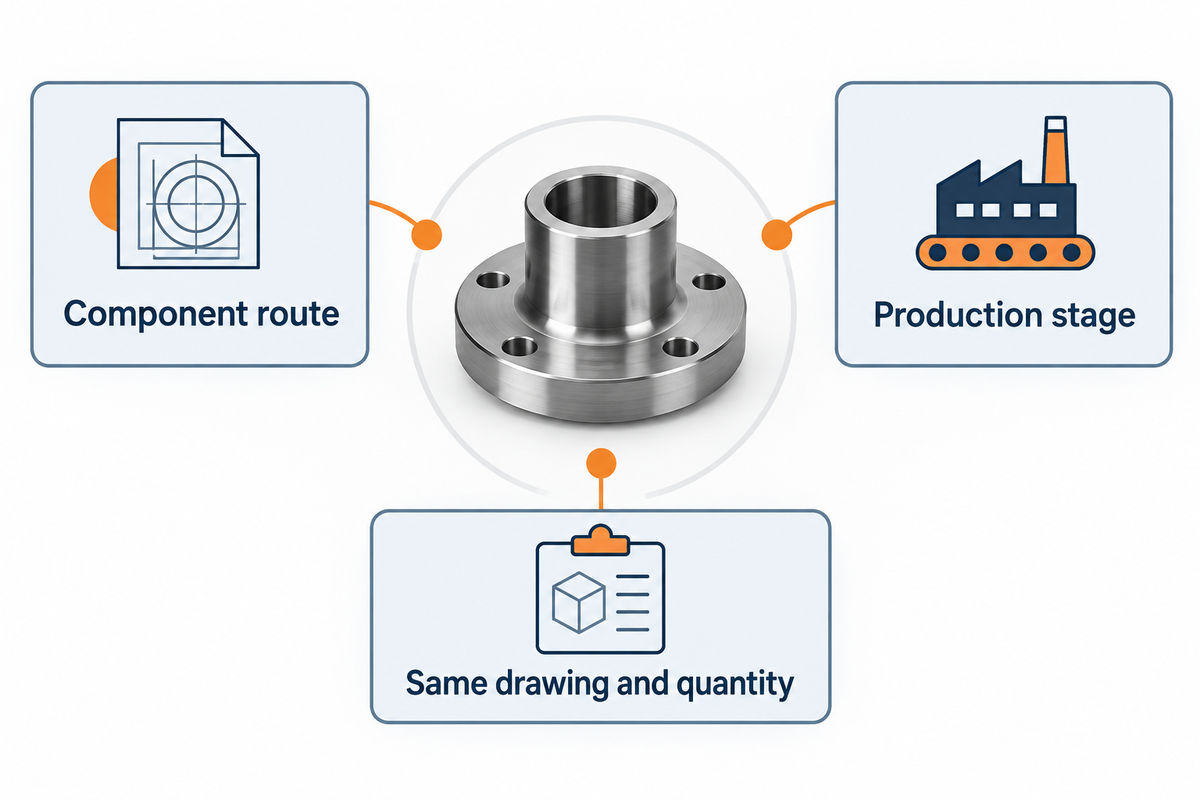
Match an automotive order to the required component route and production stage before comparing suppliers. Linamar and Impro address integrated manufacturing needs; Cox and EMC offer precision component machining; Protolabs and WayKen address custom development work. A shortlist becomes useful when each candidate is responding to the same drawing, quantity and finished-part requirement.
Where should a repeat production component go?
A recurring forged shaft or machined casting belongs with suppliers whose published processes follow that route. Bharat Forge, Sansera, Musashi and Hirschvogel provide forming-led options, while Ryobi and Nemak illustrate casting-led manufacturing. Stecker offers a different arrangement: machining complex castings with partner-foundry supply. Those distinctions affect which company takes responsibility for the starting blank.
Small rotational components form another shortlist. Cox’s Swiss and multi-spindle routes differ from the machining-and-finishing combination described by EMC, and MacLean-Fogg brings forming and fastener expertise into the comparison. For a shaft, sleeve or bushing enquiry, the turning route for rotational parts is a useful starting point for describing the required features. The component family matters more than a broad statement that a supplier offers advanced CNC machining.
Who fits prototype and custom-component enquiries?
Protolabs, WayKen and RapidDirect provide development-oriented routes, while Zhenling accepts drawing-led enquiries for custom components. These options let a buyer discuss a design without first assuming a dedicated serial-production line. A functional metal prototype, a visual model and a production-intent component remain different deliverables even when their CAD files show the same outside shape.
The material scope needs to be defined as well. Metal and plastic machining can answer development questions; a prototype of engineering plastics does not establish the behavior of the eventual metal part. Additionally, CNC plastic machining for a fit check doesn’t replace the material, finish and acceptance definition of the released component. Use the prototype to determine the answer to an engineering question, and define the next order on its own terms.
Billet, Castings or Forgings: Match the Machining Route
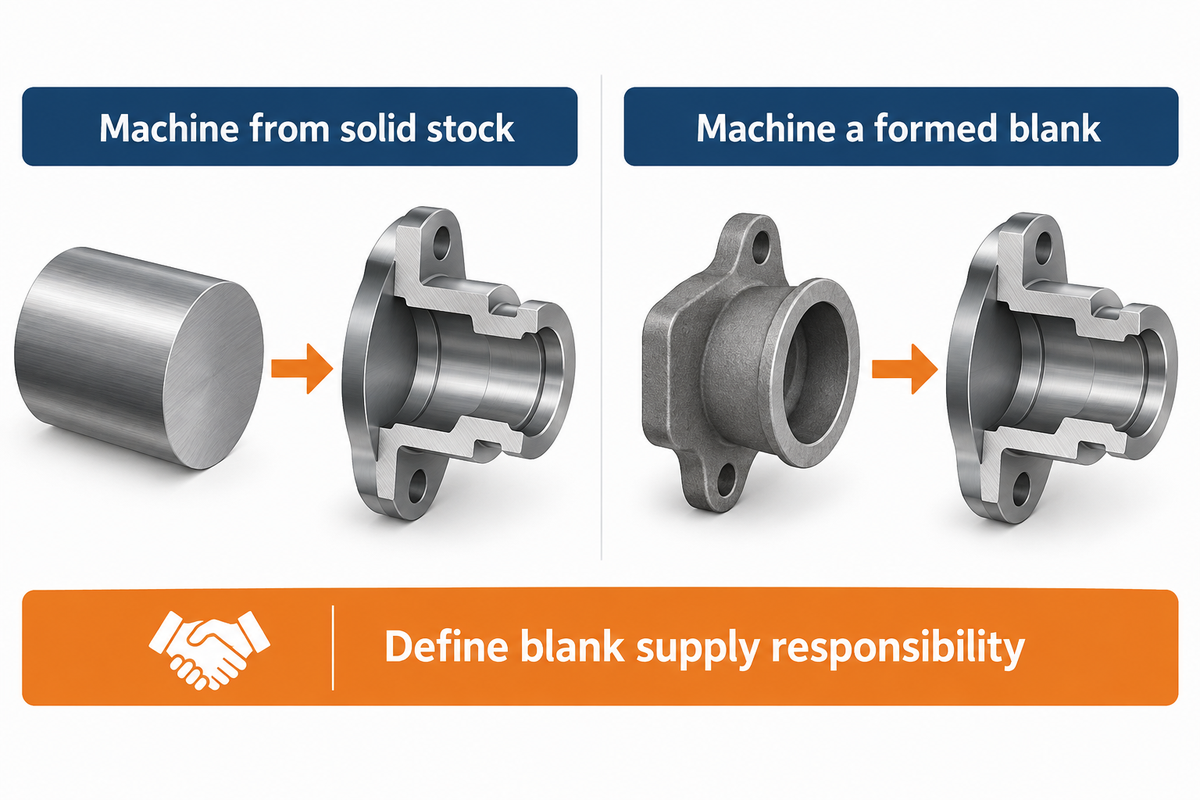
CNC machining removes material, and doesn’t define the starting stock. A part can be machined from a casting, forging, or from solid stock. Ryobi’s casting-to-machining chain and Musashi’s forming-to-finishing chain show why the manufacturing process needs to be part of a supplier comparison.
Billet machining can be a quick evaluation of a part without committing to a casting die or forging tool. It still involves programming, workholding, cutting tools and inspection. “Tooling-free” is a misleading term. A prototype part made from a solid piece of material shouldn’t be described as mechanically identical to a cast or forged part.
Ask potential suppliers whether the supplier provides the blank, machines a customer-supplied blank, or coordinates a partner for cast or forged automotive parts. Stecker and Ryobi illustrate different ownership arrangements within that supply chain. A quote for simple machining can’t be directly compared to a part quote that includes forming, heat treating and assembly.
Machine from solid stock
- Define the material grade and starting condition.
- Include workholding and programming in the order scope.
- State what the prototype must demonstrate.
Machine a formed blank
- Define the casting or forging supply responsibility.
- Include preceding and subsequent operations in the scope.
- State the finished component’s acceptance requirements.
Multi-axis CNC milling is useful where the geometry requires access from different directions, but an axis count isn’t a tolerance guarantee. The discussion of multi-axis access should follow the drawing’s features and datums. A machinist still needs a workable setup and an inspection method for the surfaces that control assembly. For 5-axis machining, access and workholding remain part of the process plan; high-precision features still need their own inspection definition.
How to Choose an Automotive CNC Parts Manufacturer
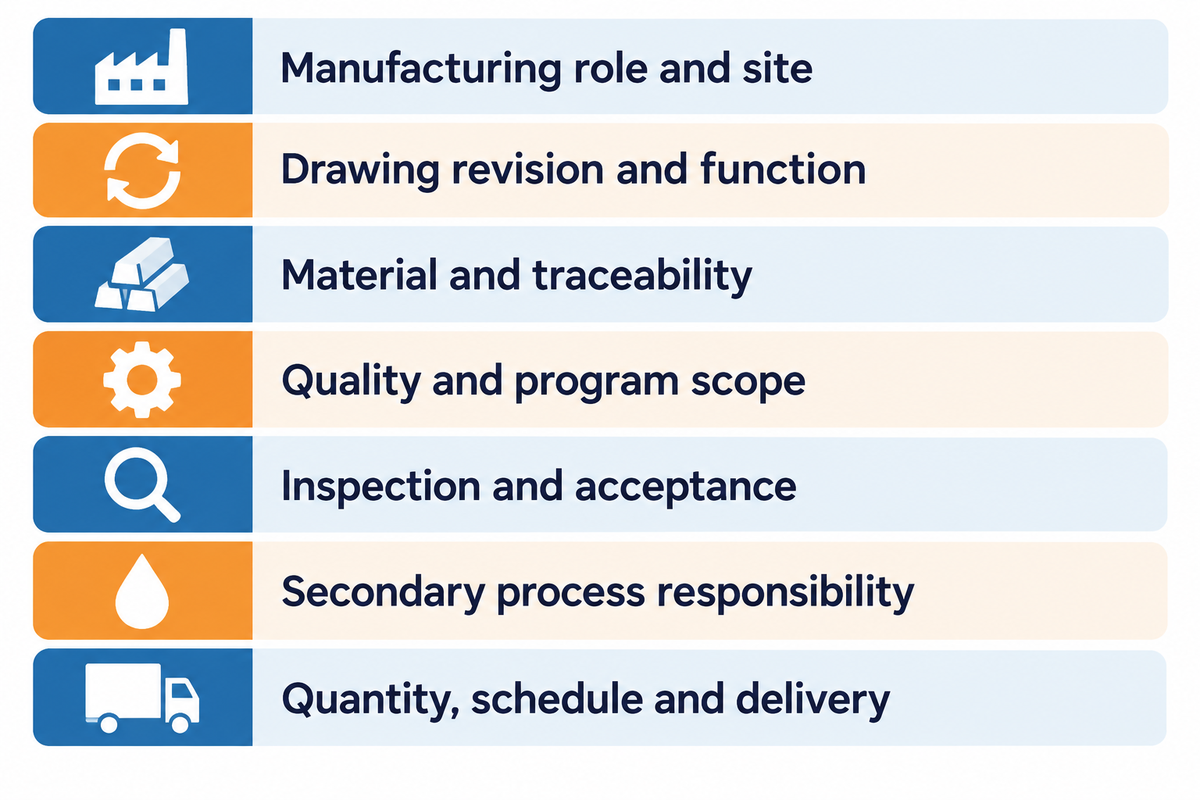
Choose an automotive machining company by matching their demonstrated processes to complete part definitions and comparing quotes with the same acceptance and delivery limits. There are useful checks concerning the manufacturing site, materials, critical features, and quality documents and responsibility for secondary operations. A broad capability statement doesn’t settle those details.
How do I choose the right CNC machining company?
Start with the component route: formed blank, machined casting or custom part from stock. A relationship with a trusted CNC supplier begins with a specific response for a specific order and clear responsibility, rather than an all encompassing offer for the best CNC machining.
- Manufacturing role and site. Identify who will make the part and which operations remain in-house. Both Digital Manufacturers and traditional machine shops can use outside services. An online CNC machining interface is an ordering channel; it doesn’t in itself set ownership of the CNC machinery, finishing line or inspection equipment used for a particular job.
- Drawing revision and component function. Send the controlled model and drawing together, with datums, fits and surfaces identified. High accuracy and high precision need a feature and acceptance method to have purchasing meaning. A general headline about 5-axis CNC technology doesn’t define the permitted variation on a bearing seat or sealing face.
- Material and traceability. State the alloy, condition and required material records. Keep the original blank route visible when comparing parts made from castings, forgings or bar. For an aluminum CNC component, the choice of material and the final treatment are to be included in the same enquiry rather than leave them as gaps between the customer and contract manufacturer.
- Quality-system and program scope. Obtain the applicable certificate and check its legal entity, site, scope and current status when the order requires it. The IATF publication list identifies IATF 16949:2016 and related recognition rules; a reference to that standard is different from evidence that a factory holds a valid certificate. Customer-specific submissions and approval remain separate requirements to define with the buyer.
- Inspection and first-piece acceptance. Agree the acceptance criteria, dimensional report and sampling or other inspection evidence before issuing a purchase order. A prototype’s successful dimensional control doesn’t automatically demonstrate repeat production control. Strict quality standards need to be translated into the actual records and acceptance criteria required for the component.
- Secondary processes and assembly. State heat treatment, plating, grinding and assembly responsibility in the quotation. Services include different operations at different suppliers; a claim to be a one-stop shop does not settle who performs each step. CNC manufacturing and sheet metal work should be separated where they create different deliverables, even when the same company supplies both.
- Consider quantity, schedule and commercial aspect. Distinguish first from repeat orders and match setup, fixtures, inspection, finishing, packing and delivery on the same basis. High-volume production and one-off parts create different planning needs. Quality and competitive pricing are meaningful only when the suppliers are quoting the same component and obligations.
For precision CNC machining services, ask for a response to the drawing rather than repeating the equipment list. A supplier specializing in CNC machining should be able to respond to the features it can make, and in case of doubt, state what’s included in the offer. Supply chain management is part of that response when blanks, special processes or logistics involve other companies. The quality management documents should cover the intended manufacturing site and scope of the order.
A cutting machine supplier delivers equipment; a component manufacturer delivers parts. Laser cutting, waterjet cutting and plasma cutting can be useful fabrication processes, but their presence in a broad service portfolio does not establish precision machining of the finished interfaces. A buyer of a housing needs a defined CNC machining service and quality control plans for the housing, and not merely available cutting processes.
Compare engineering services, at least, with the same care taken for machining. Suppliers offering design input may identify tool access, material or inspection questions, while the buyer retains the controlled definition and approval of any change. Engineering and manufacturing need an agreed handoff so that an attractive quote does not silently substitute a different component.
Frequently Asked Questions
Which automotive CNC parts companies are best for different orders?
Linamar fits integrated programs, Cox fits small turned components, and Protolabs fits prototype and low-volume orders.
For a drawing-led custom component, Zhenling Metal is another enquiry option, while Luvata Welshpool has a narrower copper-component focus. These choices come from their published manufacturing scope, rather than a universal performance score. The useful starting point is the required component family and order stage, followed by a comparison of the actual manufacturing offers received.
Which automotive CNC parts companies are based in the USA?
Cox Manufacturing, Stecker Machine and EMC Precision are US-based companies in this shortlist.
San Antonio, Texas (Cox); Manitowoc, Wisconsin (Stecker); and Elyria, Ohio and additional Indiana operations (EMC) are specified. The parent corporate office of MacLean-Fogg is in Mundelein, Illinois. A company’s US location is distinct from an overseas manufacturer’s American plant, so specify the intended production location when comparing a local supply route.
Is CNC machining suitable for prototype development?
CNC machining can produce functional prototypes in the specified machining material and geometry.
Protolabs and WayKen publish prototype-oriented services, and EMC’s automotive page also covers prototype quantities. The development order should state which question the part is intended to answer, such as fit or assembly access. A successful prototype then provides evidence for that question; it doesn’t automatically establish the tooling, process control or approval needed for recurring production.
Are CNC machine manufacturers the same as automotive parts manufacturers?
CNC machine manufacturers sell equipment; automotive parts manufacturers use production equipment to deliver components.
A lathe or a machining-center supplier doesn’t necessarily mean a company is a contract parts manufacturer. Look for delivered product and responsibility for production, instead of the presence of CNC in the company description.
How much does a custom CNC automotive component cost?
A usable price comes from a quote for the controlled drawing, quantity, material and acceptance scope.
Setup and programming, stock or formed-blank supply, workholding, cutting time, finishing and inspection can all change the quoted amount. A prototype price answers a different question from a repeat production price. Send suppliers the same revision and ask them to separate any tooling or first-order charges from recurring part costs, then compare packing, freight and documentation on the same basis. The company pages reviewed for this list do not provide a common, comparable automotive-component price range, so no universal dollar figure is presented.
Does a prototype supplier automatically qualify for automotive production?
Prototype supply does not automatically establish approval for a recurring automotive production program.
The qualification of production follows the buyer’s defined requirements for manufacturing, quality and submission. Confirm those requirements for the intended site and component before treating a development order as serial supply.
Send a Controlled Drawing for Review
Can you manufacture custom CNC parts from CAD files or engineering drawings?
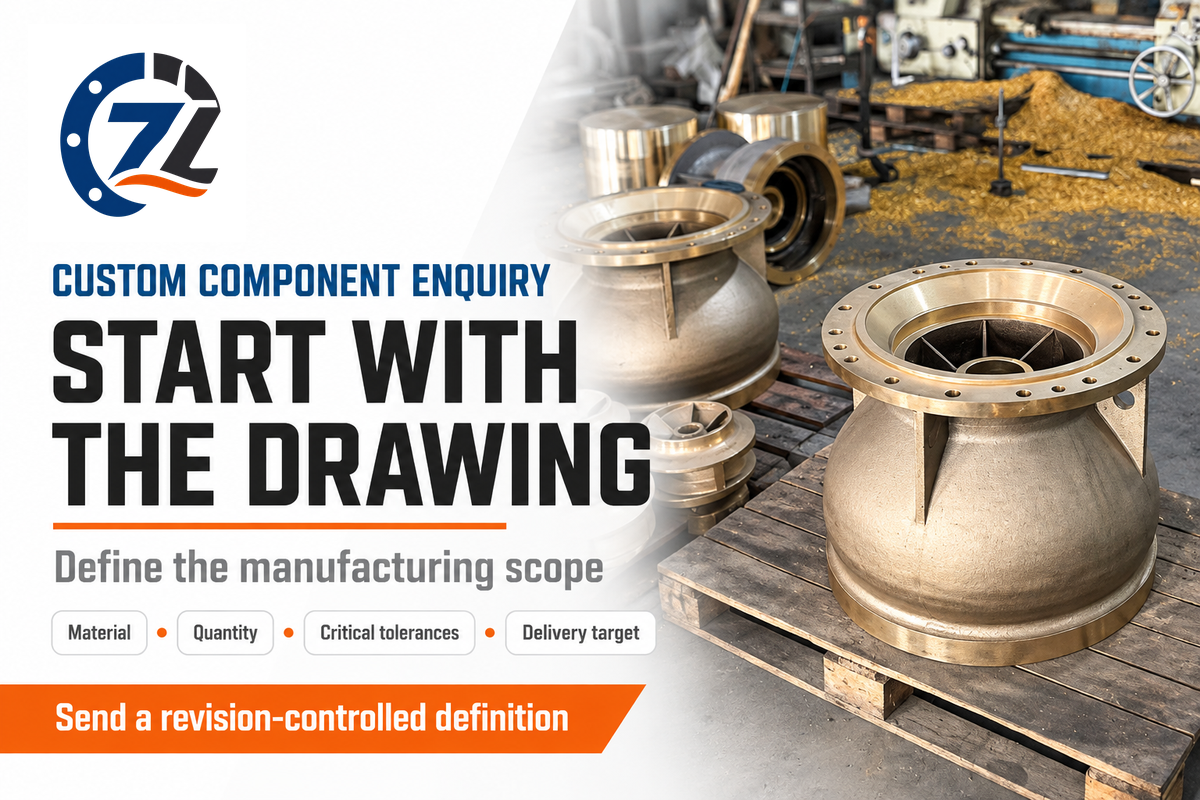
Zhenling determines the feasible manufacturing scope by reviewing CAD files and engineering drawings to fabricate custom components. Send the revision-controlled drawing and model with material, quantity, and critical tolerances, and finish and delivery target. Responses can then be provided for geometry, process route and necessary inspection without interpreting a general service description as a confirmed automotive production commitment.
Our automotive drawing review is the specific next step for a component enquiry. The wider machining capabilities and order scope provide context when the process hasn’t yet been selected. We make components to the agreed definition through our own Jiashan plant and the stated project supply route.
Key takeaway
An automotive machining shortlist should match the component, blank route and order stage. Compare suppliers against the same drawing and finished-part obligations before choosing a manufacturing partner.
Have a custom automotive component to discuss?
Provide a controlled drawing and quantity for a manufacturing review.
In October 2026, publicly available manufacturing information was summarized in the company profiles. The comparison doesn’t represent independent factory testing or a measured market ranking. Company websites are shown in the profiles and in the tables as plain text.
References & Sources
Company histories, process descriptions and application pages are identified by the official websites in the company profiles. Zhenling identity and plant information: About Zhenling Metal. Quality-system publication reference: IATF Publications. The company comparison uses public first-party descriptions, not independent factory test results.