Get in touch with Zhenling Company

Last updated: September 2026
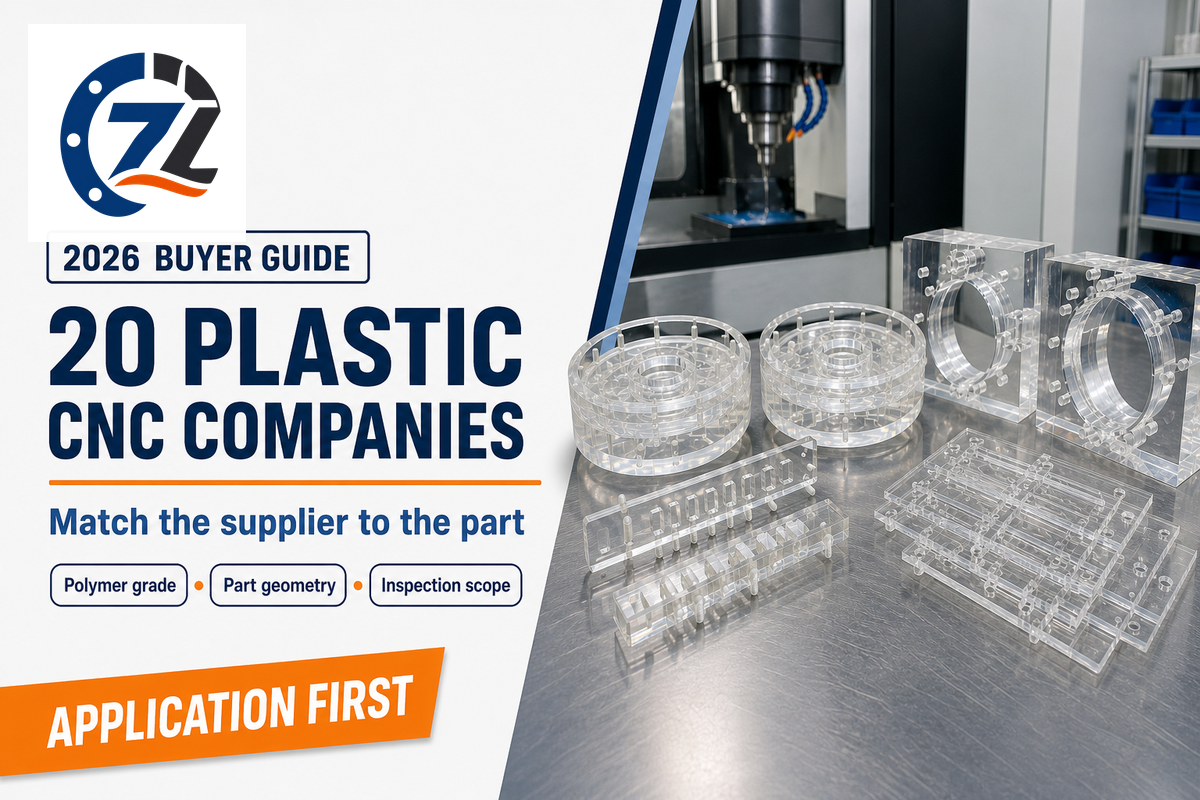
The best plastic CNC machining service companies are suited to different jobs: Protolabs suits digitally quoted prototypes, Drake brings Torlon and PEEK process integration, and Boedeker combines engineering stock with plastics-only machining. Zhenling Metal offers drawing-based engineering plastic review. For demanding parts, compare the polymer grade, geometry, inspection conditions and production scope before choosing a supplier.
Quick Picks for Plastic CNC Machining
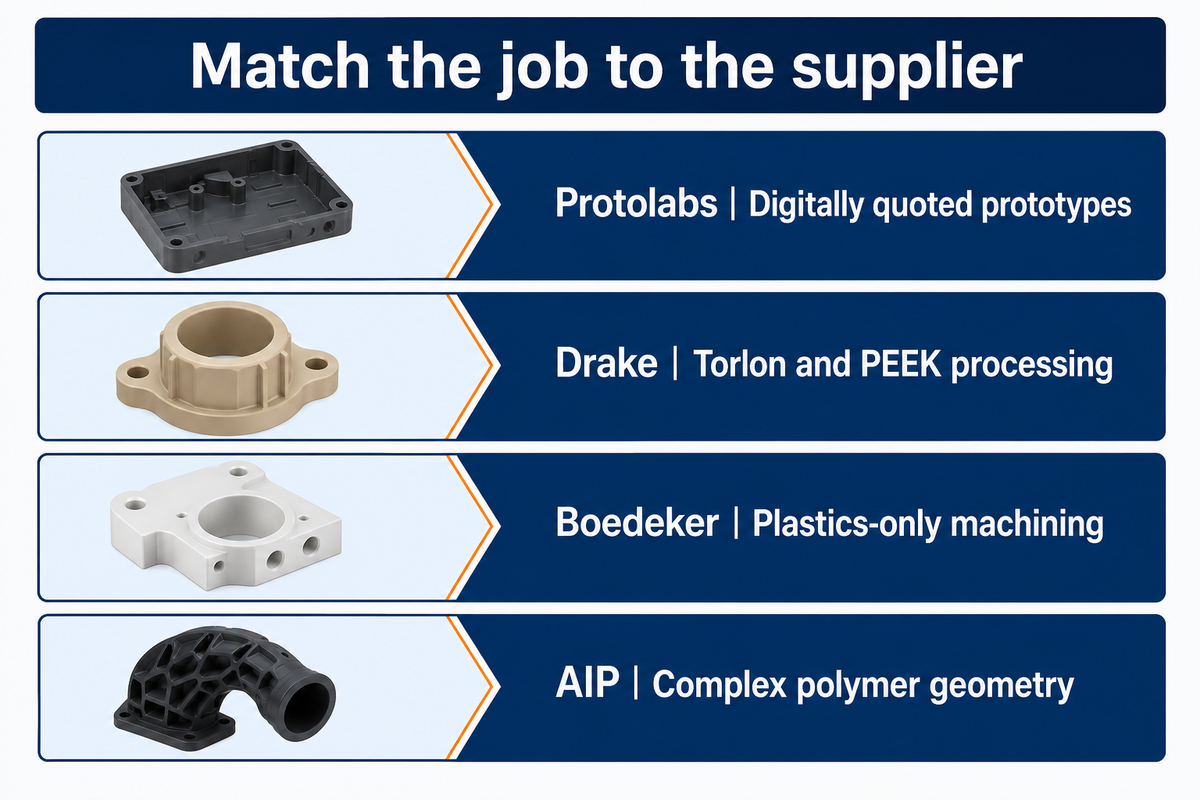
- Best for drawing-based engineering plastic parts requiring material-specific machining review and flexible prototype or low-volume production: Zhenling Metal.
- Best for digitally quoted plastic prototypes: Protolabs factory service.
- Best for Torlon and PEEK stock-to-part processing: Drake Plastics.
- Best for plastics-only machining with engineering stock access: Boedeker Plastics.
- Best for complex polymer geometry with multi-axis processing: AIP Precision Machining.
- Best for large industrial thermoplastic components: Röchling Industrial.
Disclosure: This guide is published by Zhenling Metal. We list ourselves first because this is our website, not because we claim to be the market leader. The other 19 companies are grouped by what they are best for, in no particular order within each group.
How We Selected These Plastic Machining Companies
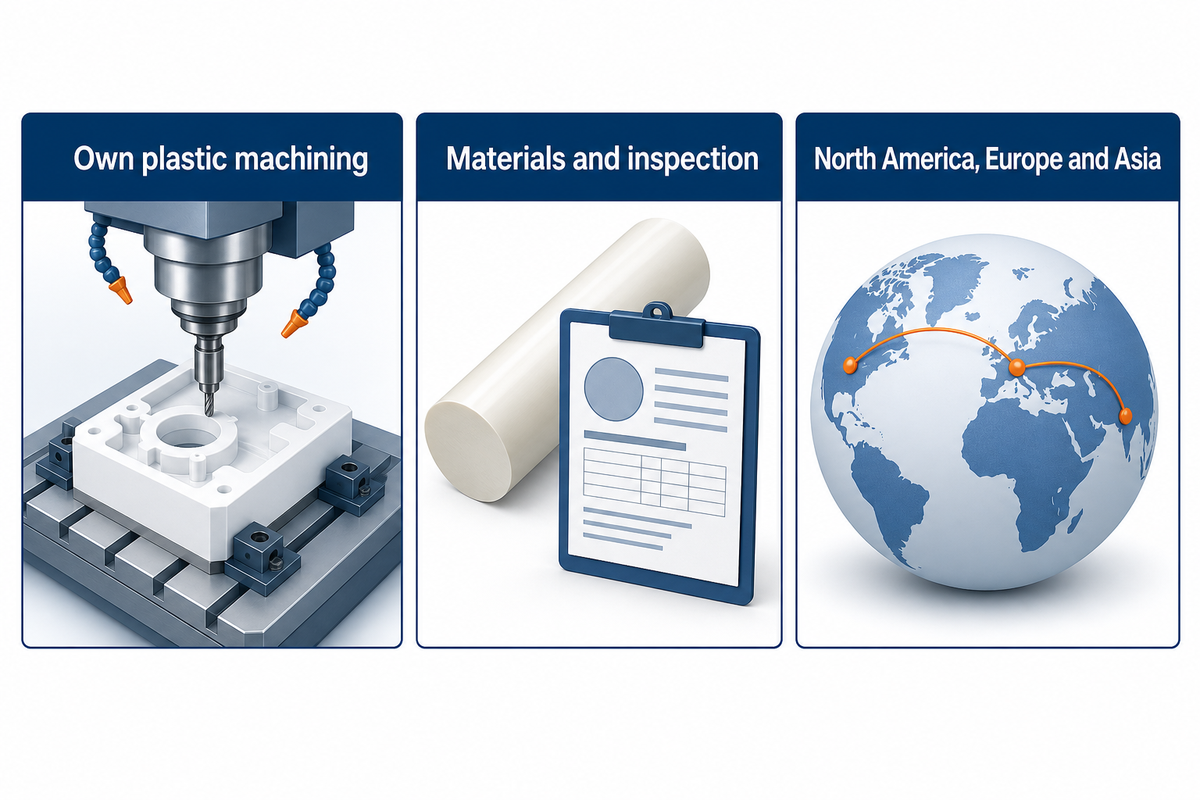
We evaluated manufacturers publishing their own plastic machining processes and relevant materials. We assessed inspection, prototype or production capability, documentation, experience and operating scope. We considered geography. Our assessment included North America, Europe, and Asia. We didn’t include brokers, marketplaces, machine tool sellers, metal-only job shops, or distributors without machining. Best for means suitable for a particular order, not smallest, least expensive or most rapidly processed. Information was checked against company websites and reliable public sources in September 2026.
Compare 20 Plastic CNC Machining Service Companies
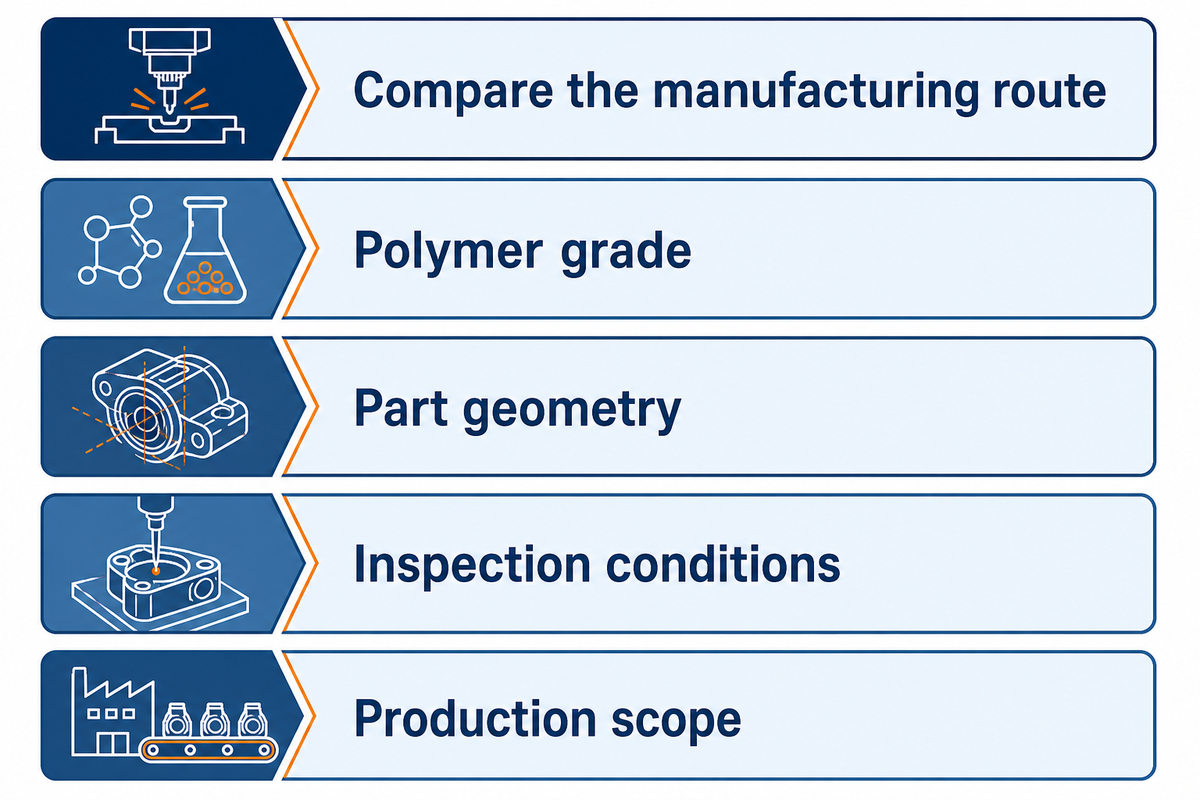
Use this table to narrow the manufacturing route before comparing quotations. Compare CNC machining capabilities against the drawing: a supplier equipped to produce precision components in PEEK may serve different machining needs from one focused on large sheet assemblies. Company numbers identify entries, not relative performance. The year for Röchling is the group’s origin; Reading’s year refers to its stated business origins. Headquarters and manufacturing locations are distinguished where they differ. On smaller screens, scroll horizontally to read all ten fields.
| No. | Company Name | Headquarters | Founded Year | Best For | Brief Introduction | Main Services | Key Advantages | Potential Disadvantages | Official Website |
|---|---|---|---|---|---|---|---|---|---|
| 1 | Zhenling Metal | Shanghai, China; factory in Jiashan | 2006 | Drawing-based engineering plastic parts requiring material-specific machining review and flexible prototype or low-volume production | Drawing-based manufacturer offering engineering plastic milling and turning alongside its broader machining business. | Plastic CNC milling, turning and drawing review | Material service pages and drawing-specific process review | Plastic limits and inspection conditions require drawing-specific review | zhenlingmetal.com |
| 2 | Protolabs | Maple Plain, Minnesota, USA | 1999 | Fast plastic prototypes through an owned-factory digital quoting route | Digital manufacturer combining an owned-factory quotation route with a separately identified partner network. | Plastic CNC milling, turning and automated manufacturability feedback | Digital quoting and material-specific design guidelines | Factory and partner-network routes have different capabilities | www.protolabs.com |
| 3 | WayKen | Shenzhen, China | Not publicly disclosed | Functional plastic prototypes with machining and appearance finishing | Shenzhen prototype manufacturer offering plastic machining and finishing for functional and appearance components. | Plastic CNC milling, turning, clear-part machining and finishing | Engineering polymers plus acrylic and polycarbonate finishing | Optical appearance requires a separate finishing specification | waykenrm.com |
| 4 | AIP Precision Machining | Daytona Beach, Florida, USA | 1983 | Complex high-performance polymer parts with detailed dimensional inspection | Polymer machining specialist combining multi-axis processing, thermal treatment and dimensional inspection. | Five- and seven-axis polymer machining, annealing and inspection | Specialist polymer engineering and multi-axis machining | Mixed metal-and-plastic sourcing needs a separate metal route | aipprecision.com |
| 5 | Drake Plastics | Cypress, Texas, USA | 1996 | Torlon and PEEK parts requiring integrated stock and thermal processing | High-performance polymer stock producer with its own machining and material-specific thermal processing. | Five-axis milling, live-tool turning and thermal processing | Integrated Torlon and PEEK stock-to-part knowledge | Torlon post-curing adds a material-specific processing step | drakeplastics.com |
| 6 | Boedeker Plastics | Shiner, Texas, USA | 1984 | Plastics-only CNC machining combined with broad engineering stock availability | Engineering plastics supplier operating a dedicated precision machining division in Shiner, Texas. | Multi-axis milling, Swiss turning, mill-turning and CNC routing | Plastics-only machining environment and engineering stock access | Dedicated plastics division does not machine the metal portion of an order | www.boedeker.com |
| 7 | CCT Precision Machining | Grapevine, Texas, USA | 1999 | Small engineered-polymer features with first-article and final inspection | Precision manufacturer machining engineered polymers and nonferrous metals with optical and contact inspection. | CNC milling, turning, routing, micro-machining and inspection | Micro-Vu video measurement and first-article inspection | ISO 13485 is listed as in process | www.cctprecision.com |
| 8 | Reading Advanced Machining | Reading, Pennsylvania, USA | 1950 | Traceable engineered-plastic and metal components within one machining supplier | Reading-based machining business serving engineering plastic and metal component requirements under one supplier. | CNC milling, turning, routing, fabrication and assembly | Lot traceability and vacuum workholding | Mixed-material operation rather than a plastics-only shop | readingplastic.com |
| 9 | EPTAM Precision Plastics | Northfield, New Hampshire, USA | 1981 | Complex polymer components requiring controlled assembly, cleaning and inspection | Northfield plastics operation combining complex machining, inspection and controlled assembly services. | Multi-axis plastic machining, Swiss turning, cleaning and assembly | CMM inspection and controlled assembly facilities | Listed Tsugami Swiss lathe: maximum turning diameter 1.25 inches | eptam.com |
| 10 | Ortek | Merenschwand, Switzerland | 1980 | Medical polymer parts requiring dry machining in controlled rooms | Swiss medical-technology component manufacturer with dedicated controlled-room plastic machining. | CNC turning, five-axis milling and dry plastic machining | Plastic cutting without lubricants in a separate controlled room | Medical-technology focus rather than general industrial fabrication | www.ortek.ch |
| 11 | Ensinger | Nufringen, Germany | 1966 | Polymer stock knowledge combined with finished CNC parts and secondary processing | Engineering plastics manufacturer connecting stock materials, CNC components and secondary processing. | Plastic CNC turning, milling, cleaning, marking and assembly | Material expertise and TECAPART quotation options | Complex parts require an individual engineering quotation | www.ensingerplastics.com |
| 12 | Röchling Industrial | Haren, Germany | 1822 | Large machined thermoplastic parts supported by a broad manufacturing network | Industrial plastics division with a broad, distributed stock-material and component manufacturing offer. | Thermoplastic milling, turning and large industrial components | Large-part examples and extensive distributed machining equipment | Combined equipment capacity is distributed across locations | www.roechling.com |
| 13 | Nylacast | Leicester, United Kingdom | 1967 | Large cast-nylon wear parts and repeat engineered-polymer components | Integrated engineered-polymer producer and machinist with its own cast-nylon material families. | Cast-polymer production, CNC turning and multi-axis milling | Oilon and Nylube materials with large-part turning | Published HDPE and POM-C extrusion is located in South Africa | www.nylacast.com |
| 14 | BKB Precision | Son, Netherlands | 1982 | Complex high-tech plastic components combining machining, cleaning and assembly | Dutch precision plastics specialist combining machined components with cleaning and assembly. | CNC milling, turning, cleaning and assembly | Integrated processing for high-mix technical components | High-mix, low-volume focus rather than commodity bulk production | www.bkbprecision.com |
| 15 | Yasojima Proceed | Kobe, Japan | 1937 | Complex PEEK components with Japanese multi-plant machining and metrology | Japanese engineering plastics company with multi-plant machining, measurement and plant-specific thermal processing. | Five-axis machining, CNC turning and image/CMM measurement | PEEK experience and four named machining plants | Sendai ISO 13485 scope does not cover all plants | yasojima-global.com |
| 16 | Nylaplas Engineering | Nailsea, United Kingdom | 1982 | UK precision plastic parts with machining, annealing and aerospace quality systems | Engineering plastics machining operation in Nailsea, now a trading division of Vink UK. | Plastic CNC milling, turning, material supply and annealing | Engineering stock and a published annealing oven | Listed five-axis milling is a 3+2 configuration | www.nylaplas.com |
| 17 | Sentinel Plastics | Cradley Heath, United Kingdom | 1989 | Polyethylene wear components and combined plastic machining, fabrication and assembly | UK industrial plastics manufacturer combining CNC components, fabrication and sub-assembly. | CNC milling, turning, plastic fabrication and sub-assembly | PE300, PE500 and PE1000 coverage with first-off inspection | Nonstandard polyethylene colors may require minimum orders | sentinelplastics.co.uk |
| 18 | Johnston Industrial Plastics | Toronto, Canada | 1942 | Canadian sourcing of engineering stock and in-house machined plastic components | Canadian industrial plastics supplier with its own machining and fabrication services. | Plastic CNC machining, prototypes, repeat parts and fabrication | Material shapes and in-house CNC processing | ISO 9001 scope is stated for Toronto and Montreal | www.johnstonplastics.com |
| 19 | Emco Industrial Plastics | Cedar Grove, New Jersey, USA | 1983 | Machined features combined with larger fabricated plastic assemblies | New Jersey plastics distributor and manufacturer combining stocked materials with in-house fabrication. | Milling, turning, routing, welding, forming and assembly | Machining and fabrication in a 50,000-square-foot facility | Custom assemblies require a fabrication quotation beyond stock purchasing | www.emcoplastics.com |
| 20 | Miller Plastic Products | Burgettstown, Pennsylvania, USA | 1969 | Machined plastic parts alongside custom tanks and chemical-equipment fabrication | Pennsylvania custom plastics manufacturer offering CNC components and fabricated chemical-equipment products. | Five-axis machining, routing, turning, annealing and tank fabrication | Machining and custom tank fabrication within one business | Machined features and welded tanks need separate acceptance specifications | www.millerplastics.com |
Prototype and Low-Volume Plastic Machining
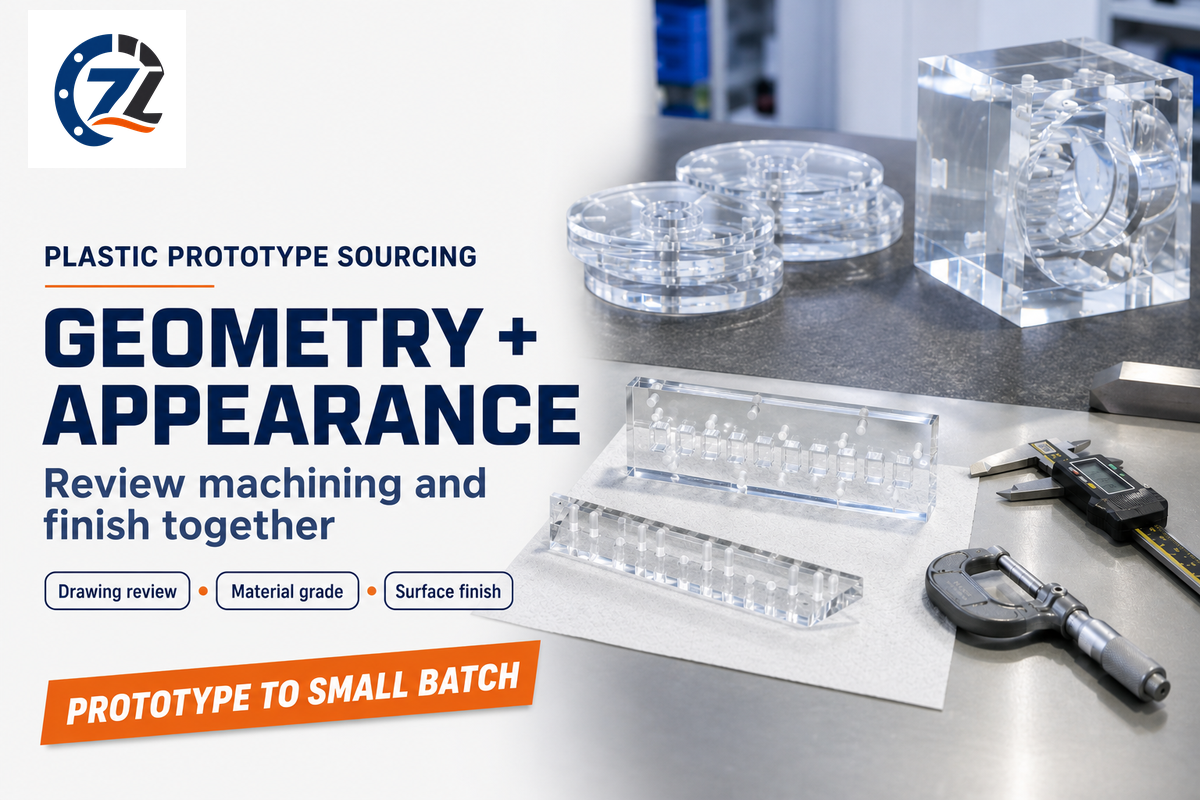
For custom parts, these suppliers offer different routes from drawing to prototype or small batch: engineering review, digital factory quoting and appearance-focused prototype work, with custom CNC processing to create parts from engineering stock.
1. Zhenling Metal: Best for Drawing-Based Engineering Plastic Parts
Headquarters / location: Shanghai, China; factory in Jiashan · Founded: 2006 · Type: Drawing-based CNC machining manufacturer
Official website: zhenlingmetal.com
Main products and materials: Engineering plastic milled and turned parts in POM, nylon, PEEK, PEI, PAI, PTFE, PMMA, PC and HDPE
Zhenling Metal's engineering plastic offer starts with the drawing: the grade, wall geometry, critical dimensions and acceptance conditions define the machining review. Zhenling’s material service pages cover polymers from acetal and nylon to PEEK, PEI, PAI and PTFE, giving buyers a practical starting point for custom plastic parts rather than a single generic plastics category. That approach fits prototypes and low-volume orders where material choice and manufacturability still need discussion with the shop. Plastic machining limits, tolerances and inspection conditions are confirmed per drawing rather than published as one universal capability table.
2. Protolabs: Best for Digitally Quoted Plastic Prototypes
Headquarters / location: Maple Plain, Minnesota, USA · Founded: 1999 · Type: Digital manufacturer with owned factories and a separate partner network
Official website: www.protolabs.com
Main products and materials: Plastic CNC milling and turning, including acetal, nylon, PEEK, PEI, PMMA and PC
Quality / controlled processing: ISO 9001:2015 and AS9100D for Minnesota CNC machining on its global certification page (according to the company website)
Protolabs gives product teams a digital route from CAD upload to manufacturability feedback and a factory quotation for machined plastic parts. The published Protolabs material menu distinguishes grades such as acetal copolymer, Delrin homopolymer and filled nylon, which helps connect the quote to a specific engineering requirement. Its owned digital factories provide one quotation route; Protolabs Network is a separate sourcing route with its own equipment and production options, rather than an extension of one Protolabs plant. Buyers choosing between those routes face different material, geometry and production options rather than one interchangeable service.
3. WayKen: Best for Plastic Prototypes with Appearance Finishing
Headquarters / location: Shenzhen, China · Founded: Not publicly disclosed · Type: Rapid prototyping and low-volume manufacturer
Official website: waykenrm.com
Main products and materials: Plastic CNC milling, turning, finishing, PMMA, PC, POM, nylon and PEEK parts
Quality / controlled processing: ISO 9001:2015 stated on its company page (according to the company website)
WayKen combines CNC plastic machining with prototype finishing, making it relevant when an enclosure, lens-like cover or demonstration part needs both geometry and appearance. According to its service pages, its Shenzhen operation works with engineering plastics including PEEK, POM and nylon as well as PMMA and polycarbonate. Clear plastic prototypes combine machining and subsequent polishing, which address different requirements: a cut surface doesn’t automatically become an optical surface simply because the stock is transparent. This supplier's fit is therefore strongest when the drawing and the appearance specification can be reviewed together, with the required finish stated separately from dimensional tolerances.
High-Performance Polymer Machining Specialists
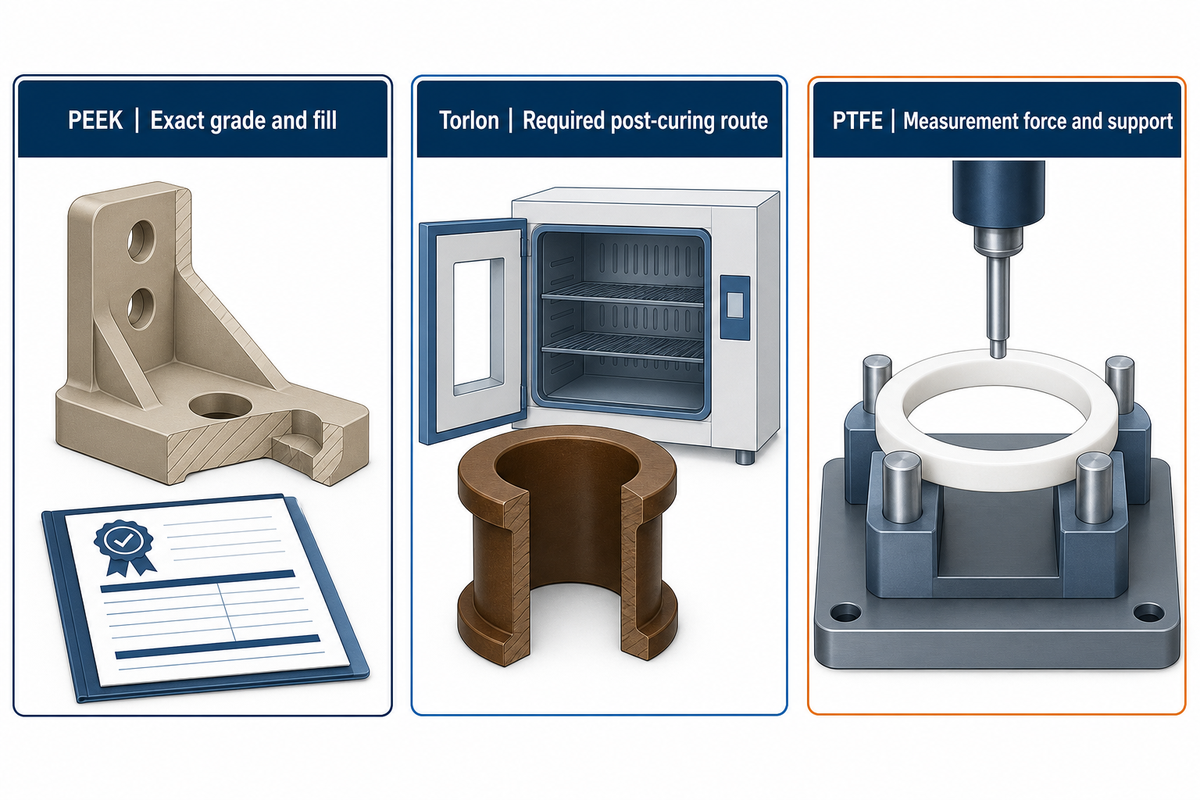
Advanced polymer orders often turn on stock condition, thermal processing, small features or documentation. The following companies publish distinct capabilities in those areas, providing plastic CNC machining for different polymer requirements.
4. AIP Precision Machining: Best for Complex High-Performance Polymer Geometry
Headquarters / location: Daytona Beach, Florida, USA · Founded: 1983 · Type: Precision polymer machining specialist
Official website: aipprecision.com
Main products and materials: PEEK, Torlon PAI, Ultem PEI and other engineered polymer components
Quality / controlled processing: AS9100D, ISO 9001:2015 and ISO 13485:2016 listed on its website (according to the company website)
AIP builds its offer around engineered polymers, with material consultation, machining, annealing and metrology presented as connected services. The company's brochure describes five- and seven-axis equipment, a useful distinction for complex plastic parts that need access to several faces or tightly related features. PEEK, Torlon PAI and Ultem PEI belong to its published material scope, so it’s a relevant shortlist candidate when the polymer itself drives the manufacturing problem. Its specialist focus is also a purchasing boundary: a combined metal and plastic bill of materials needs a separate route for the metal components.
5. Drake Plastics: Best for Torlon and PEEK Process Integration
Headquarters / location: Cypress, Texas, USA · Founded: 1996 · Type: High-performance polymer stock producer and component manufacturer
Official website: drakeplastics.com
Main products and materials: Torlon PAI, PEEK, Ultem PEI, PPS and other high-performance polymer parts
Quality / controlled processing: AS9100D and ISO 9001:2015 stated on its website (according to the company website)
Drake connects stock-shape production with component machining, which is particularly relevant to Torlon PAI and PEEK orders. Its machining page distinguishes Torlon post-curing from PEEK annealing instead of treating every thermal operation as the same stress-relief step. Five-axis milling and live-tool turning support parts with complex geometries while the material route remains part of the production decision. The practical limitation is built into that advantage: a Torlon job may require post-curing as a distinct process, so a generic instruction to anneal the finished part doesn’t describe the same manufacturing route.
6. Boedeker Plastics: Best for Plastics-Only Machining and Stock Access
Headquarters / location: Shiner, Texas, USA · Founded: 1984 · Type: Engineering plastics distributor with its own precision machining division
Official website: www.boedeker.com
Main products and materials: PEEK, PAI, PTFE, acetal, nylon, composites and machined components
Quality / controlled processing: ISO 9001 and ISO 13485 stated for its machining operation (according to the company website)
Boedeker combines engineering plastic distribution with its own machining division, rather than merely selling stock to another workshop. The company dates its business to 1984 and its machining division to 1996, and describes a plastics-only environment intended to avoid metal cross-contamination from shared cutting operations. Its listed processes include three-, four- and five-axis milling, Swiss turning, mill-turning and five-axis routing, supporting a range of part shapes from one supplier. For procurement, the stock-and-machining combination is useful; the same plastics-only focus means a metal component on the assembly requires a different machining route.
7. CCT Precision Machining: Best for Small Features and Documented Inspection
Headquarters / location: Grapevine, Texas, USA · Founded: 1999 · Type: Precision plastics and metals machining manufacturer
Official website: www.cctprecision.com
Main products and materials: PEEK, Torlon, Ultem, Delrin, Vespel and G10/FR4 components
Quality / controlled processing: AS9100 certification and ITAR registration; ISO 13485 is listed as in process (according to the company website)
CCT's plastic machining offer combines small-feature work with a quality department that uses Micro-Vu video measurement and probing. Its published materials include PEEK, Torlon, Ultem, Delrin, Vespel and G10/FR4, while first-article and final inspection give buyers more to evaluate than a machine-axis count. Optical measurement can be relevant where physical probing would influence a delicate feature, although the method still has to suit the drawing. CCT’s website lists ISO 13485 as in process, so orders requiring an already awarded ISO 13485 certification do not match its current published qualification.
8. Reading Advanced Machining: Best for Traceable Plastic-and-Metal Orders
Headquarters / location: Reading, Pennsylvania, USA · Founded: 1950 · Type: Precision plastic and metal machining manufacturer
Official website: readingplastic.com
Main products and materials: CNC milled, turned and routed plastic components plus fabrication and assembly
Quality / controlled processing: AS9100D and ISO 9001:2015 announced on its current website (according to the company website)
Reading Advanced Machining, also known through its Reading Plastic history, traces its origins to 1950 and separately describes specialty applications from 1978. The current operation combines plastic and metal machining with three- and four-axis processing, vacuum workholding and lot or batch traceability. That combination suits assemblies whose engineering plastic components and metal parts benefit from a common procurement relationship, with identification carried through production. The tradeoff is its mixed-material scope: buyers specifically seeking a plastics-only cutting environment should distinguish that requirement from the company's broader machining and fabrication offer.
9. EPTAM Precision Plastics: Best for Controlled Polymer Component Programs
Headquarters / location: Northfield, New Hampshire, USA · Founded: 1981 · Type: Precision plastics machining and assembly manufacturer
Official website: eptam.com
Main products and materials: Acetal, carbon-fiber PEEK, UHMW-PE, Ultem and other engineered polymer components
Quality / controlled processing: ISO 13485:2016 facility with ISO Class 7 and 8 cleanrooms (according to the company website)
EPTAM's Northfield plastics operation combines three-, five- and seven-axis machining with Swiss turning and downstream assembly. According to its plastics capability page, more than ten CMM probe and vision systems support inspection, alongside ISO Class 7 and 8 cleanrooms for controlled work. These capabilities make the business relevant when a polymer component is part of a documented product program rather than an isolated shape cut from stock. Its broader cleaning, assembly and new-product-introduction offer is available when those services belong in the purchase scope; Swiss-turning work on its listed Tsugami machine requires a quotation within that machine’s 1.25-inch maximum turning diameter.
10. Ortek: Best for Medical Polymer Parts with Dry Machining
Headquarters / location: Merenschwand, Switzerland · Founded: 1980 · Type: Medical technology component manufacturer
Official website: www.ortek.ch
Main products and materials: PEEK, PEKK, UHMWPE, POM, PEI and Propylux medical components
Quality / controlled processing: ISO 13485:2016 stated on its website (according to the company website)
Ortek's medical-technology focus shapes its plastics offer: the company describes dry machining without lubricants in a separate climate-controlled room. Its listed polymers include PEEK, PEKK, UHMWPE, POM, PEI and Propylux, with CNC turning and five-axis milling providing the cutting routes. For buyers whose component specification calls for that processing environment, the combination is more informative than a broad claim that the supplier can machine almost any plastic. The commercial boundary follows the specialization: Ortek's published proposition centers on medical technology, rather than general-purpose industrial sheet fabrication or a broad commodity plastics order.
Integrated Materials and Complex Plastic Components
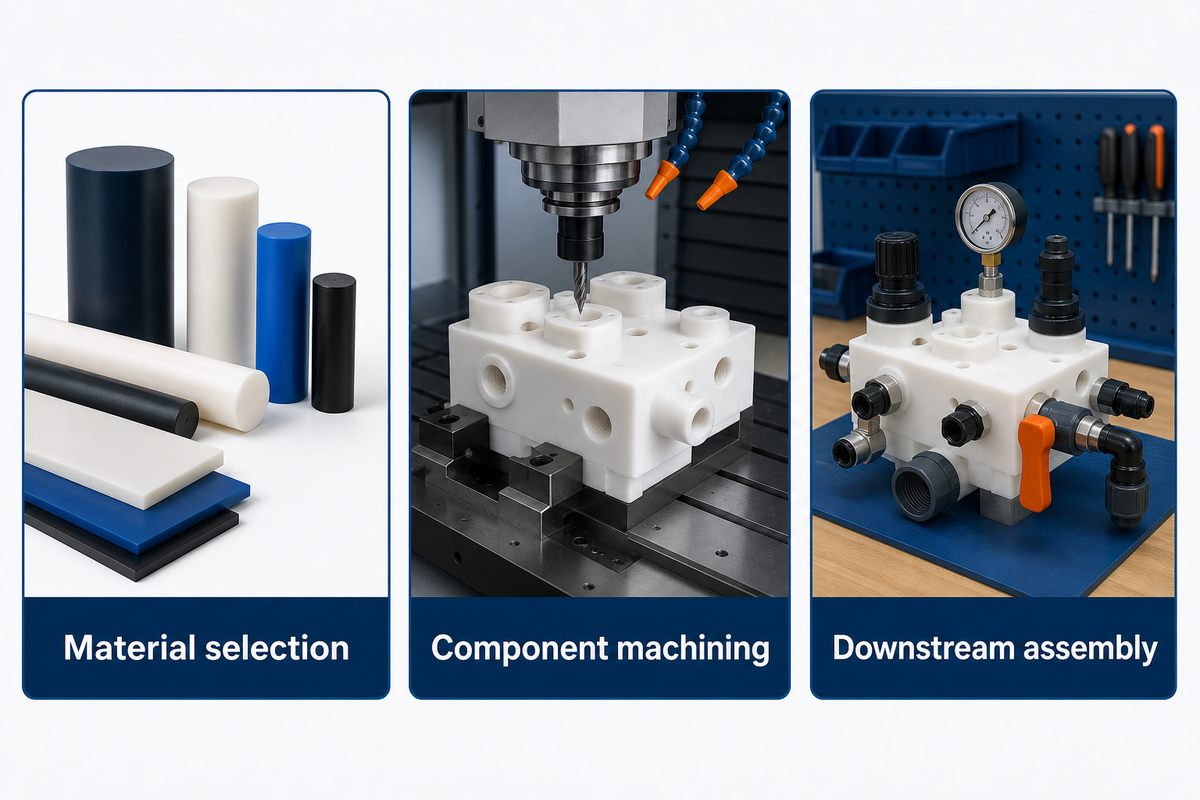
Stock production, material expertise and downstream assembly can change how a plastic component is sourced and how suppliers produce parts. These companies connect machining to a wider materials or technical-component offer.
11. Ensinger: Best for Material-to-Component Engineering Support
Headquarters / location: Nufringen, Germany · Founded: 1966 · Type: Engineering polymer materials and components manufacturer
Official website: www.ensingerplastics.com
Main products and materials: PEEK, POM, PA, PTFE, PSU and PPSU machined components
Quality / controlled processing: ISO Class 6 and 7 cleanrooms are available for sensitive machining-related assembly and handling (according to the company website)
Ensinger combines engineering polymer materials with finished-part manufacturing, giving buyers a route that connects stock selection to the machined component. Its machining offer includes turning, milling, cleaning, marking and assembly, while its published cleanroom options support sensitive handling and assembly work. TECAPART provides an online quotation route for suitable components, alongside individual engineering quotations for more involved geometry or requirements. The choice between those routes matters: a complex manifold or unusual processing request belongs in an engineering review, rather than assuming every component can follow the standard online quotation path.
12. Röchling Industrial: Best for Large Machined Thermoplastic Components
Headquarters / location: Haren, Germany · Founded: 1822 · Type: Industrial plastics materials and components group division
Official website: www.roechling.com
Main products and materials: Machined thermoplastic and composite industrial parts including wear and handling components
Röchling Industrial is headquartered in Haren, while the 1822 date refers to the wider group's historical origins, not the start of CNC plastic machining. Across its published machining offer, the company lists more than 220 CNC milling machines and 150 CNC lathes, with examples including a 2,500 mm cable sheave. Those examples make it relevant to buyers of large handling, wear and other industrial plastic components that exceed a small prototype shop's usual work envelope. Capacity is distributed across locations, however, so the combined equipment list doesn’t describe everything available at one plant.
13. Nylacast: Best for Large Cast-Nylon Wear Components
Headquarters / location: Leicester, United Kingdom · Founded: 1967 · Type: Integrated engineered-polymer producer and component manufacturer
Official website: www.nylacast.com
Main products and materials: Cast nylon, Oilon, Nylube and machined wear components
Quality / controlled processing: ISO 9001:2015 processes stated on its manufacturing page (according to the company website)
Nylacast links its cast-polymer materials, including Oilon and Nylube, to the production of finished wear and handling components. The manufacturing page describes three-, four- and five-axis milling and turning up to 2,000 mm diameter for suitable parts, giving large-component buyers a concrete capacity reference. This integrated route is relevant when the material formulation and the component geometry need to be considered together for repeat industrial orders. One location-specific boundary remains useful for sourcing: its published HDPE and POM-C extrusion capability is in South Africa, rather than being a process offered identically at every plant.
14. BKB Precision: Best for Precision CNC Plastic Assemblies
Headquarters / location: Son, Netherlands · Founded: 1982 · Type: Specialist high-performance plastics machining manufacturer
Official website: www.bkbprecision.com
Main products and materials: Complex plastic components, manifolds and assemblies for high-tech applications
Quality / controlled processing: ISO 9001:2015 stated on its quality page (according to the company website)
BKB Precision positions its Son operation around complex plastic components for high-tech applications, with machining, cleaning and assembly combined in the offer. Manifolds and assemblies illustrate why this matters: a finished component can require more than milling an external profile or turning a simple diameter. The company's published high-mix, low-volume focus makes it a relevant candidate when part variety and process coordination matter to the buyer's schedule. That high-mix, low-volume positioning also defines the order fit: BKB belongs in a precision machining shortlist, rather than being treated as a commodity bulk production alternative.
15. Yasojima Proceed: Best for Complex PEEK Parts from Japanese Plants
Headquarters / location: Kobe, Japan · Founded: 1937 · Type: Engineering plastics machining and digital manufacturing company
Official website: yasojima-global.com
Main products and materials: PEEK and other engineering plastic components, machined prototypes and medical components
Quality / controlled processing: ISO 13485 is scoped to the Sendai plant; ISO 9001 is also listed (according to the company website)
Yasojima Proceed identifies machining plants at Sendai, Shiga, Osaka and Kyushu, with equipment and processes assigned by location. Its technical information includes five-axis machining, CNC turning, image and CMM measurement, and plant-specific annealing, giving PEEK buyers a defined set of processing options. The company's Kobe base and 1937 history sit alongside this current multi-plant manufacturing offer. Certification guides order routing: the published ISO 13485 scope belongs to Sendai, so a component requiring that certification needs the Sendai manufacturing route rather than another Yasojima plant.
Regional Plastic Machining and Fabrication
Local material supply and fabrication can matter alongside CNC capability for industrial and commercial applications. This group combines regional service with its own machining, with particular strengths in stock-to-part or assembled-component orders.
16. Nylaplas Engineering: Best for UK Plastic Machining with Annealing
Headquarters / location: Nailsea, United Kingdom · Founded: 1982 · Type: Engineering plastics machining operation and trading division of Vink UK
Official website: www.nylaplas.com
Main products and materials: PEEK, PAI, PEI, POM, PA, PTFE and other engineered plastic components
Quality / controlled processing: AS9100 revision D and ISO 9001:2015 stated on its website (according to the company website)
Nylaplas combines engineering plastic stock with its own machining service and now operates as a trading division of Vink UK. Its history begins in 1982, while the current Nailsea equipment list includes milling, turning and an annealing oven for material-specific processing. PEEK, PAI, PEI, POM, PA and PTFE place it in a useful position for UK engineering-plastic orders that combine stock sourcing with custom machining. The listed 5-axis 3+2 milling machine provides indexed machining, so a part requiring simultaneous five-axis cutting needs a different equipment configuration.
17. Sentinel Plastics: Best for Polyethylene Parts and Fabricated Assemblies
Headquarters / location: Cradley Heath, United Kingdom · Founded: 1989 · Type: Industrial plastics machining and fabrication manufacturer
Official website: sentinelplastics.co.uk
Main products and materials: HDPE, HMWPE, UHMWPE, PEEK, PVC and other machined or fabricated parts
Quality / controlled processing: ISO 9001:2015, certificate FM39387, stated on its website (according to the company website)
Sentinel's offer extends from machined industrial plastics to fabricated parts and sub-assemblies with inserts or bearings. Its polyethylene information distinguishes PE300, PE500 and PE1000, helping buyers separate material families before choosing a wear component or handling part. Mills, lathes and first-off inspection support the machining side, while the assembly offer can reduce the number of separate operations a buyer coordinates. A practical ordering limit is stated on its polyethylene page: nonstandard colors may carry minimum-order requirements, so color selection can change the procurement route even where the part geometry stays the same.
18. Johnston Industrial Plastics: Best for Canadian Stock-to-Part Sourcing
Headquarters / location: Toronto, Canada · Founded: 1942 · Type: Industrial plastics distributor with in-house machining and fabrication
Official website: www.johnstonplastics.com
Main products and materials: Machined plastic parts, sheet, rod and tube across engineering polymers
Quality / controlled processing: ISO 9001:2015 applies to Toronto and Montreal locations (according to the company website)
Johnston brings material shapes, plastic fabrication and an in-house CNC service into one Canadian supply relationship. Founded in 1942, the Toronto-based business offers a route for buyers who need sheet, rod or tube sourcing alongside custom machined plastic components rather than purchasing stock separately. Its published scope includes prototypes and repeat production, making the stock-to-part combination useful across changing order quantities. For orders requiring the stated ISO 9001:2015 certification, the defined geographic scope is Toronto and Montreal, so the purchasing route should match one of those Johnston locations.
19. Emco Industrial Plastics: Best for Machining Plus Plastic Fabrication
Headquarters / location: Cedar Grove, New Jersey, USA · Founded: 1983 · Type: Plastics distributor and in-house fabricator/machining manufacturer
Official website: www.emcoplastics.com
Main products and materials: PEEK, PTFE, Torlon, Ultem, nylon, acetal and custom plastic assemblies
Emco combines plastics distribution with its own manufacturing capabilities in a 50,000-square-foot Cedar Grove facility. Its machining and fabrication pages describe mills, lathes, routers, welding, forming and assembly, with polymers such as PEEK, PTFE, Torlon, Ultem, nylon and acetal in the material range. That combination is relevant when an order includes both accurately machined features and a larger fabricated structure, rather than a collection of identical turned parts alone. A custom assembly follows a fabrication quotation, however, so buying the raw sheet or rod doesn’t by itself define the finished-component scope.
20. Miller Plastic Products: Best for Machined Parts with Tank Fabrication
Headquarters / location: Burgettstown, Pennsylvania, USA · Founded: 1969 · Type: Custom plastics machining and fabrication manufacturer
Official website: www.millerplastics.com
Main products and materials: Machined engineering plastic parts, plastic tanks and fabricated equipment
Miller Plastic Products combines CNC machining with custom tank fabrication, creating a relevant option for buyers of plastic chemical-equipment components. Its published machining services include five-axis work, routing, turning and annealing, while the wider manufacturing business also fabricates tanks and related plastic structures. Orders that combine a machined fitting or component with a fabricated vessel can therefore be discussed within one business. The purchasing boundary is the acceptance specification: dimensional requirements for a machined feature and requirements for a welded tank are different, and each needs its own clearly defined scope within a combined order.
How to Choose a Plastic CNC Machining Supplier
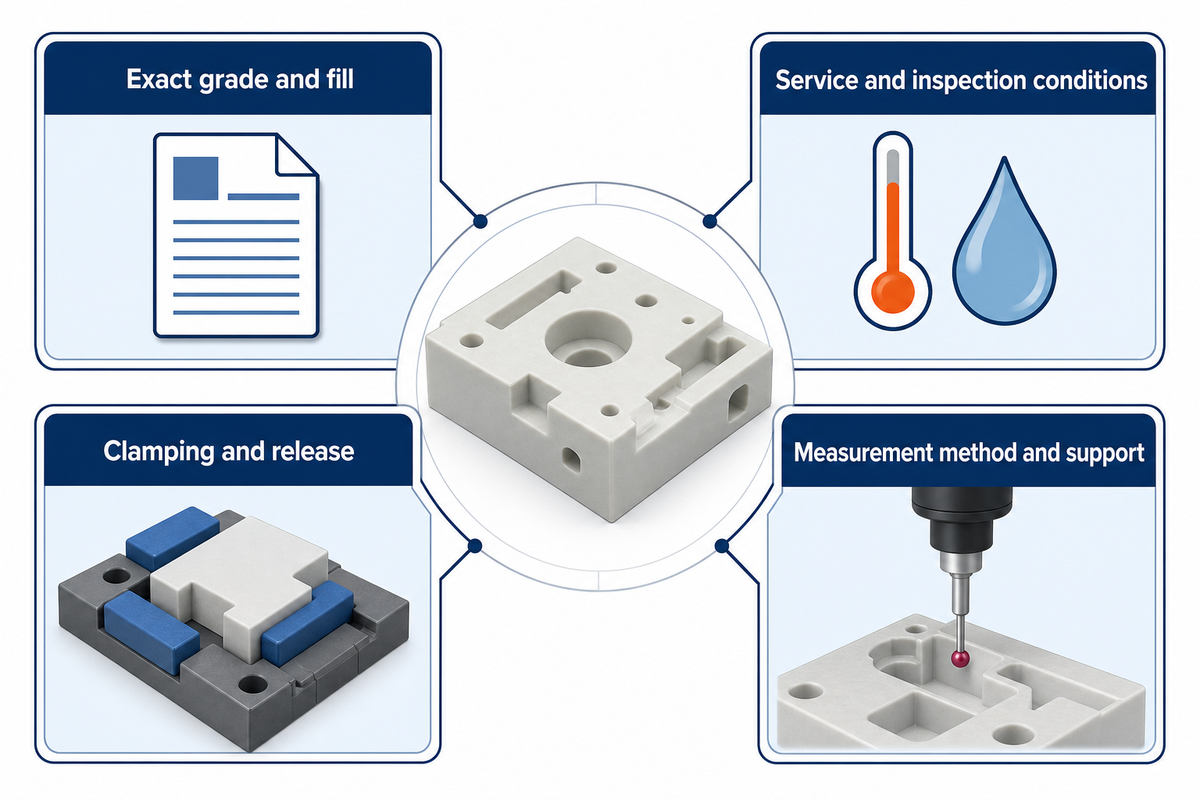
The acceptance standard for CNC machined plastic parts should specify the dimensional tolerance to be cut as well as other relevant processing requirements. Plastics are affected by numerous process variables which lead to differences in dimensional measurements. Curbell’s guide to challenges in dimensional tolerance illustrates the importance of including material behavior in specification.
Plastic Machining Capabilities and Inspection Conditions
- The material callout for tool selection and dimensional control should be exact and complete. PEEK can take many different forms and function differently based on filler content. Material interchangeability should identify the producer or approved equivalent; resin compliance and finished-part requirements remain separate.
- Specify stock form and thermal history. Rod, plate and near-net stock can lead to different material removal and stress-release patterns. Ask how the proposed machining process handles roughing, resting and any justified annealing. Drake’s machining guidance distinguishes Torlon post-curing from PEEK annealing; one generic thermal instruction can’t replace those material-specific decisions.
- The service temperature and inspection condition for dimensional tolerance should be clearly stated separately, and a material data sheet’s short-term thermal condition shouldn’t be assumed to guarantee continuous service.
- Defining moisture conditioning for nylon. Moisture can be absorbed by nylon and cause dimensional changes. State whether acceptance concerns the dry-as-machined state, a conditioned state, or a defined operating state. The supplier and customer must define moisture conditioning, e.g., where very little clearance is provided by a shaft/bore fitting or a flatness requirement leaves little allowance for movement.
- Addressing clamping and released constraints. A part, small or large, can change dimensions after constraints from fixtures or tools are released. The sequence in which a part is machined, the supports and fixtures used, and the timing of measurement can impact the final result. State what’s required for the critical dimension and support of a given feature, and don’t assume metal-part fixturing or clamping force will transfer unchanged.
- Considering cutting heat and choice of cutting fluid. Control heat from machining through cutting-tool choice, chip removal and compatible cutting fluid. If the cutting fluid isn’t compatible with the workpiece, it can be a constraint for the manufacturer. The manufacturing process used to produce plastic parts can be restricted by the geometry of the feature, pocket, or an interrupted cut. A supplier may state which polymer it can machine, but its process to limit heat and produce the given wall thickness is more relevant.
- Considering behavior of processed material. Several phenomena like thermal expansion, moisture absorption, creep and stress release can affect final part dimensions. For critical dimensions on parts with tight tolerances, determine the acceptance condition for each functional feature. Requiring a minimum tolerance doesn’t ensure a process is feasible for a given part.
- Agree measurement procedures and support. Probe forces may deflect parts, and edge detection and/or optical measurements may impose limits. Define datums, support, contact or non-contact measurement, and reporting for critical features. Describe measurement limitations. An assumed uniform measurement force or soak time must not be employed for all features being measured. The measurement system must be tailored to the feature being measured and the measurement apparatus.
Complete supplier qualification: check the current certificate and manufacturing-site scope, the proposed material traceability, first-article report and any outsourced special processing. ISO 9001, AS9100 and ISO 13485 concern defined quality-system scopes; an approved resin grade and a qualified finished device or component are separate matters. A cleanroom class describes an environment, not blanket approval of every part produced there. Put the required documents and responsibility for secondary operations into the quotation request.
Match the Polymer to the Part
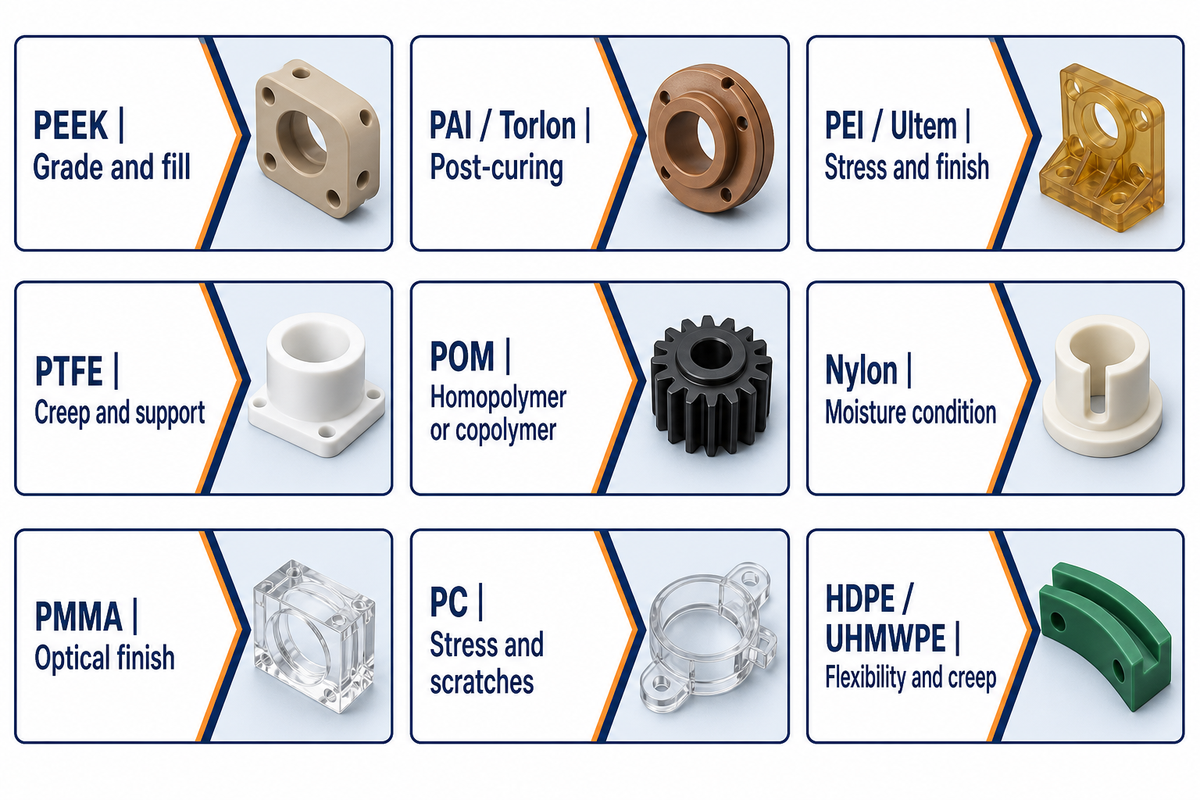
Material selection changes the supplier shortlist across the variety of plastics available. A shop handling several polymers still needs a process suited to the selected grade and the part’s specific needs. Across many industries, engineering-grade plastics serve a broad range of applications, but low friction, chemical resistance, electrical insulation and dimensional stability are different purchasing requirements. The Mitsubishi Chemical Group discussion of dimensional stability connects machining heat, stock stress and service loading to finished-component behavior.
Common Materials for Custom Plastic Machining
| Material | Typical reason to consider it | What the machining quotation must address |
|---|---|---|
| PEEK | Demanding thermal, chemical or wear requirements, depending on grade. | Exact grade and fill, stock source, machining sequence and inspection state; filled grades are not interchangeable with unfilled PEEK. |
| PAI / Torlon | Loaded components where the chosen grade’s temperature and mechanical properties fit. | Stock condition and the required post-curing route; distinguish post-curing from ordinary stress-relief annealing. |
| PEI / Ultem | Heat-resistant and insulating components with grade-specific requirements. | Fill content, stress control, finish and the applicable grade documentation; the trade name alone is incomplete. |
| PTFE | Low-friction and chemically resistant components. | Compliant workholding, creep, measurement force and support; a metal-style inspection setup can distort a soft feature. |
| POM / acetal / Delrin | Gears, bushings and dimensionally demanding general engineering parts. | Homopolymer versus copolymer, grade and stock condition; Delrin is not a generic name for every acetal formulation. |
| Nylon / PA | Wear components, guides and load-bearing engineering parts where the grade fits. | PA grade, cast or extruded stock, moisture conditioning and the acceptance state. |
| PMMA / acrylic | Transparent covers and appearance prototypes. | Machined geometry and optical finish as separate requirements; transparency of the stock does not guarantee optical-quality surfaces. |
| Polycarbonate / PC | Tough transparent components where impact resistance matters. | Residual stress, scratch-sensitive surfaces, compatible processing and the required appearance finish. |
| HDPE / UHMWPE | Handling, wear and chemically exposed components with appropriate loading. | Flexibility, creep, thermal movement and support during inspection; grade selection and fit allowances remain important. |
For detailed drawing discussions, Zhenling’s PEEK machining service, POM and Delrin processing and nylon machining review provide material-specific starting points. A filled grade that offers excellent abrasion resistance may create different tooling and surface requirements; a high level of electrical insulation or the ability to withstand extreme temperatures must come from the selected grade’s data and the application’s conditions.
From Plastic Prototypes to Repeat Production
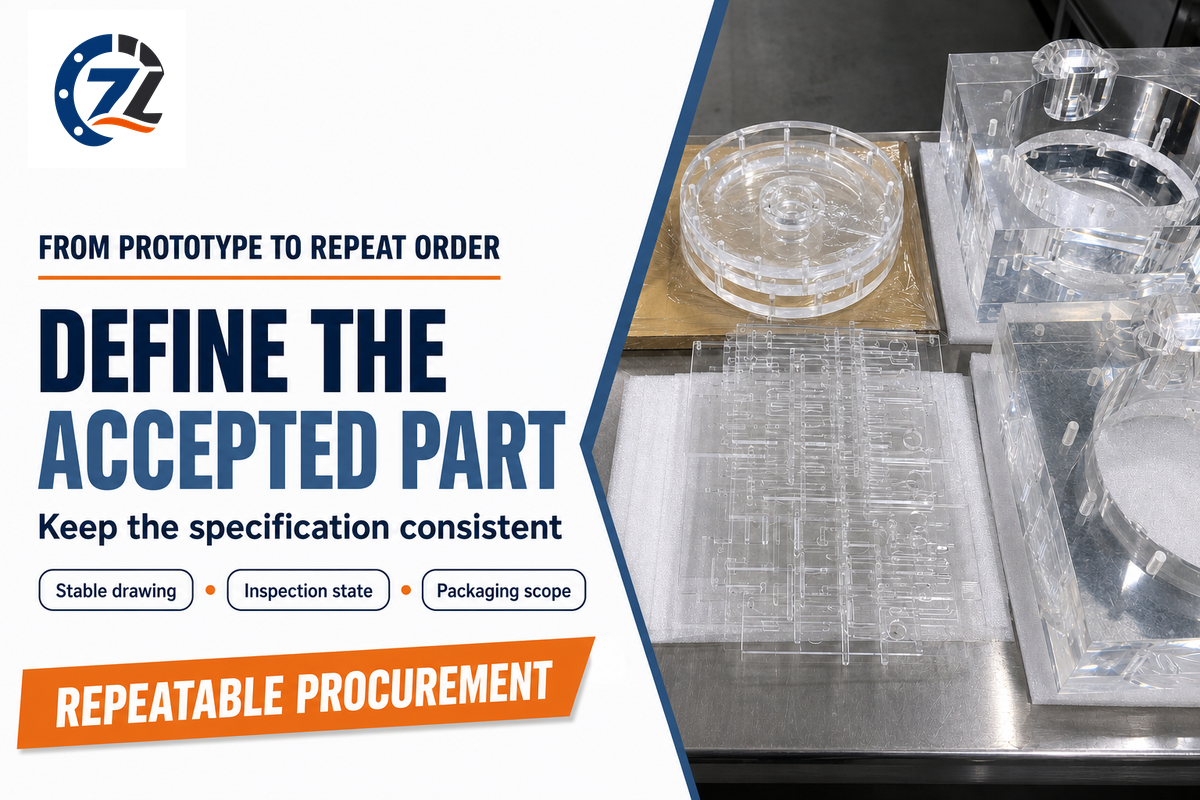
Prototypes provide sample parts and help evaluate a supply source under the agreed drawing and inspection conditions. Evaluating sample parts is one thing; producing repeated parts and ensuring a consistent supply of those parts is another. Drawings, specifications, and documents must be stabilized, including the accepted drawing revision, CAD model, stock grade, conditioning, secondary processing and measurement plan. The first accepted shipment sets the baseline.
CNC Milling and Turning for Repeat Orders
With milled parts, the sequence of operations can impact part quality, especially where plastic machined parts require high precision. For parts turned on a CNC lathe, final diameter and concentricity can be impacted by support and clamping. Though each of these issues can be documented, CNC routing of large and/or flexible parts presents similar challenges. Describing the routing plan helps the buyer and quality personnel determine if a change to the process plan is permitted.
Consider quotations evenly. The price and turnaround for a simple prototype depend on quantities, material certs, first article, finishing, packaging and shipping. A simple prototype doesn’t define repeatability, and its short lead times do not establish the timing of a documented repeat program with special stock or secondary processing. A supplier that offers extensive program services may perform work that a simple prototype may not need. Look at your purchase order to define the service requirement.
CNC plastic machining services are often used for prototype and low-volume production since parts may be machined from stock without molding tooling. If there’s recurring and substantial demand for a part with stable and definite shape, then producing the part by Injection Molding may be economical. The break-even quantity for a part may be very small or very high, based on variables such as how the part is designed, stock cost, machining cycle, tooling investment, how it’s inspected and expected design changes. Curbell’s plastic part design guidance gives information about various methods of manufacturing and when they may be used.
For a cost-effective order, a supplier isn’t evaluated solely on the lowest unit price, shortest lead-time or longest list of high-strength materials. Look closely at what defines a repeatable, useable part for your end-use.
Frequently Asked Questions
Which is the best plastic CNC machining service company?
The best plastic CNC machining company depends on the polymer, geometry, tolerance, quantity, operating environment and documentation requirements. AIP, Drake and Boedeker offer different forms of specialist polymer support; Protolabs suits its factory prototype route, while Zhenling reviews drawing-based engineering plastic work. Compare the actual grade, critical features and inspection conditions before comparing quotations. A strong shortlist contains suppliers suited to your order, rather than companies selected solely for size, country or a claimed minimum tolerance.
Which company is best for PEEK CNC machining?
The best PEEK machining supplier has relevant grade experience, dimensional control and traceability for your application. AIP, Drake, Boedeker, Ensinger and Yasojima publish PEEK machining capabilities, but their service scope differs. Check actual PEEK part experience, including filled grades where required, stock sourcing, stress-relief strategy and inspection records. Industry documentation must match the intended component and manufacturing site. A supplier capable of machining general PEEK isn’t automatically qualified to make every medical or semiconductor part.
Which company is best for tight-tolerance plastic parts?
The best supplier for tight-tolerance plastic parts controls the polymer and measurement conditions as well as the machine. AIP, CCT, EPTAM and other specialists in this list describe relevant machining or inspection capabilities. Compare stock condition, material stability, temperature, workholding and release from the fixture. Agree the measurement method, support and acceptance state for critical features. A quoted machining tolerance only becomes useful when both parties can reproduce the measurement on the same grade and geometry.
Are Chinese plastic CNC machining companies reliable?
Some are, but country of origin alone isn’t a sufficient qualification criterion. Assess the actual factory, polymer range, drawing review, material sourcing, plastic-specific processing, dimensional inspection, documentation and export experience. Zhenling and WayKen belong on a shortlist when their stated capabilities fit the drawing.
How much does plastic CNC machining cost?
There’s no universal plastic CNC machining price because material, geometry, quantity, tolerance and inspection requirements vary widely. Quotations reflect polymer stock, machining time, fixtures, waste, inspection, polishing, documentation and secondary processing. Compare the delivered cost of accepted parts, including finishing and freight.
Is plastic CNC machining better than injection molding?
Neither process is universally better; CNC machining and injection molding suit different volumes, geometries and tooling requirements. Machining often suits prototypes and low volumes without dedicated molding tooling. Molding becomes attractive when stable geometry, cumulative demand and achievable molded properties justify tool investment.
Send a Drawing for a Material-Specific Review
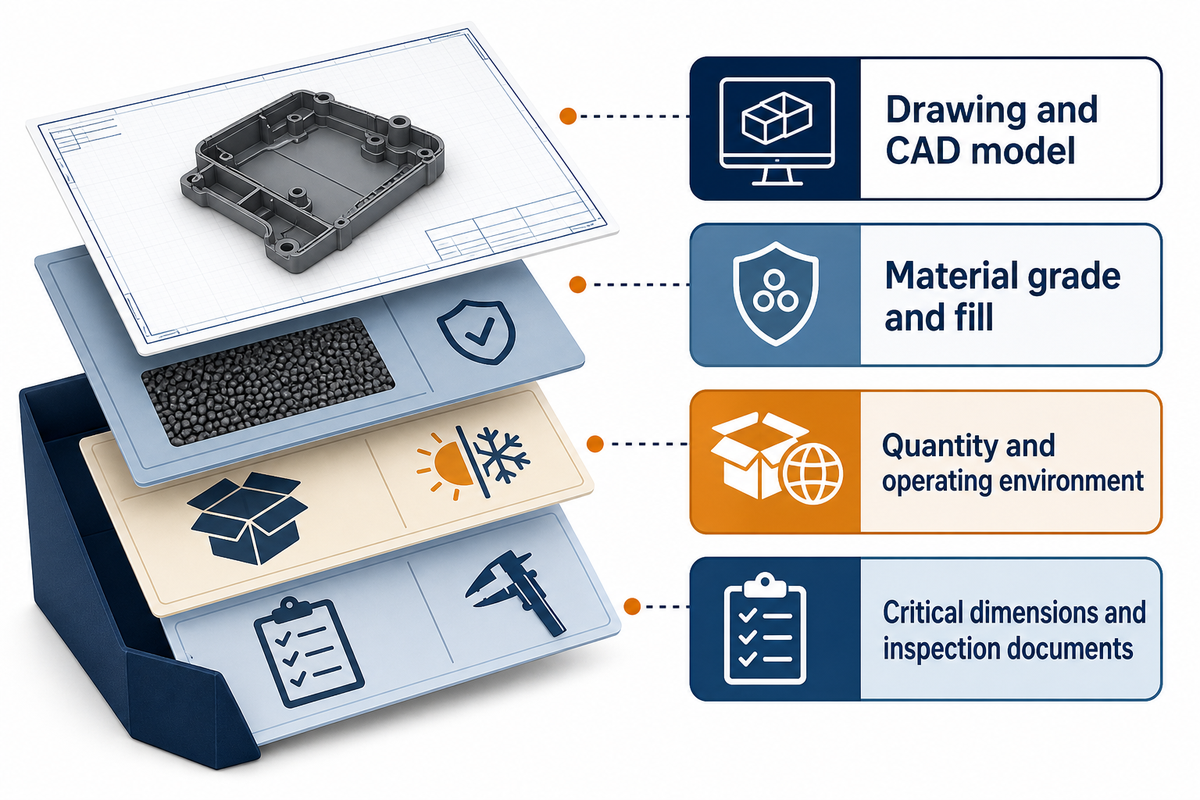
The best shortlist starts with the part. Choose the suppliers whose material knowledge, machining route and inspection scope match the order, then compare like-for-like quotations. For Zhenling’s drawing-based engineering plastic service, send the drawing and CAD model, material grade and fill, quantity, operating environment, critical dimensions and required inspection documents.
Explore Zhenling’s machining material options to identify the relevant polymer before requesting a drawing review.
Related Articles
- Acrylic and PMMA machining: geometry and finish considerations
- Prepare a drawing for CNC manufacturability review
- Compare three-, four- and five-axis machining
References and Sources
Company histories, service descriptions, equipment and quality-system statements come from the official websites shown in the comparison table and company cards. Protolabs certification scope follows its Global Certification + Compliance page; Nylaplas ownership follows its current company homepage. Technical purchasing guidance draws on Ensinger’s engineering-plastics FAQ, Drake’s machining guidance, Curbell’s dimensional-tolerance and part-design resources, and Mitsubishi Chemical Group’s dimensional-stability guidance. These sources support the stated capabilities; the order-fit categories are this guide’s editorial assessment.