Get in touch with Zhenling Company


Black Oxide Finishing Service for Custom Machined Steel Parts
Source machined steel parts and a reviewable black oxide finishing scope through one quotation path. Zhenling Metal connects the drawing, substrate condition, post-treatment, inspection plan, packing requirement and delivery responsibility without turning an industry guideline into an unverified production promise. Black Oxide Finishing enquiries should include material, named standard, hardness condition, post-treatment requirement, critical surfaces and inspection. Use the drawing review to test the route and its limits. Confirm records, pricing assumptions and schedule separately for the order.
Black Oxide Finishing for Dimension-Critical Steel Parts
In general people believe a black oxide coating is just a rust barrier. The blunt truth is more helpful: the conversion coating modestly alters the surface of the metal dimensionally while its additional oil, wax or similar applied preservative shoulders much of the corrosion duty.
Fit can be right while protection is wrong
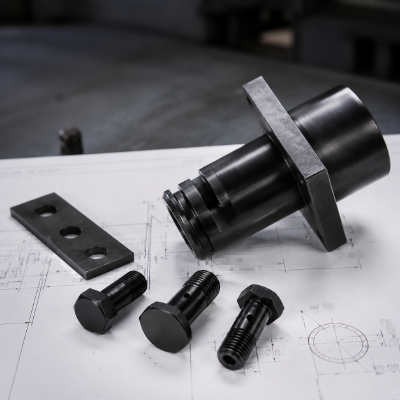
Black oxide alone may not stop rust in humid or condensing service, creating a real risk for a 39 HRC hardened OEM shaft, bearing interface or valve component even when the typical layer context is 1–2 µm. Because hardness, corrosion exposure and dimensional review answer different problems, Zhenling provides a CNC-machined drawing review tied to current specification and patent evidence. Unlike a generic finish promise, the honest version states the trade-off and won’t claim production suitability first.
The coating and the seal work as a system
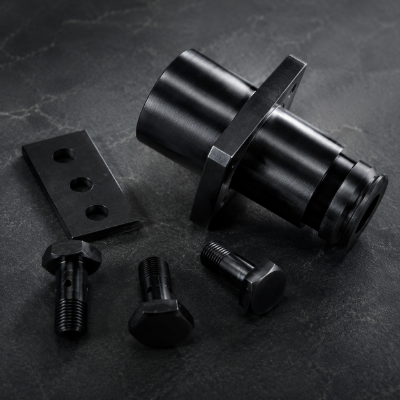
MIL-DTL-13924F states that the black conversion coating alone provides only limited protection under mildly corrosive conditions. Its classes and procurement provisions make the preservative, storage condition and required evidence part of the order definition.
Review the service environment before the finish callout
- Substrate grade, strength, hardness and heat treatment
- Critical dimensions, fits, threads and surface condition
- Humidity, condensation, handling, storage and shipping exposure
- Appearance, glare, seal, maintenance and acceptance method
- Application proof path
Put the numbers beside the failure mode
A hardened OEM shaft, bearing interface or valve component carries a real risk when a 39 HRC relief trigger and a typical 1–2 µm layer are treated as interchangeable facts. The problem occurs because hardness controls process qualification while layer context informs dimensional review; neither number proves corrosion life.
Engineering boundary: 39 HRC is a review trigger
For surface-hardened or through-hardened steel parts at 39 HRC or above, MIL-DTL-13924F requires post-conversion hydrogen-embrittlement relief for all classes. We won’t claim that black oxide is automatically free of hydrogen-related qualification concerns; the drawing, material condition, applicable specification and responsible processor must align before release.
STEP 01
Provide actual hardness or the heat-treatment requirement, not only a generic steel grade.
STEP 02
Identify the applicable standard revision and coating class when a military callout controls.
STEP 03
Define the required objective quality evidence, sampling and lot documentation.
| Selection condition | Black oxide fit | Question that must be closed |
|---|---|---|
| Critical fits or threads | Often considered because the coating is thin and integrated with the ferrous metal surface. | Which dimensions are measured before and after finishing, and what residue is acceptable? |
| Dark, low-glare appearance | A matte black finish or polished black surface is possible, but the starting surface strongly affects gloss and texture. | Is the acceptance sample, color range or surface-preparation route defined? |
| Mild indoor exposure | Potentially suitable when the supplementary coating, handling and maintenance plan match the environment. | Which preservative, test and storage period are written into the order? |
| Salt, condensation or long unprotected storage | Needs application-specific validation or another protection system. | Would zinc plating, paint, powder coating, stainless steel or a different coating system better address the exposure? |
| Sustained sliding contact | Not necessarily a permanent wear layer; run-in and contact pressure can remove it. | What contact mode, lubricant, counterface and acceptable wear behavior apply? |
Materials, Surface Finish Options, and Drawing Requirements
“Blacken the parts” isn’t a complete manufacturing instruction. Carbon steel, alloy steel, tool steel, stainless steel and non-ferrous materials don’t share one blackening process, while surface reactivity changes with scale, machining, grinding, blasting, hardness and alloy content.
Material mismatch risk
Grade names do not replace condition data
An OEM shaft, bearing seat or valve part can fail inspection when a 39 HRC hardened condition and a typical 1–2 µm conversion layer are assumed from the alloy name alone. Because heat treatment, CNC machining and grinding change surface reactivity, Zhenling provides a precision drawing review informed by current specification and patent evidence. Unlike a color-only request, the honest version states the trade-off and won’t claim one process for every production material.
Primary review scope
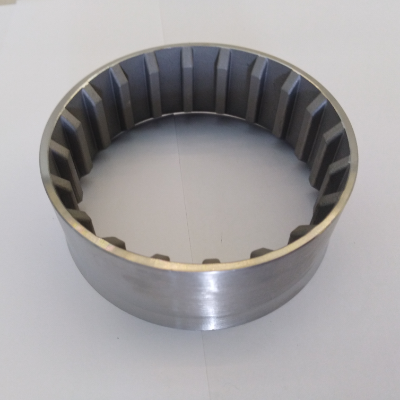
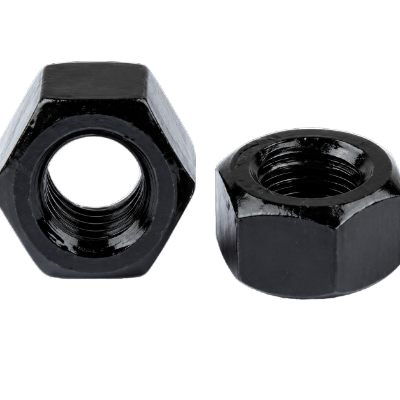
Carbon and alloy steel
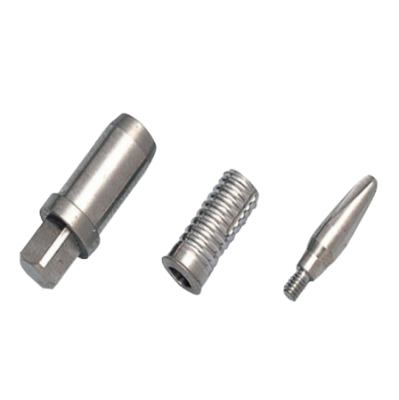
These ferrous substrates are the starting scope for a black oxide treatment review. Submit the exact grade, condition and hardness because the same alloy can respond differently after heat treatment, abrasive preparation or final grinding.
- Grade and governing material specification
- Hardness, tensile requirement and heat-treatment state
- Scale, rust, heat tint and previous surface operations
Special route
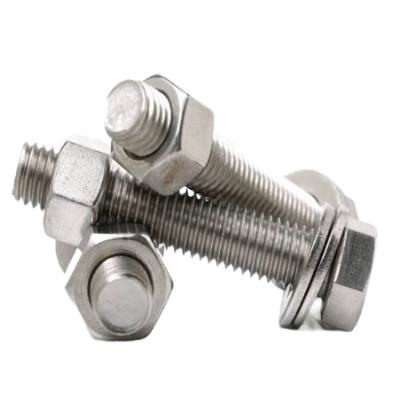
Stainless steel and corrosion-resistant grades
Stainless steel can receive a black finish, but not through one universal hot black oxide route. Grade, condition, activation, process family and acceptance criteria must be confirmed; current MIL-DTL-13924F requirements also distinguish a Class 4 route for AISI 300-series corrosion-resistant steel.
- Confirm whether the requirement is conversion black oxide or another black surface technology.
- Review smut, rub-off and edge-exfoliation risks against the selected process.
- Don’t infer chrome-free chemistry unless the responsible process record proves it.
Condition-sensitive
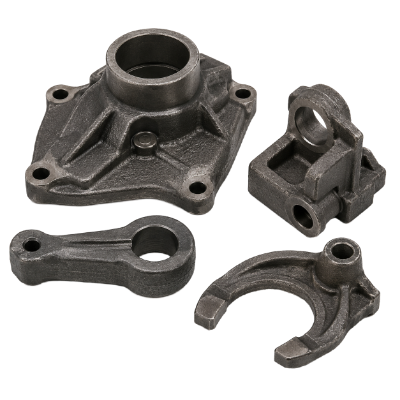
Cast, sintered, wrought and highly reactive ferrous parts
Surface area, porosity and reactivity can change oxide formation and seal uptake. Historical process literature reports that highly reactive surfaces can blacken quickly yet become sooty or poorly adherent when the reaction isn’t controlled.
- Identify porosity, impregnation and cleanliness requirements.
- Specify a wipe test, visual limit or residue criterion.
- Clarify any oil or wax removed from features that should remain clean.
Different chemistry required
Aluminum, copper and nickel-based alloys
These shouldn’t be routed under a ferrous black oxide process that isn’t qualified for use with the specified substrates, process families and criteria. Where a black appearance is mandated, the drawing should reference a suitable conversion, anodic, plated, painted or other coating specific to the substrate and with its own applicable acceptance requirements.
- Avoid using the term “black oxide” as simply a color shorthand.
- Separate decorative appearance from corrosion, wear and electrical requirements.
- Request evidence for the exact substrate and process combination.
RFQ Field Data & Specification
RFQ field
Why the finisher needs it
Decision-ready input
Controlled product definition
Prevents quotation and inspection against different revisions.
Two-dimensional drawing, three-dimensional model, revision and marked finish scope.
Material condition
Substrate chemistry and reactivity affect the blackening process.
Grade, material specification, certificate requirement, hardness and heat treatment.
Critical geometry
The coating is thin, but cleaning, seal and handling can still affect functional features.
Fits, threads, bores, sealing faces, masking and measurement points.
Starting surface
The substrate finish influences color, gloss, coverage and defect risk.
Roughness, machining/grinding condition, scale, heat tint, blasting and cosmetic zones.
Finish route
Hot black oxide, mid-temperature black oxide and a cold black oxide process are not automatically equivalent.
Applicable standard, class, process restrictions, chrome-free requirement and approved alternatives.
Post-treatment
Oil, wax or another specified seal changes handling and corrosion behavior.
Product or performance requirement, dryness, residue, compatibility and removal restrictions.
Acceptance evidence
“Good finish” is not a repeatable inspection rule.
Appearance sample, rub-off limit, dimensions, corrosion test, sampling, certificate and lot identity.
Black Oxide Coating Process and Quality Controls
A stable black oxide finish begins before the chemical solution and ends after sealing, inspection and packing. The process creates a surface finish when the black oxide solution forms a black oxide layer at the metal surface, but cleaning, bath condition, rinsing, substrate reactivity and the final preservative decide whether the result is uniform and fit for handling.
Process failure risk
Control inputs before diagnosing the black surface
An inconsistent coating on a production shaft, bearing component or OEM assembly can fail because cleaning, activation, sludge, rinsing and seal are connected. For a 39 HRC hardened part and typical 1–2 µm layer context, Zhenling provides a CNC-machined drawing review informed by specification and historical magnetite-process patent evidence. Unlike a black-box handoff, the honest version exposes the trade-off and won’t claim in-house process control before supplier records are checked.
01
Drawing review
Confirm material grade, hardness, surface finish boundary, masking of features, specification revision and availability of evidence that requirements were met.
02
Machining & deburring
Remove defects that would remain visible under a thin chemical conversion coating and protect critical edges.
03
Cleaning & activation
Remove oil, oxide and soils without silently changing critical geometry or surface condition.
04
Blackening route
Use the approved ferrous-metal process family and documented controls for the substrate and class.
05
Rinsing & relief
Control residues and complete any required hardness-related post-conversion relief.
06
Seal or preservative
Apply the order-defined oil, wax or supplementary coating and confirm residue-sensitive features.
07
Inspection & release
Check appearance, dimensions, specified tests, lot identity, packing and shipment evidence.
08
Storage & delivery
Protect the black oxide coated parts against handling, condensation and transit exposure agreed in the quote.
| Process label | What it may mean | What the quotation must clarify |
|---|---|---|
| Hot black oxide | Typically an elevated-temperature alkaline oxidation route using sodium hydroxide chemistry to form a magnetite-rich black iron oxide conversion layer on suitable ferrous surfaces. | Substrate, bath/process specification, temperature family, class, relief, seal and acceptance evidence. |
| Mid-temperature black oxide | A lower-temperature process family marketed between conventional hot and room-temperature routes; chemistry and performance are supplier-specific. | Do not assume equivalence to a named standard or hot route without process and test evidence. |
| Cold black oxide | Common room-temperature products, sometimes marketed with broad black passivating language, may use copper-selenium/tellurium compounds rather than the same magnetite layer. | Confirm rub-off, smut, topcoat, abrasion, dimensional, environmental and specification requirements. |
| Gun bluing | A related family of dark conversion finishes used on firearms, but the phrase does not define the industrial coating applied to a custom component. | Use the actual material, process specification and acceptance criteria instead of a visual synonym. |
Defect signal
Patchy or gray areas
Potential causes include inadequate cleaning, poor water break, scale, nonuniform activation, bath condition, sludge contact or alloy variation. A cosmetic rework instruction shouldn’t be issued until the root cause and dimensional risk are understood.
Defect signal
Soot, smut or rub-off
Surface reactivity, process mismatch, excessive dwell and inadequate rinsing or sealing can contribute. Stainless edges and highly reactive blasted surfaces deserve separate review rather than a universal cycle extension.
Defect signal
Early rust after cleaning
Post-cleaning can remove oil or sealant and expose the finish sooner. The cleaning method, replenishment plan and service environment belong in the application decision when selecting a coating to prevent rust that also protects the metal in real service.
Policy
Process ownership must be stated honestly
[ HOVER TO EXPAND ]
Trade reporting notes that many machine shops outsource black oxide. Zhenling won’t imply that a black oxide line is in-house until the order route is confirmed; the quotation should identify whether finishing is performed internally or by a qualified partner and who owns release, nonconformance and lot evidence.
- Ask who maintains control of the bath/process record and final preservative.
- Ask how parts transition among the machining centers, finishing process, inspection and packing stage.
- Ask which organization signs the certificate and retains the lot record.
Batch Evidence
Batch handling needs records, not appearance alone
[ HOVER TO EXPAND ]
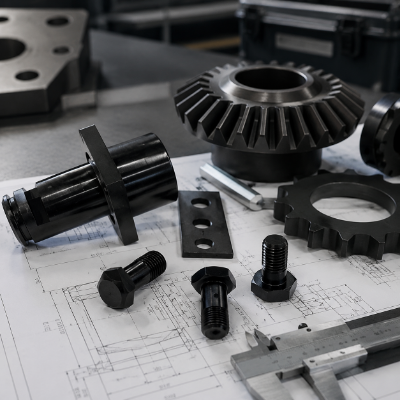
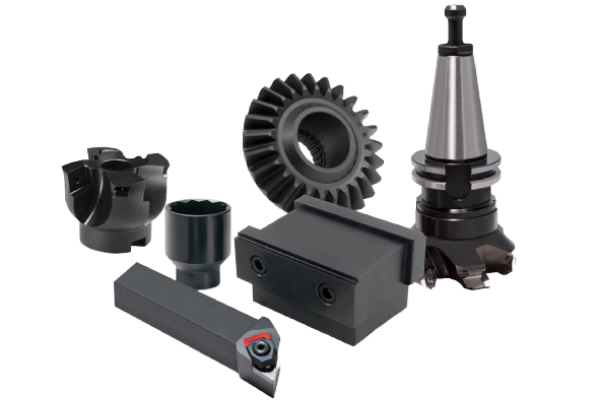
A production photograph may show multiple black oxide parts, including gears, shafts and custom components. It doesn’t establish that the coating applied was hot black oxide, that parts share one lot, or that dimensions and corrosion tests passed.
- Protect parts from contact damage and mixed-lot handling.
- Keep the approved drawing revision and lot identity connected through packing.
- Define whether finish acceptance is visual, dimensional, functional or test-based.
Black Oxide vs Zinc Plating for Precision Components
Finish choice often narrows to black oxide, zinc, paint, or stainless after environment is known. There’s no responsible one-word winner: black oxide and zinc plating protect through different mechanisms, change dimensions differently and bring different high-strength-steel qualification questions.
Comparison risk
Do not compare unlike evidence
An OEM valve, shaft or precision assembly can carry hidden rework risk when a 39 HRC trigger is compared with a typical 1–2 µm layer as though both were corrosion ratings. Because plating thickness, conversion behavior and service exposure solve different problems, Zhenling provides a CNC-machined drawing review grounded in specification and patent evidence. Unlike a generic scorecard, the honest version names the trade-off and won’t claim one production finish is always superior.
Decision Factor
Black Oxide Finishing
Zinc Plating
RFQ Decision
01 Protection mechanism
Iron-oxide conversion layer plus the specified oil, wax or supplementary coating.
Deposited zinc layer that can provide sacrificial protection under a qualified plating system.
Match the mechanism to exposure, maintenance, life and applicable standard.
02 Dimensional effect
Peer-reviewed literature describes a typical integrated layer around 1–2 µm with virtually no dimensional change; MIL-DTL-13924F requires no appreciable dimensional change.
Deposited coating thickness and thread allowance must be built into the drawing and plating specification.
Mark fits, threads, bores and measurement points; do not substitute a typical value for a tolerance analysis.
03 Appearance & glare
Dark black surface with gloss influenced by the starting surface and seal; often selected for low glare or machine appearance.
Metallic or chromated appearance varies with the selected zinc system and post-treatment.
Use an approved visual range or sample when appearance is an acceptance criterion.
04 Corrosion resistance
Limited without a preservative; the coating is thin and corrosion behavior is strongly seal- and environment-dependent.
Can offer stronger sacrificial protection, but performance depends on coating system, thickness, conversion layer, test and service conditions.
Compare specified test conditions and exposure, not unsupported “high” or “medium” labels.
05 High-strength steel
MIL-DTL-13924F triggers post-conversion relief at 39 HRC or above.
High-strength-steel plating requires its own hydrogen-embrittlement controls, baking and standard compliance.
Provide hardness and governing specification before either route is approved.
06 Maintenance
Oil or wax condition, cleaning and handling may remain part of service life.
Maintenance depends on the zinc system, damage, environment and use.
State whether replenishment, dry handling, paint adhesion or lubricant compatibility matters.
07 Best-fit signal
Dimension, appearance, glare, fit or lubricity matter and the exposure can be managed.
Sacrificial corrosion protection is central and the geometry/specification can accommodate the deposit.
Validate with the drawing, environment, material strength and acceptance plan.
Finish Evidence: Part Photos, Inspection, and Application Boundaries
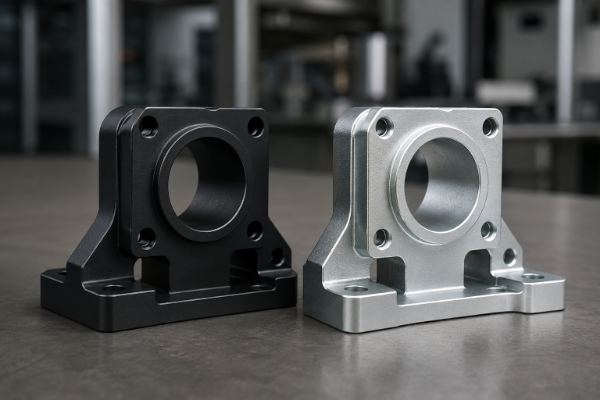
A glossy photo can help align black finish expectations, but it can’t prove the coating applied, substrate, layer thickness, corrosion resistance, hardness relief, dimensional acceptance or process capability. Evidence becomes useful when each image, inspection record and certificate is tied to the controlled part and lot.
Evidence gap risk
A photo cannot close a numerical requirement
A supplier image of an OEM shaft, valve or bearing part can hide inspection risk when the 39 HRC condition, typical 1–2 µm layer context and production lot aren’t linked. Because appearance, dimensions and process qualification require different records, Zhenling provides a precision CNC-machined-part review grounded in specification and patent evidence. Unlike an anonymous gallery, the honest version states the trade-off and won’t claim a production test result from a photograph.
Request a Part Evidence ReviewAppearance-record checklist
What a part photograph should capture
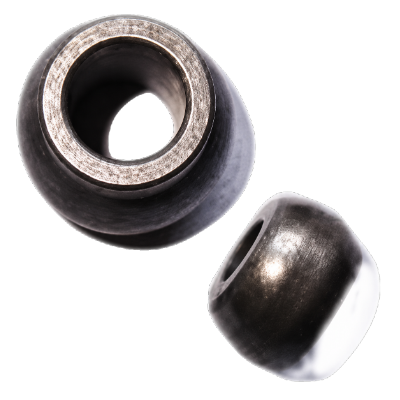
Use controlled lighting and multiple angles to show color, gloss, surface texture, edge coverage and visible defects. Keep appearance approval separate from the dimensional report, preservative confirmation and corrosion test.
- Part or sample identity and drawing revision
- Lighting and approved appearance range
- Areas where handling marks, rack contact or residue are allowed
- Statement of what the image doesn’t establish
Good candidate
Fit, glare or appearance
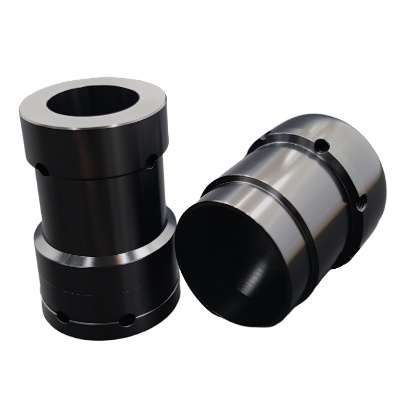
A thin chemical conversion can support dimension-sensitive, low-reflectivity or machine-finish objectives when the ferrous substrate and surface condition are suitable. Confirm the seal and functional-interface requirements instead of treating color as the whole specification.
Needs validation
Humidity, cleaning or storage
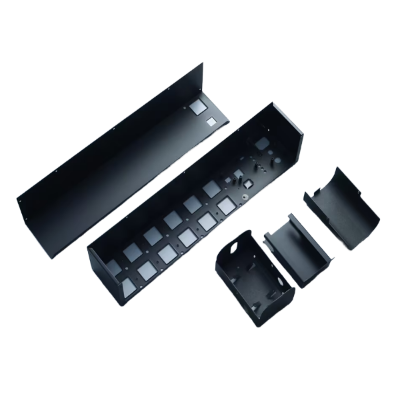
Indoor exposed steel can still corrode when black oxide is left under-protected. Condensation, wash chemistry, fingerprints, packaging, transit duration and preservative condition can matter more than the appearance on release day.
Consider alternatives
Sacrificial protection or wear
Maintenance-free expectations conflict with finishes that depend on oil, wax, or handling controls. A recent SKF/Dewe patent also treats wear-intensive sliding and run-in loss as a distinct problem, so black oxide is not necessarily a permanent abrasion layer.
Experience signal
Residue-sensitive features
Oil that helps protect a broad surface can be unacceptable in a blind hole, adhesive zone, sensor interface or clean assembly. Mark those features on the drawing and agree how the part will be cleaned, dried, reprotected and packed.
Experience signal
Reference sample control
An oil film isn’t a warranty on lighting conditions, substrate, chemical seal or the alloy used. Referencing a visual master with the applicable part number, date, revision, route/class and accepted range lets each subsequent lot be compared with the same visual target.
Zhenling Manufacturing Context and Quality Evidence
Company-supplied documentation states Zhenling was established in 2006. It describes an 8,000 m² Jiashan site, a 6,000 m² workshop, and machining, forming and welding resources for non-standard metal components.
Trust gap risk
Factory scale is not finish qualification. An international OEM, valve buyer or precision-parts supplier faces risk if an 8,000 m² factory claim is used to imply control of a 39 HRC trigger or typical 1–2 µm layer. Because company context and product approval are separate, Zhenling provides CNC, turning, grinding and machined-part facts alongside order-relevant specification evidence and bounded patent evidence. Unlike a badge wall, the honest version states the trade-off and won’t claim production certification without records.
First-party documented
Machining context
The company document lists CNC turning, milling, grinding, boring, drilling, wire electrical discharge machining and three-, four- and five-axis machining resources. Buyers who need the machining scope before finish review can use the separate CNC milling service for custom components page. This supports custom-part manufacturing context, not a claim about black oxide bath ownership or chemistry.
First-party documented
Material context
Documented machining experience includes bearing steel, carbon steel, alloy steel, stainless steel, nickel-based alloys and aluminum alloys. A broad machining list doesn’t mean every material is eligible for one black oxide coating process.
First-party documented
Application context
The profile names pressure-vessel, oil-gas separation and fluid-control applications. Order suitability still depends on the controlled drawing, operating environment, responsible processor, finish route and application-specific approval.
DRAWING
Revision and finish boundary agreed
MATERIAL
Grade, condition and hardness recorded
PROCESS
Owner, class, relief and seal disclosed
INSPECTION
Method, sampling and acceptance defined
SHIPMENT
Lot, packing and release record linked
01
Application need
State the real exposure, fit, appearance, glare, wear and maintenance priorities.
02
Material and callout
Bind grade, condition, hardness, drawing revision and finish scope.
03
Process and post-treatment
Name the responsible route, restrictions, relief and preservative requirement.
04
Inspection and acceptance
Agree what’s measured or tested, by whom, on what sample and against which limit.
Black Oxide QuoteProof Protocol: evidence before badges
CE and ASME credentials mentioned in company-supplied background won’t appear as black oxide trust badges until the certificate number, legal entity, validity and scope are verified. We also won’t claim a particular chemical system, in-house black oxide line, fixed tolerance, salt-spray result or repeatability level without order-relevant records.
- Certificate evidence must match the named legal entity and relevant product or quality-system scope.
- Processor evidence must identify who performs, controls and releases the finish.
- Customer approval must define whether a sample, test, inspection report or first article is required.
Ask for the evidence scope before asking for a badge list
We can turn your drawing and purchase specification into an order-specific evidence list.
Request an Evidence-Scope ReviewBlack Oxide Service: RFQ, Lead Time, MOQ, and Delivery
A black oxide service quotation is useful only when machining, finishing, post-treatment, inspection, packing and logistics are priced against the same product definition. Pricing, minimum order and turnaround are confirmed after review because geometry, batch size, cleanliness, masking, hardness, evidence and destination can change the route.
Commercial mismatch risk
A low unit price can hide an incomplete scope. An OEM assembly can incur delay when a 39 HRC trigger and a typical 1–2 µm layer are missing from the RFQ. Quantity, inspection and delivery can carry different assumptions, so Zhenling provides a drawing review grounded in current procurement-specification evidence and bounded patent evidence. Unlike a placeholder price, the honest version states the trade-off and won’t claim one turnaround for every part.
BRONZE
Total-cost logic without an invented savings percentage. No current transferable payback or savings benchmark was verified for custom black oxide coating services. Compare quotations by machining setup, batch size, surface preparation, masking, finishing route, seal, inspection, nonconformance responsibility, packing, freight and the cost of separating machining from metal finishing.
- Ask whether the quote includes cleaning, post-treatment, inspection and export packing.
- Ask who pays when a dimensional or finish nonconformance crosses supplier boundaries.
- Ask whether minimum order reflects chemistry, fixture, inspection, packing or logistics constraints.
Technical inputs
T-01
Two-dimensional drawing, three-dimensional model and revision
T-02
Material grade, condition, hardness and heat treatment
T-03
Quantity, lot structure and repeat-order forecast
T-04
Critical dimensions, threads, bores, masking and surface roughness
T-05
Black oxide specification, class, allowed alternatives and chrome-free requirement
T-06
Post-treatment, appearance, test, inspection and certificate requirements
Commercial and logistics inputs
C-01
Sample, first-article and production quantities
C-02
Required delivery date and destination
C-03
Storage duration, shipping mode and condensation risk
C-04
Cleanliness, dryness, individual wrapping and export packing needs
C-05
Required inspection report, material certificate and lot record
C-06
Responsibility for finishing, rework, deviation and shipment release
Quote line
Weak wording
Decision-ready wording
Process scope
“Black oxide included”
Named material/condition, approved process family or class, responsible processor and post-treatment.
Dimension scope
“Tight tolerances supported”
Listed critical characteristics, measurement stage, method, sampling and acceptance rule.
Appearance scope
“Uniform black finish”
Approved visual range, surface preparation, lighting, sample control and allowed contact marks.
Corrosion scope
“Good corrosion resistance”
Specified preservative, test method, duration, specimen condition and acceptance limit when required.
Turnaround
“Fast global delivery”
Confirmed sample and production dates after material, process, inspection and destination review.
Minimum order
“Low minimum quantity”
Confirmed quantity by part, lot, finish route, inspection plan and packing configuration.
Release package
“Certificate available”
Named certificate/report, issuing entity, lot linkage, measured/tested fields and retention responsibility.
01
Application Need
Define the job the finish must do and the environment it must survive.
02
Material & Drawing Callout
Close grade, hardness, revision, critical features and finish boundary.
03
Process & Post-Treatment
Confirm the coating process, responsible processor, relief and seal.
04
Inspection & Acceptance
Agree evidence, sampling, test conditions, deviations and release authority.
05
Lot & Shipment Evidence
Link the approved part, record, packing and destination before dispatch.
BLACK OXIDE
TECHNICAL RESOURCES
Technical guides and evaluation frameworks to determine surface finish suitability, prepare RFQs, and compare black oxide against zinc plating and powder coating.
Turn “black oxide required” into a reviewable manufacturing RFQ
Send the drawing, material condition, finish callout, exposure and evidence needs. We’ll return the open technical and commercial fields that must be closed before quotation.
FAQ: Black Oxide Finishing
These answers define the questions an engineering or procurement team should close before approving a black oxide coating. Final suitability remains tied to the drawing, material condition, responsible processor, applicable standard and service environment.
What does a black oxide finish do?
It creates a dark chemical conversion at a suitable ferrous metal surface, usually with a supplemental oil, wax or other specified coating. The finish can support appearance, low glare, fit and lubricity objectives, but its corrosion protection is conditional.
Does black oxide change part dimensions?
MIL-DTL-13924F requires no appreciable dimensional change, and a peer-reviewed study describes a typical integrated magnetite layer around 1–2 µm with virtually no dimensional change. Treat that value as technical context, not as permission to ignore critical-feature review, cleaning residue or inspection.
How much corrosion resistance does black oxide provide?
The current military specification says the conversion coating alone provides only limited protection under mildly corrosive conditions. The preservative, substrate, preparation, handling, storage, maintenance, test method and real exposure determine whether the coating is suitable.
How long does black oxide coating last?
A responsible universal service-life figure can’t be determined. Service life varies with moisture, salt, contact, cleaning, abrasion, seal condition and care, so the order should specify the environment and acceptance criteria rather than rely on a generic time frame.
What is the difference between hot and cold black oxide?
Hot black oxide commonly refers to an elevated-temperature magnetite-forming conversion route on suitable ferrous material. A cold black oxide process may use different room-temperature chemistry, so rub-off, smut, topcoat, abrasion and specification equivalence must be confirmed rather than assumed.
Can stainless steel be black oxide coated?
Some stainless steel grades can receive a specified black conversion treatment, but grade, condition, activation, dwell, process family and acceptance criteria matter. Don’t route all stainless steel through a carbon-steel process or infer a chrome-free route without evidence.
What must be reviewed for steel at 39 HRC or above?
MIL-DTL-13924F requires hydrogen-embrittlement relief for surface- or through-hardened parts at 39 HRC or above. Provide the actual hardness, heat treatment condition, applicable class and desired quality evidence in advance for approval.
What should a drawing specify for black oxide finishing?
Specify material and condition, finish boundary, critical dimensions, surface prep, applicable standard and class, process limits, post-treatment, appearance, test, inspection, lot and packing requirements. Identify any clean, dry, adhesive, sealing, electrical or residue-sensitive regions.
Which post-treatment should be specified?
Oil or wax selection depends on corrosion potential, dryness, lubricity, assembly, cleaning, storage and compatibility specifications. Identify approved product or standard and where oil or wax is restricted.
When should zinc plating or powder coating be selected instead?
Consider zinc when sacrificial corrosion protection is central and the part can accommodate the qualified deposit and high-strength-steel controls. Consider powder coating or paint when a thicker barrier, color system or outdoor exposure requirement dominates, while checking fits, edges, masking and damage behavior.
What affects black oxide service pricing, minimum order and turnaround?
Drivers include geometry, quantity, initial condition, cleaning, masking, process route, relief, seal, inspection, lot documentation, packaging, end use and responsibility bounds. Zhenling evaluates prices, minimum order and lead time after considering these factors.
What inspection documents can accompany an order?
Depending on the purchase specification, the package may include controlled drawing revision, material evidence, process/post-treatment confirmation, dimensional report, test result, lot identity, certificate and packing release. The quotation must name what’s included and which organization issues each record.
![Shop-Floor Carbon Steel CNC Machining Guide [2026]](https://zhenlingmetal.com/wp-content/uploads/2026/08/carbon-steel-cnc-machining-handbook-r2-featured-150x150.png)