Get in touch with Zhenling Company

Custom Powder Coating Services for Industrial Metal Parts
Powder coating services for custom metal parts should start with the finished-part requirement, not a generic color choice. Send the drawing or 3D file, substrate, quantity, service environment, color, gloss, texture, functional masking, acceptance evidence, packaging, and destination so Zhenling Metal can review feasibility and define the quotation scope. Powder Coating Services enquiries should include substrate, pretreatment, powder system, film thickness, masking, adhesion or corrosion requirement and packaging. Keep open questions visible. Capability, records and timing become order-specific only when the written quotation closes those questions.
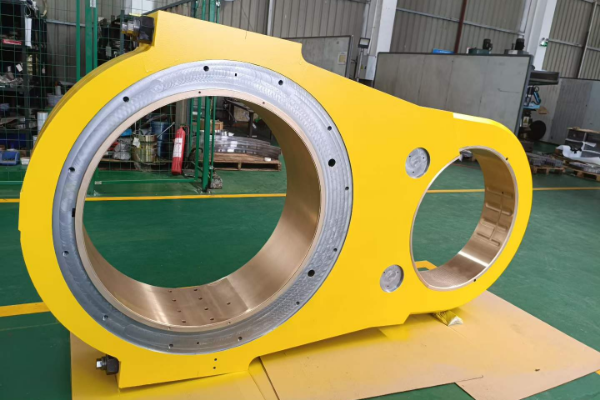
Part definition
Drawing revision, material, incoming condition, quantity, and critical dimensions.
Finish definition
Exposure, powder system input, appearance, masking, and acceptance conditions.
Delivery definition
Inspection records, packaging, destination, freight basis, and requested timing.
Powder Coating Services for Industrial Parts That Need a Defined Finish
Industrial powder coating applies dry powder to a prepared metal surface and cures it into a film, but that description doesn’t remove the buyer’s risk. A coating may look acceptable and still fail at a thread, sealing face, grounding point, welded edge, or receiving inspection because the functional requirement never reached the approved scope. The honest trade-off is that appearance alone can’t prove function, so request a drawing-based finish review before treating the coating choice as complete.
Industrial powder coating still takes its meaning from the approved substrate, preparation, coating system, and acceptance plan; what powder coatings offer cannot be inferred from powder alone.
Hover to flip
Functional protection
Define exposure before durability
State whether the part works indoors or outdoors, then identify moisture, corrosion, cleaning, wear, contact, and expected service life. A durable finish or corrosion resistance becomes a design target only after the substrate, surface preparation, coating system, and evidence plan are confirmed.
Hover to flip
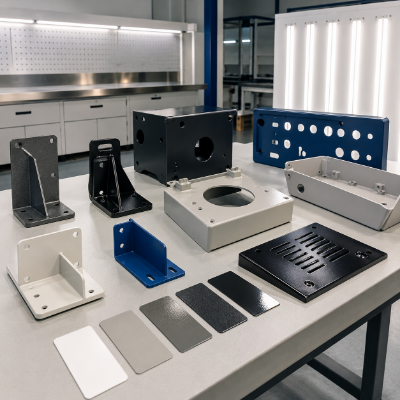
Appearance control
Make visual language measurable
Choose the color reference, gloss, texture, cosmetic areas, approved sample, viewing condition, and acceptable variation. Words like high-quality, flawless, or long-lasting aren’t a replacement for acceptance criteria.

Hover to flip
Assembly protection
Treat coating build as part geometry
Mark the threads, holes, bearing seats, mating faces, gasket lands, grounding areas, and rack locations. That keeps the powder coat requirement from creating an avoidable fit, electrical, sealing, or rework problem.
Define the Finish Before You Request a Quote
The Finish Definition Ledger turns a vague powder coating request into six reviewable decisions. It exists because missing inputs leave design, procurement, the coating processor, inspection, and delivery working from different assumptions; completing it doesn’t prove that every material, powder, standard, or test is available.
02
Exposure and performance
- Indoor or outdoor environment, contact, temperature, humidity, chemicals, wear, and cleaning.
- Required service life and the failure modes the design must avoid.
- Any relevant product, customer, or regulatory specification and its current revision.
03
Color, gloss, texture, and appearance
- Color code or system, gloss method or range, and smooth or textured finish.
- Cosmetic A surfaces, hidden areas, edge expectations, and acceptable variation.
- Master panel, approved sample, photograph role, lot consistency, and approval owner.
04
Functional boundaries
- External and internal threads, holes, bearing seats, mating faces, gasket lands, and datum areas.
- Grounding or electrical-contact surfaces, weld-after-coating zones, and keep-clear areas.
- Permitted rack or contact positions and any post-coating dimensional checks.
05
Quantity, packaging, and delivery
- Part quantity, lot pattern, drawing revision, requested date, destination, and freight basis.
- Individual protection, separators, moisture control, labels, cartons, crates, or returnable packaging.
- Change control, handling, transport, and nonconformance responsibilities that must be named.
06
Evidence, acceptance, and qualification
- Test method, specimen or production-lot basis, exposure condition, location, sampling, and pass criterion.
- Record format, responsible party, approved sample, first-article decision, and response to nonconformance.
- Qualified product, approved processor, current certificate, or third-party laboratory requirement where specified.

Independent worksheet
Copy the ledger into your request for quotation. The copied worksheet works before you approach Zhenling Metal, giving procurement and engineering a way to resolve missing decisions internally. Mark an unresolved item “to be confirmed” instead of guessing.
Specification context: QUALICOAT specifications distinguish plant, material and finished-product requirements.
Request a Quote With a Defined Finish
Protect Threads, Fits and Functional Surfaces With Clear Masking
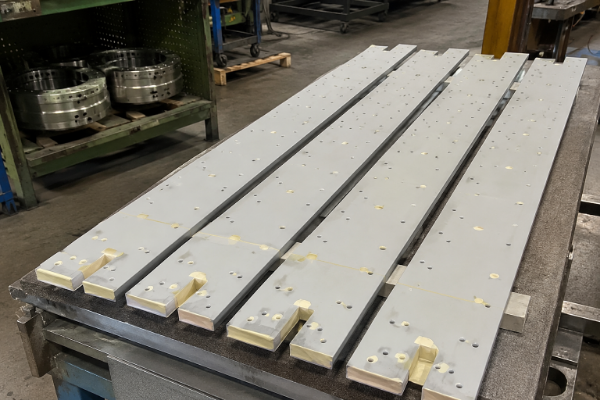
Threads and bores: mark coat, mask, or inspect.
Mating and sealing faces: state the functional boundary.
Grounding and contact areas: define bare-metal requirements.
Rack points and cosmetic faces: approve visible contact zones.
Coating thickness can become a functional dimension at a thread, bore, bearing seat, mating face, gasket land, or grounding contact. Missed masking can bind an assembly, remove clearance, break electrical continuity, compromise a seal, or create difficult cleanup because the cured coating remains when assembly begins.
The drawing should control the final boundary instead of leaving it to a shop-floor assumption. Zhenling Metal can review an annotated drawing during quotation, while the masking process, coating allowance, processor capability, and verification method remain subject to the approved scope.
- Use positive callouts: mark the surfaces to coat, not only the surfaces to mask.
- Name the reason: thread function, bearing fit, sealing, conductivity, welding, or cosmetic control.
- Connect the boundary to inspection: choose visual evidence, a gauge, a thread check, or a dimensional record.
- Control changes: revise the drawing when a masking boundary changes instead of relying on an email memory.
Powder-Coating Process and Acceptance Scope
Define the complete finish and protection scope
Define substrate and pretreatment, powder system, target film thickness, masked areas, adhesion or salt-spray requirement, appearance sample, packaging condition, test owner and release record in the RFQ.
Review outcome
A short issue list, not an automatic approval
Send a simple drawing or screenshot and state the expected function. The review may flag unclear coating boundaries, but it doesn’t guarantee fit or confirm an unverified masking capability.
Match the Substrate, Coating System and Service Environment
Powder coatings produce different results depending on the metal, incoming surface, preparation, cure, geometry, and service environment. The risk rises when a buyer orders “powder coat” without defining cleanliness, prior finishing, weld condition, corrosion exposure, adhesion, or appearance. A visually clean substrate can still carry process soils or oxides that the preparation plan must address.
| Buyer input | Why it changes the decision | Confirm during quotation |
|---|---|---|
| Aluminum alloy or casting condition | Oxide, porosity, casting history, machining fluid, and cosmetic expectations can affect preparation and outgassing risk. | Incoming condition, surface preparation, appearance limit, masking, cure review, and evidence required. |
| Carbon or alloy steel | Rust, scale, oil, sharp edges, cavities, and fabrication residue can prevent a coating from adhering consistently. | Cleaning, pretreatment, whether a sandblast or another route is specified, edge treatment, and system definition. |
| Stainless steel | Surface finish, contamination, and bare functional areas may differ from ordinary steel assumptions. | Preparation, adhesion basis, appearance sample, and the surfaces that must remain uncoated. |
| Fabricated or sheet-metal parts | Welds, seams, corners, thin walls, trapped soils, hanging orientation, and thermal exposure can create defect or distortion risk. | Weld completion, cleaning, racking, geometry review, coating processes, handling, and packaging. |
| Buyer-specified coating system | Thermoset, thermoplastic, epoxy, primer, or qualified-product requirements change applicability and test interpretation. | Exact product or specification, revision, approved list, processor qualification, cure basis, and acceptance evidence. |
In practice, the trade-off is application-specific: request a substrate and finish review against the drawing before turning a familiar powder family into a purchase requirement. If the finish route is still open, aluminum programs can also be evaluated against anodizing services, while ferrous parts needing a thin conversion finish can be compared with black oxide finishing. These are selection paths, not interchangeable specifications without a drawing and service-environment review.
Surface preparation isn’t the same as appearance cleaning. Industry guidance links residual oils, oxides, shop soils, rust, scale, and weld spatter to finish defects, so preparation must fit the substrate and application rather than a generic “clean metal” description.
The blunt version: neither a familiar powder family nor a tougher-sounding film is automatically the right choice. Zhenling Metal won’t claim that thicker is always better, that one pretreatment fits every metal, or that an automotive coating assumption transfers to unrelated industrial equipment; each trade-off must be checked against the drawing, exposure, processor evidence, and acceptance plan.
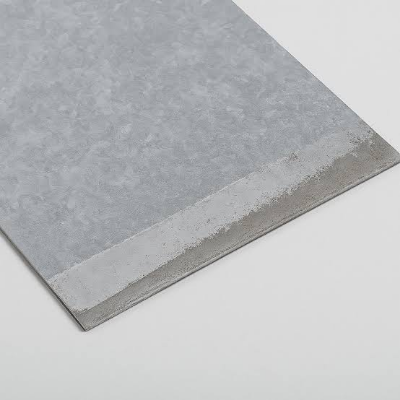
Disclose part history
Castings, galvanized surfaces, old finishes, contamination, and prior heating can raise outgassing or adhesion questions. Zhenling Metal should receive that history before a route is confirmed.
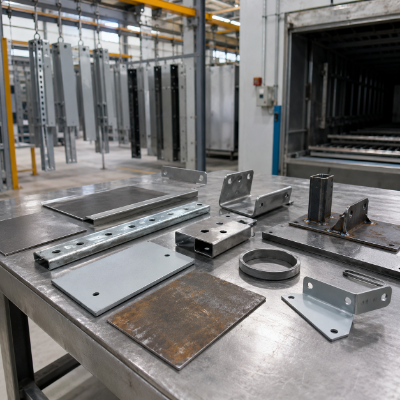
Separate performance from marketing
Environmentally relevant goals, durability, and corrosion resistance require a defined system and evidence basis. A powder coating service can’t infer them from color or resin family alone.

Protect qualification boundaries
A general quality certificate isn’t automatically a powder-coating process qualification. Ask for the exact certification, scope, site, status, and applicability when the contract requires one.
Use a Drawing-First Workflow for Quote and Delivery Readiness
A quote-ready workflow should connect the drawing, finish requirement, inspection, packaging, and delivery fields without implying that one supplier performs every function onsite. The reason is practical: procurement rules treat specifications, quality assurance, packaging, documentation, and delivery as separate responsibilities because each gap can cause delay, rejection, or liability. The honest version is that coordination isn’t proof of an in-house coating process; request a drawing-based scope review that names who performs and verifies each operation.
01
Submit
Send the current drawing or model, substrate, incoming condition, quantity, environment, finish target, and destination.
02
Review
Identify unanswered preparation, masking, racking, appearance, cure, dimensional, test, and responsibility questions.
03
Define
State what the quotation includes for processing, inspection, reporting, packaging, freight basis, and timing.
04
Approve
Freeze the drawing revision, sample or visual standard, acceptance method, owners, and change-control rule.
05
Release
Schedule production and delivery only against the approved scope, with open items closed or explicitly accepted.
PKG-A
Geometry package
2D drawing, 3D model, revision, dimensions, and masking callouts.
PKG-B
Finish package
Substrate, part state, specification, color, gloss, texture, and approved sample.
PKG-C
Evidence package
Method, location, sampling, pass criteria, records, qualification, and approval owner.
PKG-D
Delivery package
Quantity, lot split, packaging, labels, destination, Incoterms rule if used, and requested date.
“
The approved scope should define the finish as a part requirement, not leave the coating processor to reconstruct design intent after production starts.
Confirm during quotation whether one commercial scope includes manufacturing, powder coating, inspection, packaging, and freight. Zhenling Metal won’t describe an internal coating department or processor-control protocol without documentary evidence, and an Incoterms rule allocates delivery tasks, costs, and risks rather than coating-process acceptance.
Define a Testable Powder Coating Acceptance Scope
Quality powder coating isn’t a specification, and a certificate can imply that controls were audited when they weren’t in scope. A sound acceptance plan defines what is measured, how, where, when, and by whom because thickness, cure, adhesion, hardness, gloss, texture, appearance, and corrosion tests answer different questions.
Stated honestly, the trade-off is that a test name without its method, location, sampling and pass criterion leaves acceptance risk unresolved. Request a testable acceptance plan tied to the drawing and contract before release.
This matrix helps a buyer define evidence, but it doesn’t prove that every test runs on Zhenling-owned equipment or that a current coating-process certification exists. If a qualified product, approved processor, accredited laboratory, or customer-specific certificate is mandatory, provide the exact specification, revision, and approval list with the request for quotation.
| Requirement | Method or reference | Location | Sampling | Evidence |
|---|---|---|---|---|
| Color and appearance | Approved panel, named color-difference method, or defined visual standard | Cosmetic surfaces and all exposed areas named on the drawing | First article, each lot, or agreed sample | Approved sample, controlled photographs, or report |
| Gloss and texture | Specified instrument method or approved sample | Flat, accessible, representative zone | Agreed frequency | Reading record or sample approval |
| Coating thickness | Named standard and instrument principle | Flat areas, edges, and functional zones as applicable | Defined number and distribution of readings | Reading sheet or inspection report |
| Adhesion, cure, or hardness | Specified method and acceptance level | Production part or agreed test panel | Per lot, shift, first article, or contract | Test record with method and result |
| Corrosion or durability | Only the named exposure method, duration, specimen, and evaluation rule | Part or test panel as specified | Agreed validation plan | Supplier or independent laboratory report |
| Masking and fit | Drawing boundary plus visual, gauge, or dimensional check | Threads, holes, fits, seals, grounding, and contact areas | First article plus agreed sampling | Inspection record, photograph, or gauge result |

Evidence strength
Match records to the purchasing risk
A cosmetic part may need an approved sample and lot photographs, while a function-critical assembly may need defined measurements, records, and independent review. Choose the evidence level from the drawing and contract, not a universal test package.
Qualification check
Ask what the certificate actually covers
Powder Coating Institute certification reviews coating-specific processes and controls, while a general quality-management certificate has a different scope. Zhenling Metal recommends checking the current certificate, program, facility, status, and application instead of accepting a badge at face value.

Compare Powder Coating Quotes by Scope, Risk and Evidence
A buyer can’t compare supplier quotations by piece price when they use different assumptions for incoming condition, preparation, coating system, masking, inspection, packaging, freight, and nonconformance handling. A low quote with undefined scope may shift rework, assembly disruption, rejection, delay, or repeated shipping risk back to the buyer.
Quoted
Comparable scope
- Quantity, lot pattern, drawing revision, and incoming part condition
- Surface preparation and coating-system definition
- Color, gloss, texture, masking, racking, and appearance standard
- Inspection methods, records, secondary operations, and packaging
- Destination, freight basis, requested timing, change control, and ownership
Not yet defined
Cost-of-risk chain
- Missing boundary → wrong coating or masking assumption
- Wrong assumption → fit, appearance, adhesion, or documentation failure
- Failure → sorting, rework, replacement, line delay, or rejection
- Unassigned responsibility → dispute, repeated freight, and schedule loss
BUSINESS IMPACT
If the project doesn’t have inputs, the return on investment can’t be justified nor the payback estimated accurately.
Supplier-language evidence check.
Common search phrases are useful for finding vendors, but they are not specifications; translate each label below into an order-level record before comparing bids.
Language found in supplier pages
What the phrase does not establish
Evidence to request
Commercial powder coating; industrial powder coating services; full-service powder coating; full service; range of powder coating services
The delivery model, included operations, exclusions, or order responsibility.
A quotation that identifies who performs, coordinates, inspects, packages, and warrants each operation.
Powder coating companies; powder coating facility; production facility; powder coating experience
That the named site, people, equipment, or controls apply to the buyer’s part.
Facility scope, process ownership, qualification status, and order-specific evidence.
Highest quality powder coating; high-quality finishes; best quality; quality work; quality and precision; value-added; flawless finish
A measurable appearance, fit, adhesion, corrosion, or documentation requirement.
Acceptance method, limit, sampling basis, approved reference, and responsible party.
Powder coating offers; powder coating solutions; offers powder coating; powder coating provides; powder coating ensures
A guaranteed result or a complete purchase scope.
Defined substrate, preparation, coating system, environment, tests, records, and exclusions.
Coating project; powder coating needs; use powder coating; wide range of applications; various industrial applications; industrial applications
That one route fits every alloy, geometry, heat history, exposure, or governing specification.
A drawing-led suitability review with unresolved conditions marked for confirmation.
Automotive parts; fabricated products; complex parts; industrial equipment; metal surface; functional coatings
Transferability from one part family or end use to another.
Comparable substrate, geometry, functional boundaries, service environment, and acceptance evidence.
Powder coating finishes; textured finishes; color matching; protective finish; industrial finishing
A controlled color, gloss, texture, protection level, or lot-to-lot appearance.
Approved sample, viewing condition, measurement method, permitted variation, and lot rule.
Sand blasting; degrease; pretreatment; application of powder; electrostatically; fixture; coating thickness; adhesion
Which preparation and application sequence is appropriate or how it will be verified.
Specified or qualified process basis, masking and racking plan, measurement locations, and test records.
Dry powder; liquid coating; corrosion resistance; environmentally friendly; environmentally friendly process; designed to withstand
Environmental benefit, durability, or service life without a defined comparison and evidence basis.
Applicable material data, exposure conditions, test method, acceptance limit, and claim boundary.
Powder Coating Engineering Tools
Specialized precision toolset for powder coating finish definition, masking boundary review, acceptance evidence planning, and quote scope normalization.
Provide the current drawing or 3D model, substrate, incoming condition, quantity, end use, color, gloss, texture, masking boundaries, acceptance evidence, packaging, destination, and required date. Mark an undefined condition “to be confirmed” instead of guessing because it can change process, risk, and price.
Aluminum, carbon or alloy steel, stainless steel, castings, machined parts, and fabricated sheet-metal parts can be submitted for review, but review isn’t automatic approval. Suitability depends on the alloy, surface condition, welds, contamination, geometry, heat history, coating system, and governing specification.
Use drawing callouts to say whether each feature must be coated, masked, kept bare, or inspected after coating. Add the functional reason for threads, bores, bearing seats, gasket lands, grounding areas, weld zones, cosmetic faces, and permitted rack points.
Specify the standard or method, target or permitted range, substrate, measurement principle, locations, number of readings, sampling basis, and record format. Don’t copy a generic thickness range from another application because the correct film build depends on the coating system, geometry, function, and governing specification.
When appearance matters, provide the color reference, gloss method or range, texture description, cosmetic surfaces, viewing condition, permitted variation, and approved sample. State who approves the sample and whether it controls the first article, each production lot, or both.
Powder coating may be suitable when the substrate, preparation, coating system, edges, film build, service environment, and validation plan align. Outdoor or corrosion claims need application-specific evidence; color, resin family, or the word durable doesn’t establish a guaranteed life.
Quantity, part size and geometry, incoming condition, preparation, coating system, color changes, masking, racking, inspection, reporting, secondary work, packaging, destination, and timing can affect cost. Compare quotes on the same scope and calculate return with your own rework and logistics data.
Lead time may change with drawing maturity, material status, sample approval, powder availability, masking complexity, processing route, test duration, lot size, packaging, transport, and open technical questions. Zhenling Metal should confirm the schedule during quotation rather than publish an unverified standard turnaround.
Request the records required by the drawing, specification, customer contract, or risk assessment, such as appearance approval, thickness readings, test results, lot records, or a current process certificate. Verify the method, acceptance level, facility, scope, validity, and responsible party before treating a document as proof.
Yes, a buyer can submit one finished-part request for quotation that defines manufacturing and surface-finish requirements together. Zhenling Metal’s quotation must state which operations are performed, sourced, coordinated, inspected, packaged, or excluded; one commercial request doesn’t prove an in-house coating process.
![Shop-Floor Carbon Steel CNC Machining Guide [2026]](https://zhenlingmetal.com/wp-content/uploads/2026/08/carbon-steel-cnc-machining-handbook-r2-featured-150x150.png)