Get in touch with Zhenling Company

Volume Production | Jiashan, Zhejiang, China
High-Volume CNC Machining Services
For production CNC orders, quantity, material condition, routing, inspection plan, packaging and release schedule are reviewed against the drawing. Any pressure-service or export documentation is order-specific and confirmed in the written quotation. High-Volume CNC Machining enquiries should include released quantity, material, routing, inspection plan, packaging, release schedule and documentation. Review the proposed route, open limits and required records before relying on price, timing or capability for the actual order, and distinguish confirmed inputs from unresolved commercial or inspection assumptions.
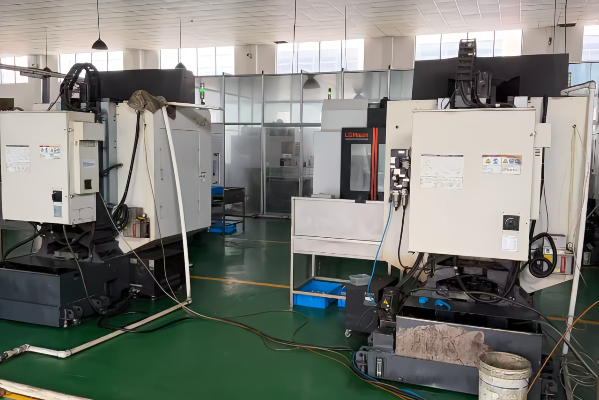
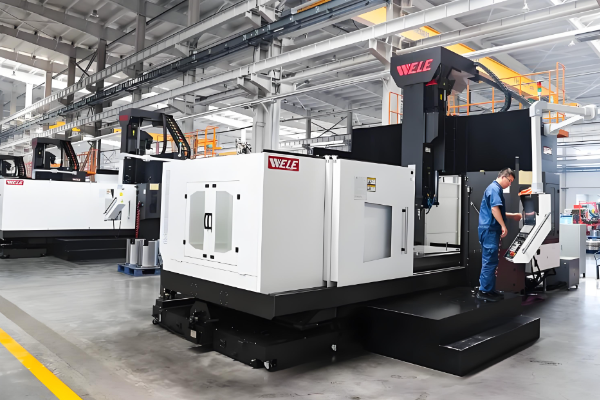
A small process drift can become a large nonconforming batch as quantity rises. Define monitoring frequency, reaction limits, containment and record ownership before production release.
Process Engineering
From Prototype Runs to Volume Production: What Actually Changes
That math is why high volume production needs engineering rather than supervision. Manual machining tolerates small drift, because a trained operator adjusts for it part by part. Volume fails differently: through a slow, invisible drift that only shows up after a few hundred pieces are already cut.
Miller’s framing is blunt about the tribal knowledge trap. If the answer to “how does this job hold size” is that one machinist knows how to do it, the process isn’t ready for volume.
At production volume, undocumented setup decisions and inspection responses can turn gradual drift into a large nonconforming batch. The control plan should define the approved setup, checks, reaction limits and record owner before release.
So the honest answer to “what do you do differently at volume” isn’t a list of machines. It’s that the setup, the testing, and the verification points are published in writing before the first run, and the same sheet travels with every repeat order.
What changes between a 10-piece run and a 10,000-piece production run
| Dimension | Prototype or low volume production | High-volume production |
|---|---|---|
| Who owns the process | The operator holds the knowledge | The setup sheet holds the knowledge; the operator executes it |
| Tooling strategy | Standard cutting tools, dialled in per job | Form tools and separated roughing and finishing tools to remove stack-up |
| Tool setting | On the machine, between parts | Offline presetter, so the spindle keeps cutting |
| Verification | First article, then spot checks | Four layers: before the cut, at process start, in-process, after the process |
| Gauging | Shared measuring equipment | Dedicated hard gauge set plus a master part with its inspection record |
| What a mistake costs | One part | Every part cut since the last verified check |
Engineering note: the four verification layers
LAYER 1
before cutting
presetting tools offline, verifying setup against the sheet, confirming program version.
LAYER 2
at process start
probing, part orientation, misload detection.
LAYER 3
in-process
tool-break checks, load monitoring, mid-cycle verification.
LAYER 4
after process
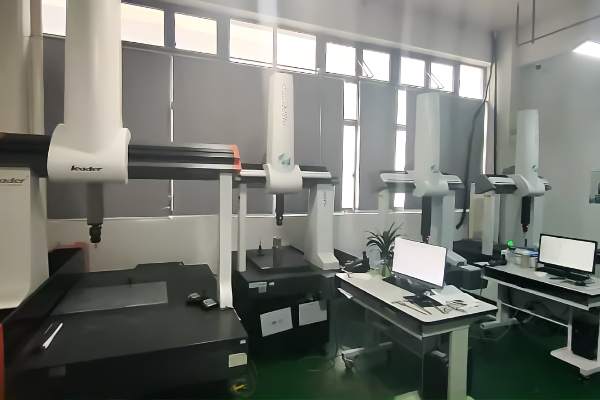
hard gauges, coordinate measurement machine sampling, comparison against master part, visual inspection.
Send a drawing and a target annual quantity, and we will mark up where your part is likely to drift first.
Four Questions to Answer Before You Request a High-Volume Quote
01
Annual quantity, and how it’s released.
A 20,000-piece annual demand called off in twelve releases is a different tooling decision from 20,000 in one shipment, because fixture and gauge investment amortises against the release size rather than the annual figure.
02
Which features actually carry the tolerance.
Most drawings carry a general tolerance block plus two or three features with tight tolerances that genuinely matter. Naming those features is what sets machine routing, tool design and, at volume, the inspection method. Send the 3D model where you have one, because our programming and computer-aided manufacturing software work from the solid rather than from a scanned print.
03
What acceptance evidence you need per shipment.
Sampling against an agreed plan, 100% inspection, a coordinate measuring machine report, a material certificate, or some mix of those. This is a cost driver, not something to settle later.
04
End application and its regulatory frame.
A fluid-control body inside a pressure envelope is governed differently from a general machined bracket, and material traceability follows the application rather than the part shape.
Method note: The NIST machining process planning activity model describes machine capability as a distribution of dimensional variation on the produced feature, not as a single tolerance value (NISTIR 5808). That is why question two asks you to name the features rather than quote the tolerance block.
Buyer advisory: the process boundary is not always obvious from the drawing
Buying departments regularly send a drawing that machines well but, at their quantity, would be much cheaper as a casting or a stamping, and nothing on the print says so. Send the annual quantity with the drawing and ask the supplier to flag it. A supplier who never raises that question is quoting, not engineering.
Machining Routes, Materials and Part Families for Order Review
Company-supplied profile data states operation since 2006 and an 8,000 m² site with a 6,000 m² workshop; these facility facts do not establish high-volume CNC capacity for an order.
PART FAMILIES & MACHINING ROUTES
| Part family | Primary machining processes | Where it sits in a volume programme |
|---|---|---|
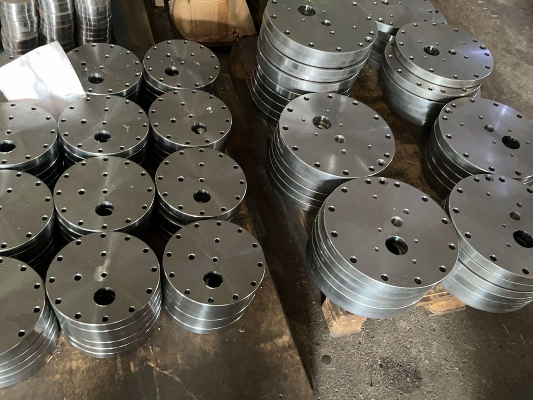
| Flanges | CNC turning, CNC boring, CNC milling | Repeat production runs, high setup-amortisation benefit |
| Valve bodies | Multi-axis machining, CNC milling, CNC boring | Complex geometries; fixture design decides the unit cost |
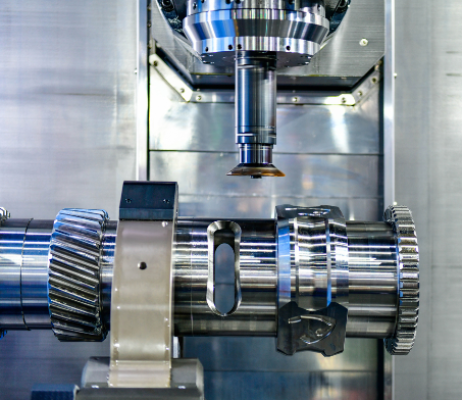
| Rollers and shafts | CNC turning, CNC grinding | Long production runs where surface finish and roundness drive acceptance |
| Plugs and machined bodies | CNC turning, wire electrical discharge machining | Large quantities of parts from bar or forged blanks |
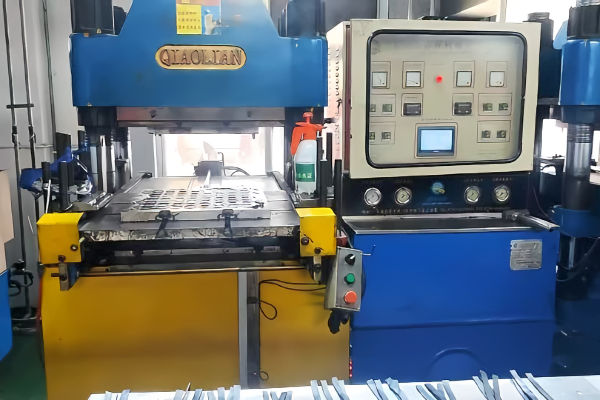
| Bent pipes and rolled sections | CNC plate rolling, CNC shearing, CNC presses, welding | Fabricated assemblies feeding pressure-vessel work |
| Complete machine assemblies | All of the above plus submerged arc and gas-shielded welding | Programmes where one supplier owns the whole component set |
HOVER TO ENGAGE DATA LAYER
PROCESS CAPABILITIES
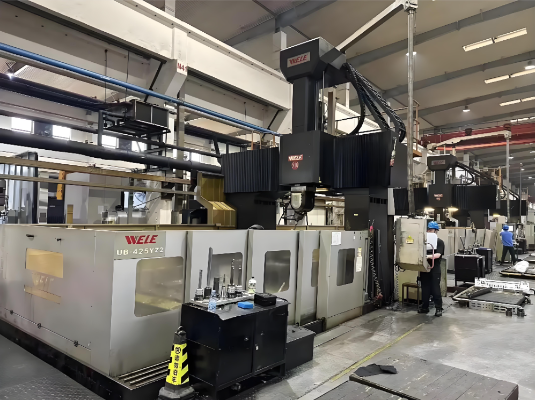
A proposed high-volume route may use turning, milling, grinding, boring, drilling, wire EDM or multi-axis machining. The actual equipment category, setup count, access risk, inspection method and available capacity must be confirmed for the released drawing and quantity.
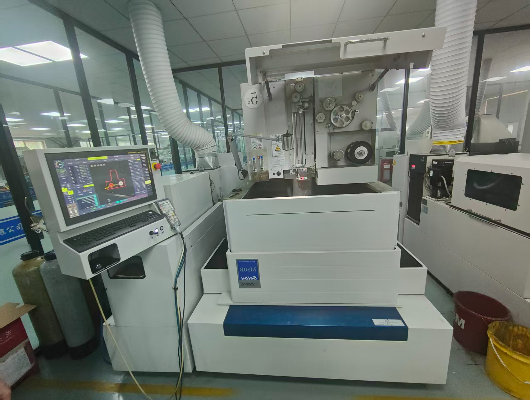
WIRE EDM
Wire-EDM equipment, wire size, corner condition, material state and inspection route must be confirmed when a milled radius cannot meet the drawing.
GRINDING
Any post-heat-treatment grinding route must be confirmed against the material condition, feature geometry, allowance, finish, inspection method and available equipment for the order.
FORMING
Any forming or welding requirement must identify the proposed outside or in-house route, equipment category, procedure, qualification evidence and inspection responsibility in the quotation.
METROLOGY
Inspection equipment, range, calibration, measurement uncertainty, sampling or full-inspection method and applicable part geometry must be confirmed in the written quotation.
Sophisticated CNC equipment, multi-axis CNC routing and advanced machining methods are picked here for a production reason, not a marketing one. Machining technology only pays for itself when it removes a setup, shortens a cycle, or makes precision components repeatable across large production runs, which is the same logic running through published work on adaptive control in high-speed milling (ASME Open Engineering). Manufacturing precision is a property of the process, not of the machine list.
This is where most programmes stumble, because the buyer believes an alloy change is a price change. That is not necessarily true, since cycle time rather than material grade is usually what sets the piece price.
Candidate Grades for Material Review
- Bearing steel GCr15
- Carbon steels 20# and 45#
- Alloy steels Q235A, Q345D, 12CrMoV, 25CrMo, 42CrMo
- Stainless 303, 304, 304L, 316, 316L, 321
- Corrosion-resistant C276 and 904L
- Specialty Nickel-based & aluminium alloys
Treat the grades above as RFQ candidates, not confirmed stock or production history. Use the material pages to compare requirements, then confirm exact standard, product form, condition, traceability and availability in writing.
The way to approach a first engagement isn’t a hand-made sample, but a prototype batch run on the real production route. Start with a prototype batch before committing to a production run, then move the same fixture and setup sheet into volume.
Have a part family that spans turning and milling?
Talk to a Process Engineer About Your Volume →
ECONOMICS OF MACHINING
High-Volume vs Low-Volume Production: Where the Cost Curve Turns
Fixture design, setup and programming happen once, and cutting is the only element that repeats. On a large production run the cost savings therefore come from distributing that one-time cost across the batch, not from a lower rate.
The Setup Amortization Curve
01
From 1 to about 100 pieces, you sit on the steepest part of the curve. Each additional piece deletes a meaningful share of setup and programming cost from the unit price.
02
From about 100 to 1,000 pieces, the curve flattens. Fixtures and form tooling cut to the contours of a specific workpiece start to earn their investment back, and cycle-time work becomes the main lever.
03
Above roughly 500 to 1,000 pieces, machining starts competing with casting, forging, stamping and moulding for that same component. The honest answer may be that CNC is no longer the right process.
A United States patent on computer-automated quoting for machined components states the boundary condition explicitly: for parts in mid- or high-volume runs, designing and building custom fixturing may be warranted, which makes machining viable again depending on component shape. The same document notes that CNC machining is rarely used for low volumes of complex shapes, because the fixturing time has nowhere to amortise.
| Cost element | Low volume production | High-volume production | Why it moves |
|---|---|---|---|
| Programming and setup | Carried by a handful of parts | Spread across the release quantity | One-time engineering, repeated cutting |
| Fixturing | Standard vices and soft jaws | Dedicated fixtures, form tools, offline presetting | Fixture cost is only justified once it is divided by volume |
| Machine selection | Whatever is free and capable | The machine with the shortest stable cycle | Efficiency here is measured in cycle seconds, not machine count |
| Inspection | Detailed check on every piece | Agreed sampling, or 100% sorting where the feature allows | Inspection labour becomes a unit cost, not an overhead |
| Material | Cut from stock | Bought to the release schedule | Grade rarely drives price; cycle time usually does |
When High-Volume Machining Is Not the Right Process
Machining is a subtractive process, so it’s priced by the second. As soon as the shape of a part and the quantity required favour a forming process instead, the cost comparison stops being close.
[PROCESS: FORMING]
Casting, forging or stamping pulls away above a few thousand pieces of a stable design, where mass production tooling amortisation beats cycle time. Features that machine easily aren’t always easy to stamp, cast or mould, so the redesign has to be checked rather than assumed.
[PROCESS: MOULDING]
Injection moulding takes over for polymer parts at larger run sizes, where tool cost is the whole argument and CNC serves as the bridge process while the tool is being cut.
[PROCESS: ADDITIVE]
Additive manufacturing and 3D printing suit complex features at low counts, or conformal geometry no cutter can reach.
[PROCESS: AUTOMATION]
Very high piece counts may use horizontal machining centres, pallet pools, bar feeders, robotic loading or other automation. The quotation must identify the proposed equipment, staffing model, setup controls, replenishment plan and verification points for the actual order.
Ready to see where your part sits on the curve?
Just send us the drawing, the annual quantity and the release schedule. We’ll tell you which side of the amortisation point your part falls on, including when the answer is that machining is the wrong process.
Request a QuoteProduction Release Planning for High-Volume CNC Parts
Production planning is based on the released part, quantity, material, inspection plan, packaging and agreed delivery schedule. Destination-specific documents and acceptance records are confirmed for the order rather than inferred from a general volume claim.
Total cost of ownership, not unit price
The upfront purchase price is the visible number. The costs that decide whether an overseas programme is genuinely cheaper are harder to see: quality assurance effort, supplier management time, compliance evidence, logistics friction and communication overhead. Academic work on total cost of ownership treats supplier selection as a full-cost analysis for exactly this reason (Penn State Smeal College of Business).
One lever we can control is that second category. A supplier who ships the same setup sheet, the same gauges and the same acceptance evidence on every release removes the recurring inspection and firefighting cost that makes low unit prices misleading.
Cost categories from published sourcing literature. Zhenling doesn’t publish an ROI percentage for machined components, because a credible figure depends on your part, your volume and your own incoming inspection regime.
Industry Requirements to Review for High-Volume Parts
High-volume requirements vary by industry and programme. Use the matrix to identify material, traceability, inspection, submission and quality-system questions; it does not establish Zhenling production history or qualification in any listed industry.
| Industry | What drives the machining requirement | Zhenling position |
|---|---|---|
| Pressure vessels and pressure-retaining components | Material traceability, weld integrity, dimensional control on sealing faces | Order-specific capability and release review |
| Oil and gas separation equipment | Corrosion-resistant grades, thick sections, fabricated assemblies | Reviewable only when alloy availability, part family, released quantity and required records are confirmed |
| Fluid control | Valve bodies, plugs, flange faces, leak-path geometry | Order-specific part, material, inspection and release review |
| Automotive industry and aerospace tier supply | IATF 16949 or AS9100 systems, PPAP and first article inspection packages | Qualification is not claimed on this page; verify the required legal entity, site, certification, submission package and order scope |
| Medical device | ISO 13485 quality management, validated processes | Qualification is not claimed; verify quality-system, validation and release requirements |
Experience with pressure-retaining and fluid-control parts must be verified against current, order-relevant evidence; no historical setup record is claimed here. Supplier fit is confirmed against the released part, material, quantity, inspection plan and written quotation.
Working in one of the core industries above?
Talk to a Process Engineer About Your Volume →
Qualification Evidence to Verify Before Release
A certificate must identify the legal owner, site, number, scope and validity before it is used for supplier qualification. CNC part requirements and deliverables remain controlled by the drawing and written quotation.
EU DESTINATION
Buyer-specified product and documentation requirements
NAMED CODE SCOPE
Verify owner, site, authorization and order applicability
EN 10204 3.1
Required material-document issuer, type and lot linkage confirmed per order
INSPECTION COVERAGE
Sampling or full inspection method confirmed for the part geometry
01
What to verify: the certificate owner, covered facility, authorization number, scope and validity. The ASME certification and accreditation programme is product- and scope-specific; a code authorization for pressure equipment does not establish an unconditional CNC dimensional capability.
02
Qualification boundary: this page does not claim ISO 9001, ISO 13485, AS9100, IATF 16949 or ITAR status for Zhenling. Verify any required status against current evidence for the named legal entity and site.
03
Order decision: if a quality-system status or deliverable is a supplier gate, require current evidence and written confirmation. PPAP, first-article and process-capability records are included only when the quotation identifies the required format, method, coverage and responsible party.
The Pressure Equipment Directive 2014/68/EU applies to the design, manufacture and conformity assessment of stationary pressure equipment with a maximum allowable pressure greater than 0,5 bar, and it entered into force on 20 July 2016. A CE mark obtained under that directive tells you something precise about pressure equipment. It says nothing at all about engineering tolerance, surface finish or part quality on a general machined component.
HOVER TO DECODE QUALITY OBJECTIONS
QUALITY OBJECTION RESOLUTION
This is the objection we hear most often, so here’s the honest version of it. Quality problems on overseas programmes rarely start at the spindle; they start in the paperwork and in change control, long before anything reaches the machine.
Programme risk rises when quality documents are incomplete, first-article requirements remain unresolved or a drawing revision changes without controlled release. Define the document set, approval owner and change process before production.
How to Qualify an Overseas Machining Partner Before the First Batch Ships
Before placing a production order, compare the proposed process route, approval samples, inspection records, change control, communication plan and corrective-action responsibility.
Your counter isn’t trust. It’s a set of artefacts you can demand and check remotely, before any money changes hands. We call it The 6-Point Batch Verification Manifest, and each document maps cleanly onto the four verification layers a production process is supposed to have.
HOVER TO SCAN BUYER ADVISORY
Buyer advisory: a passing first article does not validate the run
This is the most common assumption we correct. First article inspection sits at layer one of four, and published aerospace guidance notes that closing a first article package routinely takes multiple rounds. Treat it as your entry ticket, then ask what holds size between part 1 and part 10,000.
01
Setup sheet and program revision. Request the document that fixes how an operator sets up and cuts each part, and ask what happens to a batch when the revision changes mid-run. No documented reaction to a revision change is a de facto statement that the operator is still the process.
02
Gauge list and master part. Identify which features are checked with hard gauges and which go to a coordinate measuring machine, and establish who owns the master part that everything else is measured against. Gauge R&R language is a good signal even where no formal study exists.
03
In-process check points. At what piece count is the process re-verified, and what specific event triggers a stop? “Every part is inspected” is a weaker answer than “check every 50 pieces per the written procedure, and if any reading exceeds tolerance, hold the lot and call the foreman.” A written interval earns its place because error accumulates across stations rather than appearing at the end (ASME Journal of Manufacturing Science and Engineering, 125(2):255).
04
Acceptance evidence per shipment. Agree it in writing before the first batch: sampling plan, 100% sorting, dimensional report, material certificate level. Ask now for the blank form, not the fully completed one later.
05
Nonconformance route. Ask how a problem discovered at your dock gets back into the supplier’s process. Structured corrective action methods such as the 8D discipline are common in manufacturing; what matters is whether the supplier can describe theirs without improvising.
06
First production batch, not the sample. Buy an actual release quantity off the production fixture. A hand-made sample proves the shop can make one part; it proves nothing about part 5,000.
Lead Time, Minimum Quantity, and Unit Cost: What Actually Drives Them
We don’t have a published price list, a published standard lead time or a published minimum order quantity for volume machining, because a figure quoted without your drawing would be a guesstimate dressed as a commitment. What we can publish is the factor set that applies to all three.
| Factor | How it moves cost | How it moves lead time | What to send us |
|---|---|---|---|
| Release quantity and schedule | Sets how far setup and fixturing amortise | Fixed releases let material, capacity and inventory be booked ahead | Annual quantity plus release pattern, and your production needs by quarter |
| Tolerance-carrying features | Drives machine routing and gauge design | Tight features may add a finishing operation | Drawing with the critical features named |
| Material grade and form | Grade rarely dominates; stock form and availability can | Non-stocked grades add procurement time | Grade, or the property you actually need |
| Part geometry and setups | Every extra clamping adds cycle time and drift risk | Multi-axis routing can remove a whole operation | 3D model where available |
| Surface finish and post-processing | Grinding, heat treatment and coating are separate operations | Outside processing extends the chain | Finish requirement and any coating spec |
| Acceptance evidence | 100% sorting costs more per part than an agreed sampling plan | Reporting adds days at the back end | Your incoming inspection requirement |
| Certification and traceability | Certificate level and test scope carry real cost | Third-party witness adds scheduling | Required certificate level |
Two of those rows are where overseas programmes tend to go wrong on cost. Acceptance evidence and certification aren’t agreed until late, after the unit rate is fixed, and then arrive as a change.
Buyer advisory: small parts and supplier attention
A common complaint from smaller buyers is that a small part receives no serious attention from any shop. The structural reason is that quoting effort stays roughly constant regardless of part size, so low-value enquiries get swamped by high-value ones. That constant is exactly what the computer-automated quoting patent sets out to remove, by deriving the price from geometry, quantity and fixturing rather than from an estimator’s time (US7840443B2).
Sending a complete brief, such as we outlined above on this page, is what moves a small part to the front of the queue. You may also choose to review the surface finish options available on machined components, so the finish question is settled up front. If the part is miniature rather than merely small, the binding constraint becomes fixturing and metrology at that scale, which is what our micro CNC machining page covers.
Get a quote built on your actual production numbers
Provide the drawing, annual volume, release schedule and acceptance evidence you require. You’ll receive a quotation detailing the cost drivers, not a single figure with no supporting explanation.
ASSESSMENT_MODULES
Engineering Assessment Tools
High-Volume CNC Machining FAQ
01
What counts as high-volume CNC machining?
There’s no standard threshold. Published supplier definitions in this market sit around 1,000 pieces and above, with some describing high volume as quantities in the hundreds and thousands. Machining for high-volume production is quoted against the release quantity rather than the annual figure, because that’s what setup and fixturing amortise against.
02
Is a Chinese supplier a quality risk for volume production?
The concern is legitimate and worth answering directly rather than deflecting. Batch risk is often a process-discipline and verification problem rather than a simple ability-to-machine question.
Ask for the setup sheet, the gauge list, the in-process check interval and the acceptance evidence format before you order. Those four artefacts tell you more about batch consistency than any certificate, and they’re the reason the 6-Point Batch Verification Manifest above is written as a request list rather than a sales claim.
03
Do you hold ISO 9001?
This page does not claim ISO 9001, EU CE or US ASME certification for Zhenling. If a certificate is a supplier gate, verify the named legal entity, site, number, scope and validity before release.
04
Can you issue PPAP or a formal first article inspection package?
This page does not claim that Zhenling issues or does not issue PPAP, formal first-article, process-capability, coordinate-measurement or material-certificate packages. If any deliverable is required, the quotation must identify its format, method, coverage, issuer and responsible party.
05
What is your minimum order quantity?
It’s set per part, not per company. The driver is whether the release quantity carries the setup and fixture cost. Send the drawing and the annual quantity and we’ll give you the break point.
06
Which alloy grades do you machine?
Material availability is reviewed by exact grade, standard, product form, condition, substitution rule and traceability requirement. The written quotation confirms the proposed stock and any permitted alternative for the order.
07
How do you keep part quality consistent across a long production run?
By fixing the process in documents rather than in an operator’s memory, and by verifying at four points: before the cut, at process start, in-process, and after the process. Precision and consistency at volume come from that discipline, not from CNC technology on its own.
Dedicated gauges and a master part with its inspection record are what make the after-process check meaningful. Where full inspection is required, the quotation must identify the applicable geometry, equipment or method, acceptance rule and retained record; no universal sorting capability is claimed.
08
Do you run lights-out or automated production?
For the actual order, confirm the proposed automation level, equipment route, staffing model, setup controls, tool-management method and verification points; this page does not assert which assets are available.
09
At what point should we stop machining and switch process?
When the annual quantity of a stable design grows past roughly a thousand pieces, casting, forging, stamping or moulding often beat machining on unit cost. The check isn’t automatic: features that machine easily are not always easy to form, so the redesign has to be evaluated rather than assumed. We would rather flag that at the quoting stage than three years into a programme.
10
How do we start?
Send a drawing, an annual quantity, a release pattern and your acceptance requirement. If any of those four is still open, contact us anyway and we’ll work through the 4-Answer Volume Brief with you.
![Shop-Floor Carbon Steel CNC Machining Guide [2026]](https://zhenlingmetal.com/wp-content/uploads/2026/08/carbon-steel-cnc-machining-handbook-r2-featured-150x150.png)