Get in touch with Zhenling Company

PEEK CNC Machining Built Around Acceptance Risk
PEEK CNC machining is a drawing-led method for producing custom parts from specified PEEK stock with milling, turning and related operations. Zhenling reviews each project as a linked material, geometry, process and inspection problem, giving you a bounded route to quote and qualification without a universal tolerance or regulated-use promise. PEEK CNC Machining enquiries should include grade, stock condition, drawing-defined component scope, critical dimensions, finish and acceptance records. Rely only on the scope that the written quotation confirms for the part, including route, open limits, records, price basis, timing, inspection responsibility and any stated order exclusion.
4 boundaries
Load, heat, geometry, evidence
2 gates
Drawing review and first article
Grade → report
Traceable acceptance path
Quote scope
Visible cost and schedule
2006
Company established
8,000m²
Jiashan factory site
6,000m²
Workshop area
3/4/5-AXIS
Machining assets
A Simple PEEK Drawing Can Hide an Acceptance Problem
A round spacer, thin plate or drilled block may look routine until material removal releases stress or inspection uses a different temperature and restraint condition. A useful PEEK machining service begins with the acceptance definition, not a headline tolerance.
Why the quote can fail later
Expensive stock makes an unproven setup risky because a rejected first batch erases a low unit price. The Zhenling review links the drawing, ASTM D6262-23 stock identity and project evidence.
01
Expensive stock
PEEK material costs make an unproven setup and avoidable scrap visible in the accepted-part price.
02
Thin geometry
Wall thickness, one-sided material removal, datum choice and clamping can change the distortion risk.
03
Filled grades
Glass-filled and carbon-filled PEEK don’t behave like unfilled PEEK at the cutting edge or measured surface.
04
Measurement disputes
A tight drawing tolerance can be disputed when free-state condition, stabilization and inspection method are absent.
Turn a tolerance request into an acceptance statement
Research on pure and reinforced PEEK reports different form-accuracy and surface results. Identify the feature, material condition and measurement rule together, then place critical dimensions on a sample or first-article path.
Drawing SignalThin wall or web
Risk to ResolveClamping and stock-removal imbalance
Quote-ready InputFree-state requirement and datum scheme
Evidence PathSample or first-article dimensional report
Drawing SignalFlat plate
Risk to ResolveFlatness after release and temperature change
Quote-ready InputInspection support, temperature and time
Evidence PathAgreed flatness setup with report
Drawing SignalFilled PEEK
Risk to ResolveTool wear, edge quality and fiber response
Quote-ready InputManufacturer, grade, filler and stock form
Evidence PathCritical-surface check on first article
Drawing SignalDeep bore or thread
Risk to ResolveHeat, chip evacuation and gauge access
Quote-ready InputDepth, aspect ratio, thread class and gauge
Evidence PathFeature-specific inspection method
Turn the drawing into an acceptance statement
Send the critical features and inspection condition for a bounded review.
Review the Drawing
Buyer Advisory
Don’t compare two PEEK CNC machining services by unit price until both quotes include the same grade, stock pedigree, first-article route, inspection package and documentation. A lower cutting price can still produce a higher cost per accepted part.
See the underlying grade-dependent machining research in the SAGE study on pure and glass-fiber-reinforced PEEK.
The PEEK Stability Envelope: Four Boundaries Before Tolerance or Price
The PEEK Stability Envelope gives engineering, quality and procurement one sequence for resolving what the drawing omits. It exposes the inputs that must be owned before a machining commitment is meaningful.
Adjacent-material decision
If the four boundaries land outside what the specified PEEK grade is documented to hold, the same review can route the part to an adjacent polymer rather than force the material. PAI (Torlon) CNC machining is the neighboring made-to-print service for that case, and the decision belongs in this review instead of after a quote.
BOUNDARY 01
Load
Access Data
- Static, cyclic or bearing contact
- Assembly preload and mating material
- Wear, friction or electrical role
BOUNDARY 02
Heat
Access Data
- Operating and cleaning temperature
- Thermal cycling and dwell
- Measurement condition
BOUNDARY 03
Geometry
Access Data
- Wall-to-span relationship
- Material-removal balance
- Datums, workholding and access
BOUNDARY 04
Evidence
Access Data
- Material and lot documents
- Critical-feature inspection
- Sample, first article and revision status
Review a PEEK tolerance with the grade, geometry, thermal state, datum plan and inspection evidence for the order.
One review, three honest outputs
Quote-ready
The drawing and commercial inputs support a bounded manufacturing quotation.
Needs clarification
A missing grade, datum, inspection condition or document prevents a comparable quote.
Sample or first article
A high-risk feature should be proven before production quantity is released.
Annealing process decision boundary
Boedeker’s annealing guidance says very few machined plastic parts require post-machining annealing and calls its cycles general guidance. Zhenling will not claim one annealing process because heat, tooling and one-sided material removal create different risk; this is a process trade-off, not an ISO approval.
Run a PEEK Stability Envelope Review
Send a drawing plus load, heat, grade and evidence inputs for a clarification summary.
Material Pedigree, PEEK Grade and Stock Shape
“PEEK” alone doesn’t specify grade.
Polyetheretherketone, or polyether ether ketone, is the polymer name; PEEK is a semi-crystalline thermoplastic and a high-performance material whose mechanical and thermal properties change with resin formulation, filler and stock history.
Properties must come from the named grade and data sheet; the structure of PEEK doesn’t make application-specific grades interchangeable, so stock and material routing belongs in the custom CNC plastic machining services review.
MATERIAL.INSPECT
Grade identity verified against datasheet boundaries. Upstream stock controls dictate final dimensional stability.
What the RFQ must name
Manufacturer, grade, color, stock form and specification
Why the machine shop needs it
Establishes the exact raw material and certificate request
What not to assume
Generic biocompatibility or food-contact status
What the RFQ must name
Filler percentage, orientation concern and critical surfaces
Why the machine shop needs it
Frames stiffness, cutting tools, tool wear and edge-quality review
What not to assume
Identical results to virgin PEEK
What the RFQ must name
Grade, carbon fiber content, conductivity and wear role
Why the machine shop needs it
Connects the filler system to surface finishes and inspection
What not to assume
Universal aerospace suitability
What the RFQ must name
Regulatory or customer specification, revision and approved source
Why the machine shop needs it
Prevents an uncontrolled substitution
What not to assume
That “medical-grade PEEK” alone approves an implant
What the RFQ must name
Sheet, plate, rod, tube, molded blank or customer-supplied stock
Why the machine shop needs it
Changes stock allowance, material removal and traceability
What not to assume
All forms share the same stress history
Grade language needs evidence
High-quality PEEK isn’t a technical designation. PEEK provides a useful balance of mechanical strength, temperature capability and chemical resistance, but “excellent mechanical and chemical performance” still needs grade-specific evidence for demanding applications.
ASTM D6262-23 boundary
ASTM D6262-23 covers PAEK sheet, plate, rod and tubular bar made by extrusion, compression molding or injection molding. Its type, grade and class structure includes resin/filler composition and dimensional-stability distinctions; the standard is a stock-shape specification framework, not finished-part approval.
Separate upstream pedigree from downstream acceptance
The stock supplier owns grade identity and upstream documents. The manufacturing agreement covers revision, CNC milling or turning, fluid restrictions, finishing, inspection and packaging.
Material Documents
Request a material certificate, certificate of conformance or lot trace only when the purchase order defines the required document.
Customer Supplied
State whether customer-supplied raw material is permitted and how remnants, identity and quantity should be controlled.
Application Protection
Protect medical applications, food-equipment, vacuum, aerospace and automotive programs with application-specific source and approval requirements.
Chemical Resistance
Confirm chemical resistance against the actual substance, concentration, temperature, stress and exposure time.
LOC: X.112 Y.090 Z.000
STS: ACTIVE
STS: ACTIVE
Which PEEK Features Can Be Reviewed for Machining?
Company-supplied profile information lists turning, milling, grinding, boring, drilling and multi-axis equipment categories. Actual equipment, production site and availability must be confirmed for the order.
Those are factory-wide assets; they aren’t evidence that every PEEK component, tolerance or surface finish has already been proven before quoting.
Feature-level proof
The risk is overclaiming because a machine list does not prove a filled-grade surface or thin wall. Our review uses the feature and sample evidence; unlike a blanket ISO tolerance statement, the result remains drawing-specific.
GEO.01
Turned geometry
Rings, sleeves, seats and plugs enter review when stock form, wall, concentricity and workholding are clear.
GEO.02
Milled geometry
Plates, manifolds and pockets need clear datum access, corner radii and material-removal balance.
GEO.03
Combined features
Cross holes, threads and sealing faces need a setup and inspection sequence before release.

TARGET.VIEW_
SCANNING… [OK]
GEO.04
Thin walls and flats
These features need restraint, release-state and stability review, then sample evidence if risk remains.
MAT.01
Reinforced PEEK
Filled PEEK brings cutting forces, heat, tool wear, edge quality and surface measurement into the plan.
REQ.01
Critical surfaces
Sealing, bearing or electrical surfaces need a functional requirement, not only a roughness number.
Capability is confirmed feature by feature
Successful PEEK machining depends on stock condition, sharp tooling, chip control, workholding, cutting speeds, feed rate and inspection access. PEEK doesn’t dissipate heat like a metal, yet a single speeds-and-feeds recipe would ignore tool diameter, grade, filler, machine and geometry.
Translate a PEEK machining guide into project controls
A PEEK machining guide is only a starting point. PEEK machining requires drawing-specific machining parameters because PEEK milling changes with grade, tool diameter, filler, geometry and workholding.
MODE: MANUAL
SYS.CONTROL.01
Tool Material Against Filler
Select carbide or another tool material against filler, edge condition and tool-life evidence; the material name alone doesn’t make PEEK respond like metal.
SYS.CONTROL.02
Chip & Thermal Evacuation
Plan PEEK chips and evacuation together because cutting forces and heat generation can change the surface and dimensional result.
SYS.CONTROL.03
Feature-Specific Inspection
Bind machining techniques to feature-specific inspection when achieving tight tolerances on precision PEEK components.
SYS.CONTROL.04
Component Segregation
Use CNC machining design review to separate precision parts and precision components that can proceed directly from features that need a sample or first article.
SYS.CONTROL.05
Project Traceability
Treat machining for PEEK parts as a controlled project: machining projects must name the grade, revision and evidence package before a partner for PEEK production commits to quantity.
SYS.CONTROL.06
Demand Environment Data
At high temperatures or in demanding applications, require material-specific design data rather than a generic process window.
SYSTEM.WARN.01
Check a high-risk feature
Send the grade, geometry and surface requirement for a first-article recommendation.
Check the FeatureFrom Drawing to an Accepted PEEK Part
A predictable project carries the same information from product definition to process planning and inspection. Unresolved decisions stay visible instead of hiding inside a unit price.
Prevent definition loss
A mismatch appears when an RFQ reaches production without the inspection state, because shop and quality teams may read the tolerance differently. One revision path connects the ISO GPS callout to the first-article report.

Contextual Reference
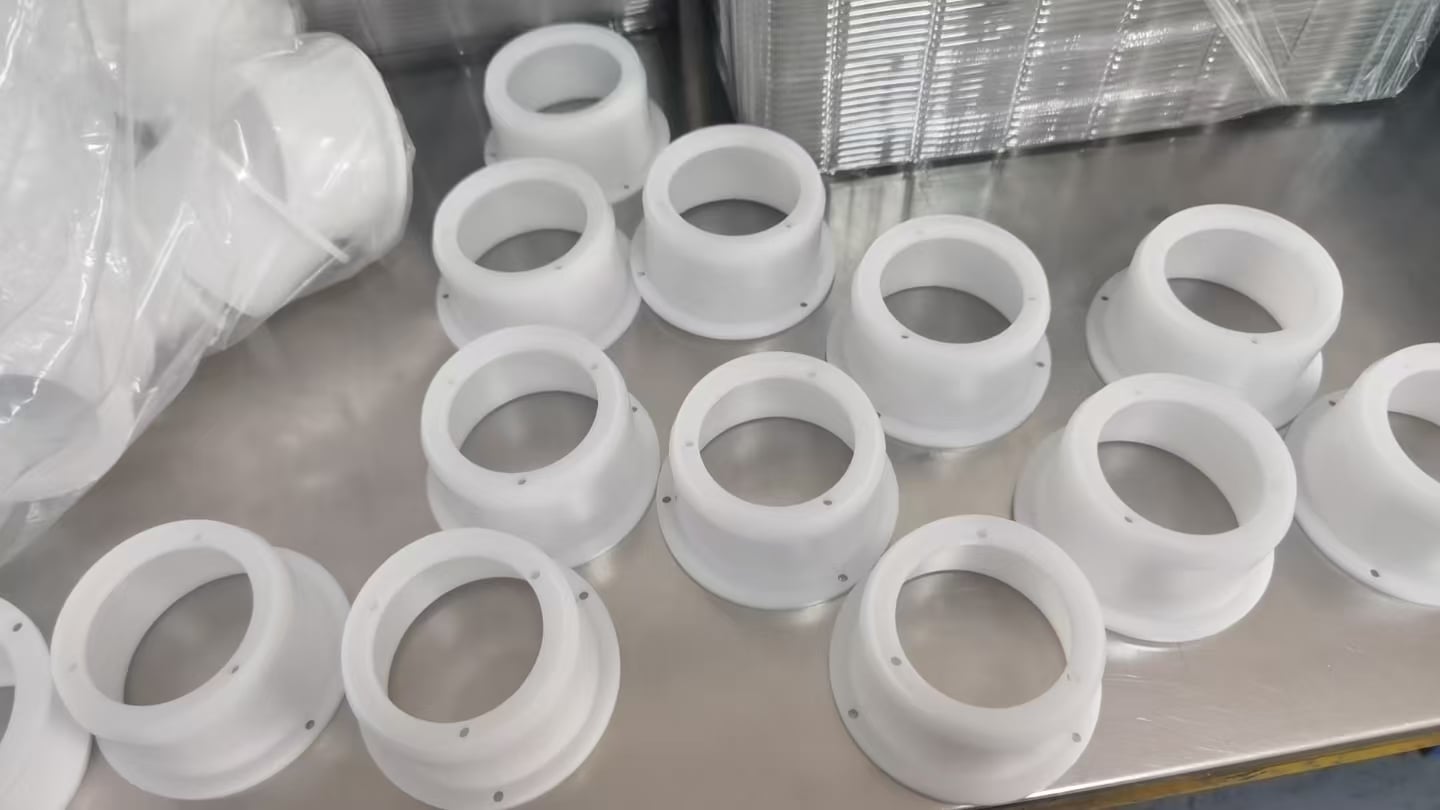
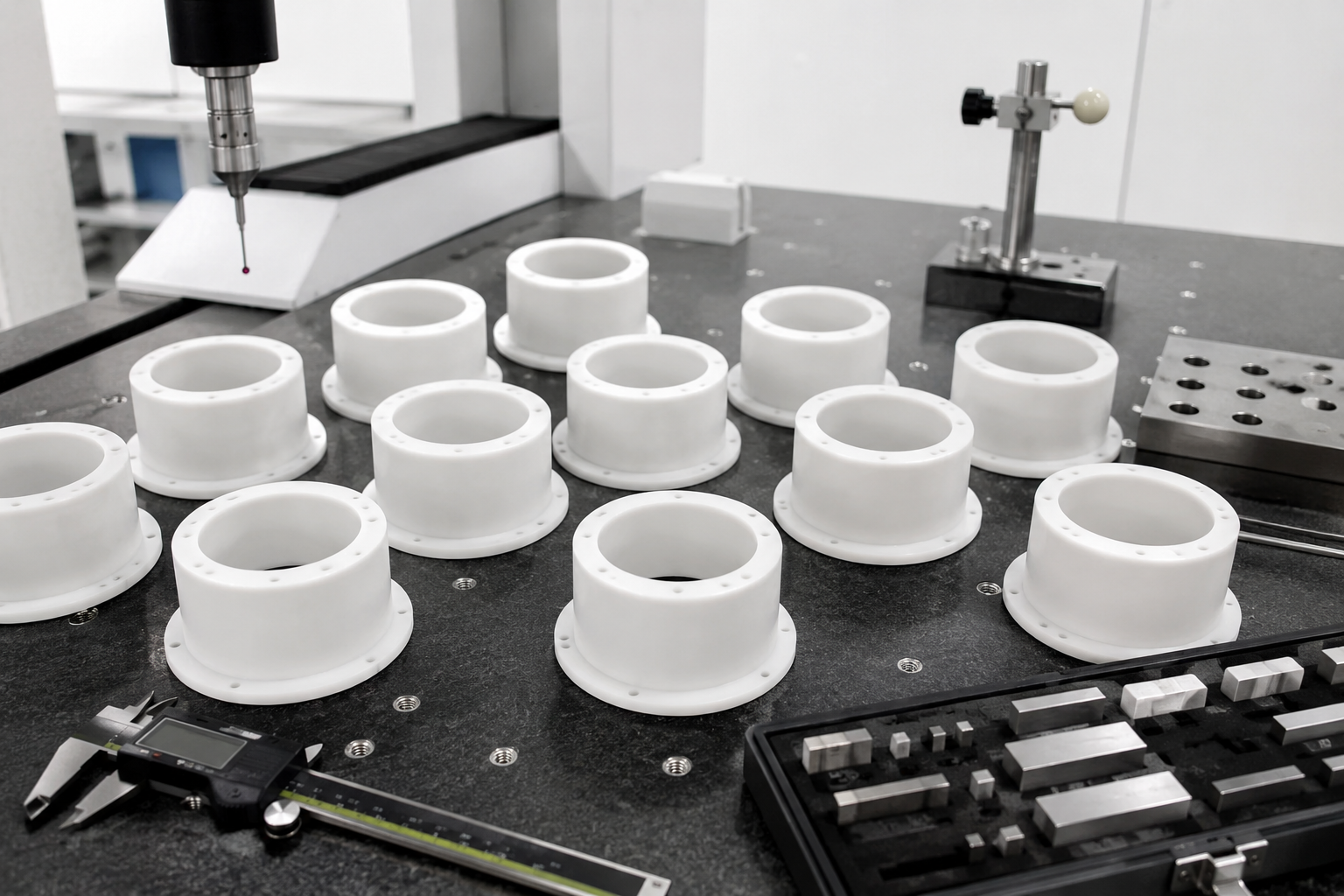
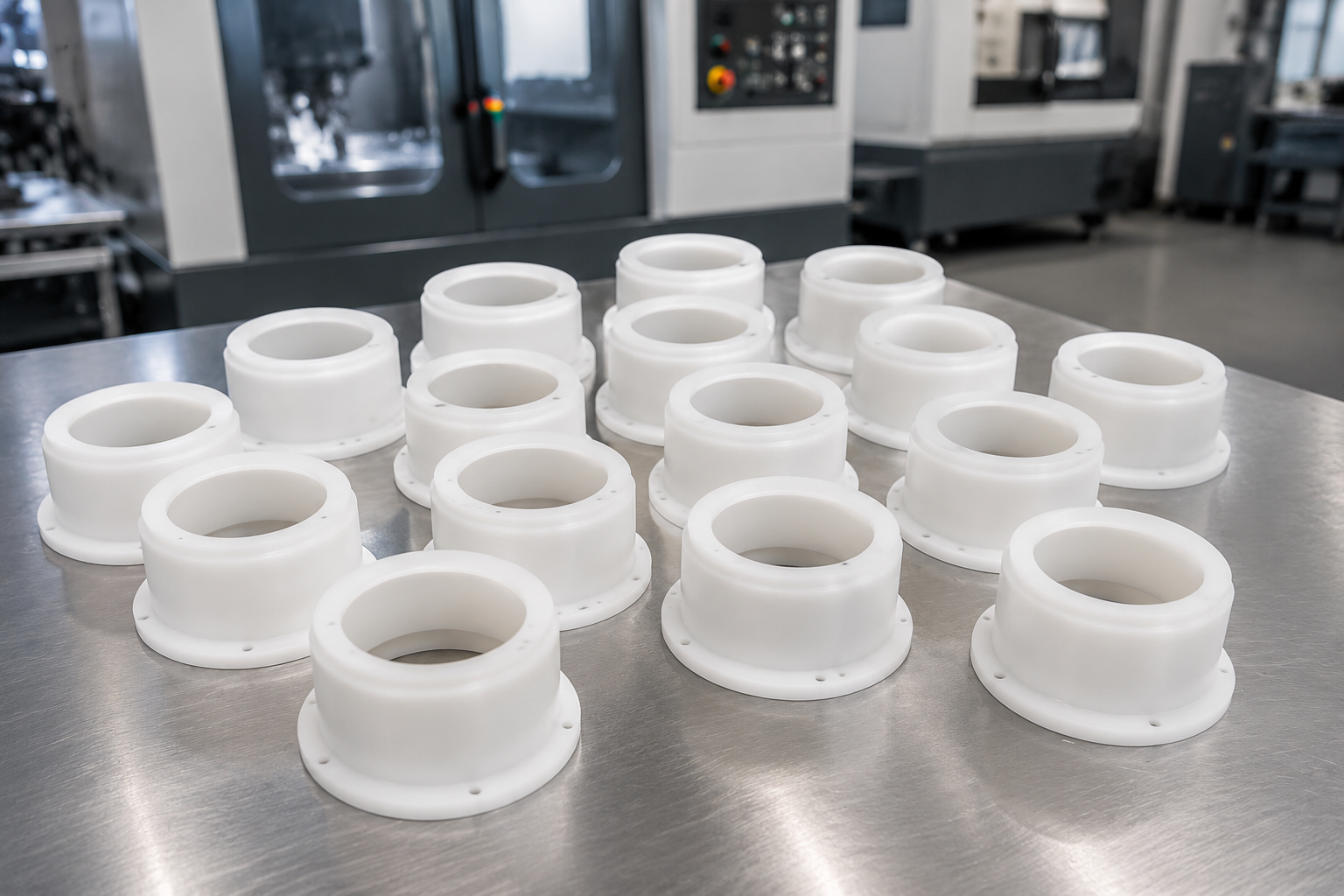
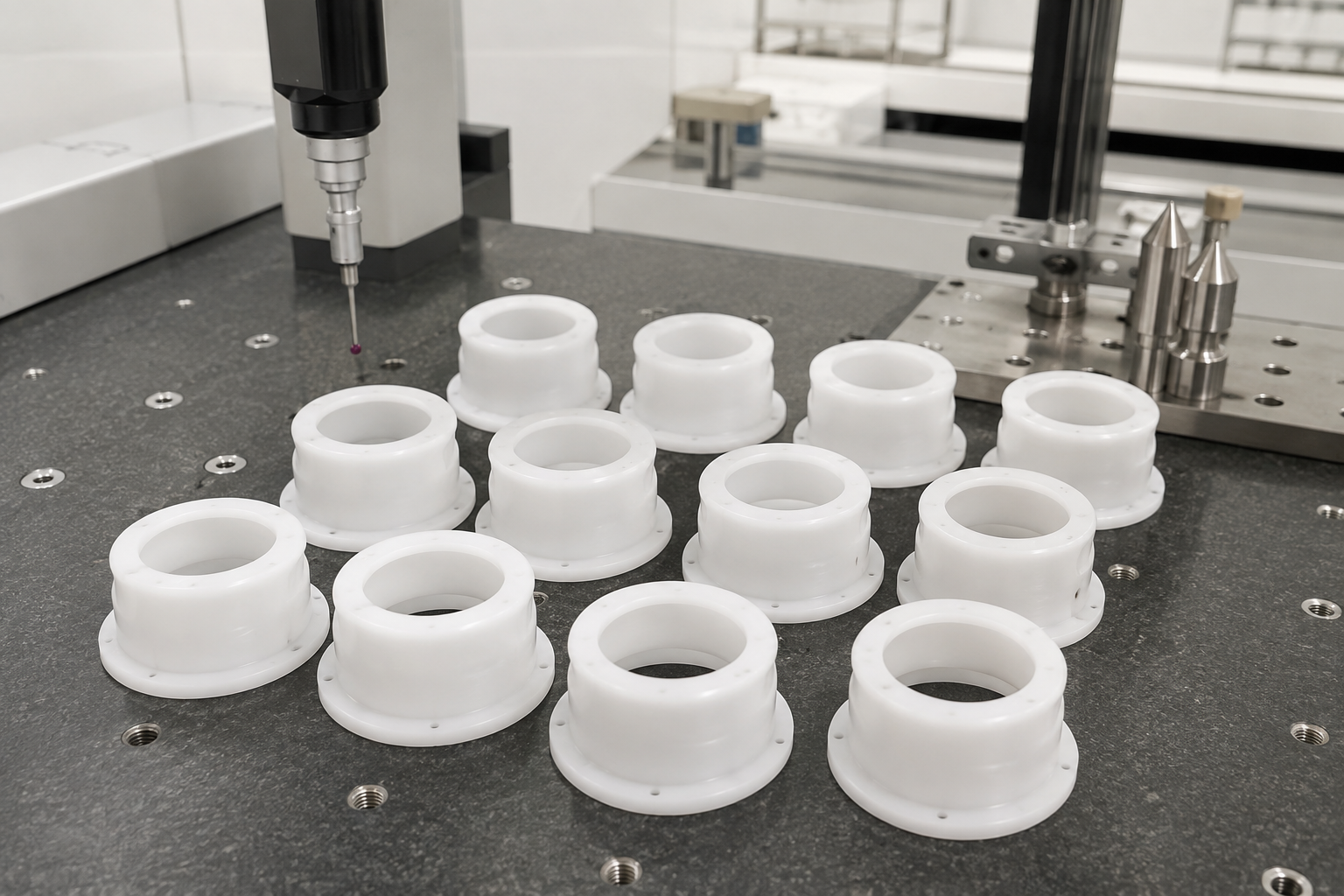
White custom-machined polymer components supplied as a product-context image. It demonstrates custom-machined polymer geometry, but it is not treated as proof of a named PEEK grade or past PEEK production.
6 Steps to Production Release
STEP 01 Bind the revision
Bind drawing, model, specifications and quantity to one revision.
STEP 02 Confirm material
Resolve grade, filler, stock, source, substitutions and documents.
STEP 03 Mark critical features
Identify datums, tolerances, free-state rules, sealing surfaces and threads.
STEP 04 Plan the machining process
Choose setups, tools, removal sequence, fluid restrictions and checks.
STEP 05 Prove the route
Use a first article for distortion risk, tight tolerances or filled grades.
STEP 06 Release and preserve
Freeze the revision, inspection, packaging and change-control rules.
PROCESS VERIFICATION
Define who owns each piece of evidence
Grade and stock pedigree
Typical Owner
Resin or stock-shape supplier
RFQ Decision
Exact product, lot and approved source
Deliverable
Material certificate or conformance record
Manufacturing definition
Typical Owner
Buyer and Zhenling
RFQ Decision
Revision, critical features and allowed process
Deliverable
Clarification record and controlled drawing
Dimensional evidence
Typical Owner
Zhenling under agreed scope
RFQ Decision
Method, temperature, restraint and sampling
Deliverable
Dimensional or first-article report if ordered
Application approval
Typical Owner
Buyer or regulatory owner
RFQ Decision
Fit for the intended device or operating system
Deliverable
Buyer validation and regulatory file
When CNC Machining Is the Right PEEK Production Route
CNC machining in PEEK fits changing designs, projects without a dedicated mold, and specified stock-shape routes. Injection molding, near-net blanks or hybrid additive plus finish machining may suit other quantities and geometries. The decision depends on lifetime quantity, revision risk, validation evidence and accepted-part economics.
The route-selection risk
The wrong route wastes stock or locks a design because geometry and program life drive cost. Our RFQ comparison covers that trade-off and doesn’t treat CNC as the automatic choice.
Dedicated production mold
0 molds
Geometry source
Sheet, plate, rod or tube
Material removed after forming
Drawing-dependent; can include most of the blank
Change consequence
Program and setup revision
Evidence to request
Stock pedigree, first article, dimensional report
Dedicated production mold
At least 1 production mold
Geometry source
Resin formed in the cavity
Material removed after forming
Gate, flash and secondary features
Change consequence
Tool modification or replacement
Evidence to request
Resin lot, process validation, molded-part inspection
Dedicated production mold
At least 1 blank-forming tool or profile route
Geometry source
Blank closer to final geometry
Material removed after forming
Finishing allowance and selected features
Change consequence
Blank tool plus machining revision
Evidence to request
Blank pedigree, finish-machining plan, final inspection
Dedicated production mold
0 production molds
Geometry source
Printed near-net form
Material removed after forming
Critical surfaces and datum features
Change consequence
Build and toolpath revision
Evidence to request
Build validation, material history, finish inspection
Choose Based on the Lifetime Program, Not the First Quote
A peer-reviewed PEEK manufacturing review distinguishes mass-production molding from machining extruded stock. A hybrid printing and milling study reported 48.7% lower material consumption in its tested comparison; that result is counter-evidence, not a universal saving.
- Start with lifetime quantity, release batches and design-change probability.
- Compare stock loss and machine time with forming-tool and validation cost.
- Account for material history, mechanical properties and surface evidence.
Analysis Level
4 route questions
Quantity, geometry, material history and acceptance evidence determine whether CNC, molding, near-net stock or a hybrid route gives the better performance and cost balance.
Bronze evidence level: decision framework only; no universal PEEK break-even quantity is claimed.
Compare the route before the quote
Request the PEEK Grade & Inspection Brief for a project-input checklist.
Quality evidence, traceability and certification scope
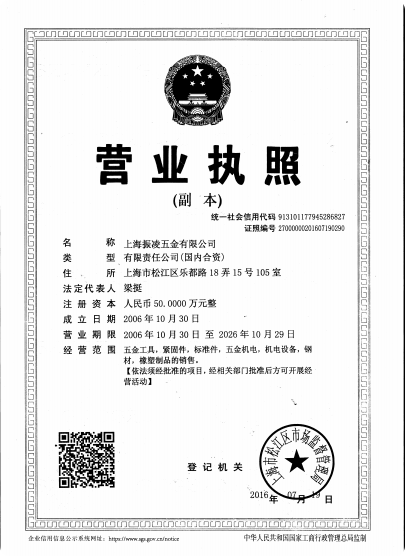
Quality and precision aren’t proven by a logo row alone. A buyer needs to know which entity, site, system, material, process and finished part each document actually covers.
CE
Company-stated credential; product and directive scope must be checked
ASME
Company-stated credential; entity, location and authorization scope must be checked
2006
Company establishment year
Export sales
Company-provided material describes an export-oriented broader product portfolio; this is not PEEK-specific performance evidence
4 boundaries
Load, heat, geometry, evidence
2 gates
Drawing review and first article
Build the evidence package in four separate layers
Layer: Company credential
Question it answers
Which organization and site hold the credential?
What to name on the order
Certificate type, holder, location, number, status and dates
Boundary
Does not certify every PEEK component
Layer: Material evidence
Question it answers
Which PEEK grade and lot entered the job?
What to name on the order
Manufacturer, grade, stock form and certificate requirement
Boundary
Does not prove finished dimensions
Layer: Process evidence
Question it answers
How was the accepted revision made and controlled?
What to name on the order
Approved route, special restrictions and change control
Boundary
Requires a project-specific plan
Layer: Part evidence
Question it answers
Did the delivered part meet the agreed characteristics?
What to name on the order
Inspection scope, sample rate, method and report format
Boundary
Does not establish service suitability by itself
SYS.ESTIMATE.ON
What Changes PEEK Machining Cost and Lead Time?
A quote becomes credible when cost and schedule drivers are visible. Fixed pricing or lead time without a drawing would ignore material, removal, setup, inspection and documents.
Visible assumptions let procurement compare supplier scope instead of mistaking excluded work for savings.
7 cost buckets
Stock + setup + machine time + inspection + documents + finishing + delivery form the evaluated cost. Compare the same seven buckets across suppliers.
[ MATRIX: 07 ]
Driver // Raw material
Input that removes uncertainty
Grade, stock form, approved source, certificate and customer-supplied status.
Why it affects commercial scope
Sets procurement route, material costs and available blank sizes.
Driver // Material removal
Input that removes uncertainty
Part envelope, finished mass, stock allowance and near-net alternative.
Why it affects commercial scope
Changes chips, machine time, warped-parts risk and recovery options.
Driver // Setups and access
Input that removes uncertainty
Datums, feature relationships, undercuts and tool reach.
Why it affects commercial scope
Changes fixture work, programming and inspection transfers.
Driver // Critical tolerances
Input that removes uncertainty
Feature list, measurement condition and gauge method.
Why it affects commercial scope
Changes finishing cuts, stabilization, sample proof and report time.
Driver // Surface & cleaning
Input that removes uncertainty
Functional finish, burr rule, allowed tool marks and residue limits.
Why it affects commercial scope
Changes tooling, handling, cleaning and visual acceptance.
Driver // Documents
Input that removes uncertainty
Material record, conformance statement, dimensional report or first article.
Why it affects commercial scope
Changes traceability and quality work.
Driver // Delivery
Input that removes uncertainty
Quantity releases, packaging, destination, incoterm and required date.
Why it affects commercial scope
Changes stock planning, batch strategy and logistics.
Bronze ROI card: no fabricated price, savings percentage or payback period.
Use cost per accepted part, not machining price alone
For expensive engineering plastic, the useful commercial formula is quoted manufacturing cost plus buyer-side qualification, rework, rejection and delay cost divided by accepted quantity.
A higher upfront cost can still produce a lower accepted-part cost when it includes the right stock, first-article route and inspection evidence. Academic PEEK processing research identifies material price as a real constraint, while near-net and hybrid studies show why removed volume can influence route economics.
Production Segregation
Separate prototype quantity from production releases and identify the first article.
Documentation Baseline
Name the document package before machining.
Logistics Confirmation
Confirm stock, approval time, destination and packaging before promising delivery.
[ PROCESS FLOW ]
Lead-time chain
Material confirmation comes before stock purchase; clarification comes before programming; sample approval comes before production release; final inspection comes before export packing. Missing inputs extend the chain even when machine capacity is available.
Normalize the quote scope
Send the seven cost-bucket inputs for a project-specific estimate.
Request an EstimatePEEK Machining Evaluation Tools
TOOL 01
PEEK CNC Machining RFQ Readiness Checker
Assess your drawing completeness, material specifications, tolerances, and inspection requirements to ensure a controlled and accurate manufacturing quotation.
Run RFQ Checker
TOOL 02
PEEK Production Route Comparison Worksheet
Evaluate CNC machining against injection molding, near-net blanks, and hybrid routes based on your lifetime program volume, revision risk, and geometry constraints.
Compare Routes
TOOL 03
PEEK Stability Envelope Review
Analyze thermal, load, dimensional, and evidence boundaries to determine material suitability and secure a meaningful, bounded manufacturing commitment.
Start Envelope ReviewPEEK Supplier Qualification FAQ
It can support precision machining, but a responsible PEEK machining tolerances answer must be tied to grade, filler, geometry, stock condition, feature size, workholding and inspection state. Zhenling confirms critical values only after drawing review and may require a sample or first article.
No universal minimum wall covers every grade and span. Send the wall, unsupported length, load, free-state rule and datums for review.
No blanket rule is used. Stock history, section thickness, material removal, heat generation, internal stress, dimensional requirement and conditional annealing guidance determine whether to anneal, use an intermediate stress-relief step, or machine without a post-machining cycle.
Match the manufacturer and grade to load, heat, wear, chemical, electrical and regulatory needs. Don’t let a generic grade label replace application engineering.
Those grades can enter a project review, but this page doesn’t claim a proven window for every filled PEEK feature. The exact grade, filler, cutting surface, edge requirement and inspection plan determine whether the route proceeds to quote, clarification or sample validation.
Coolant depends on supplier guidance, heat, cleanliness and end use. State prohibited fluids, residue and cleaning limits before release.
No. Those claims belong to exact grades, controlled processing and application evidence, not every PEEK component.
CNC machining is a strong candidate when you need custom PEEK parts without a dedicated production mold, expect revisions, or require a machined stock route. Injection molding, a near-net blank or additive plus finish machining may be better when lifetime quantity, geometry, material use and validation justify that route.
Send the revision, grade, stock form, quantity, critical features, finishes, inspection, documents, packaging, destination and date. Add operating conditions when they affect acceptance.
The package can be scoped around available material records, a certificate of conformance, dimensional inspection, first-article evidence or customer-specific forms. List each required document in the RFQ so availability, content, sampling and cost are agreed before production.
![Shop-Floor Carbon Steel CNC Machining Guide [2026]](https://zhenlingmetal.com/wp-content/uploads/2026/08/carbon-steel-cnc-machining-handbook-r2-featured-150x150.png)