Get in touch with Zhenling Company

AXIS: Z-HT.101

Heat Treatment Services for Machined Metal Parts | Zhenling
Heat treatment works best when the handoff is controlled before material state, geometry or finishing assumptions cause rework. This is Zhenling’s front-end approach to heat-treated part quotes. Heat Treatment Services enquiries should include material, starting condition, named process, target hardness, test-record need, distortion allowance and responsibility. Keep open questions visible. Capability, records and timing become order-specific only when the written quotation closes those questions.
- Quotation timing confirmed after RFQ review
- Prototype schedule confirmed in the quotation
- STEP, IGES and PDF accepted
- Minimum quantity confirmed in the quotation
- Written scope
Our role starts with the drawing. The written quote names the proposed route, execution party, included secondary work, required tests and release owner before stock or parts move.
If a non-disclosure agreement is executed, it governs the CAD files, design data and transfer route covered by that agreement.
DATA.01
Established 2006
Long-running custom metal manufacturing operation
DATA.02
8,000 m² site
Jiashan, Zhejiang manufacturing base
DATA.03
6,000 m² workshop
Machining, forming and welding floor
DATA.04
3-, 4- and 5-axis
Machining-center categories stated by Zhenling
DATA.05
ORDER-SPECIFIC
Destination and export documents confirmed in the written quotation
DATA.06
NOT ASSERTED
No pressure-vessel output claim; verify order-specific capacity and qualification
Machined-Part Heat-Treat Planning Capabilities
Quality planning begins before the thermal cycle. Zhenling manufactures made-to-print components and coordinates machining, heat treatment, straightening, cleaning, grinding, coating and final inspection when those operations are included in the order.
Our drawing review follows the principle in ISO 15787:2016 that the required final heat-treated condition belongs in controlled technical documentation.[4] An ambiguous near-limit dimension creates rejection risk because temperature, support and measurement uncertainty can move the reported result.

Parts entering the review path
SCOPE // DEFINED- Flanges, rollers, valve bodies and plugs
- Bent-pipe and pressure-related components
- Shaft-like parts, rings, bores and machined faces
- Forging and casting inputs that need final machining
- Custom machine parts built from a drawing or sample
- Welded assemblies whose governing order calls for post-weld treatment
- Industrial equipment and heavy equipment parts with drawing-defined release criteria
Our service offers material-selection input, machinability advice and machining-to-heat-treatment handoff support. The customer specification and applicable industry requirements govern the thermal route and acceptance of the finished component.
Review Sequence
4 STAGES01
Drawing and callout review
We work from STEP, IGES and PDF drawing files. That review checks the controlling revision, material designation, incoming condition, target property, test location, final dimensions and downstream operations.
02
Machining-sequence review
Rough machining, an intermediate stress relieving step where the governing route calls for it, heat treat, straightening, finish machining and inspection are arranged around the part—not treated as isolated purchase lines.
03
Quote-scope definition
After RFQ review, the written quotation confirms response timing, included work, buyer-supplied inputs, separately priced work and the technical questions that must close before release.
04
Low-volume entry
Minimum quantity, single-part review and sample or first-article availability are confirmed in the written quotation before volume production.
Supplier comparison
Buyers comparing heat treatment companies, heat treatment services for steel, or heat treating services for machined parts should compare the full machining-to-release scope rather than a process name alone.
Hidden bottleneck
Distortion is not always caused at the furnace. Residual stresses from prior manufacturing operations can release during heat treatment. If the quote starts at the furnace door, it may miss the earlier source of movement and the later feature that must still clean up.
SYS_MAT // 031
Materials, Starting Condition, and Target Property
Our machining experience covers carbon and alloy steels, stainless steels, nickel-based alloys and aluminum alloys; material properties and section geometry guide the order’s thermal route, while a broad label such as “steel” or “aluminum” is not enough. Zhenling can identify material-state and handoff risks, but the customer specification remains controlling and the incoming condition must be stated. ISO 4885:2026 supplies current vocabulary for heat treatment of ferrous materials; it does not override order-specific requirements.[3]
Five selection axes
AXIS
RFQ INPUT
DECISION IT CONTROLS
AXIS 01Material state
Grade, standard, product form and incoming condition
Whether the proposed heating and cooling route is compatible
AXIS 02Property target
Hardness, strength, ductility, toughness or machinability target
Through-property, surface/core or softening intent
AXIS 03Geometry
Section change, thin walls, bores, length and symmetry
Distortion review and support strategy
AXIS 04Surface and sequence
Masking, cleaning, grinding, coating and final machine work
Where stock and datums must survive
AXIS 05Evidence
Method, sampling, acceptance and records
How the component is released
Heat-Treatment Route Review
A route name is only a starting point; a process label does not define the complete service, so the review and quotation must close the material, geometry, equipment, test and evidence questions for the individual order. Hardening, annealing, stress relieving, case hardening, carburizing, nitriding, carbonitriding, vacuum heat treating, cryogenic treatment and post-weld heat treatment each raise a different set of questions. ISO 20431:2023 addresses quality-control requirements and recommendations for industrial parts and heat-treatment facilities; the applicable execution and evidence scope still has to be defined for the order.[5]
Property and Test Intent
Metal heat treating services can cover several routes. Each heat treatment process has its own acceptance needs, so a metal heat treat request must name the property and acceptance route rather than rely on a supplier label. If the RFQ calls for metal hardening services, the order should separate surface intent from core properties and identify the applicable metallurgical test.
Specification-Defined Controls
Vacuum heat treatment, controlled heating and cooling, or a braze cycle may matter only when the drawing, material standard or customer specification calls for it. Those heat treating requirements belong in the RFQ; their presence here does not assign an execution location or furnace capability.
Buyer intent to state
Target hardness or mechanical properties after the final temper
Scope to confirm in writing
Material state, quench route, distortion controls, test plan and finish work
Buyer intent to state
Softening, machinability, structure or later-process preparation
Scope to confirm in writing
Applicable specification, starting condition and downstream state
Buyer intent to state
Reduce the effect of earlier processing before critical finishing
Scope to confirm in writing
Process stage, datums, stock condition and features measured afterward
Buyer intent to state
Surface hardness with a defined core and depth requirement
Scope to confirm in writing
Masking, effective or total depth definition, test section and acceptance
Buyer intent to state
Property condition for an applicable alloy system
Scope to confirm in writing
Alloy/temper, geometry support, cooling route and post-cycle inspection
Buyer intent to state
Control of surface reaction or a specification-defined atmosphere
Scope to confirm in writing
Execution location, vacuum furnace class, cleanliness, loading and records
Pricing, Lead Times, and Total Release Scope
Heat-treated part quotes depend on drawing- and order-specific details. Material condition, geometry, quantity, treatment route, masking and loading, post-treatment straightening and cleaning, test procedures, finishing operations, required records and lead time all affect scope and price.
Three Quote Layers
Quote Input
Purchase-order input includes the drawing revision and incoming material condition, together with the target property, location, quantity, process requirement and final machining state.
Quoted Scope
Written scope names the execution party, route, included secondary work, buyer-supplied items, separate prices and change conditions.
Release Evidence
Order-level evidence names the test result, dimensional result, traceability record, deviation path and acceptance owner needed to release the part.
Quote comparison
A high-quality comparison uses the same drawing revision, material condition, acceptance criteria and release package across every supplier response.
Why it changes delivered cost
Catches revision or material-state conflict before execution
Buyer control
Require written assumptions
Why it changes delivered cost
Changes setup, surface exposure and repeatability needs
Buyer control
Name what is included
Why it changes delivered cost
May sit outside the thermal line item
Buyer control
Assign owner and acceptance point
Why it changes delivered cost
Method, sampling and report format change effort
Buyer control
Define before award
Why it changes delivered cost
Determines whether the treated part becomes a released part
Buyer control
Lock stock, datums and final inspection
Why it changes delivered cost
Open responsibility can delay release
Buyer control
Name approval path and commercial treatment
A low thermal-processing price does not necessarily produce the lowest released-part cost. If finishing, reporting or testing is omitted, the buyer may face extra work and delay at the release stage.
Schedule definition
After drawing approval, the written quotation confirms the prototype schedule and states treatment, external testing, finishing, transit and any expedited option separately.
Test Definition, Records, and Release Control
Quality control needs an interpretable test. The method, surface condition, geometry, property range and measurement location must align with the feature or lot covered by the acceptance decision.
CTRL // MENU

Rockwell release definition
- Name the Rockwell scale and applicable method, such as ISO 6508 or ASTM E18, in the controlling requirement.
- Locate the test on a surface and geometry suitable for the selected method.
- State whether the result applies to a point, zone, sample, part or lot.
- Define the reading or sampling plan and the acceptance rule before testing.
- Link results to the part number, revision, material/lot identity and treatment batch where required.
One hardness reading is not necessarily representative of an entire part or lot. The order must state where to test, how many results govern acceptance and who may approve a deviation.
Credential scope check
Certification labels do not define the covered facility or process, and a certificate is not a substitute for order-level scope. A certification logo is not necessarily proof that a facility will specialize in the required process, so verify the legal entity, physical site, process or checklist scope, validity, alloy family and customer-program applicability.
A quality-management system can require controlled process records and changes, but it does not independently certify every process, facility or part; compliance still depends on the applicable scope, heat-treatment requirements and accepted release records.
Order applicability
CQI-9 belongs in the RFQ when an automotive customer or program requires that heat-treat system assessment. Nadcap scope is checked when an aerospace program requires the applicable special-process accreditation. Neither label replaces the order-level test and release definition.[7]
Release Package
A certificate cannot replace a defined scope. A release record must state what it supports, the covered part or lot and the authority under which it is accepted.
Release risk
Release risk grows because a bare hardness value cannot connect the tested location to the acceptance criteria. Zhenling brings those open definitions back into the written order path before the result is used for release.
Buyer-Controlled Specification-to-Release Responsibility Chain
Zhenling engineering note — Buyer-Controlled Specification-to-Release Responsibility Chain: the purchaser, OEM or cognizant engineering authority keeps specification, deviation and final acceptance control; Zhenling reviews manufacturability, handoff risk, quote scope and open responsibilities before release. ISO 15787:2016 reinforces that the required final condition belongs in controlled technical documentation.[4]
SPREAD 1 / 3
01
Lock the authority and revision.
Identify the purchaser, OEM or cognizant engineering authority plus the controlling drawing and specification revision.
02
Define the material and target.
Review grade, incoming condition, target property, location, test definition and customer-specific requirements.
03
Map geometry and sequence.
Flag section changes, datum strategy, residual-stress sources, machining allowance and the post-treatment route.
04
Name execution and applicable controls.
Confirm the execution party, location, thermal process, furnace or atmosphere requirement, and any customer-required special-process assessment.
05
Lock test and acceptance.
Confirm method, surface/geometry suitability, scale, location, sampling, acceptance, dimensions and records.
06
Release the complete route.
Confirm final machining, coating, packaging, deviation approval and the owner of final acceptance.
We treat handoff and responsibility conflicts as questions for the written quote. We do not replace the customer’s design authority; supplier suggestions can inform a decision but cannot unilaterally modify a controlled drawing, substitute a material or approve a deviation.

Manufacturing controls that reduce late surprises
Datum strategy
DECISION BEFORE TREATMENT
Name surfaces retained through roughing, treatment and finishing
RELEASE BENEFIT
Dimensions return to the same reference system
Symmetry & section
DECISION BEFORE TREATMENT
Identify uneven mass and one-sided removal
RELEASE BENEFIT
Focuses support and finishing review
Test location
DECISION BEFORE TREATMENT
Choose a usable surface tied to the required property zone
RELEASE BENEFIT
Prevents an unrepresentative reading from governing release
Change control
DECISION BEFORE TREATMENT
Name what requires written approval
RELEASE BENEFIT
Keeps the quoted route aligned with the accepted route
Drawing-Defined Part and Route Review
Company-supplied profile information states operation since 2006 from an 8,000-square-metre Jiashan site with a 6,000-square-metre workshop. The written quotation must identify the proposed machining and heat-treatment routes, actual equipment, execution sites and responsible parties for the order.
Production Base Gallery

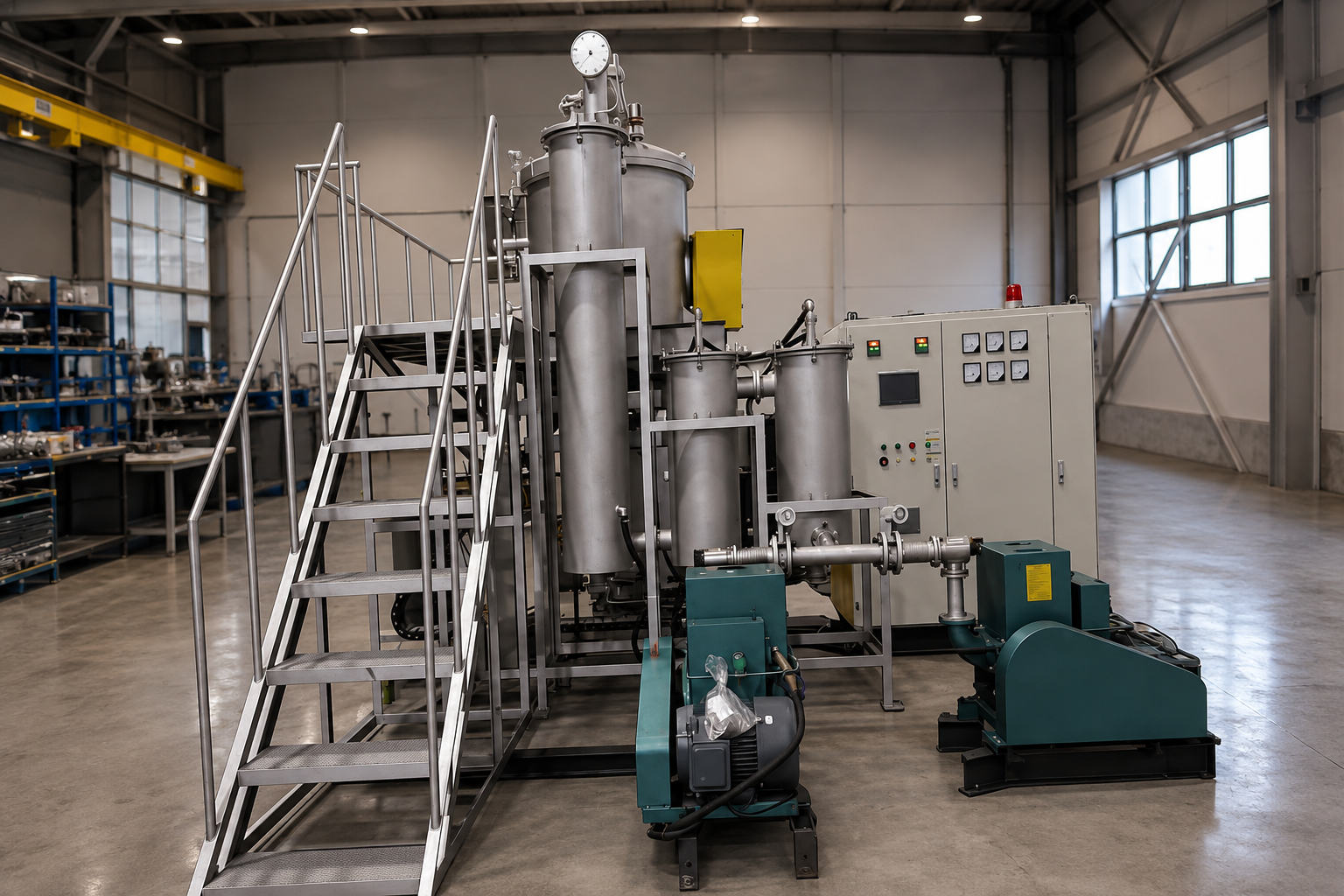
Illustrative Multi-Axis Route
Illustrative equipment image; actual machine, production site and availability must be confirmed for the order.
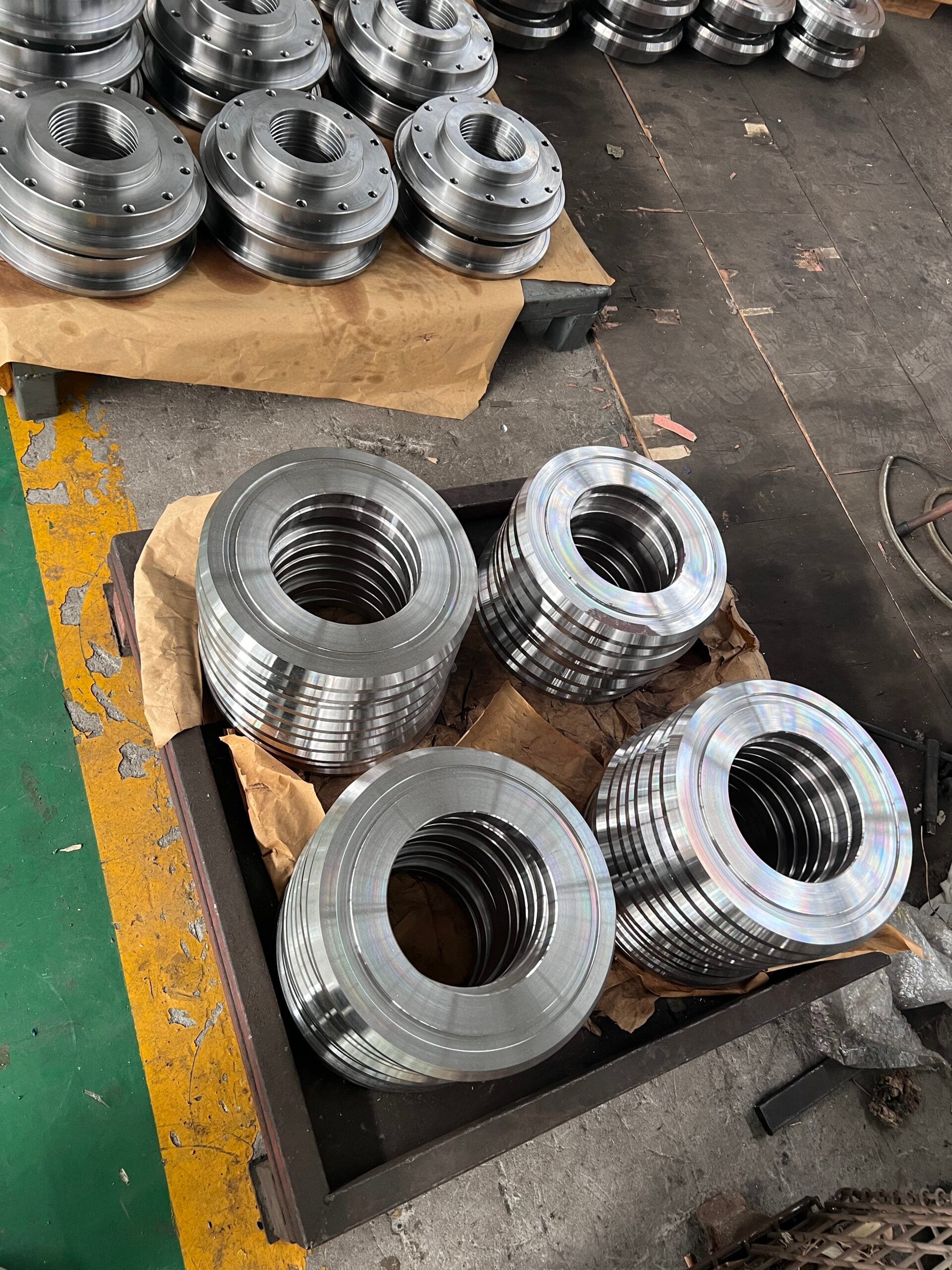
Illustrative Batch of Machined Steel Rollers
Illustrative component image; it does not establish ownership, production history or workshop location.

Illustrative Machined Carbon-Steel Rings
Machined ring components showing the part families that enter drawing-led route review.
Heat Treatment Engineering Tools
01
Heat Treat RFQ Checker
Evaluate heat treatment request for quotation parameters and technical requirements.
02
Heat Treatment Quote Scope Comparator
Compare heat treatment quote scopes, specifications, and manufacturing routes.
03
Distortion Handoff Risk Triage
Triage and identify distortion risks during component handoff and processing.
Heat Treatment Service FAQ
Send the current drawing revision, exact material grade and incoming condition, quantity, requested treatment or controlling specification, target property and location, dimensional limits, post-treatment work, test/acceptance plan, required records and delivery need. Use the RFQ Completeness Checker to find open inputs.
Sequence follows material state, geometry, property target and the final features that must hold tolerance. Rough machining may come first, while critical grinding or machining may need to follow the last thermal step; the quote should name both the treatment stage and the final inspection stage.
Name the method and Rockwell scale or other test method, the exact feature or zone, the surface condition, the sample or reading plan and the acceptance criteria. ISO 6508 and ASTM E18 are method references, but the drawing or order must still state which result governs the part.
Start with material history, section changes, symmetry, datum strategy, earlier forging/casting/welding/machining stresses, support method and the finishing sequence. Our Distortion Handoff Risk Triage highlights which interfaces need written review.
Quotes may carry different assumptions for incoming review, tooling, masking, loading, straightening, cleaning, grinding, tests, records, retest and packaging. Compare total release scope with the Quote Scope Comparator, then close every “not stated” line.
Agree the material or lot identity, process record or certificate required by the controlling order, actual hardness or other test results, dimensional report, deviation/retest record and packing identification. Required package content follows the customer requirements and order, not a generic document bundle.
Our engineer-reviewed quotation names the proposed execution party and location, included work, buyer-supplied inputs, tests, records, open approvals and final release owner. Buyer, OEM or cognizant engineering authority keeps specification and deviation-approval control.
No label alone proves order coverage. Check the legal entity, facility address, validity, process or checklist scope, alloy/customer-program applicability and any order-specific approval; CQI-9 is tied to relevant automotive customer requirements, while Nadcap scope is used where the aerospace program requires it.
Minimum quantity, single-part review and sample or first-article availability are confirmed in the written quotation together with the treatment and release scope.
After the drawing and core inputs are reviewed, the written quotation confirms response timing. Missing material, test or responsibility data remain visible as open items rather than hidden assumptions.
Request a Drawing-Level Heat-Treat Review
Send the available details, including revision, grade, incoming condition, quantity, target property and location, machining stage, test plan, required records and requested delivery date. We will respond with the quoted scope and any open questions that must be resolved before release.
Drawings remain confidential, and an NDA is available before file review. Expedited production review is available on request.
References & Sources
- ASTM E18-25 — Standard Test Methods for Rockwell Hardness of Metallic Materials: test method, machine verification and location/geometry limitations.
- ISO 6508-1:2023 — Metallic materials — Rockwell hardness test — Part 1: regular and superficial Rockwell test methods and scale scope.
- ISO 4885:2026 — Ferrous materials — Heat treatments — Vocabulary: current terminology for heat treatment of ferrous materials.
- ISO 15787:2016 — Technical product documentation — Heat-treated ferrous parts: presentation and indication of final heat-treated condition on technical drawings.
- ISO 20431:2023 — Heat treatment — Control of quality: quality requirements and recommendations for industrial mechanical parts and heat-treatment facilities.
- NIST — Residual stress and its impact on machining: measured interaction among residual stress, machining and part distortion.
- ISO 9001:2015 — Quality management systems — Requirements: quality-management scope and controlled-process context.
- AIAG CQI-9 — Special Process: Heat Treat System Assessment: automotive heat-treat system-assessment scope and intended use.
External references support method and buyer-control principles. Zhenling-specific identity, factory, equipment-category, material and part statements come from company-supplied information; the written quotation controls each order’s execution and release scope.
![Shop-Floor Carbon Steel CNC Machining Guide [2026]](https://zhenlingmetal.com/wp-content/uploads/2026/08/carbon-steel-cnc-machining-handbook-r2-featured-150x150.png)