Get in touch with Zhenling Company

cnc machining materials
CNC Machining Materials for Custom Machined Parts by Zhenling
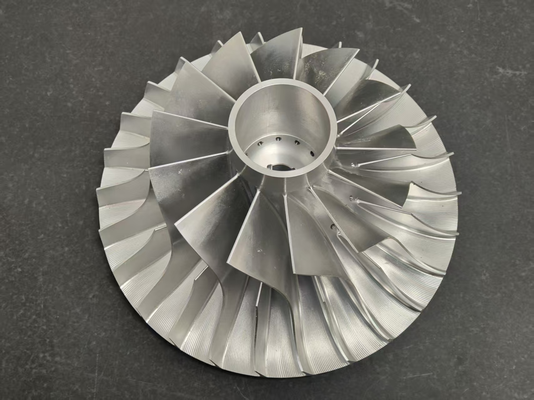
The CNC machining materials we cut cover 22 families and more than 30 grades, worked from your drawing or 3D file. Send the file and a process engineer returns a quote in 48 hours, naming any material substitution that would cut cost or lead time. The tables below cut your shortlist to two or three candidates before you send anything.
- Engineer-reviewed quote within 48 hours
- Prototypes in 7 to 15 business days
- Untoleranced dimensions held to ISO 2768-m
- STEP, IGES, X_T, DWG, DXF and dimensioned PDF accepted
- Quote turnaround
- Within 48 hours, reviewed by an engineer
- Prototype lead time
- 7 to 15 business days after drawing approval
- Small-batch lead time
- 15 to 20 business days after drawing approval
- Production lead time
- 20 to 30 business days, confirmed with your quotation
- Minimum order
- No minimum order quantity — single pieces are accepted
- Untoleranced dimensions
- ISO 2768-m unless your drawing specifies otherwise
- Untoleranced dimensions
- ISO 2768-m unless your drawing specifies otherwise
Your drawings are handled as confidential, and we sign a mutual non-disclosure agreement on request before any file is opened.
CNC Machining Capabilities
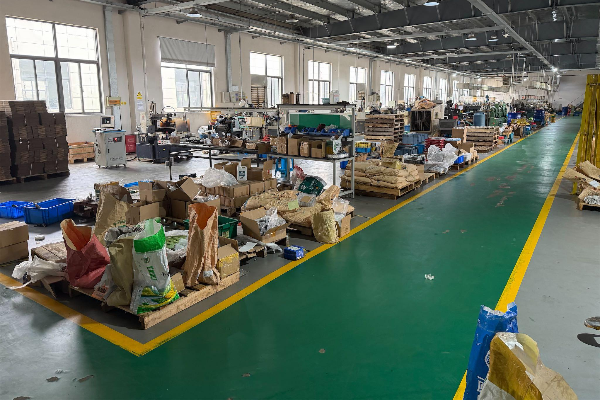
Every CNC machine on our floor is set up from your drawing, not from a catalogue part number. That is why the material list runs to 22 families and more than 30 grades: the machining processes decide what we take on, not a fixed product range. Cutting, machining, welding and fabrication all happen in one 6,000 m² workshop on an 8,000 m² site we have run since 2006.
Milling and Turning
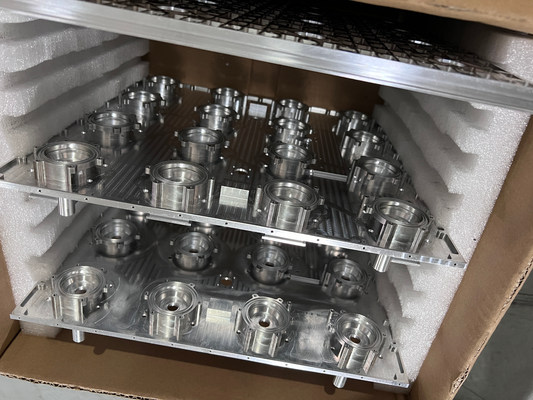
Three-axis and four-axis machining centers cover prismatic machine parts, plates and housings. Imported five-axis machining centers take the multi-face and contoured work.
Wire EDM & Grinding
Wire-cut EDM produces hardened profiles and tight internal corners that a cutter cannot reach. Surface and cylindrical grinding finish features carrying assembled tolerance.
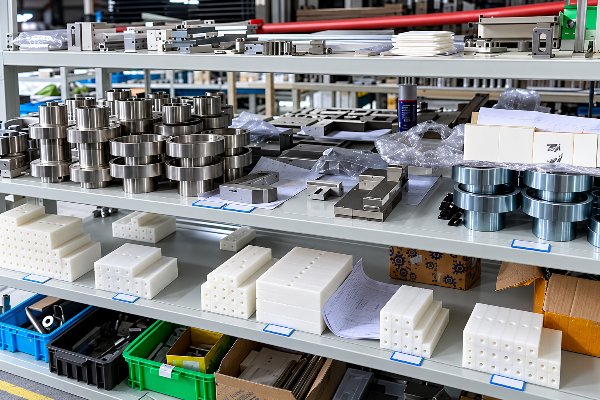
Plate Fabrication
CNC shearing, plate rolling and press work convert plate into shells and brackets in the same building. Keeping cut, roll and machine under one roof removes supplier handover.
Welding and Assembly
Lincoln submerged-arc welding, process 12, and gas-shielded welding join assemblies before final machining, so faces are cut after weld distortion has happened.
Material Selection for CNC Machined Parts
Choosing materials for CNC machining runs in three moves: translate what the part has to do, rule out the families that cannot do it, then rank the survivors on the numbers. The router below does the first two moves and the fit grid does the third. Whichever grade you land on, material is purchased against the specification your drawing calls out and the mill certificate ships with the finished parts.
Alloy Family Router
Start from the job the part has to do, not from the family name. Unlike an A-to-Z stock list, this one is ordered by duty. The third column is where the money is: it names what to rule out and why.
| What the part has to do | Start with | Rule out — and why |
|---|---|---|
| Contain internal pressure | 1045 (45#), 4140 (42CrMo), 304 / 316L stainless steel | Resulfurized free-machining grades. Sulfides carry no strength at room temperature and act as stress risers, so cracks run down the bar along the sulfide stringers. |
| Control fluid in a valve body | 304 / 316L stainless steel, C93200 bronze, brass | Magnesium, which fails galvanically wherever it meets a dissimilar metal in a wet joint. |
| Survive chemical attack | 316L, Alloy C276, 904L, PTFE, polypropylene | Acetal, which resists solvents and fuels well but is attacked by strong acids. |
| Work under high heat | Alloy 718 (980 °C), PEEK (330 °C), PAI (260 °C) | Any plastic below its rating: ABS stops at 80 °C and nylon 6 at 90 °C. |
| Deliver wear resistance | D2 tool steel at 62 HRC, quenched and tempered 4140, PAI, acetal | Soft aluminum alloy in a sliding contact — 93 HB will not hold a running surface. |
| Save weight | 6061-T6 aluminum alloy, AZ31B magnesium, PEEK | Stainless steel, unless the corrosion duty actually requires it. |
| Conduct electricity or heat | C11000 electrolytic tough pitch copper, rated 100% IACS | Brass and bronze, whose alloying additions cut conductivity for a machinability gain. |
| Insulate | PEEK, PEI, PTFE, acrylic | Any metal, and nylon in a humid room — it takes up 7.0% water at saturation. |
| Touch food or drinking water | 304 / 316L stainless steel, HDPE, polypropylene | C36000 free-cutting brass (2.5–3.7% lead) and C93200 bronze (6–8% lead). |
| Slide without lubrication | PTFE, acetal, PA66, C93200 bearing bronze | Acrylic, which breaks at 4.0% elongation instead of yielding. |
| Stay optically clear | Acrylic (PMMA), polycarbonate | Polycarbonate wherever solvents are present — it stress-cracks under load in contact with them. |
“On a pressure-containing part we quote the grade the drawing names and nothing else. A resulfurized substitute cuts faster and passes the same dimensional check, then splits along the sulfide stringers once the part is in service.”
Zhenling process engineering — standing rule on pressure work
Thermal expansion decides the tolerance on a mixed assembly
The expansion column crosses both halves of the grid, and the spread is the whole argument against one default tolerance. Carbon steel moves 12 µm/m·K; PTFE moves 120 and HDPE 130. A plastic part in that assembly travels ten to eleven times as far per degree as the steel it bolts to.
A nylon number without a moisture state is unusable
Unfilled nylon 6 measured dry against the same material moisture-conditioned drops from 74 MPa to 35 MPa tensile, and from 2.7 GPa to 1.1 GPa in modulus. Nylon 66 repeats the effect at 86 MPa down to 60 MPa, with modulus falling 3.3 GPa to 1.6 GPa.
That is a 53% strength loss on PA6 and 30% on PA66, from nothing but ambient humidity.
PA6 reaches 7.0% water at saturation and PA66 8.5%, so the conditioned figure is the one a part in a humid room will actually deliver.
22 Materials We Machine
Two of the plastics below carry a grade choice this grid does not settle: PTFE across unfilled, glass-filled and carbon-filled, and POM across copolymer and homopolymer. Each has its own page — PTFE and Teflon CNC machining and POM and Delrin machining grades — and the card figures below are for unfilled PTFE and for acetal without a copolymer or homopolymer split.
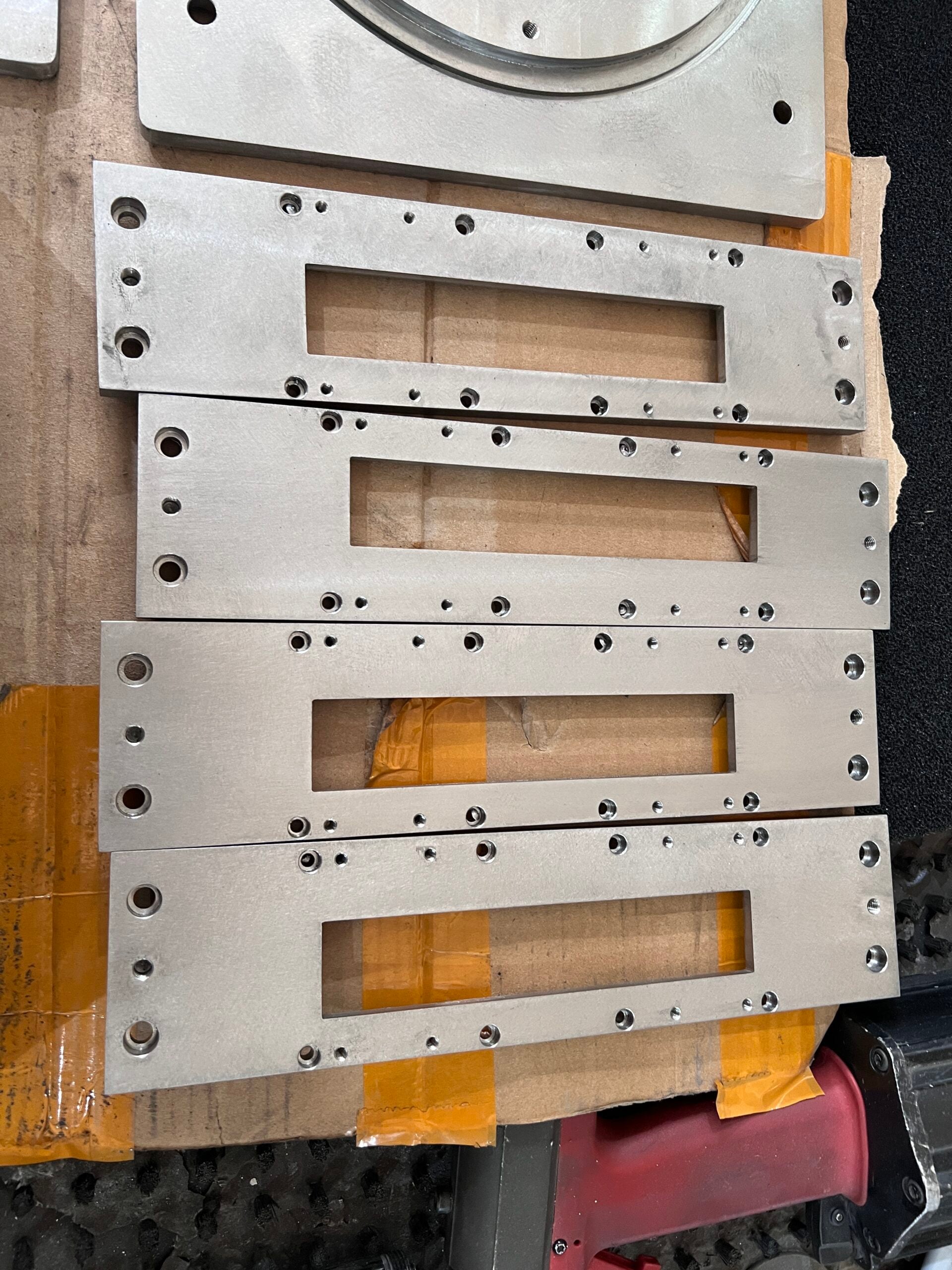
Aluminum CNC Machining
6061-T6 · 6082 · 7075-T6 · 5052 · ADC12Aluminum alloy machines faster than any other metal on this page, at 270% of the free-machining steel benchmark, so cycle time rarely drives its cost. That speed buys you machine hours, not hardness: at 93 HB the surface will not hold a sliding contact.
Specs: Aluminum — 6061-T6
Machinability270%
Hardness93 HB
Tensile str.310 MPa
Max temp.170 °C
Expansion:24 µm/m·K
Corrosion:Self-passivating oxide film
Applications:Housings, brackets, heat sinks
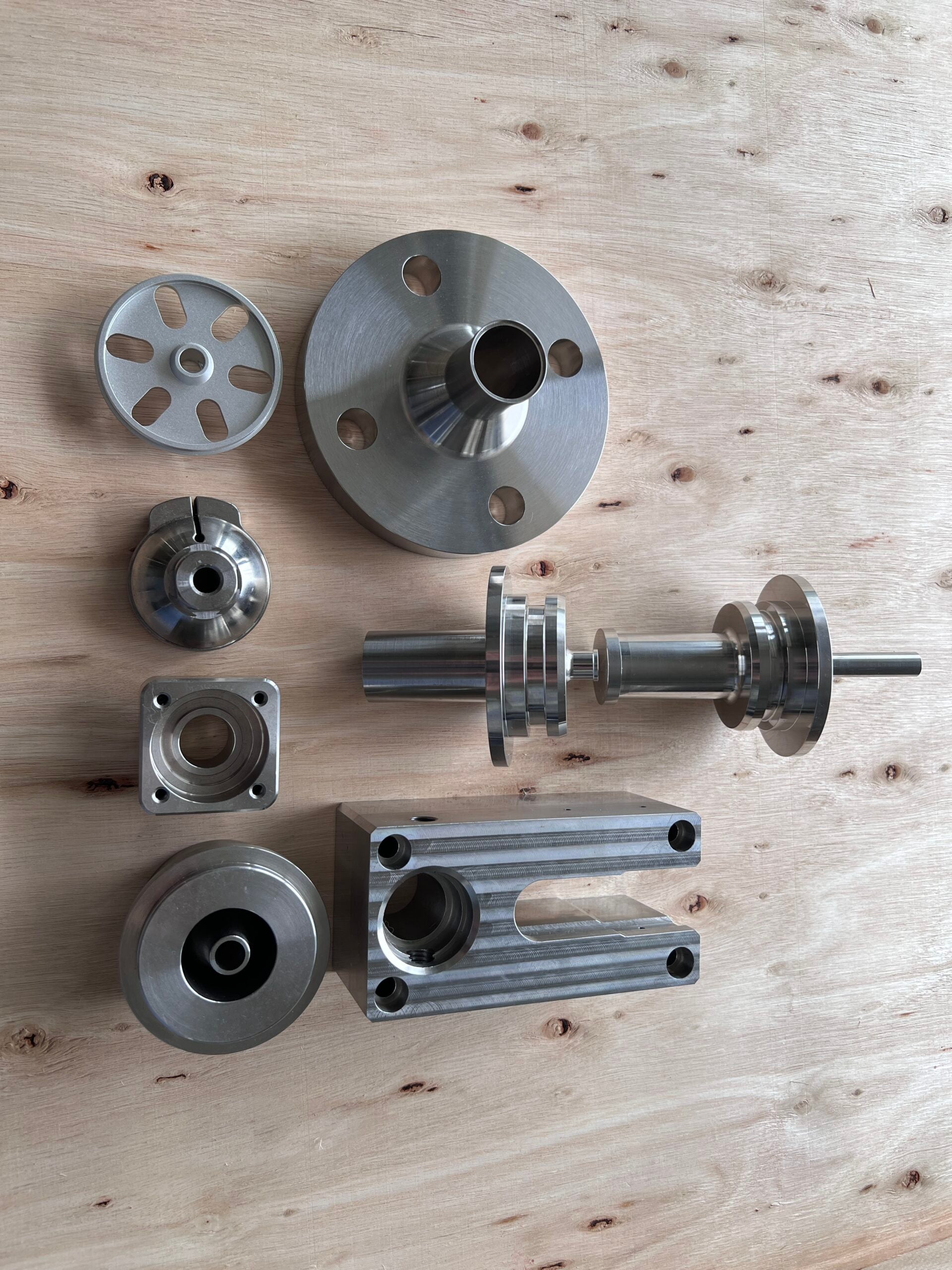
Stainless Steel CNC Machining
303 · 304 · 304L · 316 · 316L · 321Austenitic stainless steel arrives with a work-hardened skin 0.003 to 0.005 in deep, and the interior can sit at half the surface hardness while cutting happens at the surface. With 304 indexed at 43%, the answer is a cut deep enough to start under that skin rather than a faster one.
Specs: SS — AISI 304, wrought
Machinability43%
Hardness170–360 HB
Tensile str.580–1180 MPa
Max temp.710 °C
Expansion:17 µm/m·K
Corrosion:Passive film; PREN 20
Applications:Valve bodies, food-contact parts
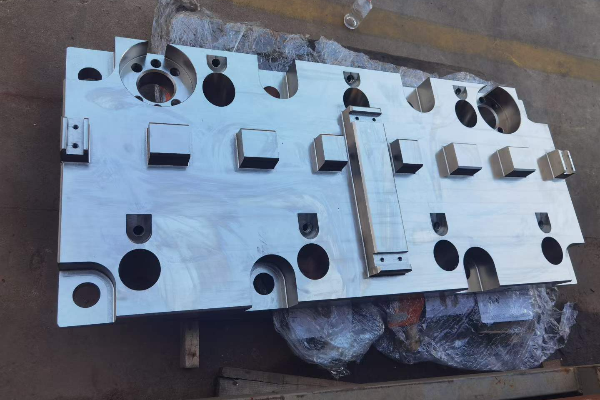
Carbon Steel CNC Machining
20# · 45# (1045) · Q235A · Q345DCarbon steel is the default for pressure-containing and structural machine parts, at 620 to 680 MPa for 1045. With no corrosion resistance of its own, plating, paint or an oiled finish has to be part of the drawing.
Specs: Carbon Steel — 1045 (45#)
Machinability65%
Hardness180–190 HB
Tensile str.620–680 MPa
Max temp.400 °C
Expansion:12 µm/m·K
Corrosion:Rusts unprotected; needs plating
Applications:Shafts, pins, pressure vessels
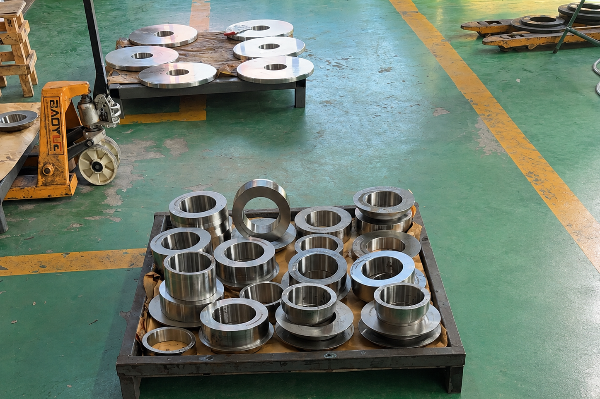
Alloy Steel CNC Machining
42CrMo (4140) · 25CrMo · 12CrMoV · GCr15Quenched and tempered 4140 reaches 1080 MPa at 310 HB, which is high strength without the price of a tool steel. Its carbon band under ASTM A29/A29M runs 0.38 to 0.43%, so two compliant bars from different heats can respond differently to the same heat treatment.
Specs: Alloy Steel — 4140
Machinability61%
Hardness310 HB
Tensile str.1080 MPa
Max temp.420 °C
Expansion:13 µm/m·K
Corrosion:Rusts unprotected; needs plating
Applications:Highly stressed shafts, couplings
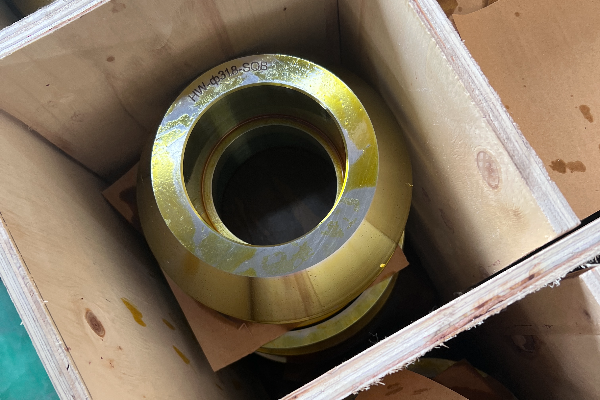
Tool Steel CNC Machining
D2 · SKD11 · H13Hardened D2 reaches 62 HRC and 2000 MPa tensile, the hardest and strongest combination in the grid. At 27% machinability it is cut soft, hardened, then finished by grinding or wire EDM.
Specs: Tool Steel — D2
Machinability27%
Hardness62 HRC
Tensile str.2000 MPa
Max temp.—
Expansion:11 µm/m·K
Corrosion:Rusts unprotected; oil after grinding
Applications:Dies, punches, wear inserts
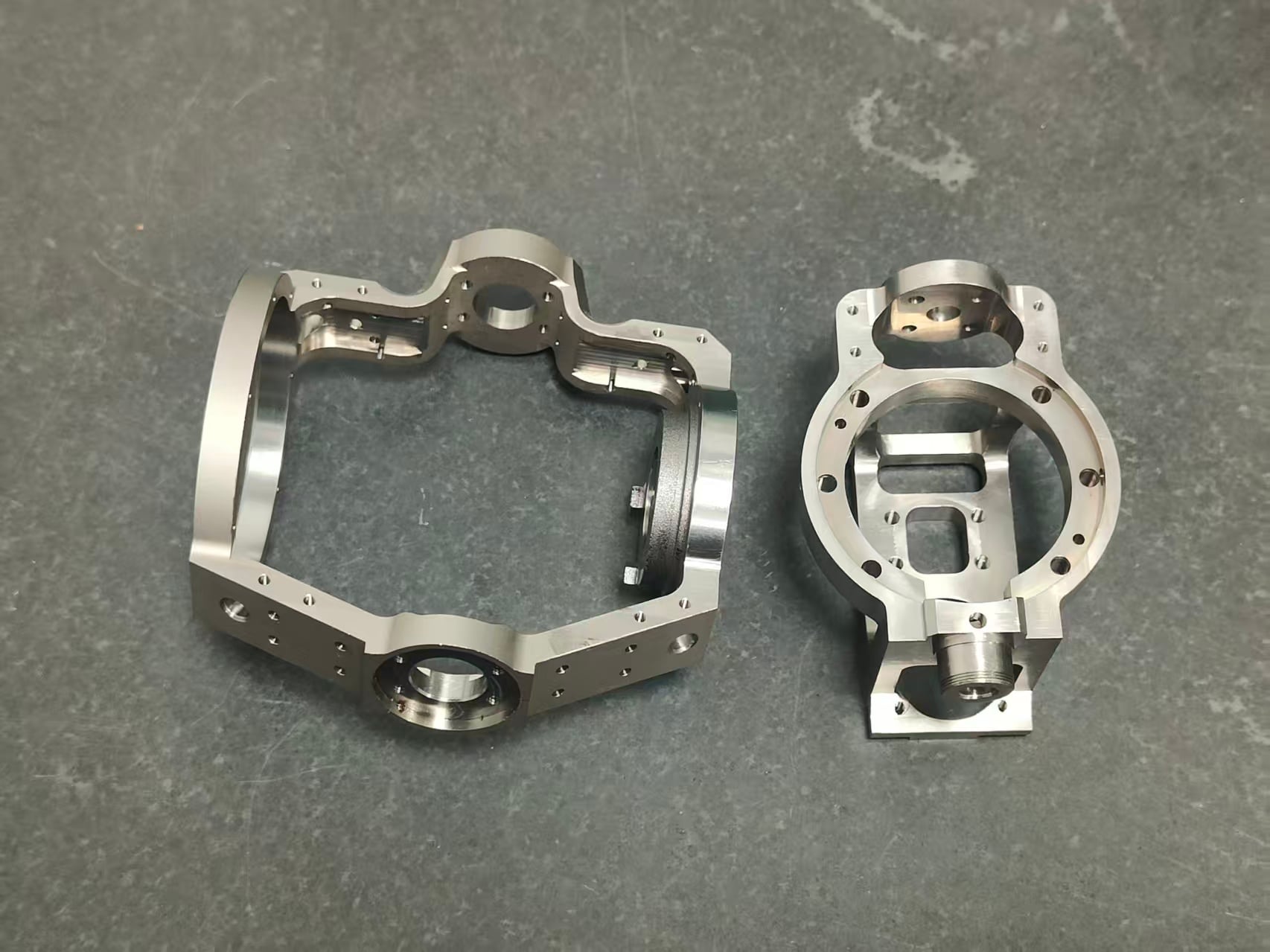
Titanium CNC Machining
Grade 2 · Grade 5 (Ti-6Al-4V)Grade 5 gives 1000 to 1190 MPa at roughly 60% of steel density and holds up in seawater and chlorides. At 20% machinability the cost driver is machine hours rather than the metal price.
Specs: Titanium — Grade 5
Machinability20%
Hardness33 HRC
Tensile str.1000–1190 MPa
Max temp.330 °C
Expansion:8.9 µm/m·K
Corrosion:Excellent in seawater and chlorides
Applications:Aerospace fittings, medical device components
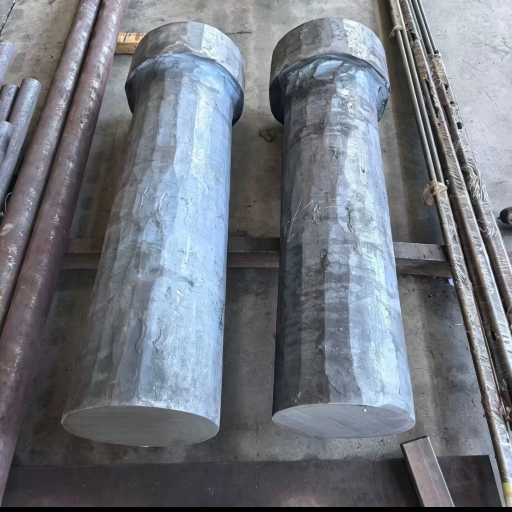
Inconel & Nickel Alloy CNC
Alloy 718 · C276 · 904LAlloy 718 holds usable strength to 980 °C, the highest service temperature in the grid by a wide margin. At 10% machinability it is the slowest metal here to cut, and tooling is planned into the quotation.
Specs: Nickel Alloy — 718
Machinability10%
Hardness40 HRC
Tensile str.930–1530 MPa
Max temp.980 °C
Expansion:13 µm/m·K
Corrosion:Holds up in oxidizing and reducing acids
Applications:Hot-section parts, downhole tooling
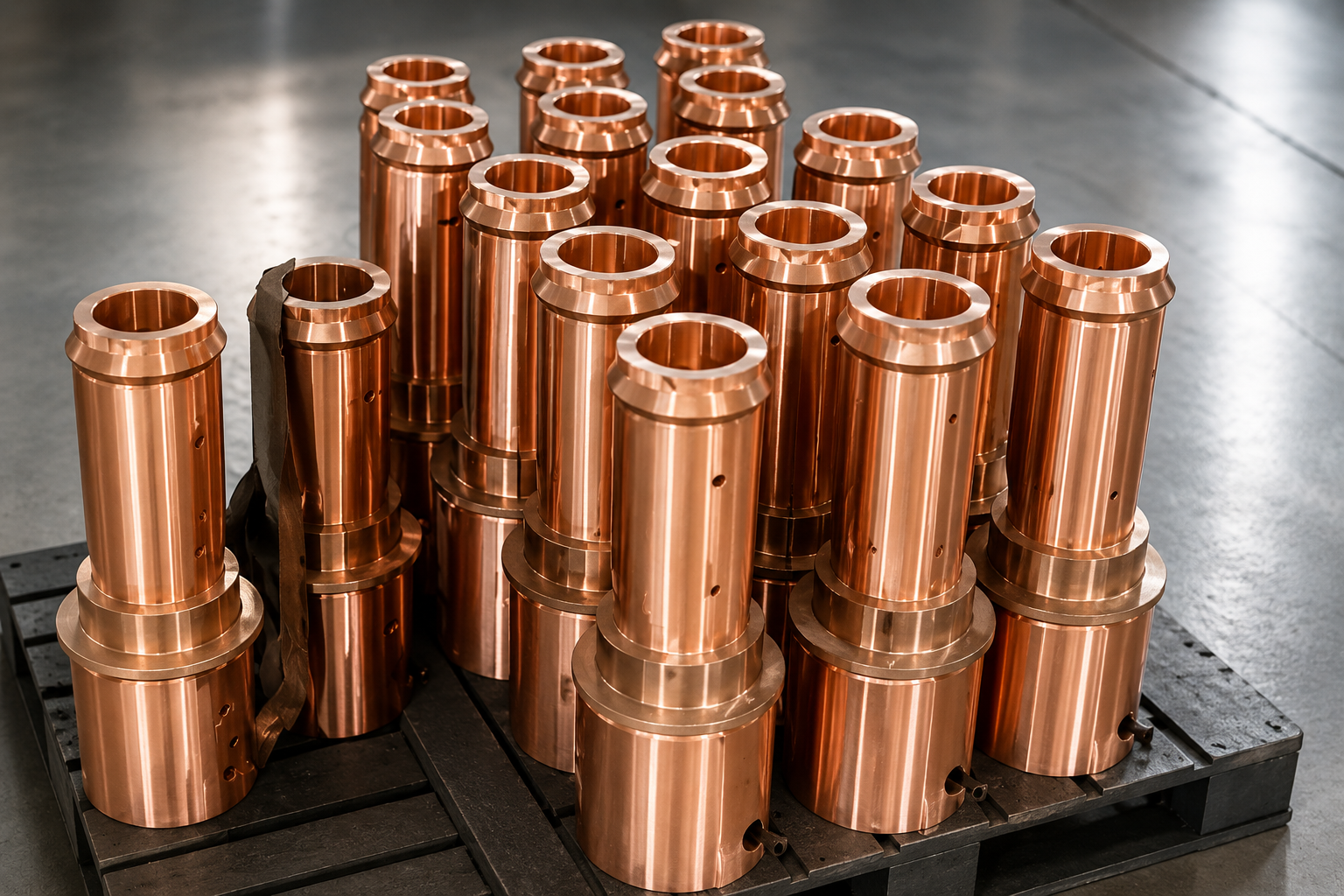
Copper CNC Machining
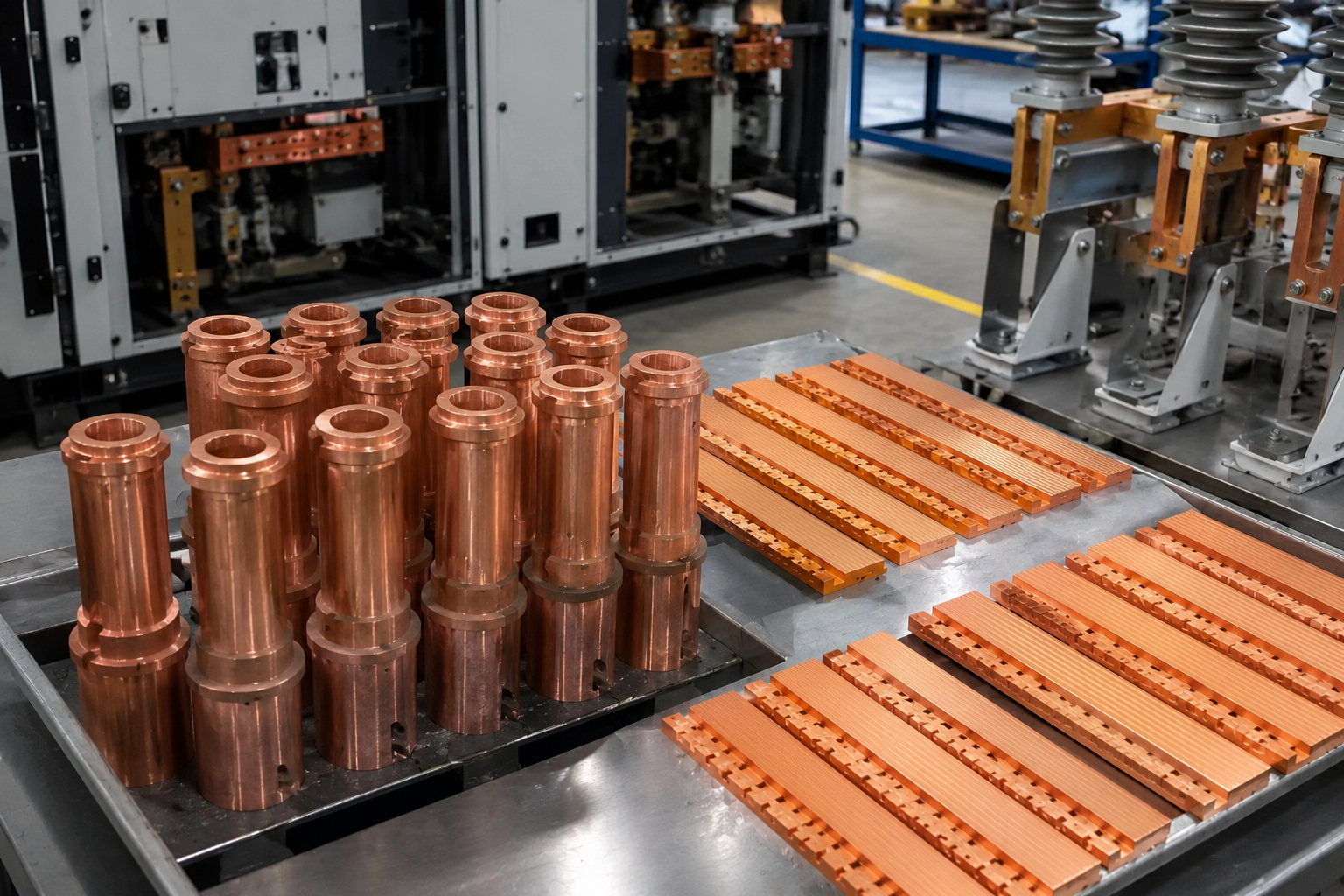
C11000 electrolytic tough pitch · C10100C11000 is rated 100% IACS, the reference point every other conductor is measured against. It is gummy to cut and no machinability index is published for it, so geometry and finish requirements drive its cost.
Specs: Copper — C11000
Machinability—
Hardness37–94 HRF
Tensile str.220–410 MPa
Max temp.200 °C
Expansion:17 µm/m·K
Corrosion:Patinates in air; unsuitable in ammonia
Applications:Busbars, electrodes, thermal conductors
Brass CNC Machining
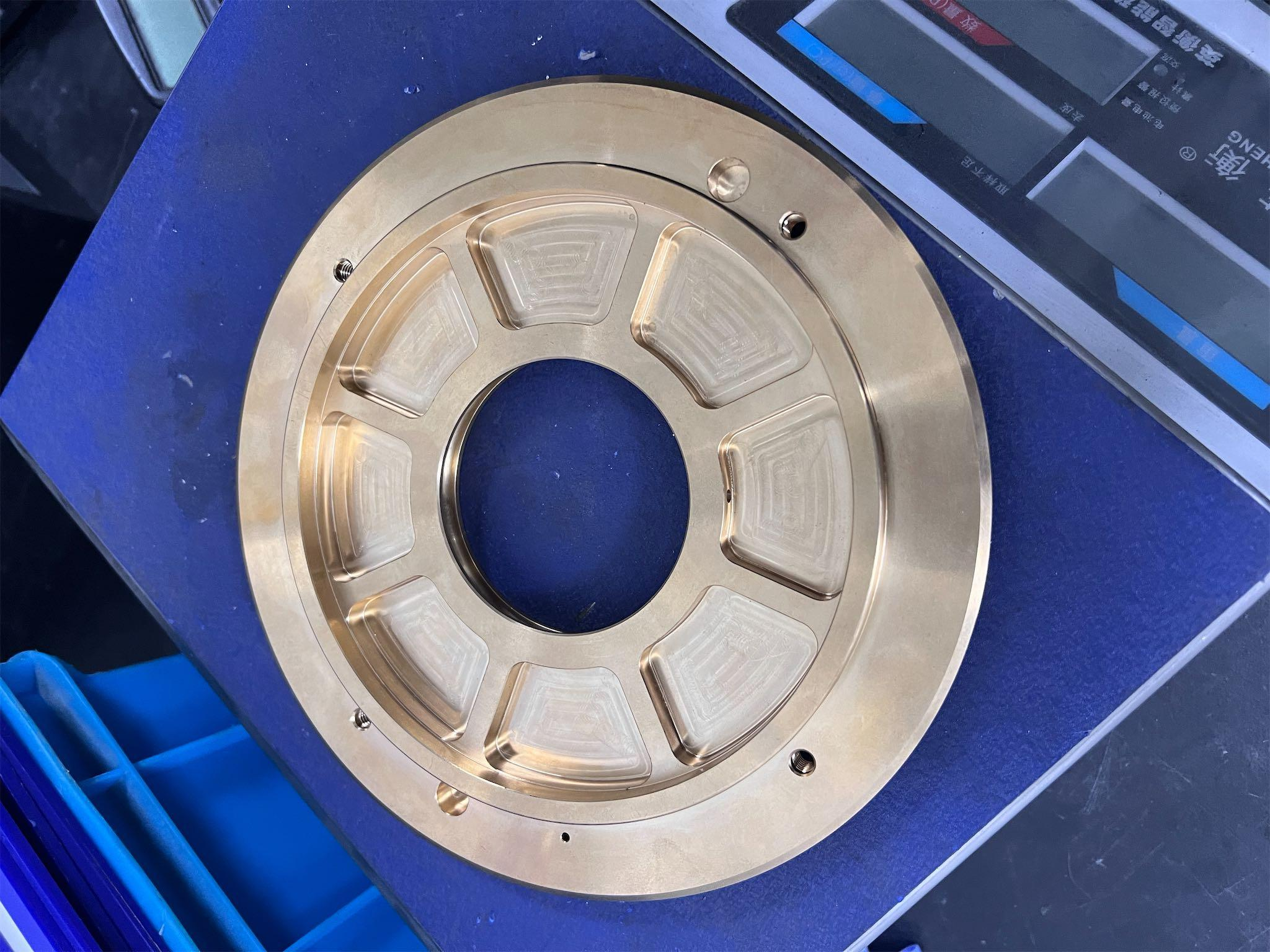
C36000 · C37700 · H62C36000 free-cutting brass indexes at 170%, second only to aluminum here, and holds a clean thread straight off the tool. It contains 2.5 to 3.7% lead, which rules it out of food and drinking water contact.
Specs: Brass — C36000
Machinability170%
Hardness—
Tensile str.330–530 MPa
Max temp.120 °C
Expansion:21 µm/m·K
Corrosion:Dezincifies in stagnant water
Applications:Fittings outside food contact
Bronze CNC Machining
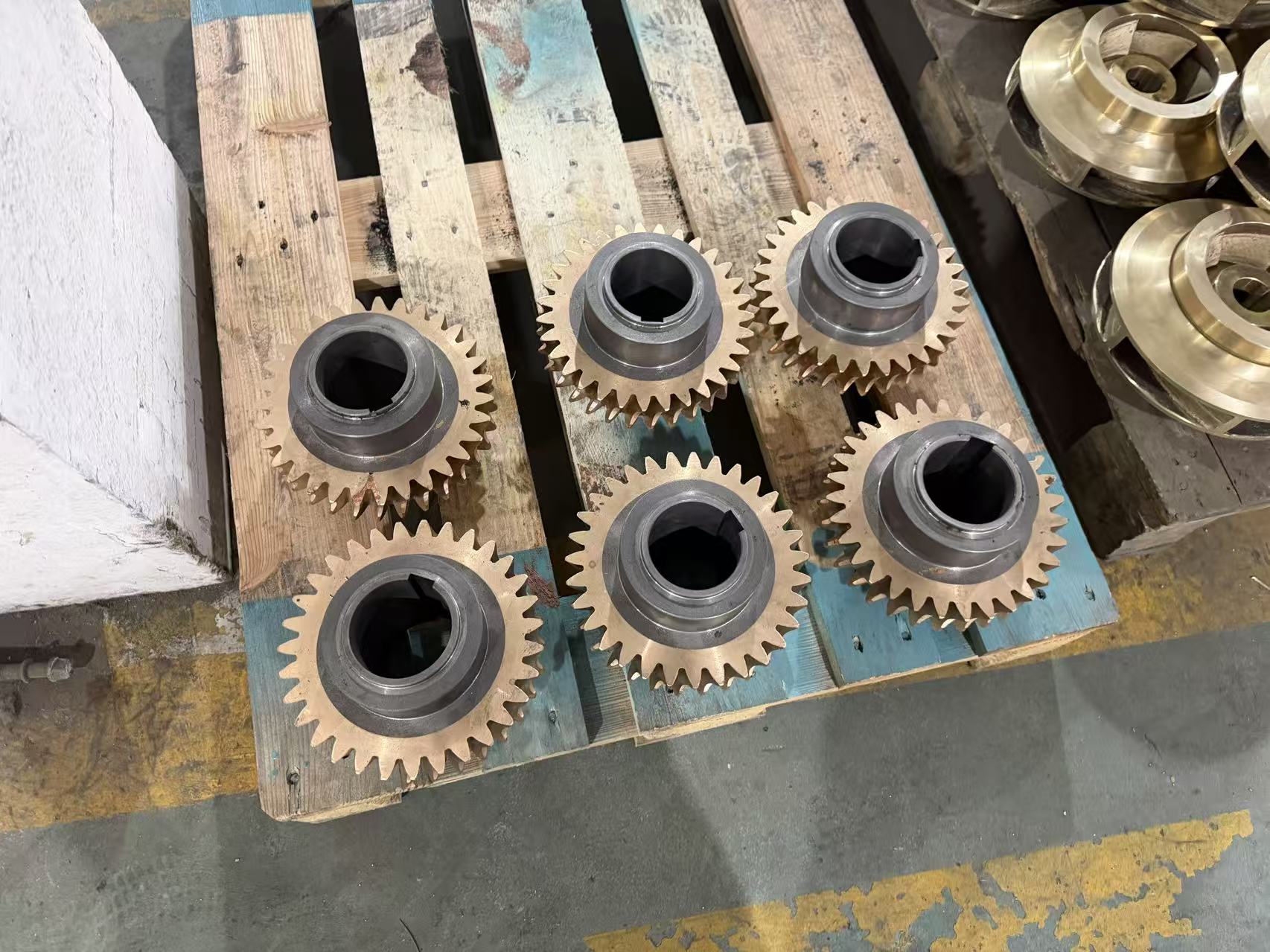
C93200 (SAE 660) · C51000C93200 bearing bronze is specified for sleeve bearings and bushings because it runs against a steel shaft without seizing. At 6 to 8% lead it carries the same food-contact exclusion as free-cutting brass.
Specs: Bronze — C93200
Machinability—
Hardness65 HRB
Tensile str.240 MPa
Max temp.160 °C
Expansion:18 µm/m·K
Corrosion:Holds up in marine service
Applications:Sleeve bearings, bushings, thrust washers
Magnesium CNC Machining
AZ31B · AZ91DAZ31B is the lightest structural metal here at 1.7 g/cm³, roughly two thirds the density of aluminum. It expands 26 µm/m·K, the widest of any metal in the grid, and it corrodes galvanically wherever it meets another metal in a wet joint.
Specs: Magnesium — AZ31B
Machinability—
Hardness—
Tensile str.240–270 MPa
Max temp.150 °C
Expansion:26 µm/m·K
Corrosion:Galvanic risk at every dissimilar-metal joint
Applications:Lightweight housings, portable equipment
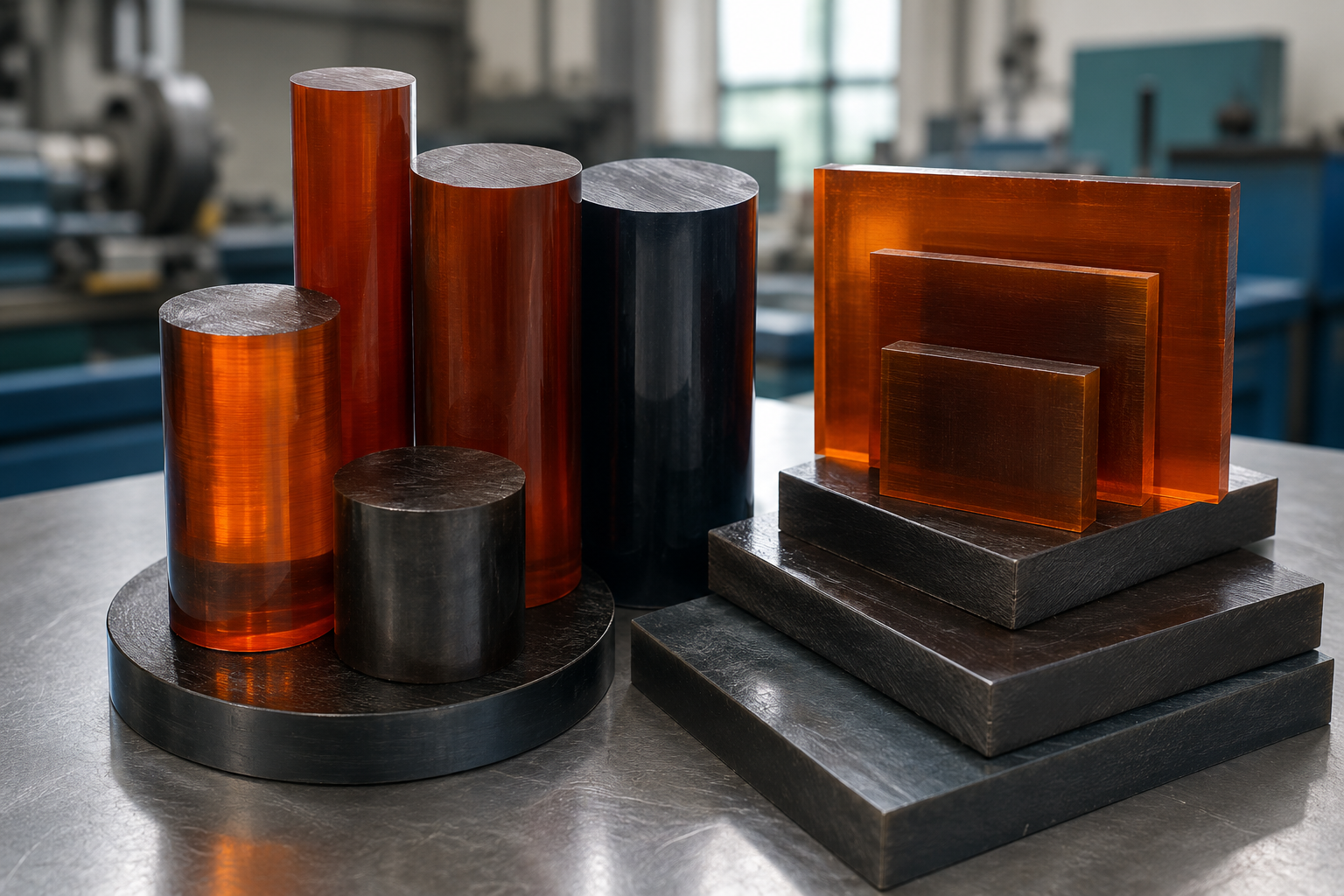
PEEK CNC Machining
Unfilled · 30% glass filled · 30% carbon filledUnfilled PEEK works to 330 °C and takes up only 0.5% water at saturation, which is why it is the choice when a plastic part has to hold size. Price is the highest of any plastic here by a wide margin, so confirm the duty genuinely needs 330 °C before specifying it.
Specs: PEEK — unfilled
Tensile str.97 MPa
Elongation43%
Max temp.330 °C
Water abs.0.5% sat
Expansion:52 µm/m·K
Chemical:Resists most chemicals; conc. sulfuric acid exception
Applications:Seals, bearings, semiconductor parts
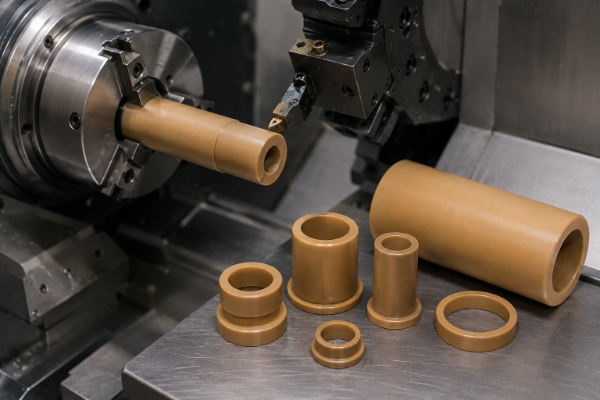
PEI (Ultem) CNC Machining
Unfilled · 30% glass filledPEI gives 110 MPa tensile and works to 170 °C while staying dimensionally predictable. It takes up 1.3% water at saturation, so parts that matter should be machined from stock that has been conditioned rather than straight off a humid rack.
Specs: PEI — unfilled
Tensile str.110 MPa
Elongation34%
Max temp.170 °C
Water abs.1.3% sat
Expansion:53 µm/m·K
Chemical:Resists dilute acids and hydrocarbons
Applications:Electrical insulators, sterilizable fixtures
PAI (Torlon) CNC Machining
Unfilled · bearing and wear gradesPAI is the strongest plastic in the grid at 150 MPa and the most dimensionally stable at 34 µm/m·K. Water absorption is the highest of the three high-performance plastics at 1.7% saturated, against 1.3% for PEI and 0.5% for PEEK, so PAI is not a substitute for PEEK where dimensional stability comes first.
Specs: PAI — unfilled
Tensile str.150 MPa
Elongation12%
Max temp.260 °C
Water abs.1.7% sat
Expansion:34 µm/m·K
Chemical:Resists most chemicals; strong bases are the limit
Applications:Thrust washers, wear rings, high-load bushings
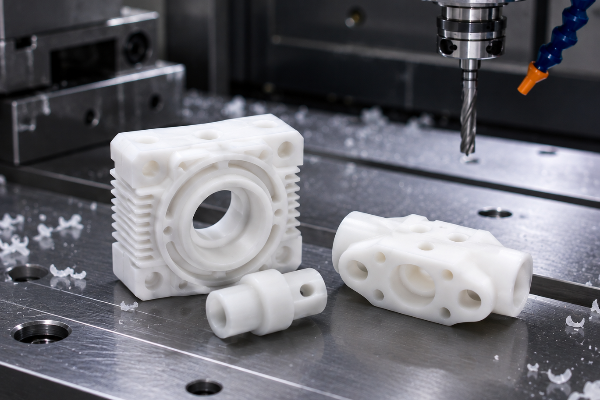
POM / Acetal CNC Machining
POM-C copolymer · POM-H homopolymer (Delrin)Acetal is the default machined plastic for gears and precision mechanism parts: 61 MPa tensile, 65% elongation and 0.21% water absorption at 24 hours. It resists solvents and fuels, but strong acids attack it.
Specs: Acetal POM-C — unfilled
Tensile str.61 MPa
Elongation65%
Max temp.100 °C
Water abs.0.21% (24h)
Expansion:85 µm/m·K
Chemical:Resists solvents and fuels; strong acids attack it
Applications:Gears, precision mechanism parts, fluid-handling
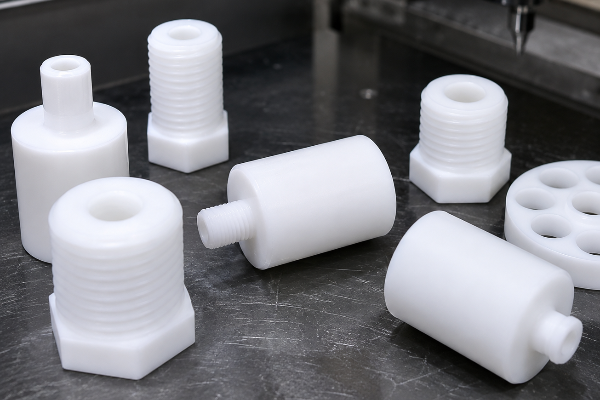
PTFE CNC Machining
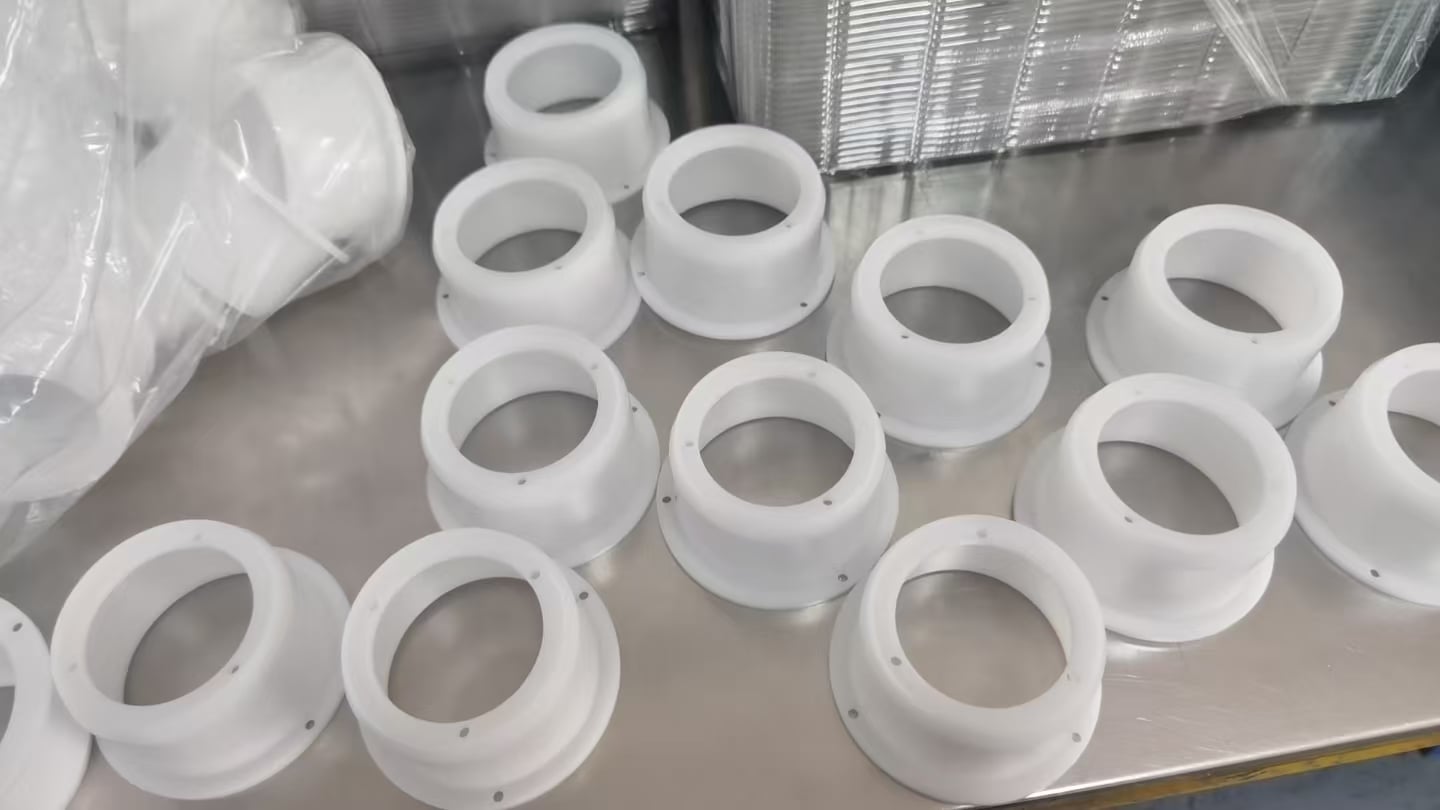
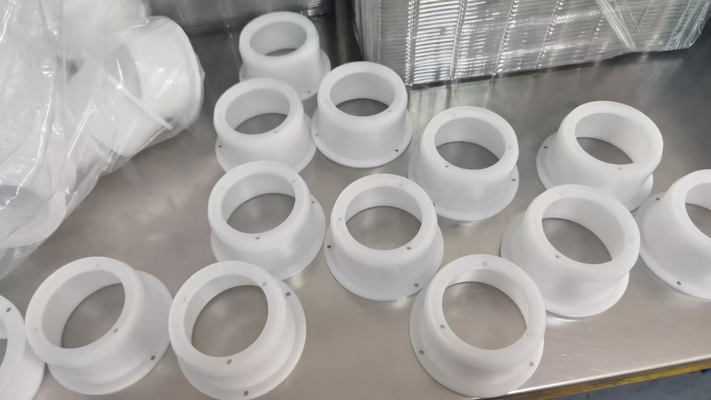
Unfilled · glass filled · carbon filledPTFE resists nearly every industrial chemical and has the lowest water absorption here at 0.0093%. At 120 µm/m·K it also moves ten times as far per degree as carbon steel, so it needs its own tolerance treatment in any mixed assembly.
Specs: PTFE — unfilled
Tensile str.25 MPa
Elongation300%
Max temp.270 °C
Water abs.0.0093% (24h)
Expansion:120 µm/m·K
Chemical:Resists nearly every industrial chemical
Applications:Seals, gaskets, low-friction pads
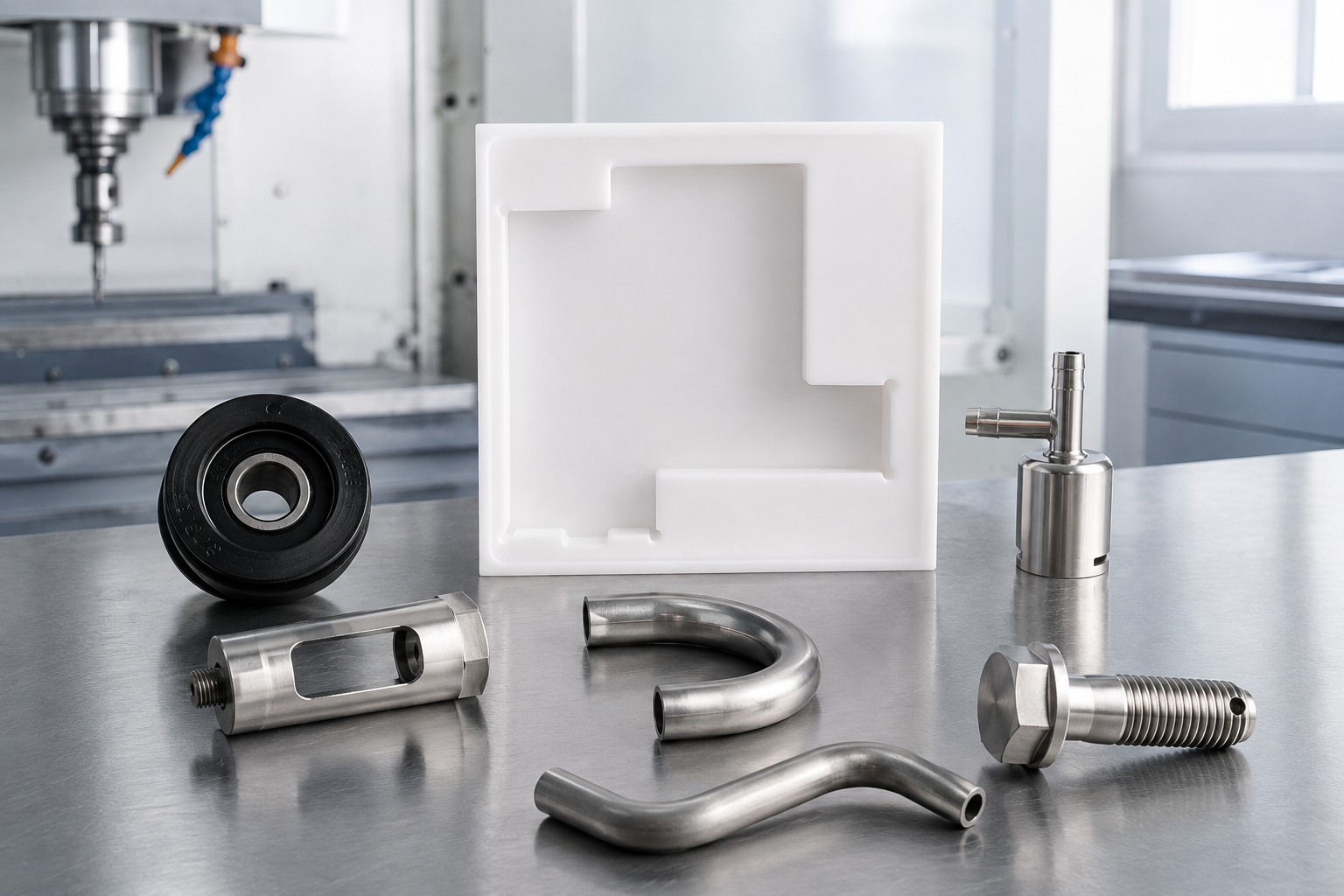
Nylon CNC Machining
PA6 · PA66 · cast nylonNylon is tough and cheap for bushings, rollers and wear pads, at 74 MPa dry for unfilled PA6. Conditioned to equilibrium moisture the same material measures 35 MPa, so the moisture state has to be stated before the number means anything.
Specs: Nylon PA6 — dry
Tensile str.74 MPa
Elongation67%
Max temp.90 °C
Water abs.7.0% sat
Expansion:84 µm/m·K
Chemical:Resists hydrocarbons and bases
Applications:Bushings, rollers, wear pads
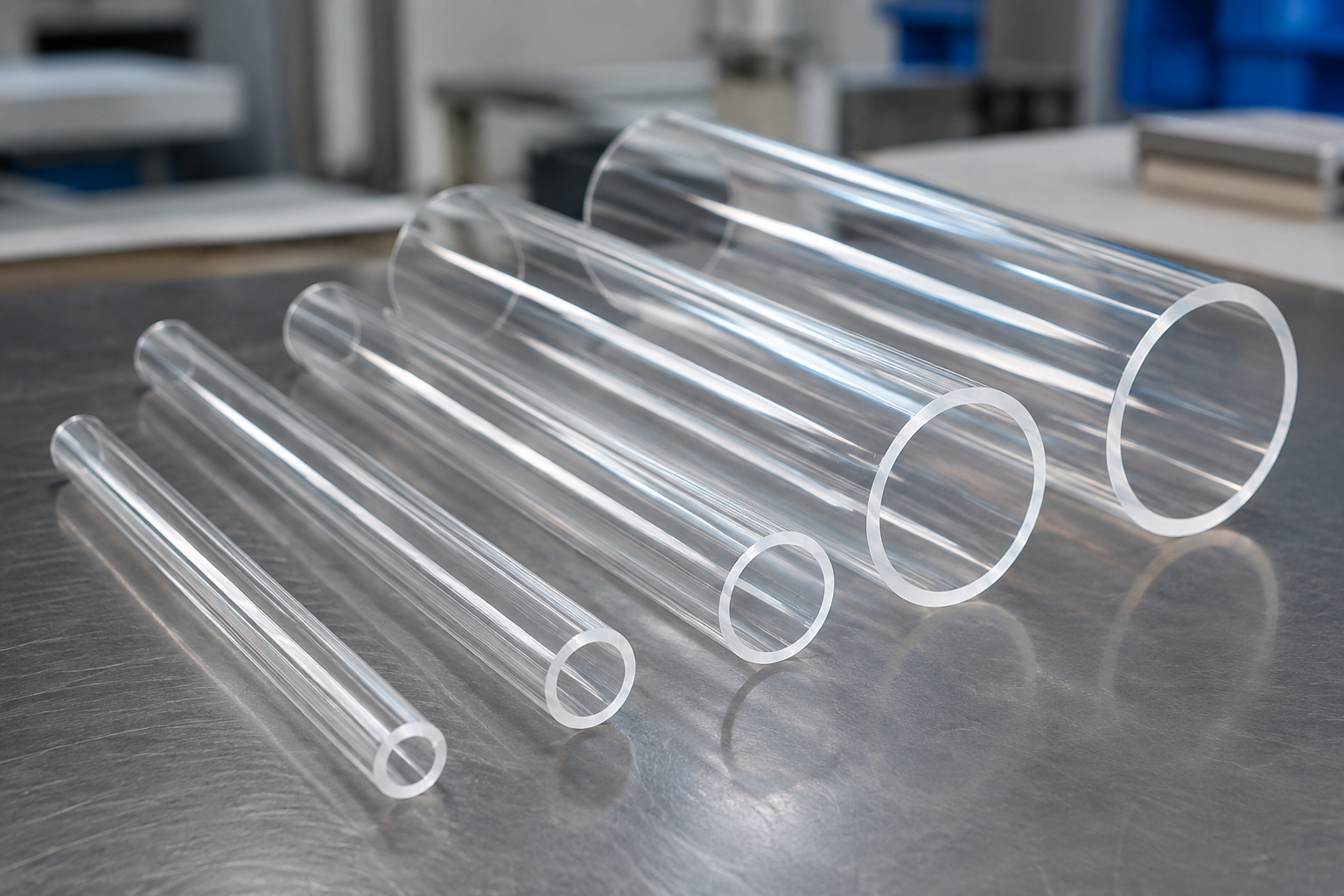
Polycarbonate CNC Machining
Unfilled · glass filledPolycarbonate is the toughest plastic in the grid, with 110% elongation and a 440 J/m notched Izod, which is why it becomes guards and sight glasses. Solvents attack it and it stress-cracks under load in contact with them.
Specs: Polycarbonate — unfilled
Tensile str.66 MPa
Elongation110%
Max temp.120 °C
Water abs.—
Expansion:69 µm/m·K
Chemical:Solvents attack it, stress-cracks under load
Applications:Guards, sight glasses, impact covers
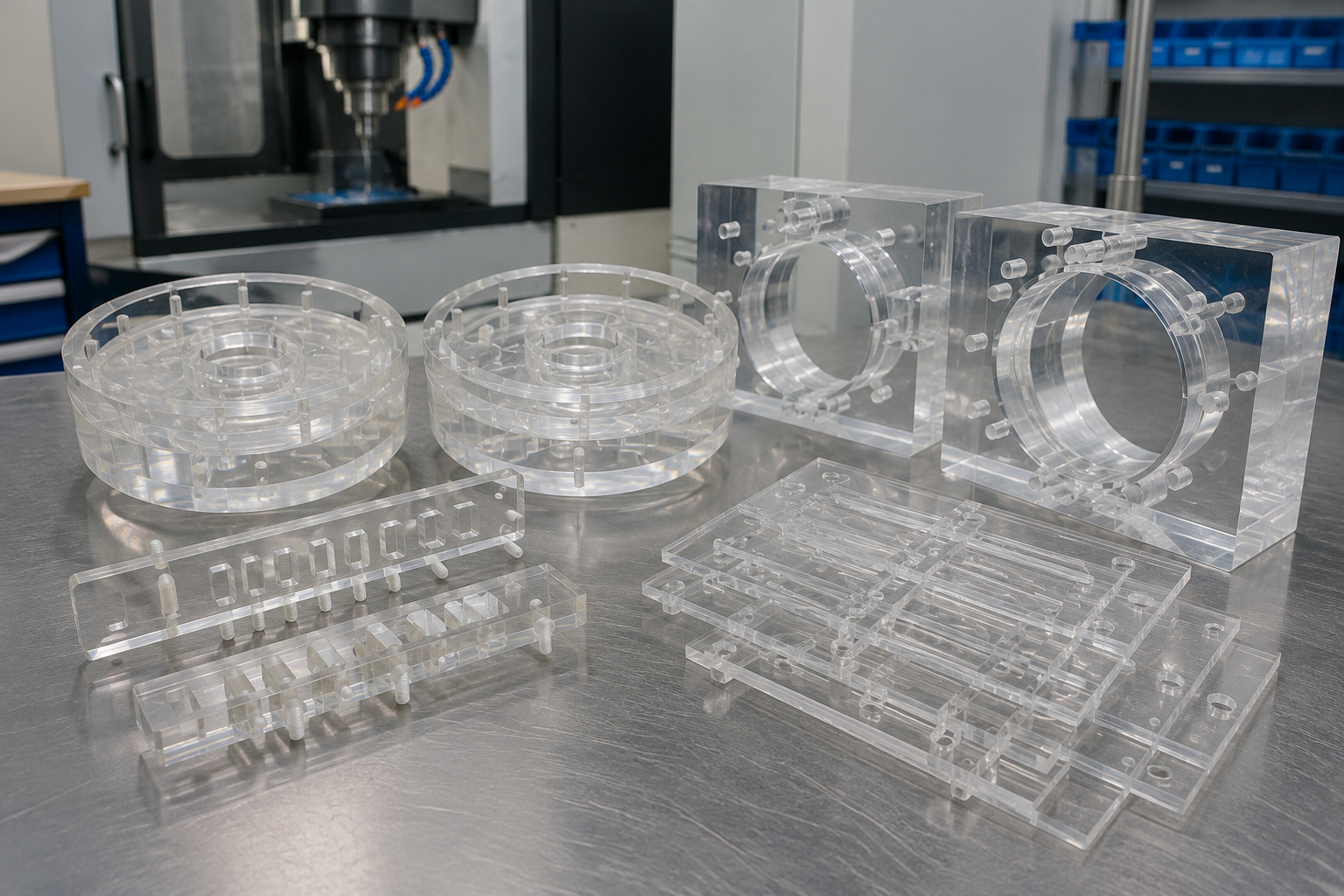
Acrylic (PMMA) CNC Machining
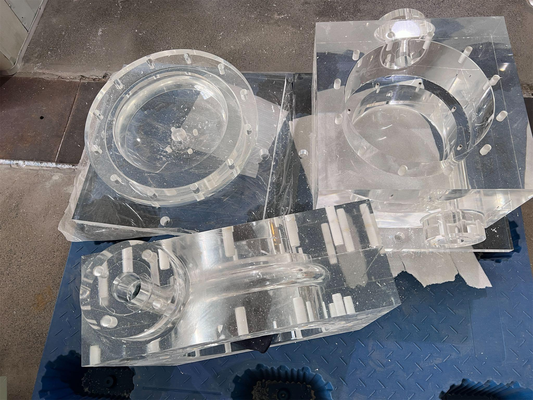
Cast · extrudedAcrylic is optically clearer than polycarbonate and holds a polished edge better. It breaks at 4.0% elongation, the lowest in the grid, so clamping force and fixturing decide whether the part survives machining.
Specs: Acrylic PMMA
Tensile str.71 MPa
Elongation4.0%
Max temp.—
Water abs.—
Expansion:76 µm/m·K
Chemical:Solvents and alcohols attack it
Applications:Windows, light pipes, display parts
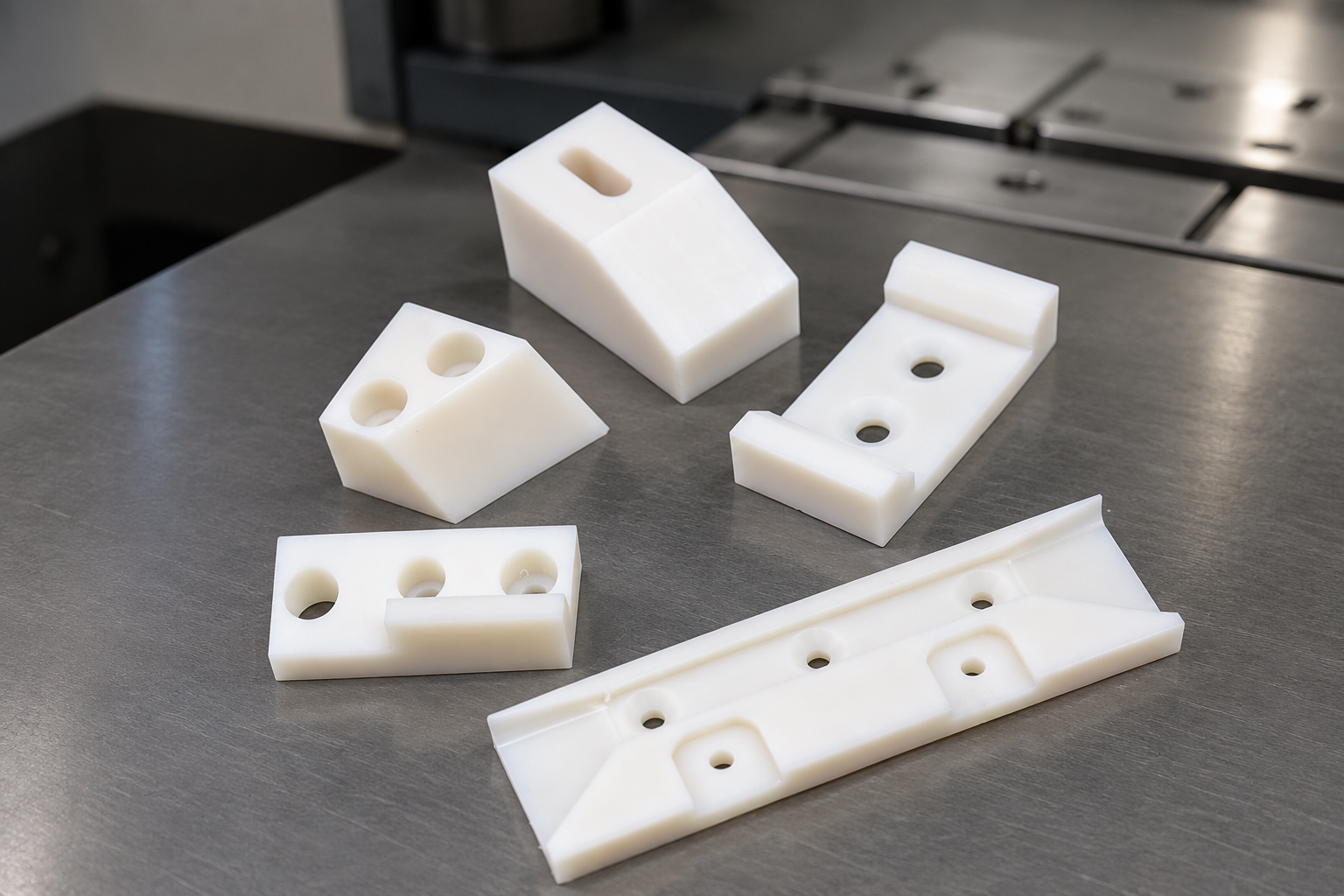
HDPE CNC Machining
Unfilled · UHMW-PEHDPE resists acids and bases across a wide range and is standard for tanks, liners and food-contact parts. It is the weakest material in the grid at 24 MPa and expands the most at 130 µm/m·K.
Specs: HDPE — unfilled
Tensile str.24 MPa
Elongation100%
Max temp.90 °C
Water abs.—
Expansion:130 µm/m·K
Chemical:Resists acids and bases across a wide range
Applications:Tanks, liners, food-contact parts
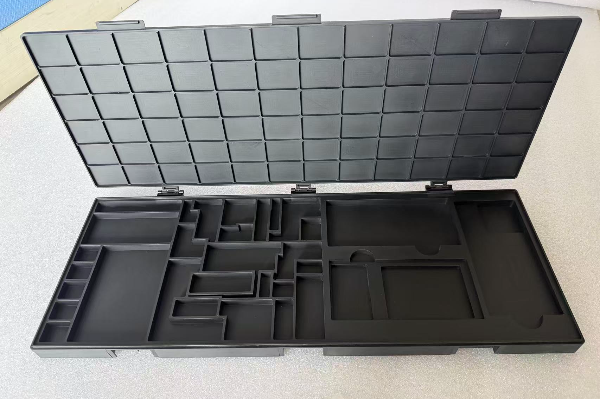
Polypropylene CNC Machining
Homopolymer · copolymerPolypropylene absorbs 0.010% water at saturation and resists acids, bases and most solvents, which suits chemical tanks and laboratory fixtures. At 0.91 g/cm³ it is the only material on this page that floats.
Specs: Polypropylene — unfilled
Tensile str.36 MPa
Elongation80%
Max temp.120 °C
Water abs.0.010% sat
Expansion:90 µm/m·K
Chemical:Resists acids, bases and most solvents
Applications:Chemical tanks, laboratory fixtures
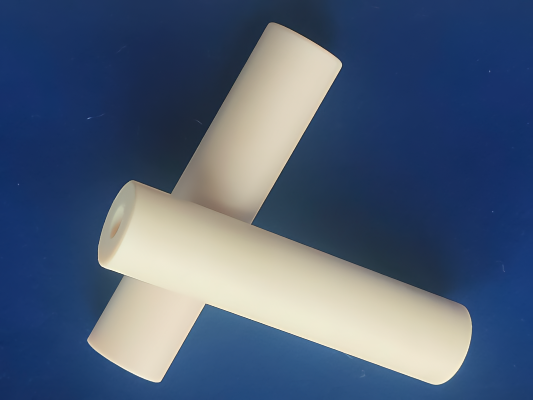
ABS CNC Machining
Unfilled · high impact · high heatABS machines cleanly and takes paint and adhesive well, which makes it the usual choice for enclosures and fixtures. It stops at 80 °C, the lowest service temperature in the grid, and chlorinated solvents attack it.
Specs: ABS — unfilled
Tensile str.41 MPa
Elongation20%
Max temp.80 °C
Water abs.0.7% sat
Expansion:95 µm/m·K
Chemical:Ketones, esters and chlorinated solvents attack it
Applications:Enclosures, fixtures, interior trim
Send Your Drawing for a Quote
Narrow the 22 grades against your own limits: the CNC material shortlist filter runs the same grid on service temperature, tensile floor, corrosion duty and food contact, and names every grade it rules out and why.
No drawing yet? Send one photo of the sample or a hand sketch. We reply with the materials that will work, and the dimensions you still need to capture before a quotation is possible.
Another Material
If the CNC material you need is not one of the 22 above, send the grade with your drawing and we confirm availability and price in the quotation. Material is purchased against your specification, and the mill certificate ships with the parts.
Surface Finishes For Machined Parts
A finish is a dimensional input before it is a cosmetic one: plating and anodizing add thickness to every coated face. MIL-A-8625 puts the growth at half the coating thickness on each coated surface, so a 50 µm hardcoat needs 25 µm taken off per surface before the part goes to the anodizing line. Call the finish out on the drawing so that allowance is cut in rather than discovered at inspection.
| Finish Process | Standard Callout | Dimensional Result | Execution |
|---|---|---|---|
| As-machined | ISO 1302 surface texture callout | Ra 3.2 µm (126 µin), edges deburred | In-house |
| Bead blasting | Drawing callout | Uniform matte, Ra 1.6–3.2 µm (63–126 µin) | In-house |
| Anodizing, Type II | MIL-A-8625 Type II | 1.8–25 µm (0.00007–0.001 in) per surface | Partner plant |
| Anodizing, Type III hardcoat | MIL-A-8625 Type III | 12.7–114 µm (0.0005–0.0045 in) per surface; 50 µm (0.002 in) nominal where the drawing is silent | Partner plant |
| Zinc plating | ASTM B633 | Minimum by service condition: SC1 5 µm, SC2 8 µm, SC3 13 µm, SC4 25 µm | Partner plant |
| Electroless nickel | ASTM B733 | Minimum by service class: SC1 5 µm, SC2 13 µm, SC3 25 µm, SC4 75 µm | Partner plant |
| Passivation | ASTM A967 | No measurable thickness change | Partner plant |
| Black oxide | MIL-DTL-13924 | Under 2.5 µm (0.0001 in) | Partner plant |
| Heat treatment | To the drawing specification | Hardness verified before machining resumes | Partner plant |
Tolerances and Drawing Requirements
The drawing outranks every default on this page. Where it is silent, the standard below applies; where it speaks, we cut to it.
Specification
What we hold
General tolerances
ISO 2768-1 class m, for linear and angular dimensions without individual tolerance indications, unless your drawing specifies otherwise
Geometric tolerances
As called out on your drawing. ISO 2768-2 was withdrawn and replaced by ISO 22081:2021, so form and position are not covered by the class m note above
Quote turnaround, including feasibility
48 hours, reviewed by an engineer
Prototype lead time
7 to 15 business days after drawing approval
Small-batch lead time
15 to 20 business days after drawing approval
Production lead time
20 to 30 business days, confirmed with your quotation
Minimum order
No minimum order quantity — single pieces are accepted
First article
Runs on every new part number; the measured report goes to you for approval before the rest of the batch is cut
Inspection supplied
A dimensional inspection report carrying the measured values, plus the mill certificate for the material supplied
Files accepted
STEP, STP, IGES, IGS, X_T, DWG, DXF and dimensioned PDF drawings
Maximum part size
Confirmed against your drawing inside the 48 hour quotation. We do not publish an envelope figure
Size and Geometry Check
Feasibility is answered from your file, not from a published envelope table. Four things let us answer it in one pass:
- Overall envelope of the largest part, and the weight of the heaviest one
- Deepest hole or pocket, with its diameter or width
- Any features on more than one face that would need a five-axis set-up
- Which dimensions are critical, with their tolerances and datums
Send Your Drawing for a Quote
Not ready to buy? Send an existing drawing and ask for manufacturability and material substitution feedback in writing, with no quotation and no follow-up.
Request Drawing Feedback Only
Pricing and Lead Times
Price follows material, part geometry, tolerance band, quantity and finishing. There is no price list for drawing-led work; your figure comes back in a written quotation.
Cost Lever List
Each lever below is something you control on the drawing. The third column tells you how to pull it and what the trade-off is.
| Lever | What it moves | How to pull it |
|---|---|---|
| Material grade inside one family | Sulfur running 0.015% against 0.025% inside the same grade specification can swing machinability by more than 100%, and machinability is machine hours | Where the duty allows it, let the quotation name the grade rather than fixing it on the drawing. Not available on pressure-containing, welded or hardened parts |
| Machinability of the family itself | The grid spans 270% for 6061-T6 down to 10% for Alloy 718 — a 27-fold spread in cutting difficulty before geometry is considered | Check whether the corrosion or temperature duty genuinely rules out the faster family |
| Tolerance band | Tight bands add passes, in-process gauging and scrap risk on every feature carrying them | Tolerance only the features that mate or seal, and leave the rest to ISO 2768-1 class m. Over-constraining a drawing costs you money without adding function |
| Surface finish | Plating and anodizing add a partner-plant leg to both cost and lead time, and add thickness that machining has to allow for | Specify a finish only where it does work. As-machined at Ra 3.2 µm is free |
| Quantity | Set-up, fixturing and first article are one-time costs spread across the batch | Ask for a price break table in the quotation before splitting an order into several releases |
| Deep pockets and thin walls | Long reach tooling cuts slower and thin walls need light passes plus extra fixturing | Open a corner radius or add a relief where function permits it |
Put a number on the machinability lever: the machinability cycle-time comparator scales cutting time between any two grades on the same index, adds set-up across the batch, and returns the machine hours each grade costs you.
Lead Times by Order Stage
Compare landed lead time, not shop lead time. By the time you have paid the freight and waited for the parts, a lower unit price from a slower shop has already been spent.
01
Prototype
7 to 15 business days
Single pieces through first-article approval
02
Small batch
15 to 20 business days
Repeat set-up with the approved first article as reference
03
Production
20 to 30 business days
Scheduled run, confirmed with your quotation
quality, inspection and documents
The question behind “can you hold it” is really “can you show me you held it”. Two documents ship with every order and a third, the first-article report, reaches you before the rest of the batch is cut. Everything in this block is a document you receive, not a claim you take on trust.
How Every Order Is Checked
-
STEP.01
Incoming material is booked against the grade and specification your drawing calls out, and the mill certificate is filed to the job.
-
STEP.02
First article inspection runs on every new part number, and the measured report is sent to you for approval before the rest of the batch is cut.
-
STEP.03
In-process checks run against the features your drawing marks as critical, using the datums it defines.
-
STEP.04
Partner-plant processes come back and are inspected against your drawing before anything ships.
-
STEP.05
A dimensional inspection report carrying the measured values ships with the parts, together with the mill certificate for the material supplied.
DATA.SPEC
EN 10204 Validation
Silently swapping out for a cheaper grade is the failure buyers fear most in offshore machining. The mill certificate answers it, because it names the material that was actually purchased rather than the one that was quoted. Under EN 10204 the mill validates a type 3.1 certificate itself, while a type 3.2 has to be validated by an independent inspector, which is why 3.2 belongs in the enquiry rather than in an email after the material has been bought.
DATA.SPEC
ISO 2768-1 class m
Acceptance is measured against your drawing, and against ISO 2768-1 class m on any dimension the drawing leaves untoleranced. A part outside those limits is reworked or remade against the same written criteria used at first-article inspection.
What Ships With Your Order
- Dimensional inspection report with measured values against your drawing
- Mill certificate for the material supplied
- First-article report for any new part number, already approved by you
Drawing-First Intake, From File To Shipment
Six steps from file to shipment. The 48 hour quotation lands at step three, and step five does not start until you have approved the measured first-article report.
-
Sign first if you want to
we sign a mutual non-disclosure agreement on request before any file is opened.
-
Send the file
STEP, STP, IGES, IGS, X_T, DWG, DXF and dimensioned PDF drawings, with no conversion required at your end.
-
Engineering review
a process engineer confirms size and geometry feasibility, flags manufacturability issues and proposes material substitutions, inside the 48 hour quotation.
-
Written quotation
price, lead time and the finishing route, itemized so you can see which lever moves what.
-
Machining and first article
the measured first-article report comes to you for approval before the rest of the batch is cut.
-
Inspection, documents and shipment
parts ship with the dimensional report and mill certificate, FOB, EXW or DDP.
SECURE_NDA
Worried about the drawing itself? Ask for the non-disclosure agreement first and send nothing until it is signed.
Request an NDA FirstManufacturing Scale and Export Record
Pressure work is what the shop was built around: 10,000 or more pressure vessels and components a year since 2006, with 80% of them leaving China. That is why the router puts sulfide stringers ahead of cutting speed on its first row, because a pressure-containing part is exactly where a free-machining substitution does the most damage.
Not sure the volume fits? Send the annual quantity and the finished part weight. We reply with whether it fits the workshop schedule and what that quantity does to the unit price.
Ask About Volume FitOperating since
2006
Site
8,000 m² in Jiashan County, Zhejiang, with a 6,000 m² workshop
Annual output
10,000+ pressure vessels and components
Export share
80% to Europe, Singapore, the United States and Australia
Work we take
Drawing-led non-standard metal parts
Five-axis
Imported five-axis machining centers on site
When Zhenling Is Not the Right Fit
Four jobs we turn down, with where to take them instead.
Why we decline
Our product certification scope covers EU CE and US ASME routes only. We do not hold ISO 13485 for medical device work, AS9100D for aerospace flight hardware or IATF 16949 for automotive production parts.
Where to take this instead
Place the certified assembly with a shop registered to that scheme, and send us the non-critical machined components inside it.
Why we decline
Implant-grade stock, biocompatibility processing and USP Class VI or ISO 10993 testing are outside what we run.
Where to take this instead
Use a medical device contract manufacturer holding that chain, and keep us for non-implant instrument and fixture parts.
Why we decline
We machine to a specification; we are not an industrial design office and cannot originate the geometry for you.
Where to take this instead
Send a photo or hand sketch and we will tell you which dimensions to capture, or have the part scanned first.
Why we decline
We do not publish machine travels, so there is nothing on this page to check your part against.
Where to take this instead
Send the file. Size and geometry feasibility comes back inside the 48 hour quotation rather than after the order.
CNC Machining Material Engineering Tools
-
Filter materials by mechanical properties, thermal characteristics, and cost-efficiency to identify the optimal alloy for your project.
-
Compare machining cycle times across different alloys and plastics to estimate production efficiency and optimize manufacturing costs.
-
Calculate precise pre-machining dimensional allowances based on desired final surface finish and heat treatment specifications.
Send Your Drawing or Sample
A process engineer reviews the file and returns a quotation within 48 hours, with manufacturability notes and material alternatives at no charge.
Request an NDA First
Drawings are handled as confidential and we sign a mutual non-disclosure agreement on request before any file is opened.
No minimum order quantity — single pieces are accepted.
01
What tolerances do you hold on CNC machined parts?
Where your drawing states a tolerance we cut to it, and anything left untoleranced is held to ISO 2768-1 class m, which covers linear and angular dimensions without individual tolerance indications. Geometry is a separate question from size, and ISO 2768-2 was withdrawn and replaced by ISO 22081:2021, so a drawing note reading ISO 2768-mK no longer points at a live standard for the geometry half. Call flatness, perpendicularity and hole position out as geometrical tolerances to ISO 1101 against stated datums, and we inspect to what the drawing states.
02
What is your typical lead time for CNC machining orders?
Prototypes ship in 7 to 15 business days after drawing approval, small batches in 15 to 20, and production runs are scheduled at 20 to 30 and confirmed with your quotation. Lead time starts at drawing approval and excludes partner-plant finishing and transit.
03
Can you accommodate rush orders or expedited delivery?
Rush scheduling is available on request and is priced with the quotation. Feasibility is confirmed at drawing review, because it depends on what is already on the machines.
04
What inspection do I get with the parts?
First article inspection runs on every new part number, and the measured report is sent to you for approval before the rest of the batch is cut. Each shipment carries a dimensional inspection report with the measured values, plus the mill certificate for the material supplied.
05
What certifications do you work to?
Our product certification scope covers EU CE and US ASME routes, and every order carries the dimensional inspection report and the mill certificate for the material supplied. We do not hold ISO 13485, AS9100D or IATF 16949, so a part destined for a medical, aerospace or automotive program that mandates one of those schemes belongs at a shop that holds it. That gets said at drawing review, not after the purchase order, because a certification scope cannot be added to a job retrospectively.
06
Is there a minimum order quantity?
There is no minimum order quantity, single pieces are accepted, and a one-off carries the same first-article evidence as a batch.
07
Should I have you sign an NDA before I send my drawing?
We sign a mutual non-disclosure agreement on request before any file is opened, so ask in your first message rather than after sending the drawing.
08
Can you machine custom parts from CAD files or drawings?
Yes — we work from STEP, STP, IGES, IGS, X_T, DWG, DXF and dimensioned PDF drawings, with no conversion required at your end. A dimensioned PDF alone is enough to quote if it carries the critical dimensions, tolerances and datums.
09
How do I know the material is what I specified?
Material is purchased against the grade and specification your drawing calls out, and the mill certificate for that purchase ships with the parts. If your drawing needs a particular certificate type, name it on the drawing so it is quoted rather than assumed.
10
Which material should I choose if I am not sure?
Work the router above from what the part has to do — load first, then service temperature, then chemical exposure, then cost — and compare the two or three grades that survive in the fit grid. Where two grades both clear the requirement, machinability usually decides it rather than stock price, because on small and medium batches the hours on the machine outweigh the price per kilogram of the bar. If it is still close, send the drawing and the engineering review will come back with a recommendation and the cost difference between the candidates.
![Shop-Floor Carbon Steel CNC Machining Guide [2026]](https://zhenlingmetal.com/wp-content/uploads/2026/08/carbon-steel-cnc-machining-handbook-r2-featured-150x150.png)